

WorldSkills expo highlights cultural heritage's ability to move forward, Wang Xin reports in Shanghai.
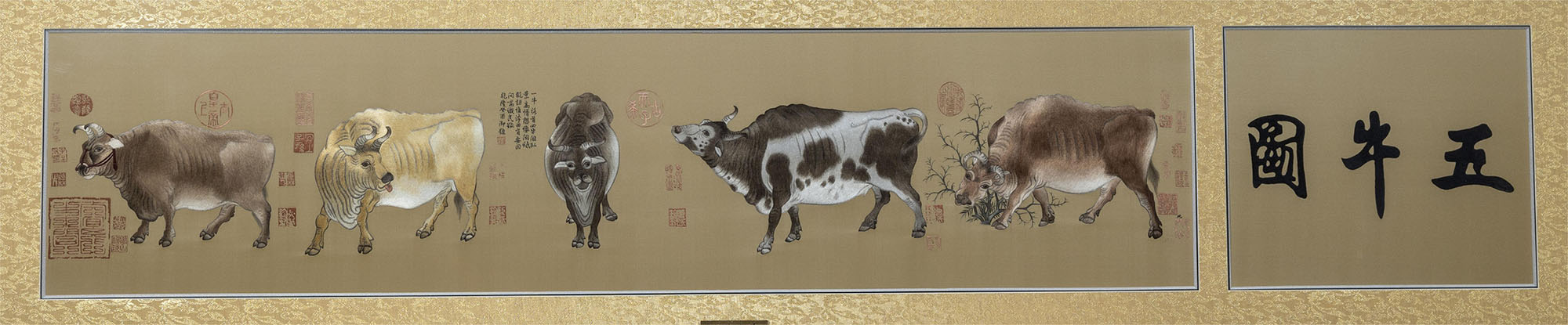
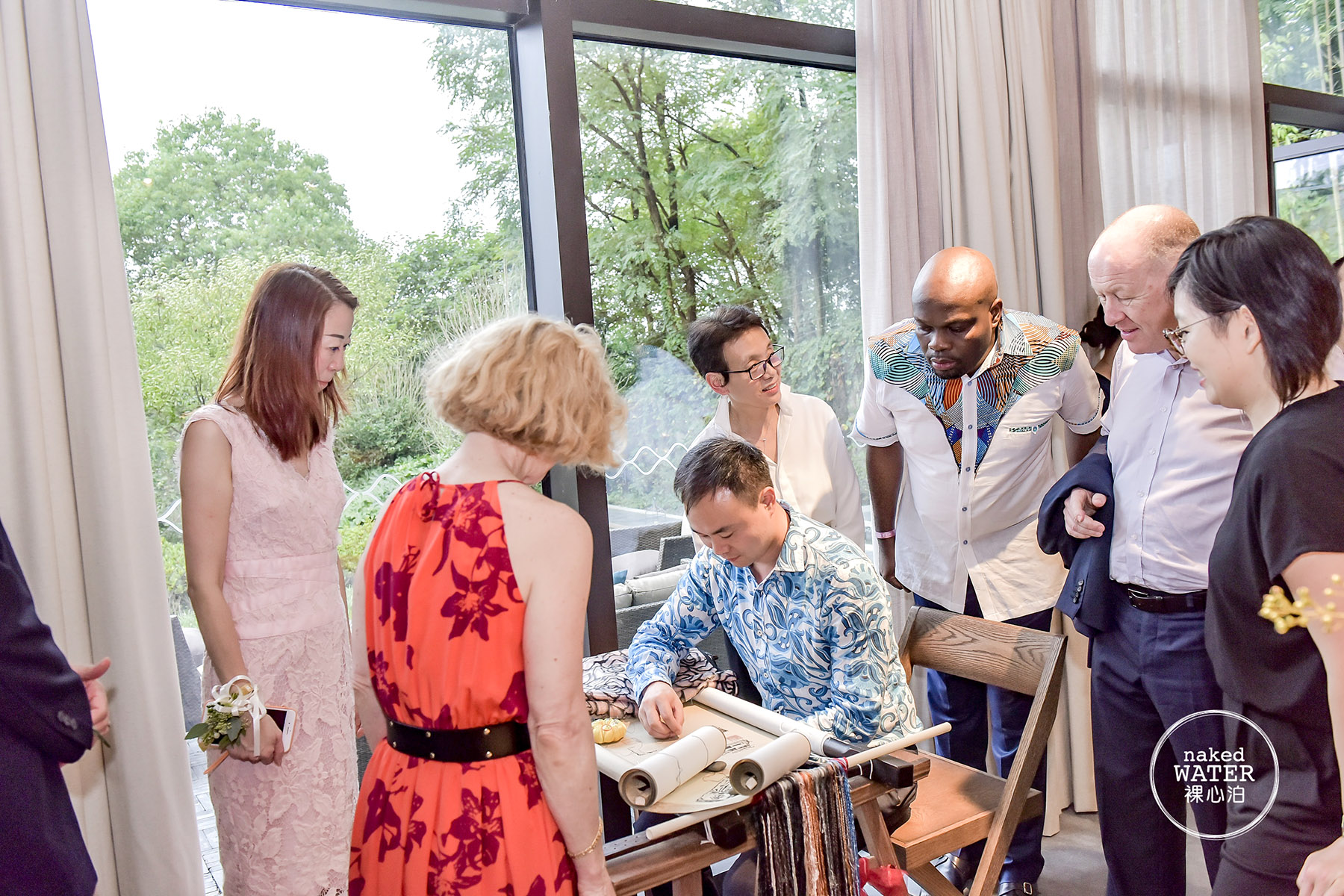
Paintings and photographs aren't limited to being created and displayed on canvas or photo paper. For Jiang Wenkui, a Shanghai silk embroidery inheritor, they can also be exquisitely presented on silk, stitch by stitch.
Listed as part of the city's intangible cultural heritage in 2023, Shanghai silk embroidery boasts a century-long history. Its origins date back hundreds, if not thousands, of years.
READ MORE: Skills event in Shanghai showcases young talent
Shanghai silk embroidery blends the city's local Gu embroidery and the strengths of other renowned embroidery traditions of Jiangsu, Hunan, Sichuan, and Guangdong provinces. It also integrates kesi (cut-silk) tapestry as well as diverse artistic forms and techniques such as Chinese gongbi (meticulous brushwork) painting, ink-wash painting, freehand brushwork — also known as xieyi, a method of Chinese brushwork marked by loose, semiabstract strokes and carefree expanses of layered colors — and oil painting.
Such a combination enables Shanghai silk embroidery to broadly diversify its themes during production, extending beyond the primary floral and landscape motifs of traditional embroidery.
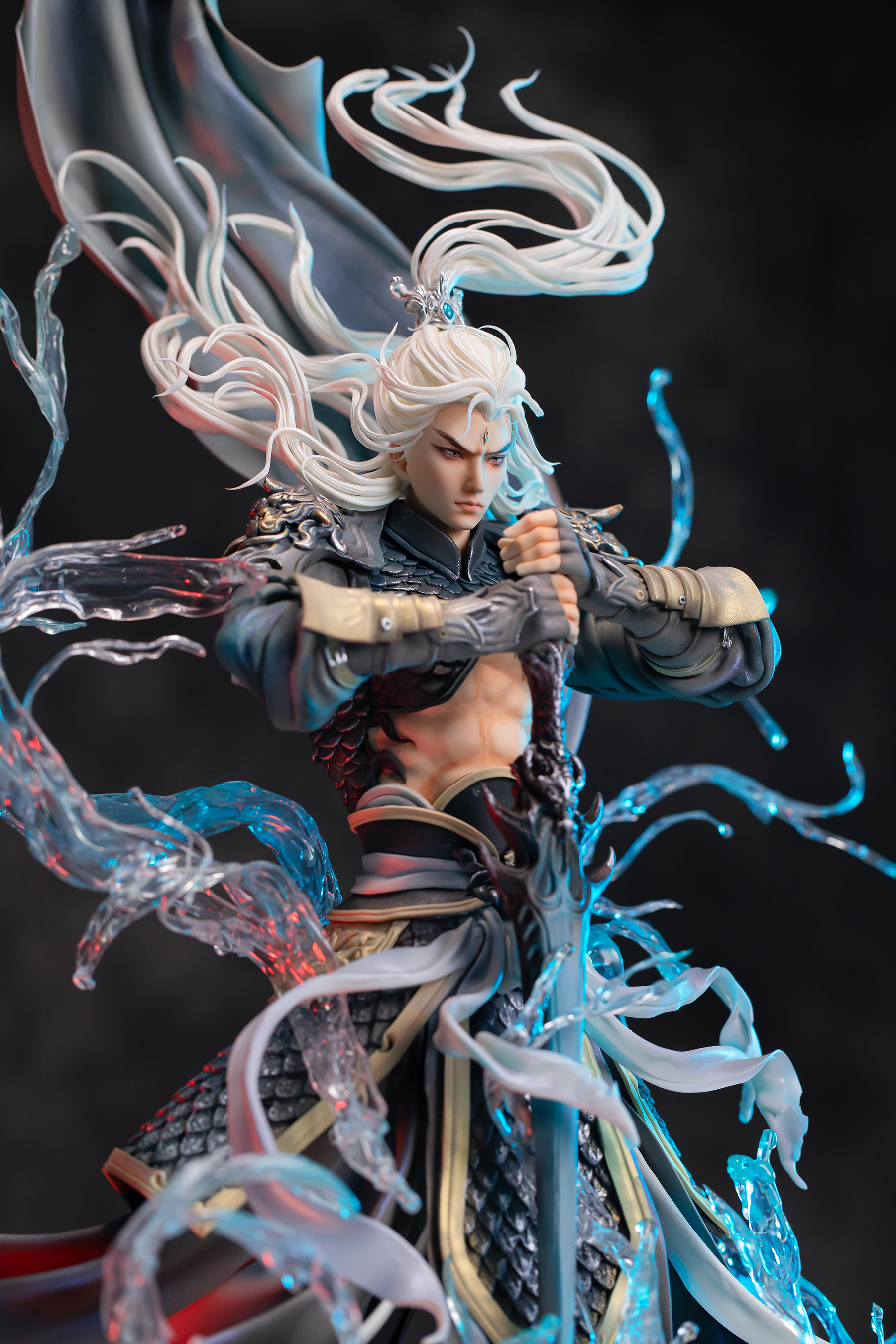
Jiang told China Daily that their silk embroidery works are considered to be reinterpretations, typically based on an ancient painting or renowned photograph. One example, shown at the WorldSkills Shanghai 2026 Expo, which ran in Shanghai from Sept 23 to 26, is their work Blooming Life.
Adapted from an original photograph, the piece depicts a curling, blooming rose. For nearly two years, Jiang and his mentor, Ye Weina, layered finely split silk threads to reproduce the undulating folds of petals, with rich red and gold hues interweaving.
Unlike traditional flower embroidery, the work adopts a strikingly modern visual language and fully captures the passionate, dynamic posture of life in bloom.
"Different from paintings, the layers of our embroidery work are built up bit by bit by hand to achieve extremely subtle color transitions. From different angles and distances, as you can see, the colors also look different," says Jiang.
The unique artistic craftsmanship is based on Ye's innovation theory proposed after over 50 years of exploration: to use the composition of Chinese painting and calligraphy as the creation's framework, to employ the thickness and arrangement of silk threads to render the texture of objects, and to recreate the light and shadow effects of ink wash painting through the gradual layering of over 200 shades of silk threads in similar hues.
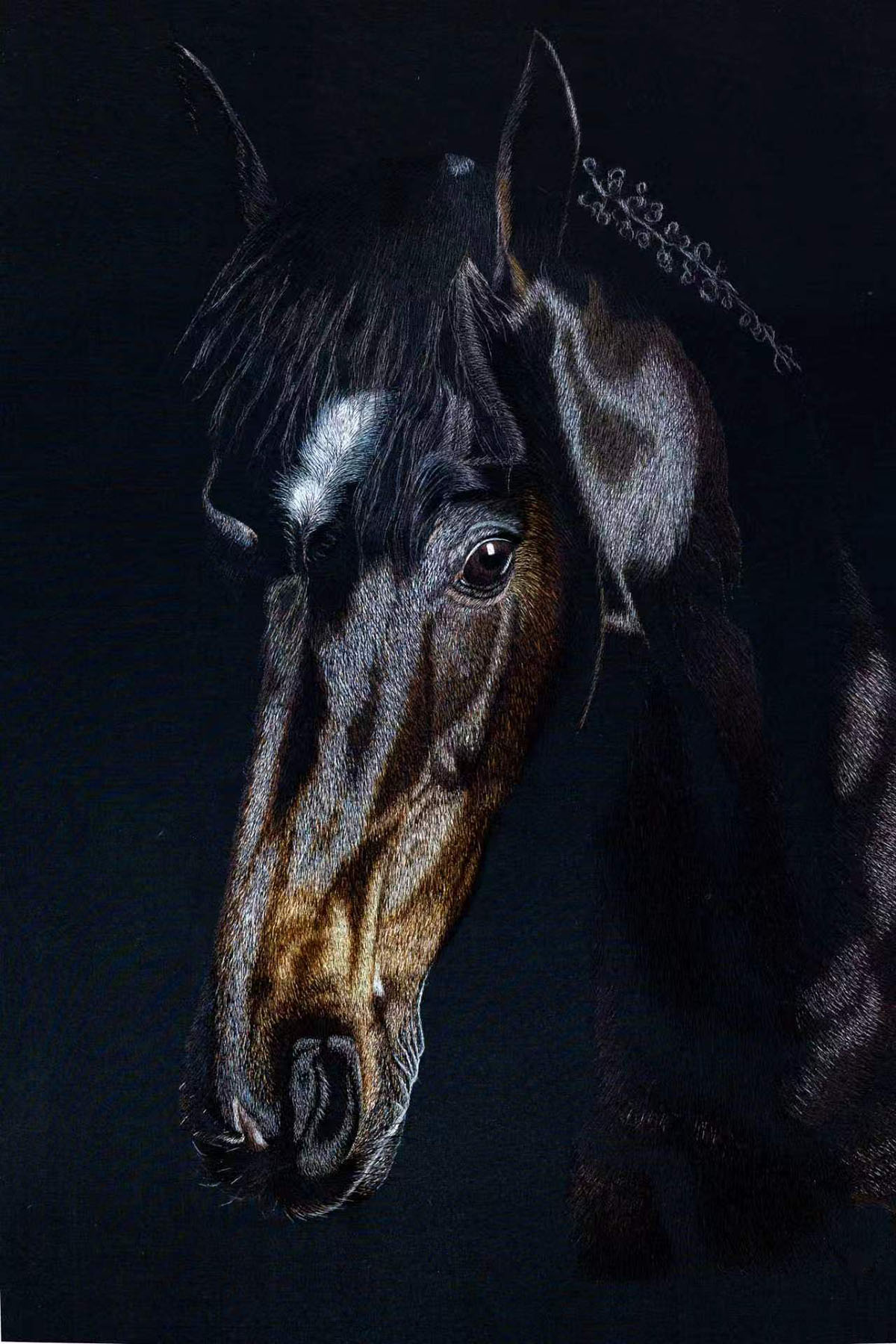
"Being an artisan requires passion, dedication, patience, and persistence. We usually work about eight hours a day to complete a section of a silk embroidery piece about the size of a fingernail.
"But with my hands and craft, I'm able to express myself and keep these unique works in this world, in a form that will remain forever. I'm happy and grateful for that," says Jiang, who has been devoted to the craft for nearly two decades.
Focused on reproducing ancient painted masterpieces, Ye and Jiang are continuing on their adventure. In recent years, Shanghai silk embroidery has also collaborated with various partners in fashion, home furnishings and cultural and creative industries, launching haute couture garments, designs for national gifts and new Chinese-style lifestyle products.
Held alongside the 48th World-Skills Competition in Shanghai, the expo brought together a wide range of skills and craftsmanship from across China's provinces and cities, where ice sculptures and ice-engraved painting from Northeast China's Heilongjiang province drew large crowds.
The art of ice sculpture emerged in Heilongjiang in 1963, and its capital city, Harbin, is believed to be the birthplace of the nation's ice lantern art. Launched in 1999, the Harbin Ice and Snow World has increasingly become a popular destination for international visitors, renowned for its grand, artistic and exquisite crystal-clear ice sculptures.
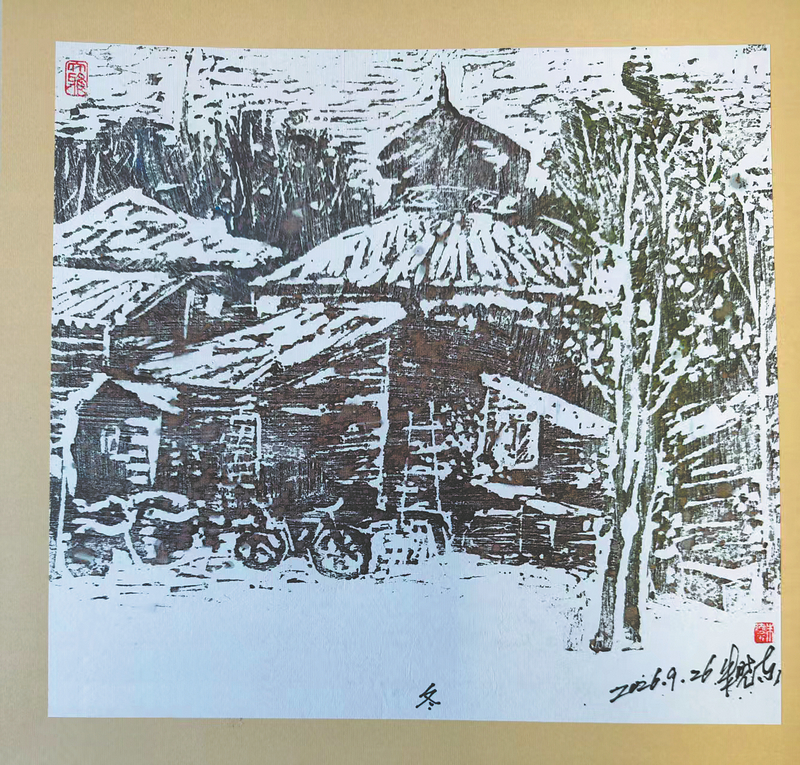
Zhu Xiaodong, a professor at East University of Heilongjiang, has been devoted to ice and snow art for about 50 years, mentoring tens of thousands of students thus far.
"Ice carving is not easy, especially the large-scale sculptures. Ice is fragile, and you'll barely have any chance to make up for your mistakes if you are not well-prepared, the sculpture is not carefully designed, or you lack skilled hands," says Zhu.
Beyond the intangible cultural heritage of ice sculptures, Zhu also creates ice-engraved paintings — rubbings of engraved ice molds. At the booth, he skillfully demonstrated how to make the ice mold and his unique painting technique as the ice melted.
"This is a new art form of ice and snow innovation. Lately, I see more young people in their 20s and 30s in the class. With them, I hope our ice and snow art and culture will travel worldwide in the future," says Zhu.
At the Sichuan province booth, a 4-meter-tall steed made of about 1.5 tons of fondant also caught a lot of attention. Dubbed "Sugar King", its creator, Zhou Yi, is one of China's best fondant artists.
At the Cake International event in the United Kingdom in 2017, Zhou and his team won three gold and two bronze medals. It was the first time that a Chinese team had won any top awards in the competition. In 2018, he stood out among 100,000 international candidates and won two top Cake Masters Magazine Awards, which are aptly dubbed "The Cake Oscars" by many.
ALSO READ: Flowing with AI's growth highlighted at skills event
Zhou's creations often feature distinct Chinese cultural elements, blending local and Western fondant techniques. Owing much of his success to China's rich cultural heritage, Zhou hopes to share the beauty of Chinese culture with a wider global audience.
"It's fantastic and so meaningful to have such a global platform to showcase our work, crafts and culture. With these fondant cakes, I hope to bring the world closer to traditional Chinese culture, and help visitors from across the world understand our brilliant civilization," says Zhou.
Contact the writer at wangxin2@chinadaily.com.cn
