

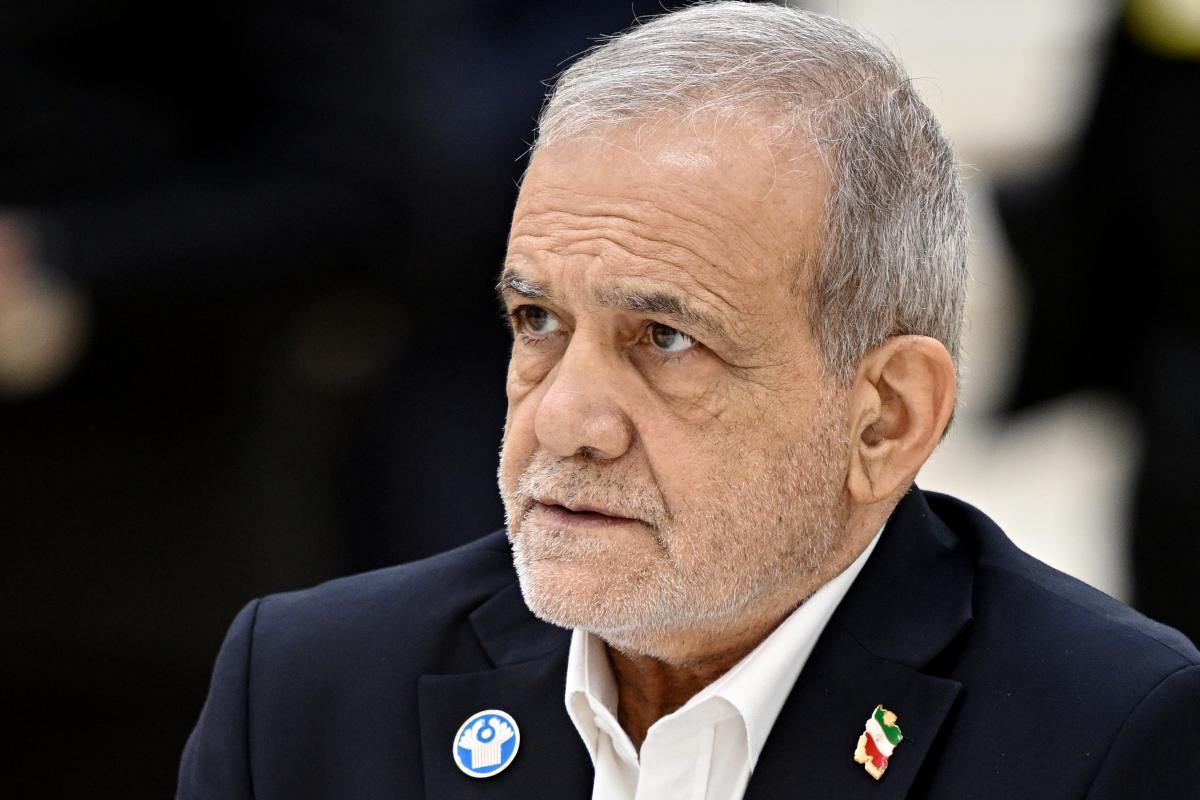
TEHRAN – Iran's President Masoud Pezeshkian on Friday reiterated that his country does not seek to develop nuclear weapons, dismissing anti-Tehran propaganda claiming otherwise as a "lie."
Pezeshkian made the remarks during a meeting with Georgian Prime Minister Irakli Kobakhidze on the sidelines of the 17th Conference of the Parties (COP17) to the Convention on Biological Diversity in the Armenian capital, Yerevan, according to a statement on his office's website.
"Iran does not seek to develop nuclear weapons, and we consider the destructive propaganda against our country as a lie," he said, citing the clear positions of Iran's late Supreme Leader Ali Khamenei regarding the prohibition of developing nuclear weapons.
Iran has always been ready for dialogue, he said, adding: “They (the United States) think they can force us to surrender, but we will not acquiesce to coercion."
He said the US sanctions against Iran fail to comply with humanitarian frameworks, describing recent US-Israeli attacks on Iran as "unjustifiable and inhumane."
Kobakhidze, for his part, underlined that his country rejects any form of foreign interference in states' internal affairs.
RELATED ARTICLES
- US mulling ‘mother of all bombs’ strike on Iran, CNN reports
- Iran's Navy: 'Violating' oil tanker caught fire east of Hormuz
- Trump says US won't attack Iran before midterm elections
- Iranian official: US accepted some of Iran's conditions, status of others unclear
In a separate meeting with Armenian Prime Minister Nikol Pashinyan, Pezeshkian said that the US must recognize that Iran will not surrender and will continue its relations with the world with power, relying on its people and coordinating with its neighbors, according to his office's website.
The US and its sanctions have created problems for Iran and the entire world, he said, warning that should Washington seek to continue the same path, the situation would worsen for the entire world.
Pezeshkian called on Washington to engage in dialogue based on logic rather than using force.
On Feb 28, Israel and the US launched joint attacks on Tehran and other Iranian cities. Iran responded with waves of missile and drone attacks targeting Israel and US bases and assets in the region, and tightened its grip on the Strait of Hormuz.
A ceasefire was achieved between the warring parties on April 8. On June 18, Iran and the US signed a memorandum of understanding (MoU) on ending the war in the region on all fronts.
Under the MoU, the two countries were scheduled to hold negotiations within 60 days, ending on Aug 17, to reach a final agreement on Iran's nuclear program and the removal of sanctions. However, they failed to make sufficient progress toward a deal as tensions continued to escalate.
Another ‘violating’ oil tanker catches fire
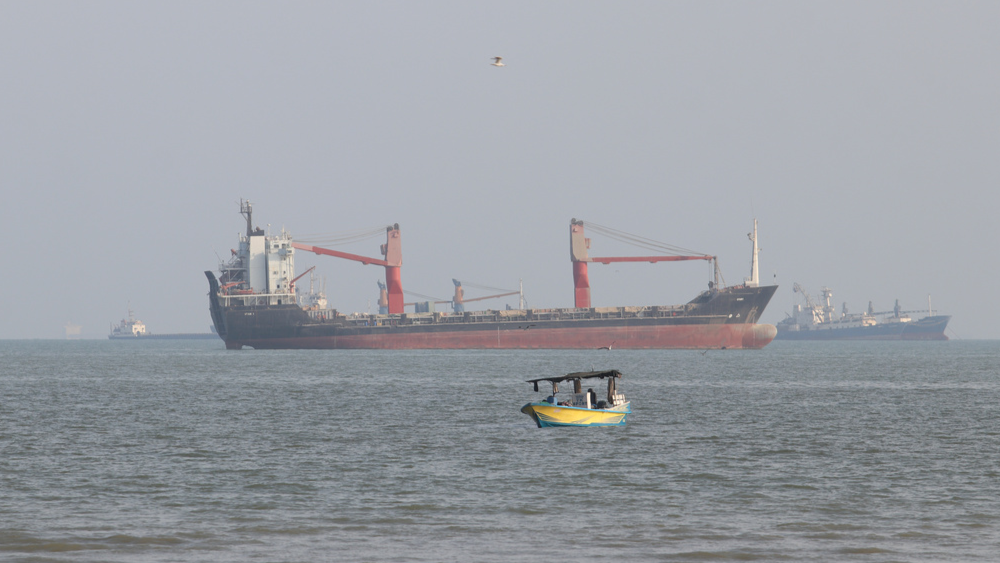
The Iranian Army's Navy announced on Friday that its forces detected another "violating" oil tanker that had caught fire east of the Strait of Hormuz.
In a statement on its website, the navy said the tanker was spotted by its monitoring teams, "which are responsible for the continuous control of the strait's eastern waters", in the waterway's "forbidden region."
It added that the vessel had turned off its tracking systems and was seeking to cross the "forbidden region," stressing that such "uncoordinated movements" cause insecurity and hazards for other vessels.
On Tuesday and Thursday, the navy announced it had detected two other "violating" oil tankers that caught fire while attempting to cross the "forbidden region" east of the strait.
It emphasized that its forces have full control and dominance over the strait's eastern waters and are continuously monitoring all "enemy" activities and vessel movements in real time.
The navy strongly advised all vessels to strictly refrain from switching off their electronic equipment in compliance with international regulations and to ensure necessary coordination with Iran's armed forces for safe passage through the Strait of Hormuz.
Qatar's claims about Iranian pilots not ‘convincing’
A senior Iranian military commander said that Qatar's remarks regarding the fate of three Iranian pilots believed to be held captive by Qatar since March are not "reassuring and convincing," the semi-official Fars news agency reported on Friday.
Commander of the Missing Persons Search Committee of the General Staff of Iran's Armed Forces Mohammad Bagherzadeh said the issue was discussed with Qatari authorities in a recent visit to Doha by Iranian Interior Minister Eskandar Momeni, and is being pursued through multiple channels.
He said that Iran intends to send another expert team to Qatar for further investigations and follow-ups, adding that "the first team (sent to Qatar) had uncovered certain facts during its assessments, and the statements and claims made by Qatari officials had failed to be reassuring and convincing at least for the team's members."
Bagherzadeh said officials of the International Committee of the Red Cross are pursuing the case through the organization's office in Qatar and in Geneva.
"We have conveyed our information and expert findings to the Qatari side," he added.
In August, the commander said Qatari forces had captured three Iranian pilots whose fighter jets were shot down in March when returning from a military mission against a US base in Qatar. A fourth pilot was killed, he added.
Qatari Foreign Ministry spokesperson Majed Al Ansari later denied the claim in a social media post.
