

Industry leaders and government officials on Friday shed lights on how sports events have been turned into lasting engines for tourism, community building and global visibility, while voicing confidence in the market’s potential.
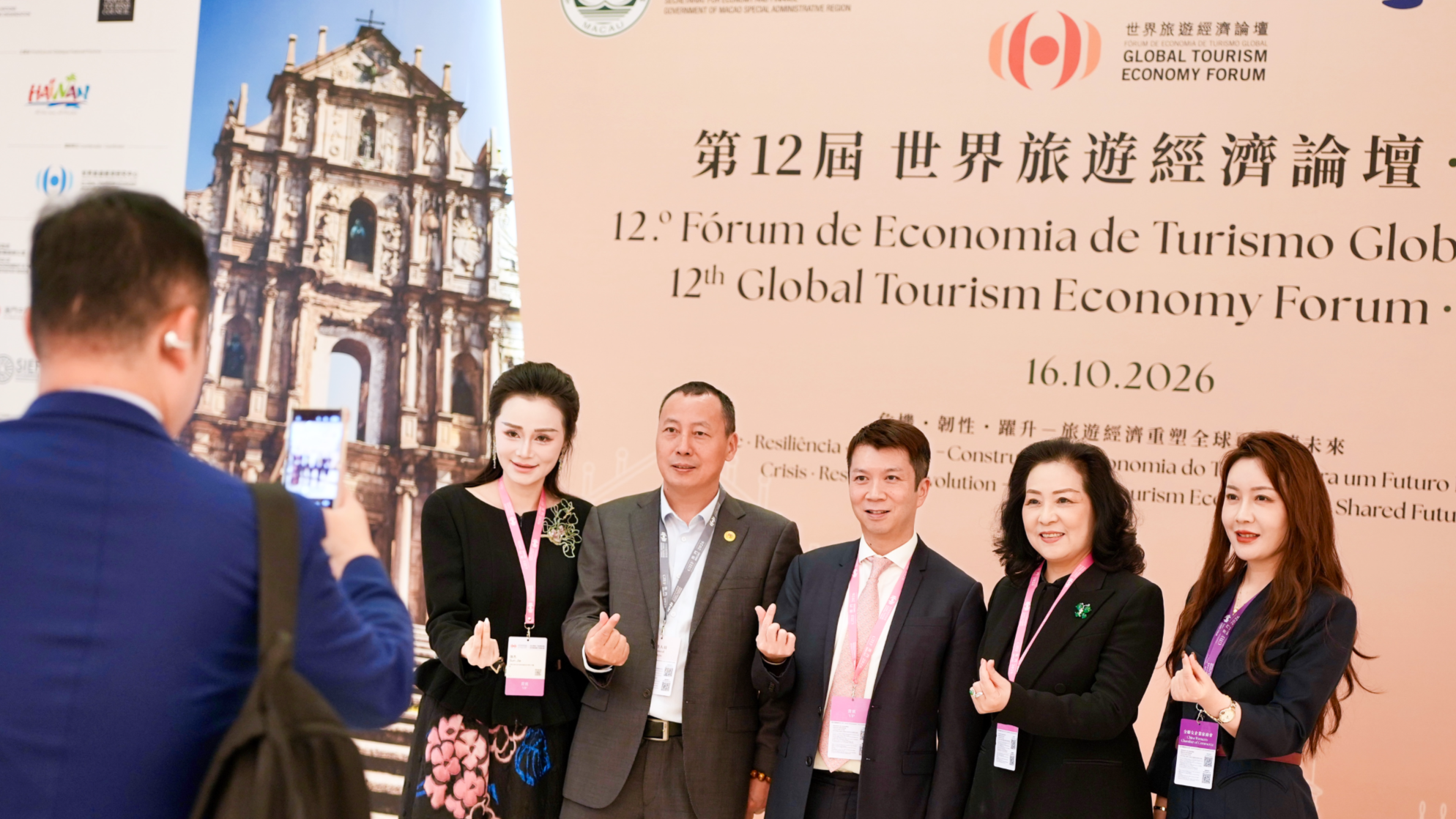
They made their remarks during a fireside-chat session at the Global Tourism Economy Forum, held in Macao.
The session, focused on sports and tourism as a winning combination, drew industry leaders and policymakers from the Chinese mainland, Hong Kong and Macao, and overseas.
Referring to Guizhou’s village-level basketball and soccer leagues, the recently concluded NBA China Games in Macao, and Hong Kong’s multiple mega events, experts discussed how cities can create lasting value beyond sport events or seasons — turning global followings into visitor inflows.
According to figures presented at the session, sports tourism in 2025 made up 10 percent of global travel spending, with revenues growing at a 28 percent compound annual rate since 2020, outpacing the 22 percent growth across tourism overall.
Eric Fok Kai-shan, vice-chairman of the Fok Ying Tung Group and chairman of the Football Association of Hong Kong, China, said last year’s National Games — held jointly by Hong Kong, Macao and Guangdong province — showed that Hong Kong is capable of seizing the global sports travel boom. The advantage is supported by the population size, industrial base, transportation links, and economic scale of the Guangdong-Hong Kong-Macao Greater Bay Area, he added.
He also cited as an example the Hong Kong Football Festival, which brought world-renowned soccer teams to the city last year, and Hong Kong’s first-ever hosting of the FIFA ASEAN Cup tournament. Fok said these events, through affordable tickets, created packed stadiums and created an unprecedented sporting atmosphere while also accelerating local players’ development.
What matters is not just the events themselves, but using them to draw visitors to Hong Kong, deepen the visitors’ understanding of the city, and build a stronger sports community here, he added.
“Build for the community and the fans, and the world will follow,” Fok said.
Wilfred Wong Ying-wai, executive vice-chairman of Sands China, a co-host of the NBA China Games 2026, said the value in strong global sports brand lies in their ability to “create an opportunity for festivities and for the community to gather around it”.
Echoing Fok, Wong stressed the importance of community participation in co-creating a sports tourism ecosystem. Citing the NBA China Games, he said that a week of activities beyond the two matches engaged the community, which, for instance, allowed aspiring young basketball players to meet legends they had long admired.
Wong said that Macao is “ready facilitywise, hospitalitywise and service-standardwise”, as positive feedback from many players confirms, which will also help raise the city’s international profile.
Wen Jiahong, a senior official from Taijiang county, Guizhou province, shared the story behind the local sports leagues — the Village BA and Village Super League — basketball and soccer tournaments, which began as spontaneous village events and later drew nationwide attention on social media.
He said the tournaments were initiated and managed by villages, and the local governments fully respect the rules set by villagers.
While “returning the games to the villages,” authorities must not forget their core duties — safety, logistics and other support, he said.
Riding the matches’ wave, once visitors come, the government’s role is to maintain a favorable business environment and promote Guizhou’s ethnic culture and intangible heritage, Wen said.
Lee Williamson, Asia at Fortune’s editorial director and moderator of the session, said the discussion clearly showed how destinations can create lasting value and long-term visitor flows long after athletes leave. He said he is more certain than ever that sports will continue to have a positive influence on tourism.
Contact the writer at amberwu@chinadailyhk.com
