

Victorious young athletes in Nagoya lead China's new wave of composed, exuberant international competitors
Moments after China's Chen Yuanjiang crossed the finish line first in the men's 110-meter hurdles final at the Aichi-Nagoya Asian Games, he let out a cry that was indicative of the nation's new youthful sporting confidence.
The 20-year-old clocked 13.15 seconds to win gold, then turned toward the stadium stands in Nagoya, Japan, and shouted — "Who is first? China!"
It was an unfiltered burst of emotion on that rainy night — confident, youthful and unmistakably personal.
His scream of joy was an insight into a new generation of Chinese athletes that emerged in Nagoya. They were not only winning medals and breaking records, but also showing a growing confidence on the international stage — composed, exuberant and unafraid to express themselves.
The terms "little brother" and "little sister", affectionate expressions to describe young Chinese athletes, became popular terms on social media during the Games.
READ MORE: China tops Asian Games table for 12th time
Of the 815 athletes on China's delegation, 548 were competing at an Asian Games for the first time, while athletes born in 2005 or later accounted for 27 percent of the delegation.
China finished at the top of the medal table with 169 gold, 89 silver and 83 bronze medals, its biggest gold medal haul at an Asian Games held outside China.
But beyond the numbers, Nagoya showed how these young athletes are learning to compete, win and overcome setbacks with the Los Angeles Olympics less than two years away.
Tough testing ground
For many young athletes, the Asian Games were their first experience of competing under the spotlight at a major international event.
"Before that, they may be known only by their coaches, teammates, opponents and people who follow their sport. At the Asian Games, a much wider audience began to notice them," Yu Siyuan, an assistant professor at the division of sports science and physical education at Tsinghua University, told China Youth Daily.
Unlike single-sport championships, a multisport event gives young athletes a chance not only to test themselves, but also to learn how to handle pressure and experience what it means to represent their country as part of a larger delegation, Yu said.
He cited swimmer Pan Zhanle as an example, saying that from the 2023 Hangzhou Asian Games to the 2024 Paris Summer Olympics and then Nagoya, Pan had shifted from proving himself to delivering consistently under growing expectations about his performances.
However, Yu cautioned against making medals the sole measure of young athletes' success.
"We should not give young athletes the impression that winning is a matter of course or that only a gold medal counts as a passing grade," he said. The hope, he added, is that the stories of the Asian Games will inspire young people to carry their enthusiasm for sport into everyday life.
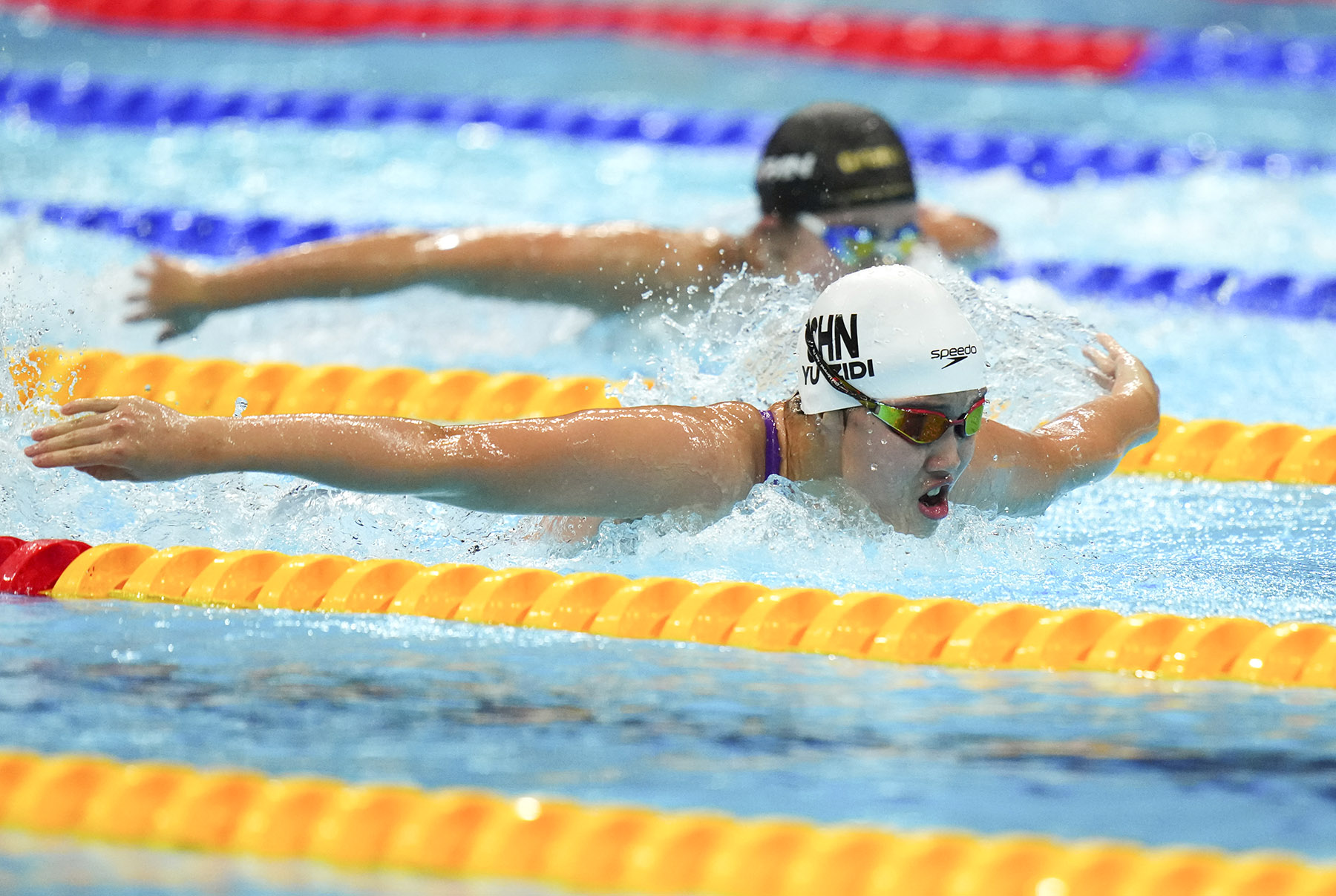
Thirteen-year-old swimmer Yu Zidi became one of the most talked-about young athletes of the Games.
She was named the women's Most Valuable Player of the Asian Games, becoming the youngest MVP in its history after winning three individual gold medals.
"As a young athlete, this honor is an affirmation and, more importantly, an encouragement to young athletes," she said.
She also expressed a wish to work with young athletes from across Asia to encourage more young people to take up swimming.
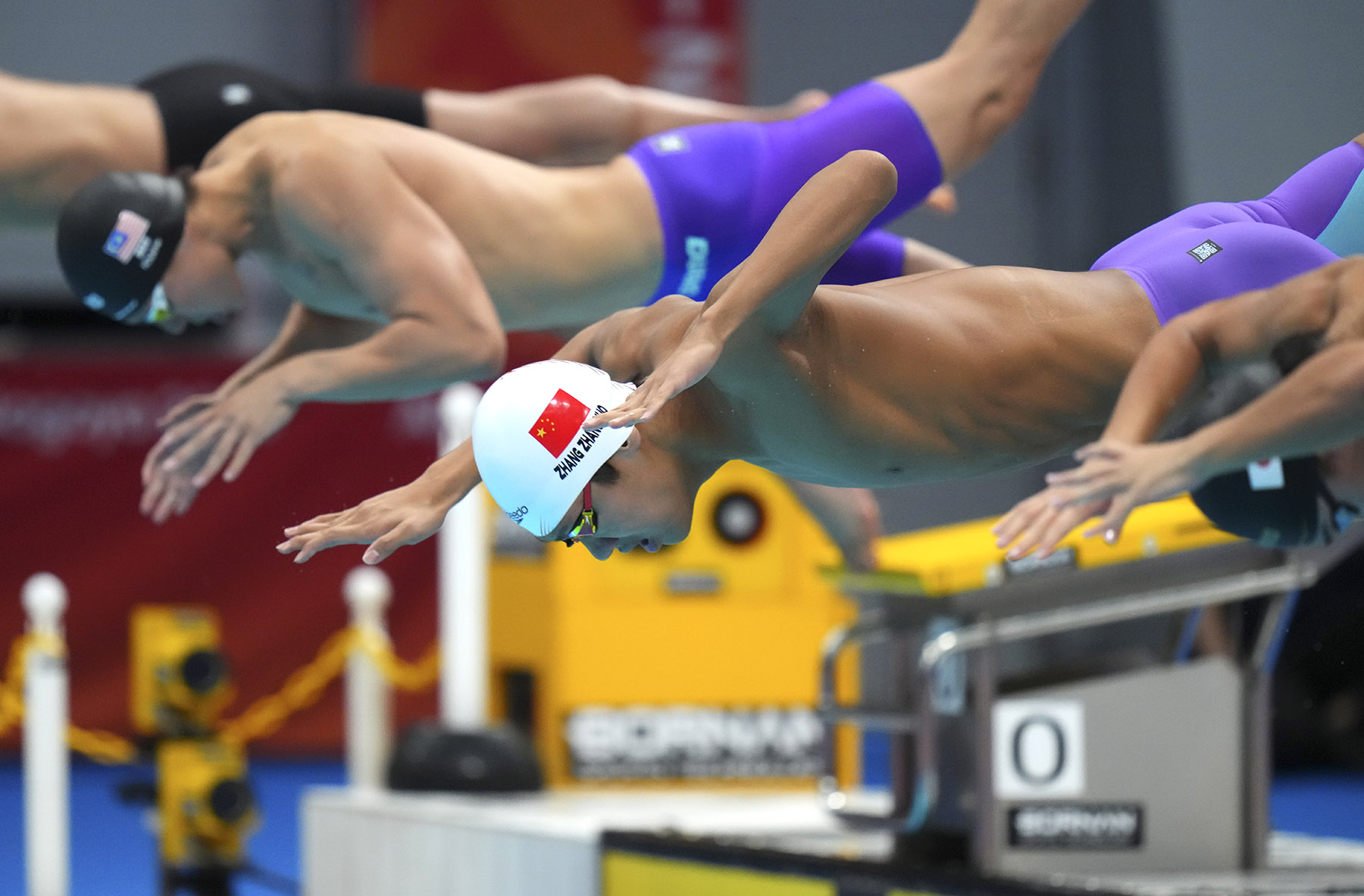
Another Chinese swimmer, 19-year-old Zhang Zhanshuo, produced an even bigger haul.
Zhang won seven gold medals, becoming the first swimmer to win seven golds at a single Asian Games. After his seventh gold, he counted from one to seven with his fingers for the cameras.
Yet, Zhang gave himself 85 out of 100 for his first Asian Games, citing shortcomings in his turns and overall ability. "Once you step down from the podium, everything starts from zero," Zhang said.
His next targets are the 2027 World Aquatics Championships in Budapest and the 2028 Los Angeles Summer Olympics.
Unafraid to be themselves
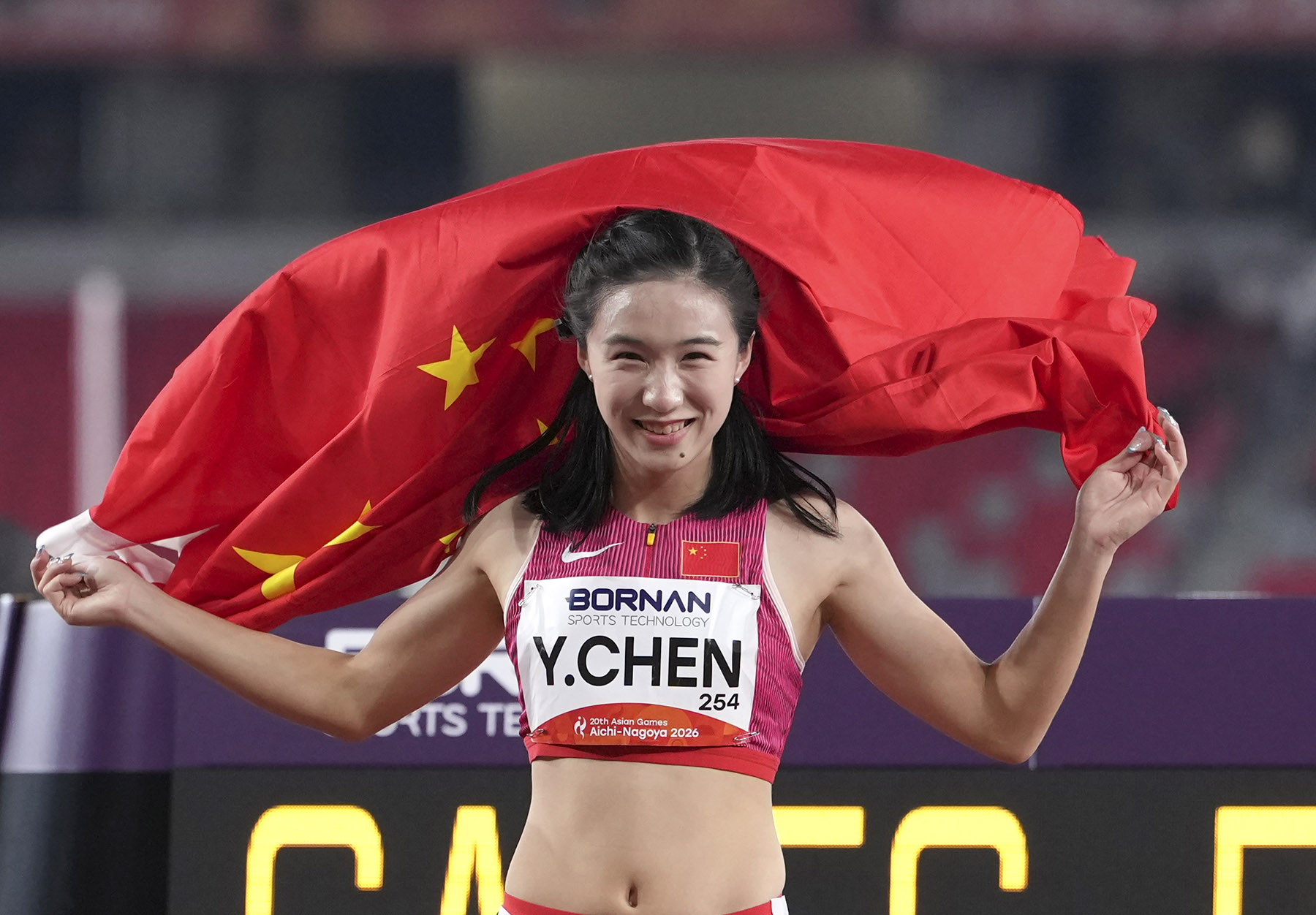
Seventeen-year-old sprinter Chen Yujie was not shy about speaking her mind. After winning the women's 100m in a Games-record 11.06 seconds, Chen wrapped herself in the Chinese flag and shouted toward the camera: "Dad, Mom, I've made it!"
Later, after completing her events, she summed up her first Asian Games in an even more casual way: "Finished! Time to clock off! Three golds and one silver — I'm pretty good!"
Her three golds came in the women's 100m and two relay events.
In the mixed 4x100m relay, Chen ran the anchor leg and received the baton behind the Thai team before accelerating past her rival to help China win in 40.78 seconds — the country's first Asian Games gold in the event.
Her only silver came in the women's 200m, where Singapore's defending champion Shanti Pereira won in 22.78 seconds and Chen finished in 22.93.
"The 100m gold was the best coming-of-age gift I could have given myself before turning 18, while the 200m silver was a lesson for me," she said. "People often say there are mountains beyond mountains and people beyond people.
"I realized I can't just stay in my own little world. I need to step outside my comfort zone and challenge stronger athletes," she said.
"I didn't do my best this time, but I still have the next Asian Games and the one after that," she said, joking that she might follow the example of Xie Zhenye and compete at four or five Asian Games.
Three years ago, Chen was a torchbearer at the Hangzhou Asian Games. In Nagoya, she was both a torchbearer and a champion.
She will soon return to high school as a senior student, catching up on classes and preparing for university. "Senior year does come with some pressure. I have to make up the classes I missed and get into a university I like," she said.
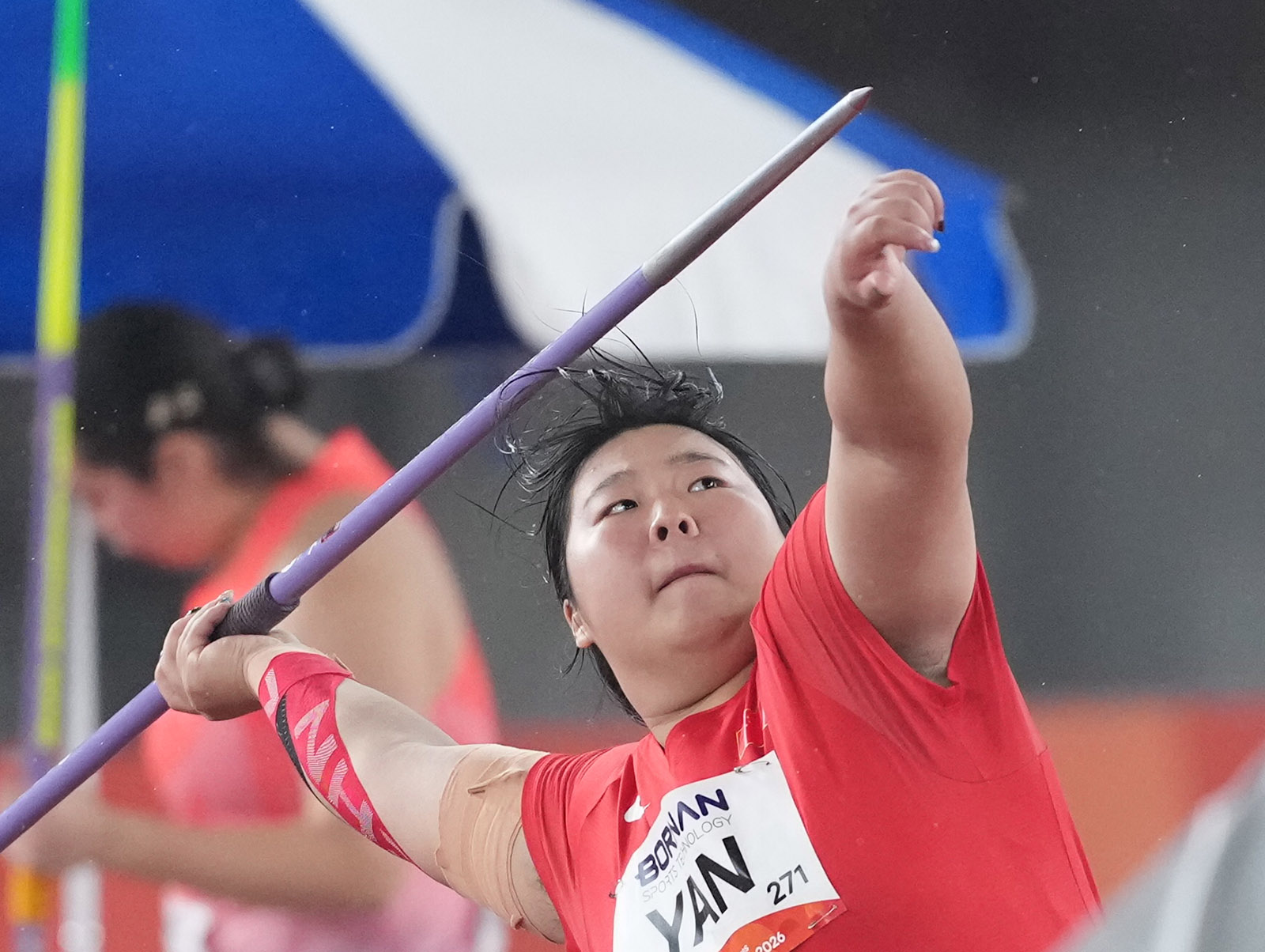
Eighteen-year-old javelin thrower Yan Ziyi opened the women's final with a 70.46m throw, setting an Asian Games record and winning her first major senior title in her first senior season.
Earlier this year, Yan threw 71.74m at the Diamond League meeting in Xiamen, Fujian province, setting an Asian record and a world U20 record. At the time, the mark was the second-best throw in women's javelin history.
Too young to compete at the Paris Olympics in 2024, Yan has quickly moved from the junior ranks into the seniors.
"I can start a new era because I'm young. I still have more time and more opportunities," she said.
Yan already has set herself a goal. "I want to save the chance to break the record for the World Championships in Beijing next year," she said.
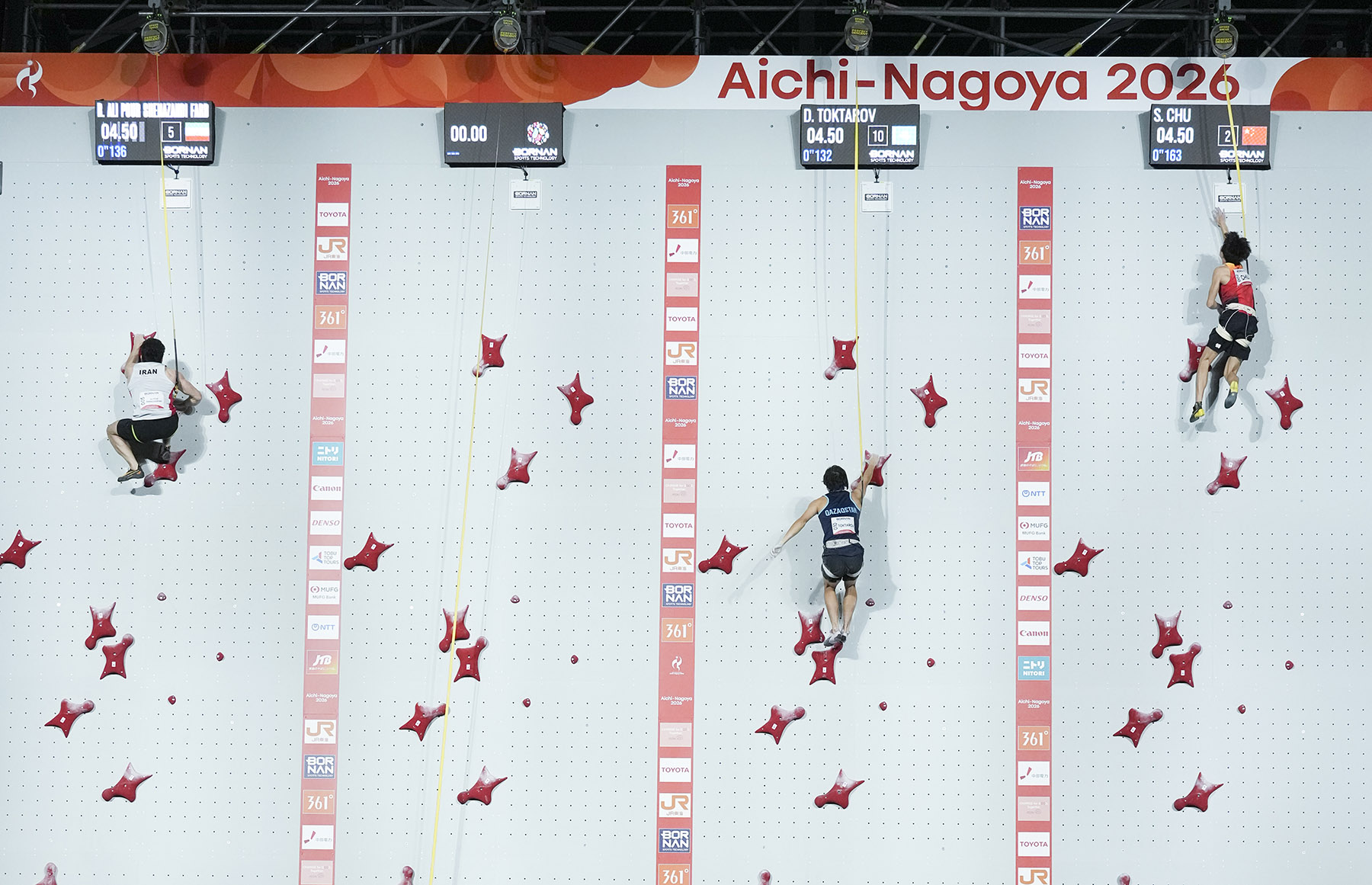
This generational shift was especially visible in the Games' urban sports, where young athletes took center stage. In skateboarding, 15-year-old Zhu Yuanling won gold in the women's street event, while 16-year-old teammate Cui Chenxi took bronze. On the climbing wall, 19-year-old Chu Shouhong made history by winning China's first individual Asian Games gold in men's speed climbing.
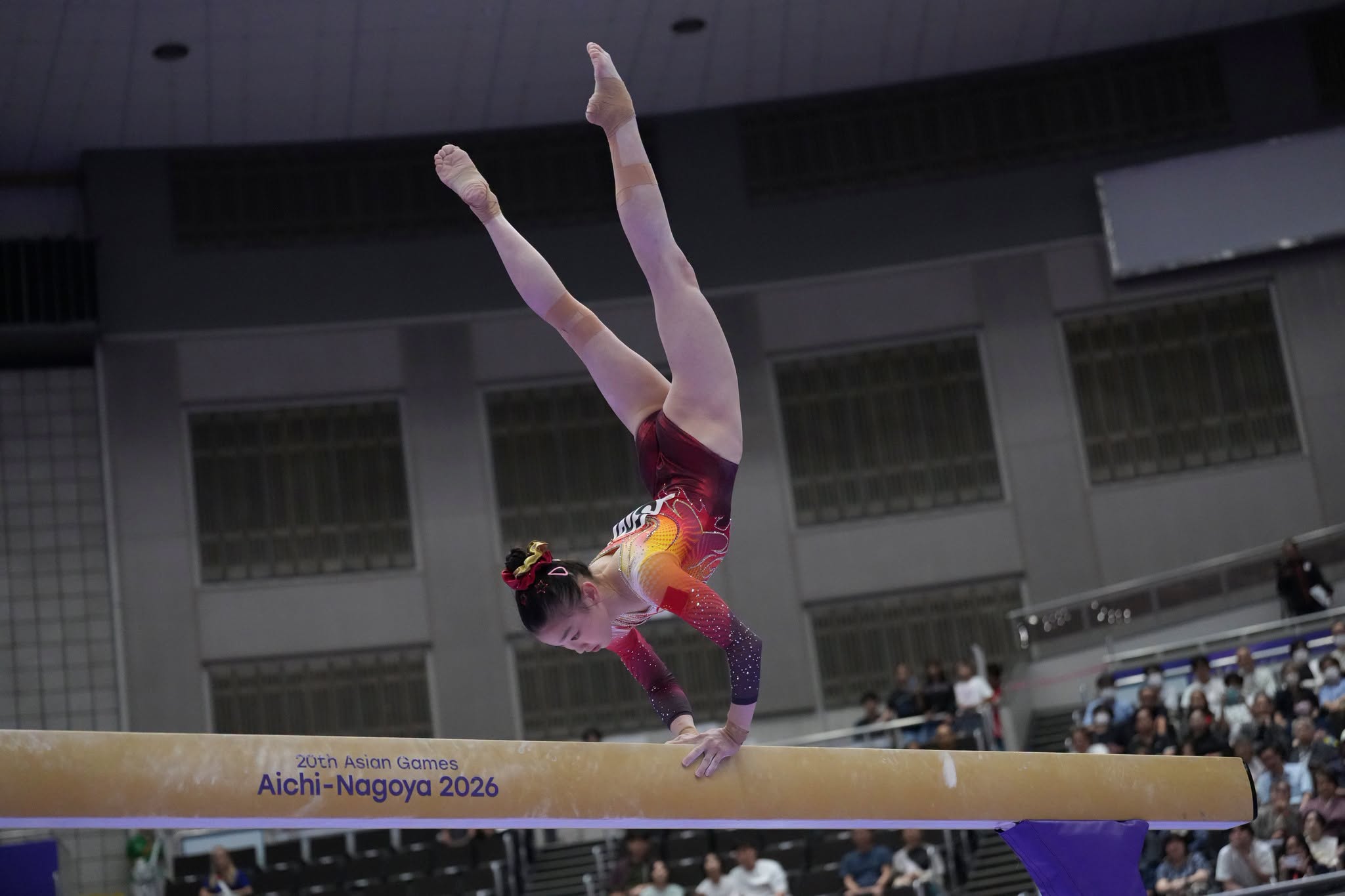
Young athletes also made their mark in traditional disciplines that demand years of technical refinement and composure. Sixteen-year-old Du Yuchen became China's youngest Asian Games shooting champion as part of the women's 10m air rifle team that set a world record, while fellow 16-year-old gymnast Ke Qinqin helped China win the women's team title and added an individual all-around silver.
Young team, new hope
In team sports, the young athletes had to learn not only how to win individually, but how to work together and share responsibility.
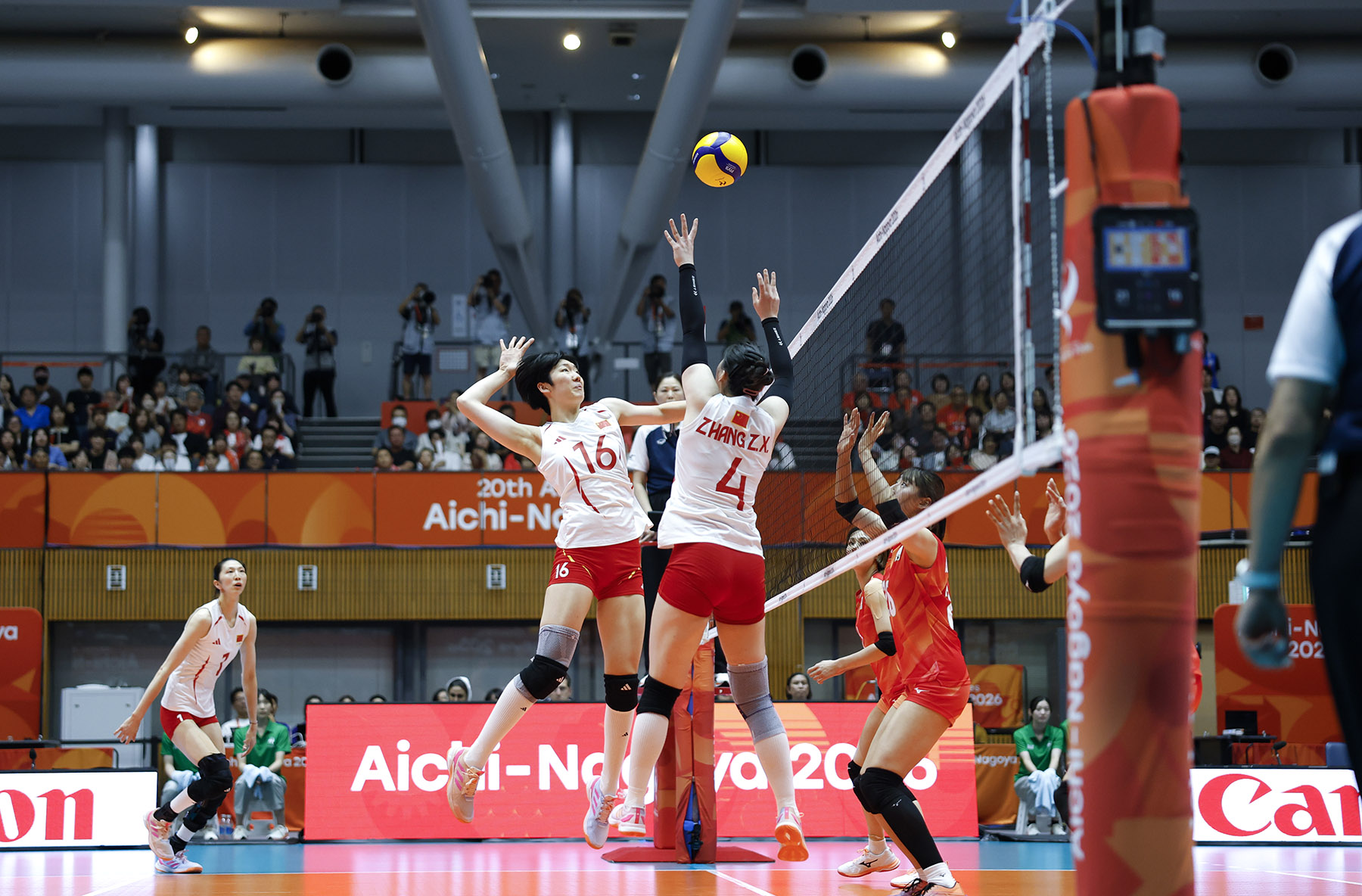
The Chinese women's volleyball team arrived in Nagoya in a period of transition.
Less than a month before the Asian Games, China lost to Thailand in the final of the Asian Volleyball Championship and missed the chance to secure direct qualification for the Los Angeles Olympics.
In Nagoya, China defeated Thailand in a five-set semifinal before beating Japan 3-0 in the final, winning its 10th Asian Games women's volleyball title and third in a row.
The team's average age was under 22, with veterans Gong Xiangyu, 29, and Wang Mengjie, 30, still playing important roles.
Among the younger players, 18-year-old Wang Aoqian stepped into a major role. Starting against Thailand in the semifinal, she converted 14 of 23 attacks and added two blocks and an ace for 17 points.
"This Asian Games gold is very important for our team. It boosted our confidence and gave us the belief that we can aim for a higher stage," Wang said.
"Young people should have more fighting spirit and show the vitality and energy that young people should have," she added.
That same combination of youth and belief was on display in men's football — a program that has historically faced heavy public scrutiny and intense pressure.
China's U23 team finished top of its group after one win and two draws, then beat Thailand 3-0 in the quarterfinals. It led South Korea in the semifinal before losing 2-1.
ALSO READ: China spots an opportunity
In the bronze-medal match against Uzbekistan, China twice took the lead and twice conceded an equalizer before winning 4-3 on penalties — securing China's first Asian Games men's football medal in 28 years.
Goalkeeper Li Hao was central to the achievement.
The 22-year-old started all six matches and kept three clean sheets. Before the penalty shootout against Uzbekistan, he had written a full page of notes on his opponents' penalty-taking habits and taped it to his water bottle.
The opposing goalkeeper threw the bottle into the stands, but Li was undaunted.
Before the shootout, he told his teammates: "You guys just take your penalties. We're definitely going to win." He then saved two penalties.
His calm smile as he faced the penalty-takers and his celebration after the victory quickly spread across Chinese social media. But Li was not entirely satisfied with his own performance.
China had conceded two goals in the bronze medal match, while in the semifinal against South Korea, a corner kick ended with his save hitting the post and rebounding into the goal.
"I just feel I need more training and more effort to make up for those regrets," he said.
After the medal ceremony, Li wore the jersey of teammate Li Zhenquan for a team photo. Li Zhenquan had suffered an injury before the Games and was unable to play, but his teammates made sure he was part of the celebration.
It was a snapshot of this young team — united, passionate and hardworking.
For the U23 side, their Asian Games mission is complete, and the players' professional careers are only beginning.
Some may be part of China's next World Cup campaign. Others will chase Olympic medals, world titles or records in their own sports.
What Nagoya showed was not simply how much this generation can achieve, but how it is learning to handle the attention, pressure and expectations that come with competing on a bigger stage.
The road to Los Angeles — and beyond — has only just begun.
Contact the writers at liyingxue@chinadaily.com.cn
