

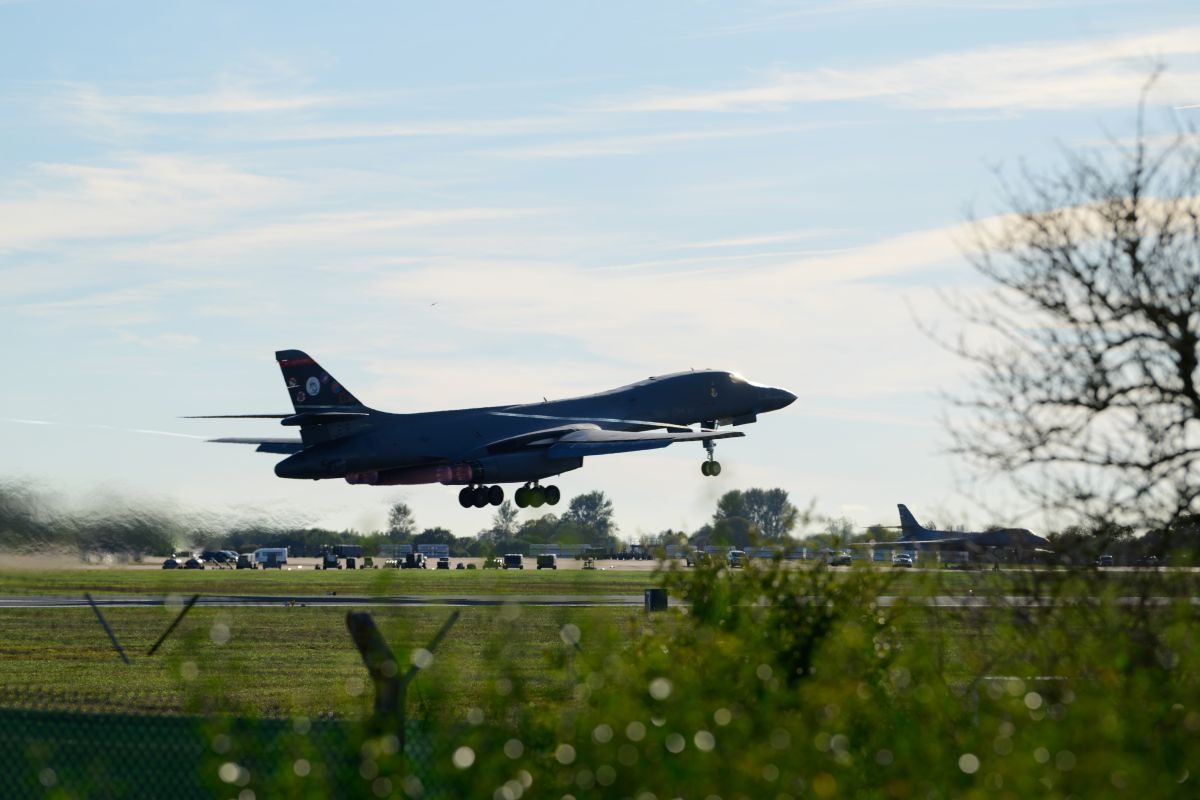
US President Donald Trump has said fresh threats of terror attacks prompted the US to move its B-1 bombers from their base in the UK, contradicting his top diplomat who had earlier described the move as part of a regular rotation.
“They didn’t fly out by accident,” Trump told reporters on Monday. “There were some threats, and rather than tempting the enemy, we’ll capture the enemy and beat the enemy. But why should leave them there? So we moved them around a little bit, not very far.”
The bombers were moved from the RAF base in Fairford, UK, to their home bases in the Midwest of the US after an alleged plot was uncovered late last month.
Earlier Monday, Secretary of State Marco Rubio, who is also Trump’s national security adviser, dismissed the movement of the planes as a routine rotation.
“It’s not unusual to see rotations happen and movement events with different parts of the world based on exercises, redeployment, people changing out, and new people coming in, new planes coming in, old planes going out. So crews are changing all the time,” he said.
RELATED ARTICLES
- Report: All B-1 bombers returning to US from British base
- UK defends Chagos deal after Trump's ‘great stupidity’ accusation
Just last week, the Pentagon had extended the B-1 rotation at Fairford until January, according to a person familiar with the matter. The Defense Department did not immediately return a message seeking comment.
The communication between the US and the UK about why the bombers were withdrawn was limited and left some senior UK officials confused about the rapid redeployment, another person familiar with the situation at the base said.
Five men were arrested on Sept 27 on suspicion of preparing a terrorist act at Fairford, in Gloucestershire, in an incident that investigators are considering a serious attempted attack. All five suspects were UK nationals, Counter Terrorism Policing said and were released on bail after no explosives were found in their vehicle, an act Trump criticized.
Last week, the Pentagon deployed an additional aircraft carrier and 10,000 sailors and Marines to the Persian Gulf, according to a US official. That move sparked fears of a potential renewal of strikes in the Middle East, with Trump saying military strikes against Iran were “possible” after the November midterm elections.
Trump’s top national security advisers, including Vance, Rubio and Defense Secretary Pete Hegseth as well as top military and intelligence officials, met at Camp David over the weekend. Rubio told reporters it wasn’t unusual, but it came at a time when the US is planning its next steps in its war with Iran, which has closed the Strait of Hormuz and sent energy prices soaring.
“We constantly are meeting for long-term strategic planning and things of this nature,” Rubio said. “So I wouldn’t call it routine because the topics being discussed are global by nature, but they are long-term in thinking.”
The bombers could still fly from the US if needed for operations in the Middle East, the officials said, pointing to the June 2025 bombing of Iranian nuclear facilities where bombers left the US.
The decision to repatriate the US bombers follows an administration decision this summer to reduce the military assets committed to NATO in the event of a crisis. The Pentagon is also weighing significant reductions to the number of US troops permanently stationed in Europe.
Throughout the US and Israeli war against Tehran, Iranian attacks on US bases in the Middle East have killed and wounded troops, destroyed aircraft and equipment, and damaged facilities, prompting questions about the long-term viability of US basing in the region. European bases have been viewed as safer locations from which to launch US operations in the Middle East and elsewhere.
Vice President JD Vance echoed Trump, telling reporters that the aircraft were moved “out of an abundance of caution, trying to protect our guys.” There was “some confidence,” he said, that Iran intends to “engage in acts of terrorism against the United States and against a lot of other people as well,” the vice president said.
Rubio said that US bases around the world “theoretically, could be threatened at any moment, and that’s why there’s so much security built around them,” while he expressed confidence in the security of the US presence at RAF Fairford.
“It’s not unusual to see rotations happen and movement of assets to different parts of the world based on exercises, redeployments, people changing out and new people coming in, new planes coming in, old planes going out,” the secretary told reporters before departing on international travel. “So crews are changing all the time.”
