

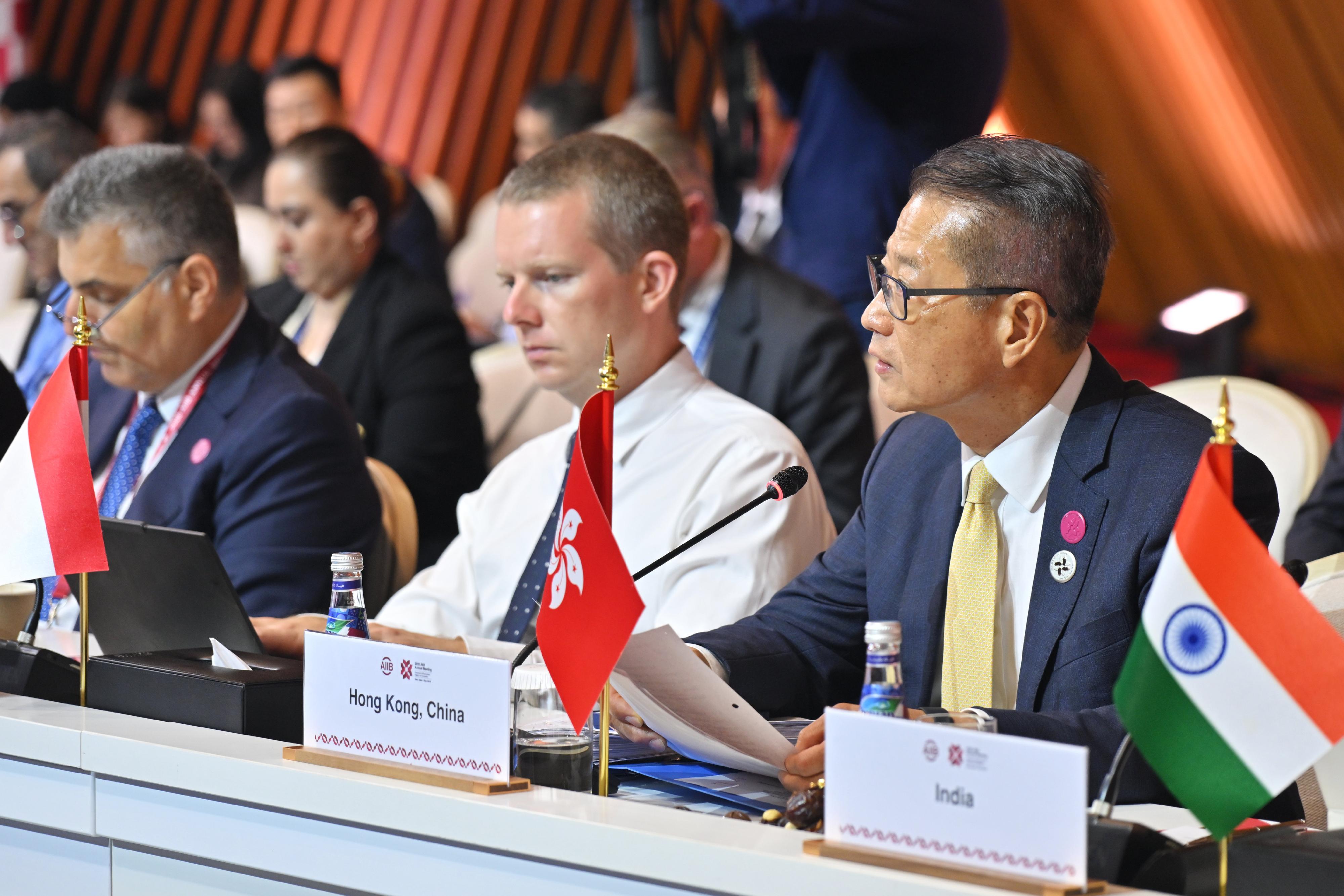
Hong Kong will review its laws to check if they already adequately address liabilities for harm caused by artificial intelligence, as the city promotes its use while strengthening AI risk governance, Financial Secretary Paul Chan Mo-po said on Monday.
Speaking at a seminar during the 2026 Asian Infrastructure Investment Bank (AIIB) Annual Meeting in Doha, Qatar, Chan said the special administrative region will strengthen cybersecurity, safeguard data privacy and improve AI risk governance so that the public and businesses can adopt new technologies with confidence and share in the benefits of the digital economy.
“We will also review whether the existing law already adequately addresses liabilities for harm caused by AI. Innovation does need room to develop, but those affected must have clarity about responsibility and redress,” he said.
Hong Kong’s first five-year-plan and the 2026 Policy Address – both delivered on Sept 16 – set out the special administrative region’s AI risk-governance strategy, he said, adding that safeguards must be built into how AI is procured, tested, used and monitored.
ALSO READ: Chan discusses deepening economic, financial ties with Qatar
“We will work with stakeholders and professionals on sector-specific guidance and governance frameworks. Safeguards should cater to risks associated with each application rather than in the form of a universal requirement for all.”
“Our vision is clear: guardrails must be in place to give people confidence to embrace innovation. In this way, we can move ahead earlier and faster,” added Chan.
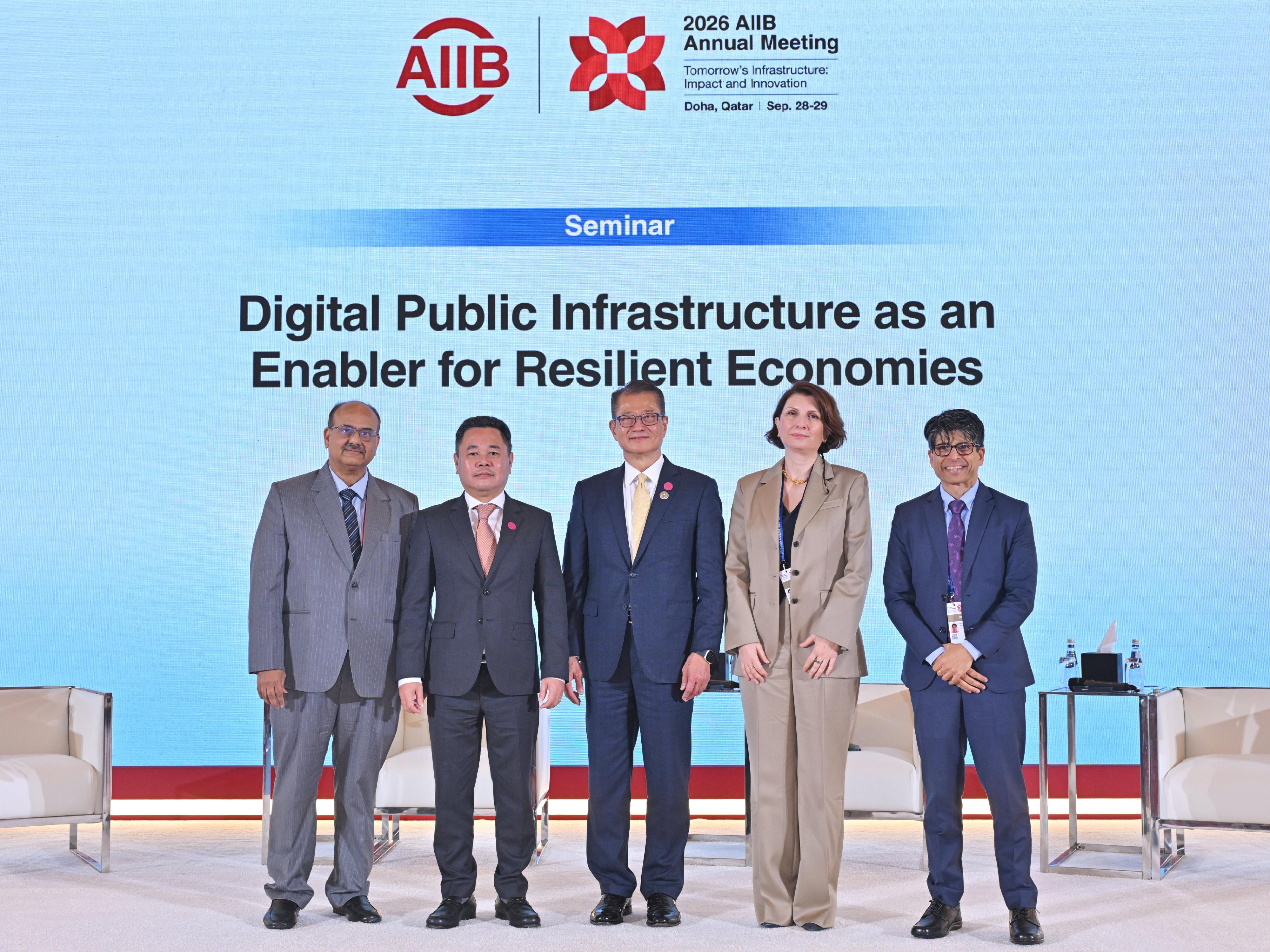
Hong Kong is promoting the application of AI in public services and across different sectors of its economy, while supporting innovation by strengthening computing power, data and digital infrastructure, and enhancing AI literacy across the community, he said.
“Realizing AI's potential across the economy requires strong foundational support, including computing capacity and reliable electricity. At Sandy Ridge in the Northern Metropolis, we are developing a major data facility cluster in an energy-efficiency and lower-carbon manner,” said the finance chief.
ALSO READ: HK fast-tracks Sandy Ridge AI computing hub to mid-2027
“To make these resources accessible and affordable, we have rolled out a $500 million Artificial Intelligence Subsidy Scheme for eligible research institutions, start-ups and business enterprises.”
In his speech, Chan also shared Hong Kong’s experience in how its digital infrastructure has made public and private services more connected and accessible while enhancing business efficiency.
He said the city’s "iAM Smart" mobile digital identity platform has allowed residents to avail of various services, from tax filing to accessing health records, reducing paper work and repeated verifications.
“Our Faster Payment System, or FPS, connects banks and e-wallets for instant transfers around the clock. By the end of last year, the average daily value of transactions done through FPS reached $2 billion,” Chan said, adding that e-wallets in Hong Kong have surged by nearly 50 percent since 2022 to over 90 million accounts.
He said small and medium-sized enterprises that may have sound trading records but insufficient collateral for a bank loan have also benefited from the Hong Kong Monetary Authority's Commercial Data Interchange (CDI), which securely connects banks with commercial data providers.
READ MORE: AI-driven electronics boom seen to keep powering HK trade
“With clients' prior consent, banks can use such data to assess creditworthiness. By June this year, over 100,000 loan applications with an aggregate value of over $11 billion had been concluded by using CDI,” he said.
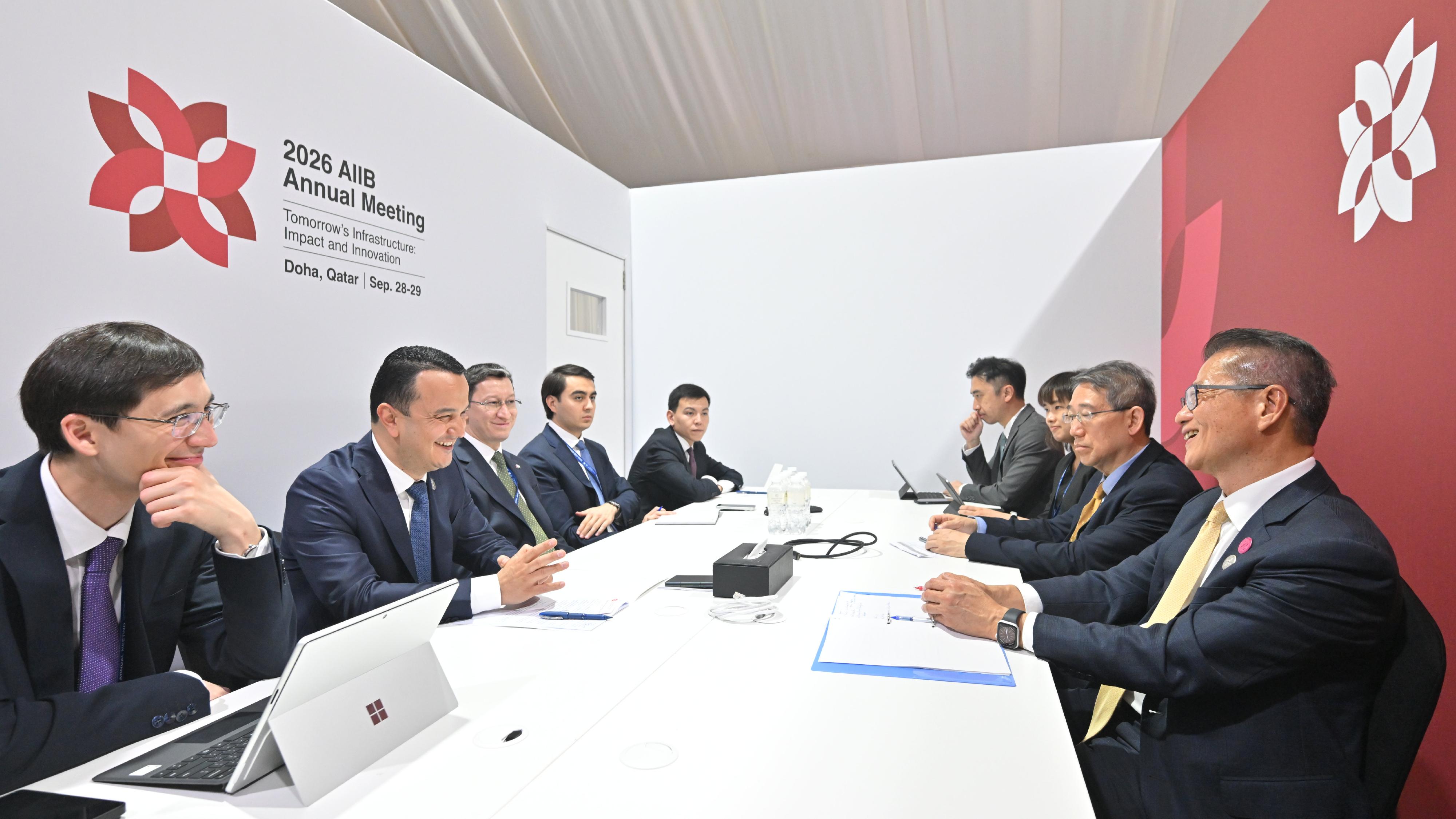
During the AIIB annual meeting, Chan met with Uzbekistan's Minister of Investment, Industry and Trade, Laziz Kudratov, to exchange views on strengthening cooperation between the two places in areas including trade, investment, finance and infrastructure development.
He also met with Abdulrahman Hesham Al-Sowaidi, CEO of Qatar Development Bank, and Danny Alexander, HSBC's chief executive officer of infrastructure finance and sustainability, before flying back to Hong Kong on Monday night.
