

On 95th anniversary of Sept 18 Incident, Tokyo should pledge to maintain peace in Asia
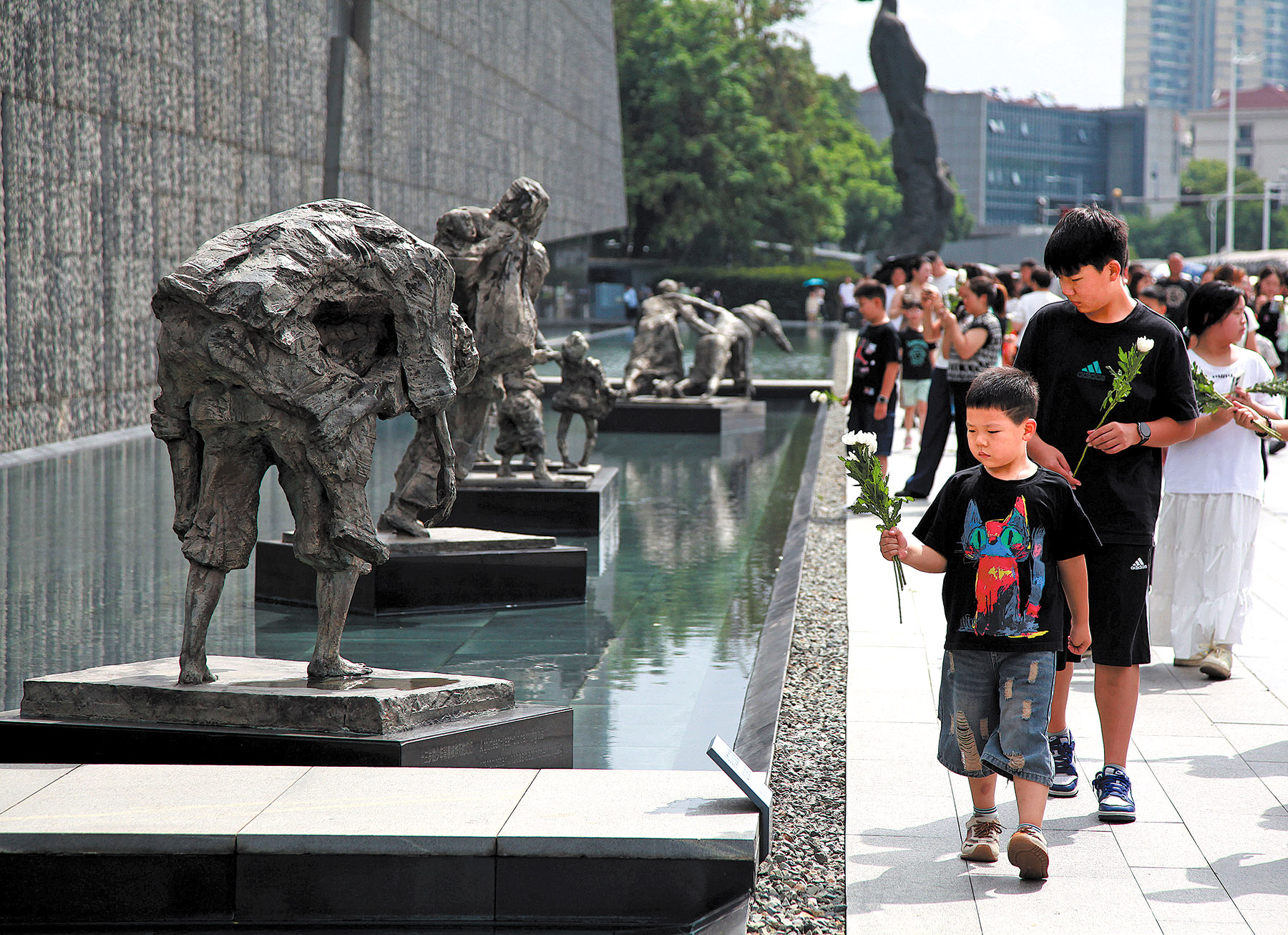
This year marks the 80th anniversary of the International Military Tribunal for the Far East, or the Tokyo Trials, as well as the 95th anniversary of the September 18 Incident.
The incident marked the beginning of the Chinese People’s War of Resistance Against Japanese Aggression (1931-1945) and opened the prelude to the World Anti-Fascist War, in which China served as the main theater in the East.
Analyzing the historical implications of the September 18 Incident remains essential, as it represents the critical turning point that initiated a large-scale military conflict, ultimately engulfing both nations and the broader Asian region.
To fully understand these implications, it is necessary to examine the historical background of the September 18 Incident of 1931.
In the suburbs of Shenyang, located in present-day Liaoning province, Northeast China, the Japanese Kwantung Army detonated explosives on a section of the South Manchuria Railway and subsequently attributed the sabotage to Chinese forces under the command of Zhang Xueliang.
Utilizing this manufactured pretext, the Kwantung Army launched unilateral, large-scale military operations across northeastern China.
This flagrant violation of international law accelerated the trajectory toward World War II, resulting in massive casualties globally and widespread devastation across Asian nations.
The establishment of the “Manchukuo” puppet regime in 1932, engineered by the Kwantung Army, stands as a prominent historical example of a government failing to maintain civilian control over its military branches.
Following Japan’s defeat, Tokyo embarked on a fundamentally different trajectory with the promulgation of the 1946 Constitution of Japan.
As a reformed state, Japan explicitly enshrined renunciation of war and nonpossession of war potential, within the legal document.
Specifically, the Constitution’s Chapter II, Article 9 stipulates the following: “Aspiring sincerely to an international peace based on justice and order, the Japanese people forever renounce war as a sovereign right of the nation and the threat or use of force as means of settling international disputes.”
“In order to accomplish the aim of the preceding paragraph, land, sea and air forces, as well as other war potential, will never be maintained. The right of belligerency of the state will not be recognized.”
This constitutional framework reflects an institutional response to the consequences of unchecked, unilateral military actions operating beyond civilian oversight — a trajectory that began with the September 18 Incident and culminated in total war in East Asia.
Furthermore, this legacy underscores the inherent structural risks of an overly dominant military apparatus. Prewar history demonstrates the dangers that arise when the military operates outside of civilian oversight and manipulates public discourse to advance an aggressive agenda.
In response to these historical failures, postwar Japan institutionalized the principle of civilian control and enshrined the renunciation of war within the Constitution.
In contemporary society, these historical lessons remain vital to institutional design and public consciousness. The maintenance of stable, cooperative diplomatic ties across the region is recognized as a significant achievement of the postwar era.
There is a broad consensus on continuing the path of Japan as a peaceful state, upholding the lessons derived from the events of 1931.
To this end, maintaining constructive relations with China and with neighboring Asian nations remains a critical priority for regional stability.
History indicates that enduring diplomatic, economic and cultural ties among neighbors are essential for guiding regional dynamics toward lasting peace and constructive engagement.
On this 95th anniversary of the September 18 Incident, Japan should take this opportunity to pledge its continued commitment to maintaining peace in Asia.
The author is president of the Japanese Political and Legal Studies Association and professor of international relations and political science at Hosei University in Japan.
The views do not necessarily reflect those of China Daily.
