

A span of 81 years ought to be long enough for a country to mend its ways. It should be long enough for some Japanese politicians to have learned the lessons of the past. It is not yet long enough to heal the wounds of those once victimized by Japanese militarism in history.
The most important question is therefore not whether the "enemy state" references in the UN Charter are elegant remnants of another era. It is whether the behavior that made such safeguards necessary has definitively disappeared.
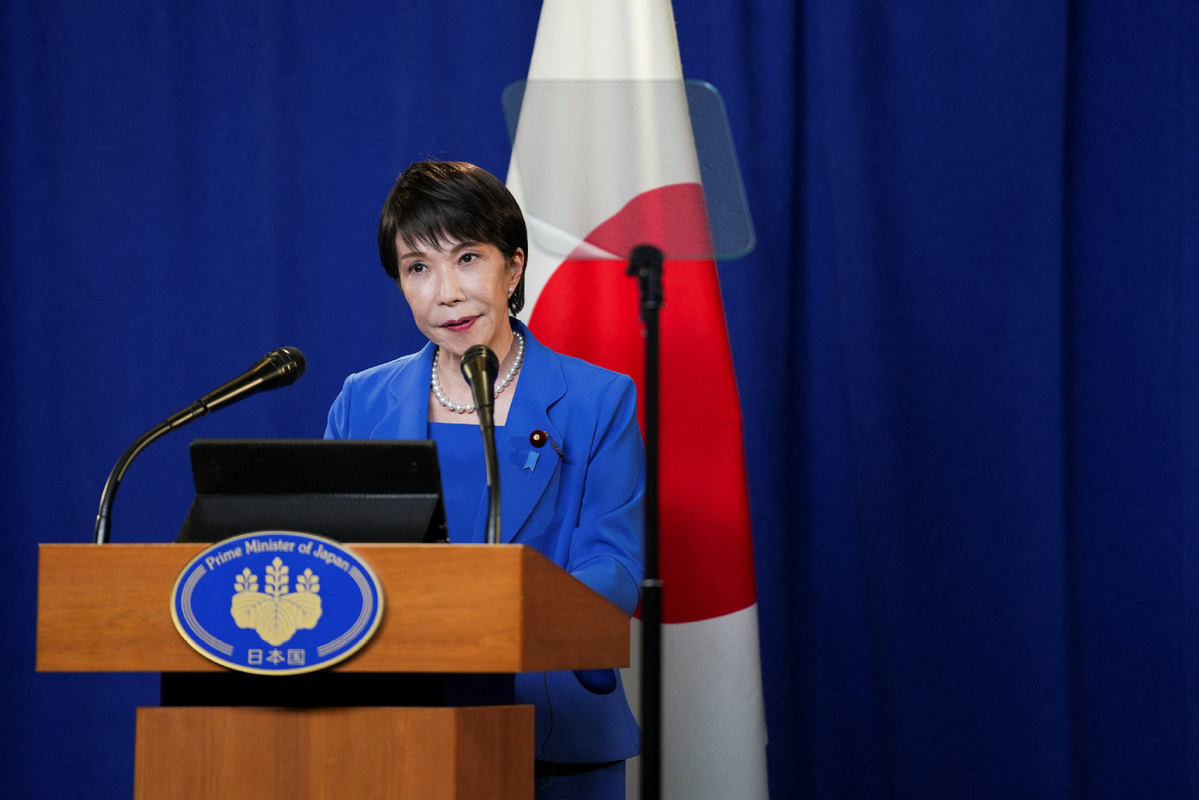
A speech by Japanese Prime Minister Sanae Takaichi has put that question back on the international agenda. Japan was admitted to the United Nations after acknowledging its militarist crimes and accepting the UN Charter in its entirety, including the "enemy state" references. These were designed as special safeguards concerning the defeated states in the World Anti-Fascist War, intended to prevent them from again threatening international peace and security.
The UN General Assembly is supposed to be a place where governments debate how to make an unstable world safer. Yet Takaichi, chose the general debate of the General Assembly's 81st session that started on Tuesday, as the moment to demand the removal of the "enemy state" references from the Charter.
READ MORE: Okinawa vote paves way for arms buildup
Takaichi cited the 2005 World Summit Outcome, which proposed to delete references to "enemy state" in the UN Charter, to justify her call to remove the clauses. But she conveniently skipped an important detail. The resolution was only a UN General Assembly outcome adopted without a vote. And if you read the document closely, Takaichi's selectivity is clear. Her proposed removal of the references was subject to explicit preconditions: "Taking into account General Assembly resolution 50/52 and recalling the related discussions conducted in the General Assembly, bearing in mind the profound cause for the founding of the United Nations and looking to our common future".
Resolution 50/52, the discussions, the "profound cause" and the "common future" all point in the same direction: Japan and other defeated states must sincerely repent their aggression and pose no threat to international peace and security.
Takaichi airbrushed those conditions out. Yet her government's actions call into question whether the references are indeed anachronistic or pertinent today. In April, her government scrapped longstanding restrictions that had limited arms exports to five nonlethal categories, opening the way for exports of lethal systems.
The Takaichi government is also revising the country's security strategy, while openly expressing readiness to change its Three Non-Nuclear Principles. Japan's military establishment is simultaneously developing capabilities across space, cyber, artificial intelligence and cognitive-warfare domains.
Japan's right-wing forces are all but rerunning the country's old militarists' playbook: external "threats" are fabricated and amplified, military power becomes the preferred language of deterrence, constitutional restraints are portrayed as obsolete, lofty rhetoric about "freedom", "order" and "peace" has become a fig leaf for an arms buildup.
That is why the comparison with 1945 should not be dismissed merely because 81 years have passed. The references to "enemy state" in the Charter are provisions aimed at the defeated Axis states in the World Anti-Fascist War, permitting regional enforcement action against such states without prior Security Council authorization, allowing UN trusteeship over territories detached from them, and preserving the legality of Allied wartime and postwar measures against them.
The legal hurdle to remove the references to "enemy state" is high. Article 108 requires a Charter amendment to win a two-thirds vote in the UN General Assembly and then be ratified by two-thirds of the UN members, including all five permanent members of the UN Security Council. In other words, invoking a nonbinding outcome document in 2005 as if it were an instruction to delete the references is less a legal argument than a political performance.
Takaichi's performance is revealing because Tokyo knows perfectly well how difficult the amendment process is. The question, then, is not why Takaichi believes the references should disappear. It is why a Japanese government has become so eager to make their removal a conspicuous diplomatic cause.
As China's Foreign Ministry spokesperson Guo Jiakun said, the references to "enemy state" were designed as special safeguards concerning defeated states, intended to prevent them from repeating their historical errors.
ALSO READ: Words ring hollow till Tokyo mends its ways
This is where Takaichi's appeal becomes more consequential than a dispute over what she attempts to describe as "obsolete wording". If the references were merely something outdated, Tokyo would have little reason to devote a prime ministerial address at the UN to their removal. Their political sensitivity derives from what they represent: the post-1945 judgment still holds water because Japan has to be constrained by an international system designed to prevent its return to aggression.
If Japan wants the world to regard the references to "enemy state" as "dead letters", the most persuasive evidence would not be a brazen demand for their deletion. It would be sustained evidence that the actions associated with Japan's militarist past will not be repeated. Takaichi's speech has, if anything, only hardened a consensus among peace-loving countries: the references to "enemy state" should not merely remain on the books; they should be enforced with greater resolve and thoroughness.
