

The Guangdong-Hong Kong-Macao Greater Bay Area is gearing up for a hectic Mid-Autumn Festival and National Day holiday that could stretch into a super-long break with rising travel demand, increasing cross-boundary flows and intensifying incentives to stimulate spending.
By taking three days off this year, mainland employees can extend the three-day Mid-Autumn Festival holiday and the National Day golden week into a 13-day break from Sept 25 to Oct 7, providing a strong boost to the tourism and consumption markets.
To capitalize on this opportunity, Guangdong province has increased the amount of consumer subsidies covering these two holidays from 20 million yuan ($2.98 million) to 30 million yuan this year.
The campaign, which runs from Sept 11 to Oct 31, offers discounts of up to 500 yuan per transaction and is open to residents and visitors from China and overseas. The subsidies cover hotels, scenic spots, tour packages and emerging products such as cruise trips, family tours and wellness travel.
ALSO READ: HK to celebrate National Day with free rides, airfare discounts, deals
Cities are adding their own incentives and experiences. Guangzhou will launch more than 2,000 themed promotional activities during the holiday period. The provincial capital and nearby Foshan will separately add two flagship shopping malls around the holiday period.
The demand for travel is already reflected in the bookings. Guangdong’s hotel bookings for the two holiday periods have risen by nearly 80 percent year-on-year, according to travel platform Fliggy. While Guangzhou, Shenzhen and Zhuhai remain the province’s most popular destinations, bookings in Foshan have doubled, with Zhongshan and Shantou also recording rapid growth, showing that holiday travel demand is spreading to more cities across the province.
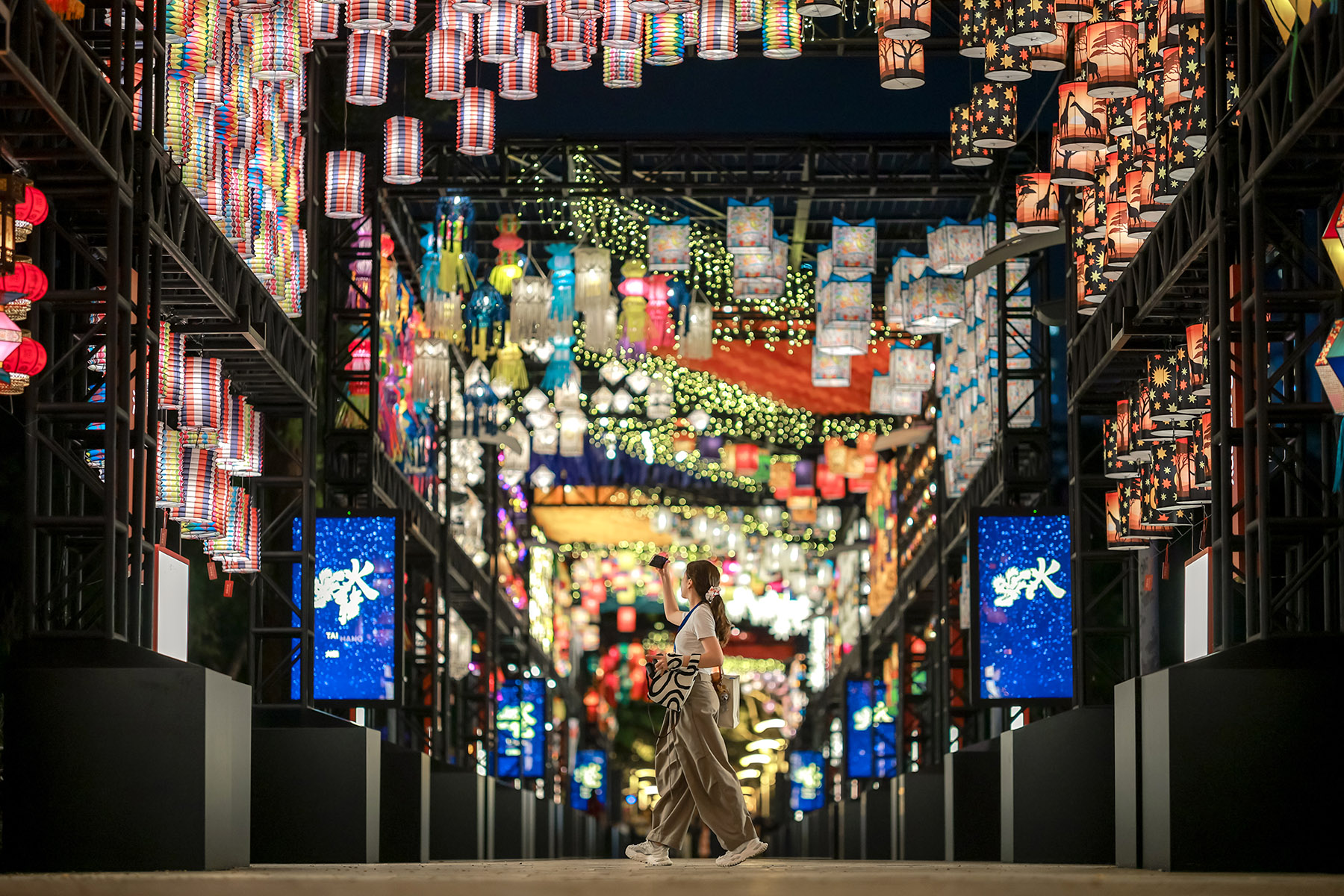
Across the boundary, Hong Kong is combining festive traditions with tourism and consumption promotions. The city’s first International Lantern Spectacular at Victoria Park features more than 3,000 lanterns from 20 countries and regions. On National Day, more than 2,000 restaurants and merchants will offer dining promotions, while shopping malls, department stores and other venues will roll out a range of consumption offers.
The expected increase in cross-boundary travel is likely to further stimulate the consumption market. The Luohu, Shenzhen Bay, and Futian border crossings between Shenzhen and Hong Kong are forecast to handle an average of about 263,000, 212,000 and 191,000 passenger trips a day, respectively, during the Mid-Autumn Festival holiday, while the Gongbei Port connecting Zhuhai and Macao is expected to see nearly 383,000 daily trips in this period.
ALSO READ: Railway travel demand in China spikes, nearly 100m tickets sold
Beyond the holiday period, the push to support consumer spending will continue. Macao will launch a 10-week community consumption campaign from Oct 9 to Dec 17, offering about 468 million patacas ($58 million) in incentives, with a focus on directing spending toward local small and medium-sized enterprises during the traditional tourism off-season.
Guan Jian, director of communications at Guangzhou-based GZL International Travel Service, told China Daily that this year, the Mid-Autumn Festival and National Day holidays are close together but do not overlap, which will significantly boost two-way travel between the Greater Bay Area and other regions — particularly long-distance travel.
Compared with previous years, tourists planned to start traveling earlier, and more people are expected to take a second trip during the vacation. The off-peak window between the Mid-Autumn Festival and National Day has boosted the market for local travel within the Greater Bay Area.
Due to factors such as frequent typhoons, the region’s cultural and tourism market performed relatively weakly this summer, which will to some extent unleash and boost tourism demand in the early fall, he said.
READ MORE: National Day fireworks to deliver positive spirits across HK
This year, Guan clearly noticed that the Greater Bay Area has increased its investment in cultural and tourism sector, stepped up financial subsidies, and expanded the range of themed events on offer.
Driven by the viral popularity of dialect film Dear You, the nearby Chaoshan region, which comprises the cities of Shantou, Chaozhou and Jieyang in eastern Guangdong province, is expected to see a sharp surge in tourism interest during the two holiday periods.
Guan cautioned that given the region’s relatively weak tourism infrastructure and scarce hotel resources, it’s better for those who prioritize travel experience to consider other Guangdong cities such as Zhongshan, Foshan, Zhuhai, or Jiangmen instead.
Song Ding, a senior researcher at the China Development Institute who focuses on tourism and consumption, said that with the prospect of an extended break and strong consumption-boosting initiatives, both the number of tourist trips and tourism revenue are expected to hit record highs this holiday season.
He called for stronger contingency planning in key areas such as tourist attractions, hotels, and ride-hailing pick-up points, to reduce disputes, improve visitor satisfaction, and maintain market order.
Chen Yanshan contributed to the story.
Contact the writer at: bingcun@chinadailyhk.com
