

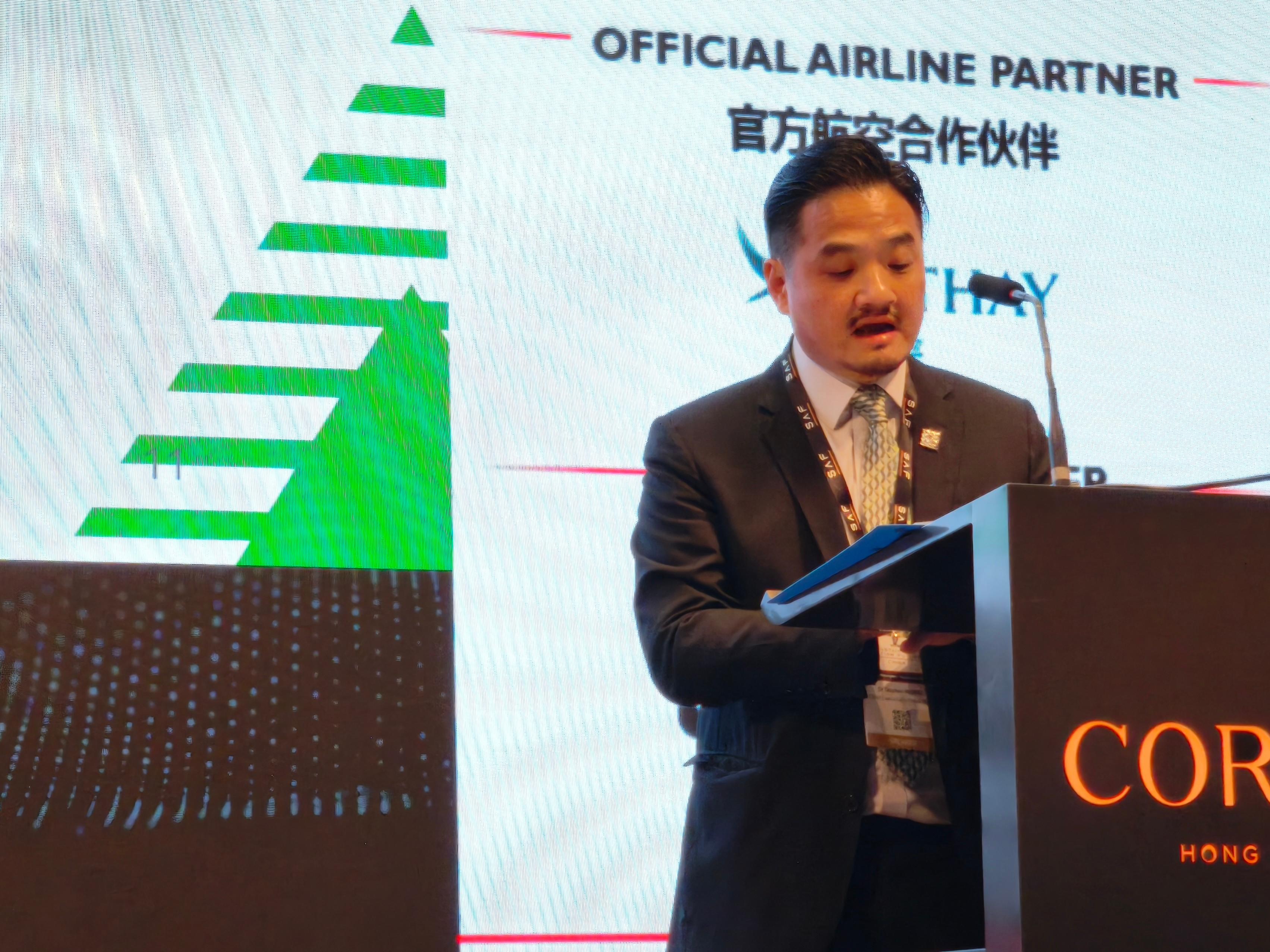
Sustainable aviation fuel (SAF) is emerging as a strategic industry for Hong Kong as the city enhances its role as an international aviation hub, the head of the Chief Executive’s Policy Unit (CEPU) said on Tuesday.
Speaking at the Sustainable Aviation Futures China Congress, Stephen Wong Yuen-shan said SAF offers more than environmental gains for the city as the global aviation industry proceeds with its green transition.
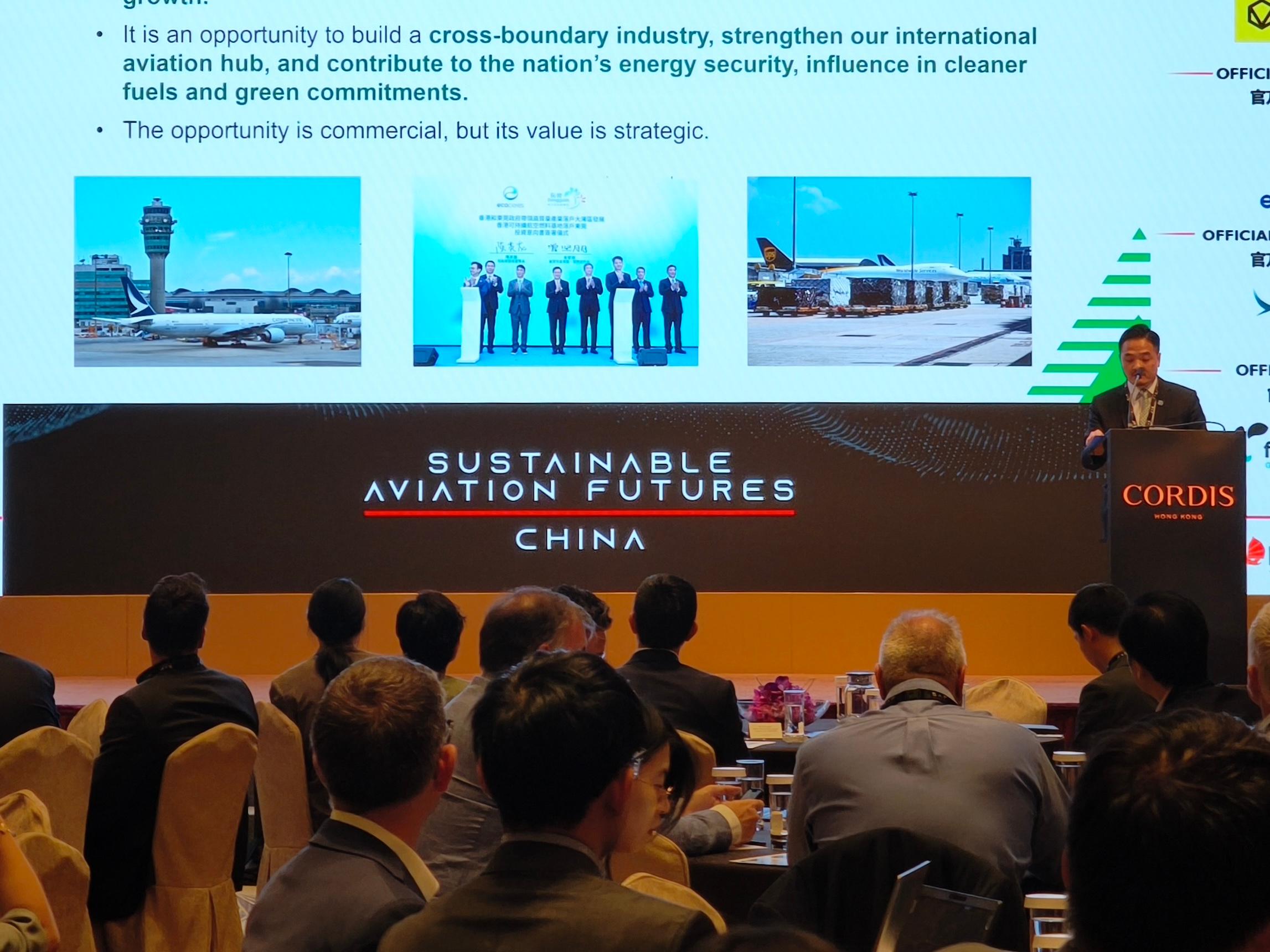
“It is an opportunity to build a cross-boundary industry, strengthen our international aviation hub, and contribute to the nation's energy security, influences in cleaner fuels and green commitments.” Wong said. “The opportunity is commercial, but its value is strategic.”
ALSO READ: Greasy revolution
While the national 15th Five-Year Plan calls for accelerating the comprehensive green transformation of economic and social development, explicitly extending the green hydrogen chain to green ammonia, methanol and SAF, it also supports the special administrative region in consolidating and enhancing its status as an international aviation hub, he said.
In response, SAF has moved up Hong Kong's policy agenda quickly. While it was mentioned only in two sentences in a sub-paragraph of the 2023 Policy Address, SAF has its own standalone heading in both the city’s first five-year plan and in the 2026 Policy Address, he pointed out.
The city’s inaugural five-year plan, unveiled by Chief Executive John Lee Ka-chiu on Wednesday, sets a SAF consumption ratio of 1 to 3 percent for flights departing from Hong Kong International Airport (HKIA) by 2030.
“More consequentially: the 2026 Policy Address commits Hong Kong to study an SAF mandate by 2028. A voluntary target attracts interest. A mandate attracts capital. That is the difference between a pipeline of pilots and a pipeline of projects,” Wong said.
He said the Guangdong-Hong Kong-Macao Greater Bay Area’s first end-to-end SAF value chain is emerging after EcoCeres – a Hong Kong-incubated firm that converts waste cooking oil into internationally certified SAF – signed an investment letter of intent for a new SAF production facility in Dongguan.
The plant is expected to produce about 450,000 tons a year of SAF and renewable diesel at full production, Wong said.
“Around that facility, what is intended to become the GBA's first end-to-end SAF value chain is emerging: waste-based feedstock collected across the GBA; refining and production in Dongguan; and research and development and headquarter services in Hong Kong.”
ALSO READ: HK, Dongguan forge HK$10b partnership in sustainable aviation fuel
The larger opportunity is to “build industries at GBA scale”, the CEPU head said, noting that HKIA Dongguan Logistics Park has already shown how Hong Kong can extend its economic infrastructure into the Greater Bay Area while strengthening its connections to the world.
“SAF gives us the opportunity to apply that model to green industry, not by duplicating every function in every GBA city, but by combining the strengths of the region into one globally competitive system. That is regional specialization by design,” he said.
While the International Civil Aviation Organization aims to reduce international aviation emissions by 5 percent by 2030 through SAF and other cleaner energies, the European Union and the United Kingdom have also introduced mandates, he said, adding that Singapore and Japan have established their own SAF targets.
“The implication for Hong Kong is clear. An airport that cannot secure a reliable SAF supply and prove its sustainability through credible certification will risk finding its routes, hub function, and competitiveness constrained,” Wong said.
READ MORE: EU, HK committed to decarbonize their economies
“It is a question of whether Hong Kong can remain an international aviation hub as the economics and rules of global aviation change.”
In his speech, he also outlined the three-year evidence-gathering process by CEPU, which coordinates the preparation of the CE’s annual Policy Address and tracks the implementation of its initiatives. He also explained how those policy initiatives on SAF connect to the city's five-year plan.
According to him, building a new industry takes longer than an annual policy cycle. Investors, producers, and airlines all need to know not only what the government will do next year, but where Hong Kong intends to be five years from now.
“Hong Kong's first five-year plan gives that longer horizon practical form. It draws together the elements we have discussed today – a consumption target, an industrial direction and Hong Kong's place in the regional value chain – and turns them into a concrete destination for 2030,” he added.
