

On Wednesday, the Hong Kong Special Administrative Region government simultaneously released its 2026 Policy Address and Hong Kong's first Five-Year Plan (2026-30). These releases signal a new stage in Hong Kong's development and the practice of the "one country, two systems" principle. Their significance is manifold.
 In recent years, following the resolution of the 2019-20 unrest, a collaborative effort among the central government, the SAR government and various segments of society has been underway to chart Hong Kong's future development strategy. This collaboration has culminated in a consensus that considers the challenging international environment Hong Kong faces, while also leveraging the city's unique strengths.
At the same time, the central government wants Hong Kong to better leverage its unique advantages under "one country, two systems" to contribute to national development.
READ MORE: Central govt: HK’s 5-year plan holistic and a milestone
Hong Kong's first Five-Year Plan is a response to both the central government's expectations and the aspirations of the SAR's residents.
The Five-Year Plan outlines a strategic focus on industrial transformation and upgrading, aiming to propel all industries toward knowledge-based, high-tech and high-value-added development. Central to this plan is the enhancement of Hong Kong's innovation and technology sectors. With robust support from the central government, Hong Kong enterprises can access a wealth of resources, fostering collaboration with mainland enterprises to drive innovation and technology. This synergy will enable Hong Kong's financial, legal and professional services to bolster innovation and technology development in the mainland.
Regional economic cooperation has become crucial amid deglobalization, and Hong Kong will seek new roles within key regional cooperation mechanisms.
The city is set to play a pivotal role in building the Guangdong-Hong Kong-Macao Greater Bay Area and the "Belt and Road Initiative", serving as a hub for finance, services, information, logistics, legal and high-end professional services.
Hong Kong is expected to further consolidate its strategic position as a gateway for mainland enterprises going global.
A key objective of the plan is the improvement of people's livelihoods. The plan addresses pressing social issues such as population aging, land and housing shortage, poverty, medical services, welfare provisions and upward mobility of young people, aiming for tangible improvements in these areas.
With the introduction of the Five-Year Plan, the nature of the SAR government's Policy Address has also changed. The Five-Year Plan outlines a long-term policy framework that aligns with and supports the national development strategy. The Five-Year Plan therefore has a higher position than the Policy Address in the governance of the SAR and Hong Kong's development.
The annual Policy Address will no longer be a stand-alone policy blueprint but will implement the policies and projects specified in the Five-Year Plan. This alignment will ensure that Hong Kong's governance, development direction and major policies are more coherent, predictable and effective.
The Five-Year Plan signifies a transformative shift in Hong Kong's governance. In recent years, the SAR government has moved from a passive governance model to a more proactive approach, emphasizing long-term strategic thinking over short-term fixes.
This shift has brought about greater certainty, coherence and continuity in policy direction and objectives, enhancing the systematic integration of various policy initiatives. The Five-Year Plan itself is a testament to this proactive governance mindset, marking an irreversible change in Hong Kong's governance philosophy.
Additionally, the Five-Year Plan enriches the practice of the "one country, two systems" principle. In the past, both internal and external hostile forces, as well as some residents, have misunderstood or distorted the relationship between Hong Kong and the mainland under this framework.
Anti-China elements have continuously opposed strengthening Hong Kong's economic ties with the mainland, spreading unfounded fears that such integration would erode Hong Kong's autonomy and increase the central government's control.
However, Deng Xiaoping, chief architect of the "one country, two systems" policy, had envisioned Hong Kong leveraging its unique advantages to support the country's socialist modernization. The Five-Year Plan will deepen Hong Kong's integration into the national development strategy, aligning its objectives with those of the country.
Hong Kong will leverage its systems and policies to functionally connect with and serve the nation's development strategy, advancing and achieving shared objectives, particularly in promoting the internationalization of the renminbi, supporting mainland enterprises' global expansion, developing the Greater Bay Area, integrating countries along the Belt and Road Initiative into a dynamic regional economy, and "telling China's story well" on the international stage.
Finally, the Five-Year Plan promises to strengthen the relationship between the Hong Kong SAR government and the central government. The synergy between the central government's overall jurisdiction over Hong Kong and the SAR's high degree of autonomy played a crucial role in resolving Hong Kong's past unrest and reshaping its political and governance structure.
ALSO READ: Hong Kong's first five-year plan helps chart development vision of the SAR
Close cooperation between the central government, the SAR government, and all segments of society is vital for ensuring the comprehensive and accurate implementation of the "one country, two systems" policy in Hong Kong.
This cooperation will help combat internal and external hostile forces, safeguard national security, maintain prosperity and stability, promote development, transform Hong Kong into various international centers and address social challenges.
As the Five-Year Plan prioritizes Hong Kong's integration into the overall development of the nation, support and cooperation from the central government and the mainland will not only be essential but are expected to increase, ensuring seamless alignment between national and local development strategies.
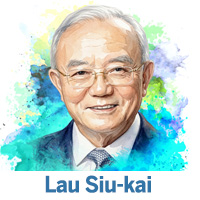
The author is professor emeritus of sociology at The Chinese University of Hong Kong and a consultant in the Chinese Association for Hong Kong &Macao Studies.
The views don't necessarily reflect those of China Daily.
