

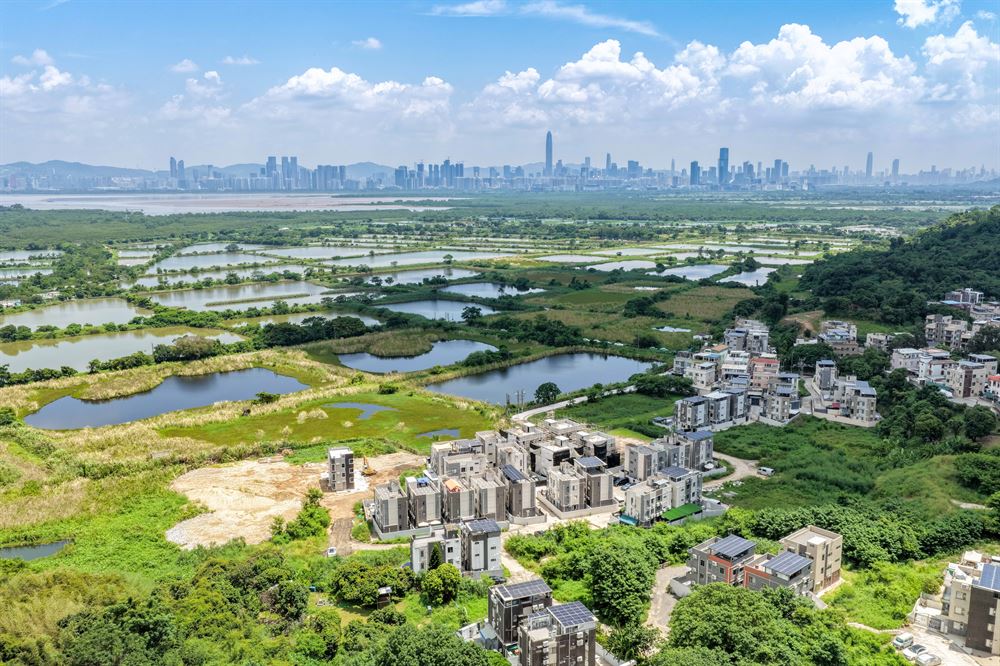
Hong Kong’s ambitious Northern Metropolis project emerged as one of the centerpieces of the city’s inaugural Five-Year Plan for Economic and Social Development (2026-30) and annual Policy Address delivered on Wednesday, with multiple measures and innovative policies unveiled to boost its construction, particularly its three university towns.
The steps include significantly expanding the university towns’ total land area, clarifying their layout and positioning, creating a flagship project for them at the Hetao Shenzhen-Hong Kong Science and Technology Innovation Cooperation Zone, and increasing government-funded postgraduate places.
Other plans are to streamline procedures and legislation to turn the metropolis into a diversified industrial development platform.
Chief Executive John Lee Ka-chiu announced the highlights of both documents, the full texts of which exceeded a total of 100,000 words. The historic five-year development plan is set to align with the nation’s 15th Five-Year-Plan (2026-30), while the Policy Address is the last of Lee’s current term.
The total campus area of the three planned university towns – at San Tin, Hung Shui Kiu and Ta Kwu Ling -- has been increased threefold to 300 hectares, roughly equal to the current combined area of Hong Kong’s eight publicly-funded universities, according to a government source.
ALSO READ: Hong Kong targets innovation spending at 3% of GDP after 2030
Built on the concept of “one town, five elements” -- education, technology, industry, talent and urban development -- the total area of the three towns will be expanded to more than 1,000 hectares, encompassing campuses and adjacent technology and industry zones, as well as living communities.
With specified roles, San Tin University Town will focus on developing medicine, life and health technology, artificial intelligence, robotics, microelectronics and emerging industries, while Hung Shui Kiu will concentrate on smart manufacturing and internationalized talent, and Ta Kwu Ling will be geared to arts and blue green development.
The Policy Address revealed precise plans to accelerate the projects’ progress. Building 1 at Hong Kong Park in the Hetao cooperation zone, which is due to be completed late this year, will be the flagship project for launching the university towns. Named “Loop Academy One”, it’ll bring together frontier research and capabilities of leading domestic and global institutions.
ALSO READ: HK's 5-yr plan, policy address aim to improve housing, help grassroots
With the construction of the university towns in full swing, the authorities will gradually increase the number of government-funded research postgraduate places by about 30 percent -- from 7,200 at present to 9,600 in the 2030/31 academic year.
The five-year blueprint also pledged to speed up the growth of the Hetao cooperation zone and build a platform for diversified industry development linking the metropolis’ multiple projects. This will include San Tin Technopole, the Sandy Ridge Data Facility Cluster, Hung Shui Kiu Industry Park and modern logistics cluster, the Lau Fau Shan Digital Technology Hub, the Advanced Construction Industrial Park in Yuen Long South, and the Ta Kwu Ling New Development Area as a base for emerging industries.
To support these goals, the Policy Address set a timeline for launching all nine of the metropolis’ new development areas, such as starting the statutory planning and relative procedures for Lau Fau Shan this year, as well as site formation and infrastructure works for Ngau Tam Mei in the first half of 2027.
The authorities pledged to expedite the relevant legislation and approval process. To facilitate cross-border flow of more research factors, a government source told China Daily that pilot projects will be rolled out this year, covering bio-samples, capital and data, paving the way for further subsidiary legislation under the Northern Metropolis Development Bill.
The bill, gazetted in July and due to be passed in the legislature this year, authorizes regulations to facilitate specified cross-boundary flows, with the first batch of subsidiary legislation covering only the passage of authorized personnel for Hetao’s Hong Kong Park.
Further steps will be taken to streamline procedures aimed at cutting time and costs for metropolis development. According to the Policy Address, a digital platform would shorten the approval time for work projects by three to six months, while the duration for initial approval of new railway project building plans would be halved to 30 days.
Contact the writer at amberwu@chinadailyhk.com
