

My most respected elder statesman, Tung Chee-hwa, the Hong Kong Special Administrative Region’s first chief executive, who oversaw the city’s historic return to the motherland in 1997, passed away on Tuesday at age 89. Tributes poured in immediately, honoring his memory and praising his immense contributions to Hong Kong.
 As the city’s first leader after more than 150 years of British rule, Tung bore the brunt of intense opposition from China-hostile external forces and local anti-establishment forces. As the Chinese saying goes, he was “surrounded by bullets flying through the air”. Amplified by hostile media coverage, he was often deeply misunderstood and subjected to grossly unfair criticism. For instance, his signature projects — the Hong Kong Science Park and Cyberport — were widely derided in their early years, yet today they stand as key incubators for local technology development. Despite the adversity, Tung stood firm, demonstrating remarkable determination, wisdom and foresight. He laid a strong foundation for the successful implementation of the unprecedented “one country, two systems” policy and a “Hong Kong people administering Hong Kong” government, setting the stage for the prosperity we see today. Even after stepping down from office, he worked tirelessly to establish Our Hong Kong Foundation, one of the city’s most effective think tanks, and the China‑United States Exchange Foundation, dedicated to strengthening bilateral relations. I am sure history will give him the fair assessment he deserves.
Yet few people truly know the extent of his efforts to ensure that Hong Kong remained corruption-free. At the time of the transition, Hong Kong — much like today — faced severe attacks from Western quarters eager to see it fail. Fortune magazine infamously declared, “Hong Kong is dead”. Western critics predicted that corruption would rise after the handover and that the Independent Commission Against Corruption (ICAC) would lose its effectiveness and independence.
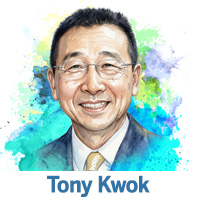
I had the privilege of serving as the first Chinese deputy commissioner of the ICAC and head of its operations department, which afforded me a close-up view of how Tung wholeheartedly supported the ICAC during the critical early years of reunification. He regularly summoned me to his office, sometimes spending entire Saturday afternoons discussing my work. He acted as my mentor, constantly impressing upon me the importance of my role and pledging his full support.
First and foremost, Tung safeguarded the ICAC’s independence — the single most important factor in the success of any anti-corruption agency worldwide. At the time, the ICAC was handling numerous sensitive cases, some involving senior cadres of mainland companies and others involving foreign consulates. He assured me that we need not worry about external pressures, which he would personally handle, and gave us a free hand to conduct thorough investigations as we saw fit. Through the successful prosecution of cases over the years, we unequivocally demonstrated to the world that the ICAC remained both effective and independent.
Second, Tung provided the ICAC with robust financial support. Even during the Asian financial crisis, when almost all government building projects were put on hold, the ICAC and the Police Force headquarters were the only two exceptions unaffected by financial constraints. The new ICAC headquarters building now stands as a powerful symbol of its independence and has even become a tourist attraction — thanks to Tung’s unwavering backing.
Moreover, in a rare departure from governmentwide financial austerity, the ICAC was one of the few departments allowed to increase its resources. In 2002, the operations department received an additional HK$18 million ($2.3 million) to establish five specialized investigative units: the financial investigation section, the computer forensic section, the witness protection and firearms unit, and the international and mainland liaison units, along with the installation of the OPSIS mainframe computer network. These additional resources enabled the ICAC to become the world’s most professional anti-corruption investigative agency — but none of these professional enhancements would have been possible without Tung’s personal support.
To underscore his commitment, Tung visited the ICAC headquarters, where he addressed staff and publicly reaffirmed his pledge of support.
Today, the ICAC’s success is often taken for granted. But we should never forget that it was Tung’s steadfast support that made this enduring achievement possible. His legacy deserves not only our gratitude but also recognition in history.
The author is a retired deputy commissioner of ICAC and an advisor of Our Hong Kong Foundation.
The views do not necessarily reflect those of China Daily.
