

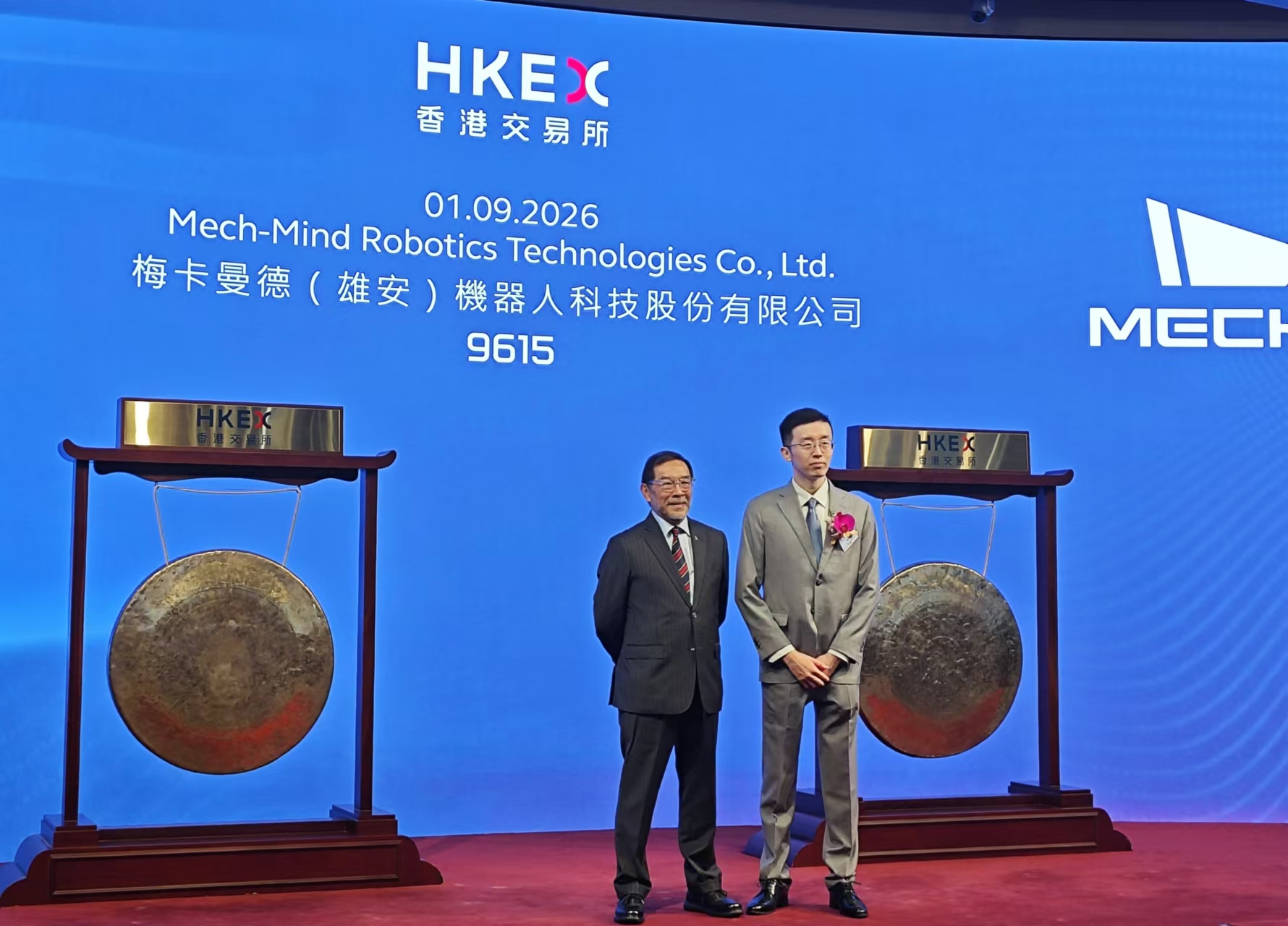
The frenzy of robotics companies launching initial public offerings in Hong Kong continues, as a Chinese mainland intelligent robot component supplier, Mech-Mind Robotics Technologies Co, debuted its share sales on Tuesday amid a lukewarm market response.
“We have completed our listing on the Hong Kong stock exchange because Hong Kong serves as our gateway to capital markets, global clients, and investors,” said Shao Tianlan, founder and CEO of Mech-Mind, at the IPO ceremony. “It will be a crucial international gateway for the company to showcase industry collaborations and expand overseas business.”
Shao added that Hong Kong is an international city with excellent connections to many companies, research institutes, and universities around the world.
ALSO READ: Jollibee picks HK over US for international unit listing
He emphasized Hong Kong’s strategic position, backed by the manufacturing strength of the Guangdong-Hong Kong-Macao Greater Bay Area and its extensive global market. “We will leverage our Hong Kong branch to establish more global connections,” Shao said.
Mech-Mind offered 23.14 million H-shares at the upper range of the indicative price of HK$101.7 ($12.97) per share, aiming to raise HK$2.7 billion before fees and expenses. Cornerstone investors include Baillie Gifford, Jane Street, Invus, and the NGS Super Fund. The company plans to use nearly 30 percent of the proceeds to expand its global reach and accelerate commercialization.
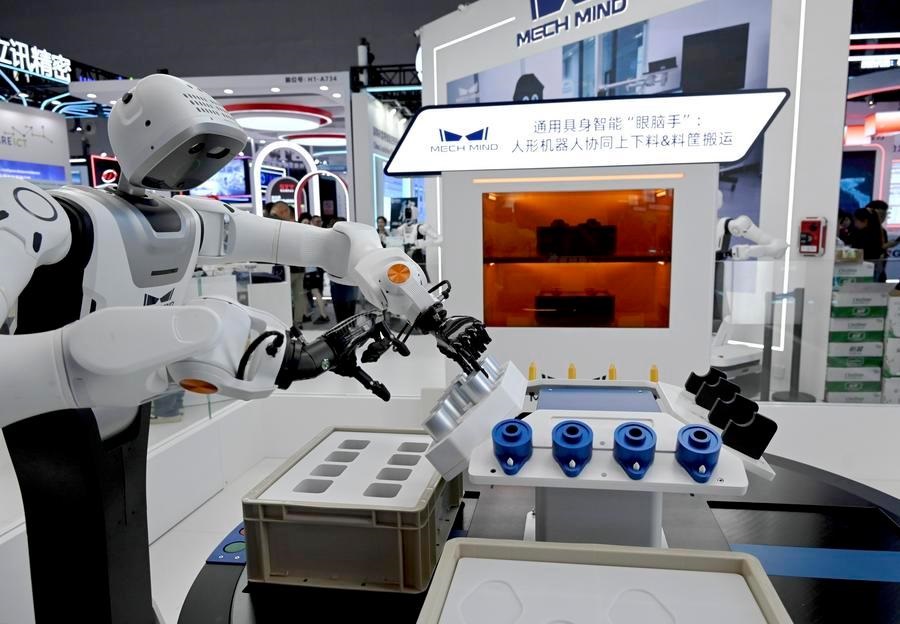
The stock slipped 1.8 percent on Tuesday compared to the offering price.
The company’s markets include Europe, the United States, Japan, and South Korea. Overseas revenue accounted for 50 percent of its total in 2025, with a compound annual growth rate of some 83 percent over the past three years.
READ MORE: Galbot opens 1st overseas fully autonomous robot retail stores in HK
According to US-based Morningstar, humanoid robots are expected to become more useful over time. The firm said adoption of robotics closely resembles the growth of the automobile industry, with production costs decreasing and their capabilities expanding, and eventually, they will be able to perform a wide range of tasks at a lower cost than employing humans for the same work.
“We see a slow initial rollout but forecast growth will accelerate through the 2030s decade, driving fast adoption by the end of the next decade. Our total market size forecast is 30 percent to 150 percent above the consensus, depending on our unit price assumptions,” Morningstar said in its research report on the robotics industry.
READ MORE: Sinopec (HK) opens 600kW supercharging station in Kowloon Bay
Morningstar views the “robot as a service” business model as a long-term winner, since it maximizes free cash flow for humanoid original equipment manufacturers and allows regular updates for customers.
Meanwhile, mainland e-commerce fast fashion retailer Shein Global also debuted its share sales on Tuesday, with the price closing 0.12 percent below the HK$48.56 offer price.
The company offered to sell 280 million new shares to raise up to HK$13.86 billion at a market valuation that has been drastically reduced from $100 billion in 2022 to $27 billion.
The retailer is facing challenges such as slowing business growth, changes in global trade policies, and soaring logistics and fulfillment costs.
Wang Zhen contributed to this story.
Contact the writers at oswald@chinadailyhk.com
