

Insect's reemergence in Beijing an indication of positive changes
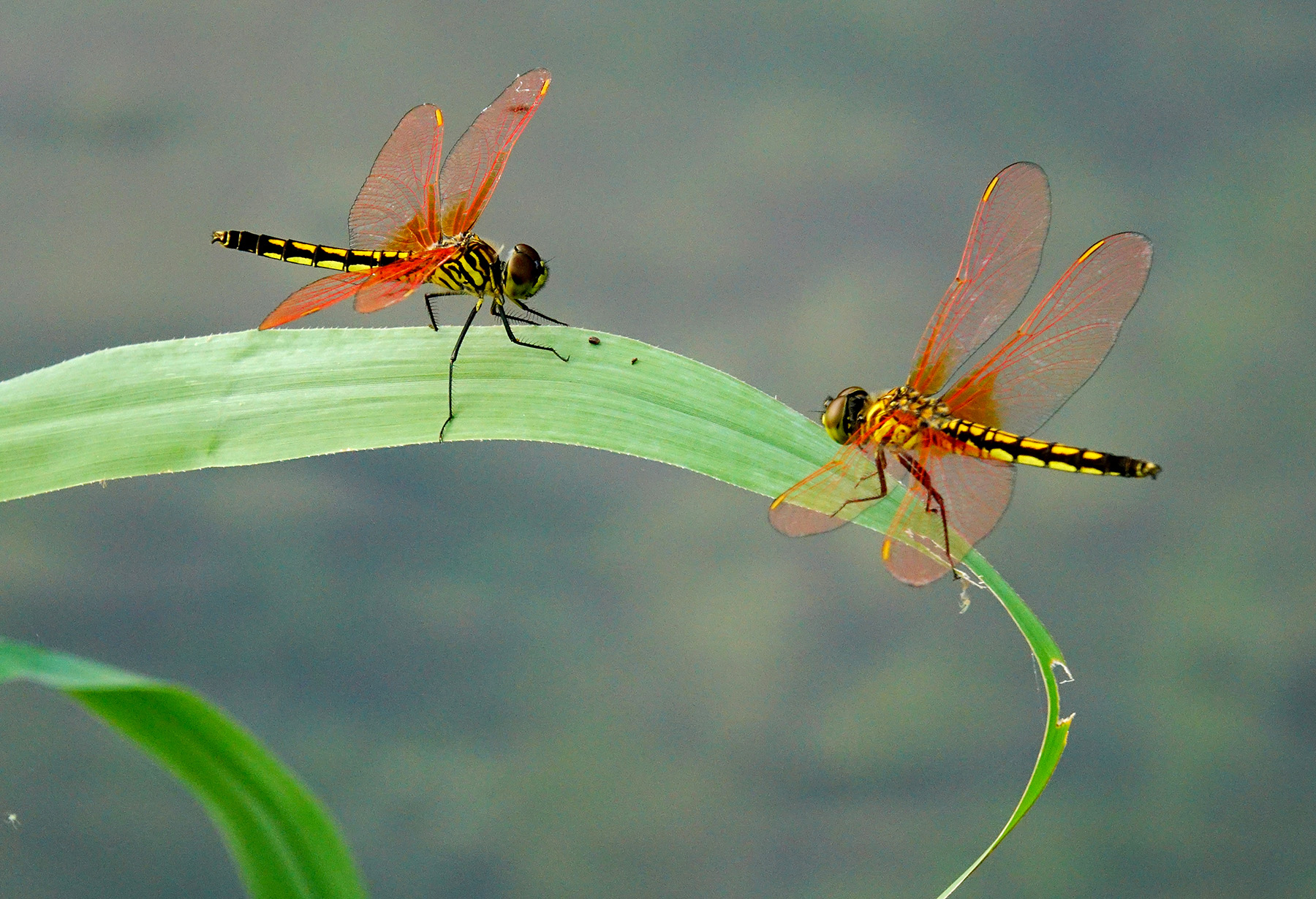
For Zhang Shuren, 78, who took his 10-year-old grandson to the Peking Insect Museum recently, dragonflies are inseparable from his memories of old Beijing.
Growing up in the 1950s and 1960s, he spent summer afternoons near ponds, canals and patches of open land, chasing dragonflies with other children.
"Back then, you didn't go somewhere specifically to look for them," he said. "They were just there."
The children sometimes used insect nets, but catching a dragonfly with their bare hands was more difficult. "You had to wait for it to land and move slowly," Zhang recalled. "If you rushed, it was gone."
Over the decades, however, he began seeing fewer dragonflies as Beijing's cityscape changed and natural spaces disappeared.
ALSO READ: Restored wetlands welcome new flocks of migratory birds
"That was when I realized that some things you take for granted can disappear," he said.
Now, when Zhang spots a dragonfly above a park pond, he always stops to watch.
"For children today, it may just be a beautiful insect," he said. "For me, it brings back an entire summer."
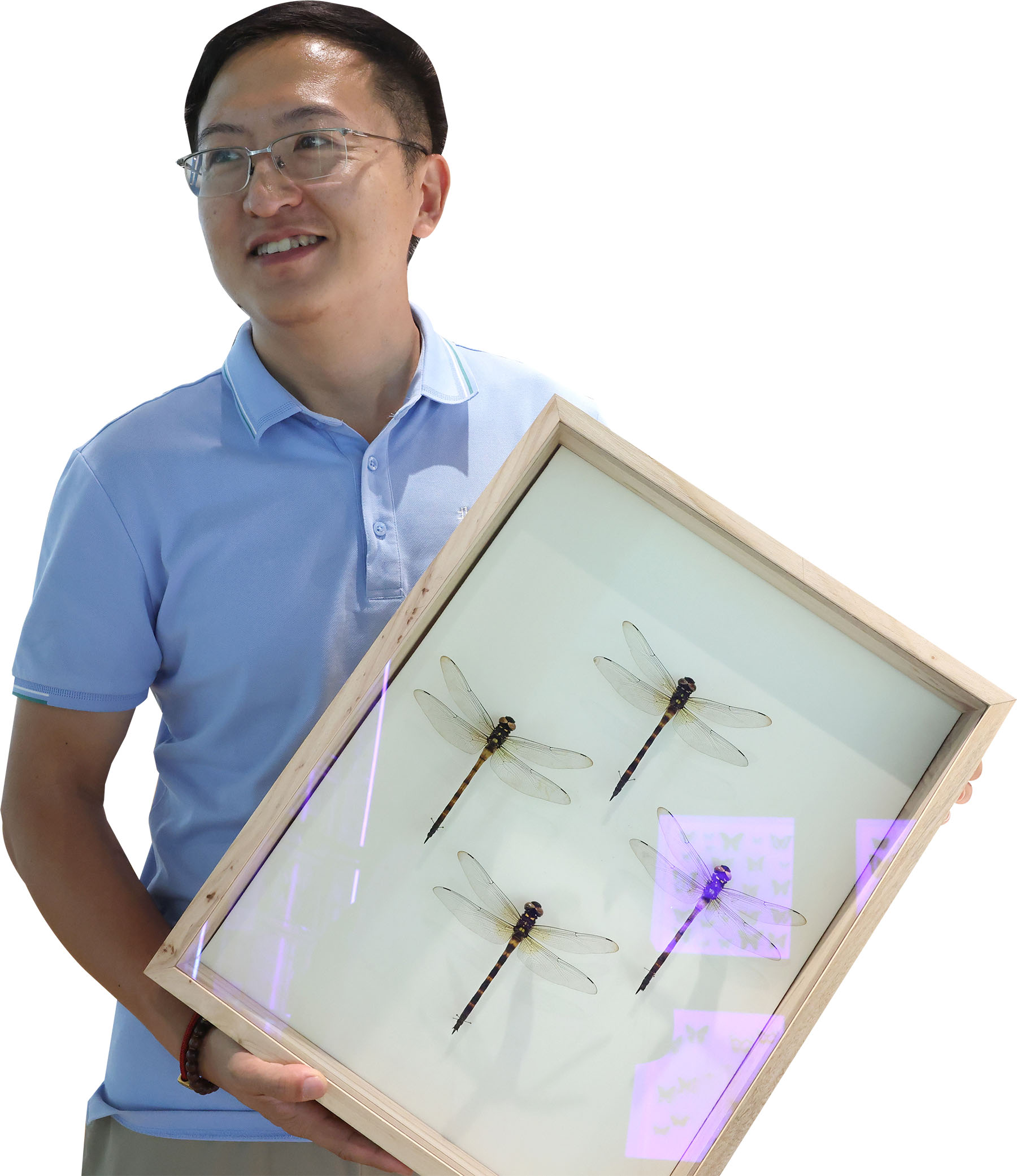
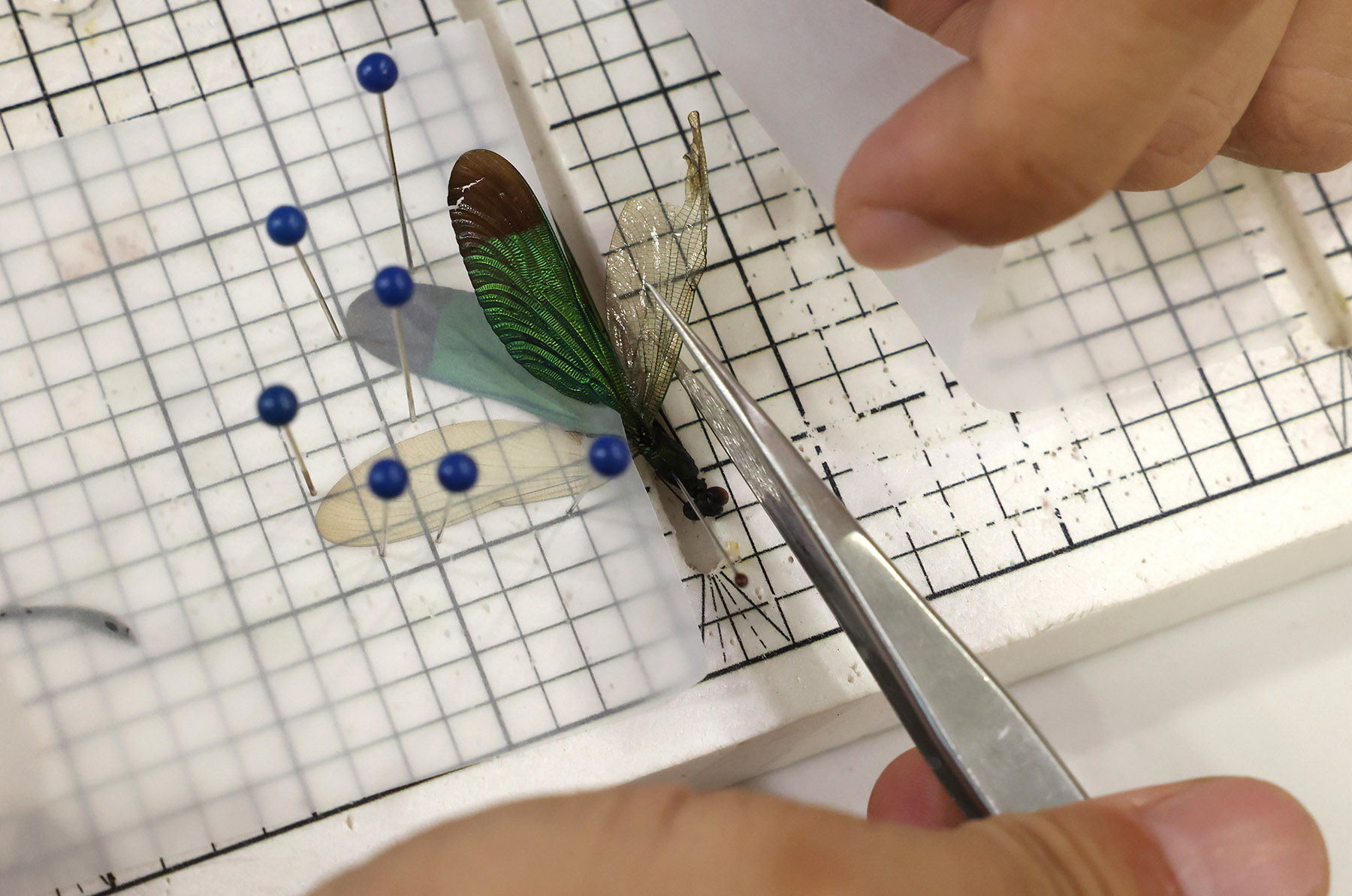
The museum in Fengtai district, which opened in April, has more than 20,000 insect specimens as well as living insects and hands-on activities for visitors.
Feng Ruochen, a 36-year-old Beijing native and co-founder and director of the museum, remembers when catching insects was simply what children did for fun.
Growing up in Beijing, Feng spent summer afternoons along the North Moat in Andingmen subdistrict, where dragonflies seemed to be everywhere. Children waited for them to land or swung insect nets through the air, competing with each other to catch one.
As Beijing expanded, natural spaces gave way to roads, buildings and other urban infrastructure. Waterways deteriorated, while pesticides used in landscaping affected insects both in the water and on land.
The dragonflies of Feng's childhood became harder to find, but in recent years — in places like the Liangshui River in southern Beijing — healthy populations of the insect now abound.
For years it was notorious for being heavily polluted, but following water treatment and environmental restoration, the river and its surrounding landscape have been transformed.
Green space now runs alongside parts of the waterway. And with the return of suitable habitats, wildlife has begun to reappear. "Dragonflies have come back in large numbers," Feng said, adding fish, frogs, beetles and birds have also become more common.
"When you restore the environment, it is not just one species that comes back," he said. "The whole ecosystem begins to recover."
Nature's barometer
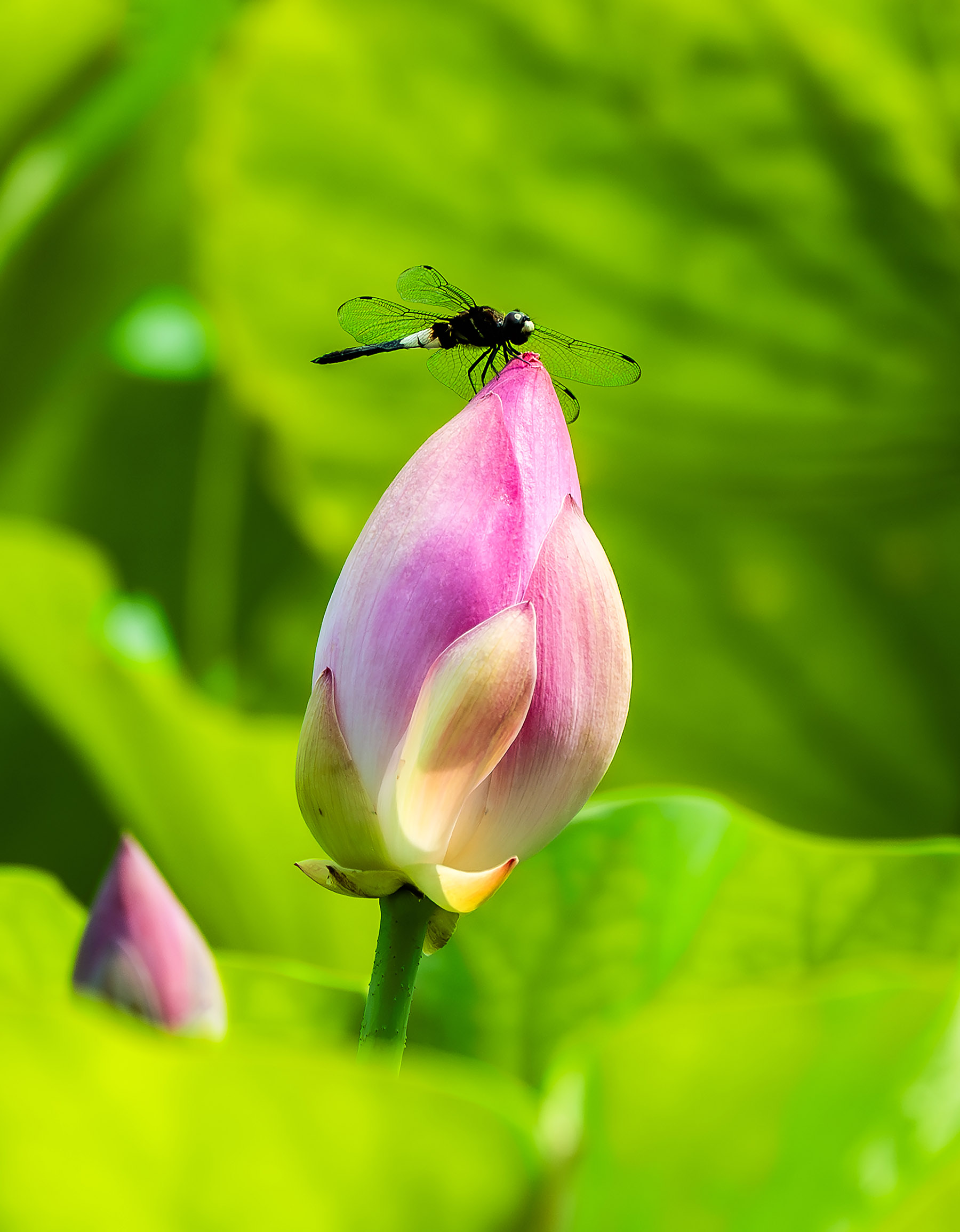
Huang Yue is an ecological restoration designer who has spent years rebuilding wetlands and urban water systems. She believes a dragonfly tells a more complicated story than simply whether a river looks clean.
In the summer of 2017, Huang was working on the restoration of a small 2,000-square-meter wetland on the outskirts of Beijing. It once contained a small pond, but changes to the surrounding river system and Beijing's low groundwater levels had caused it to leach away.
Huang and her colleagues restored the wetland. To keep the water from leaching again, an impermeable liner was put down on the ground surface.
"We then reintroduced native aquatic animals and planted submerged vegetation. As the ecosystem recovered, more dragonflies returned," she said.
"I remember one blade of grass with five dragonflies on it," Huang said, adding she was impressed by the sight.
In that small patch of wetland, she and her team identified between 20 and 30 species of dragonflies.
For Huang, who studied landscape architecture and urban biodiversity at Tsinghua University, the dragonfly is a useful way of reading an ecosystem.
But to thrive, a dragonfly needs more than just clean water. It requires aquatic vegetation for shelter, hunting and reproduction. It also needs suitable places along the shoreline to emerge from the water, and a food chain capable of supporting both predators and prey.
"To understand why dragonflies disappear — or why they return — you have to look at the whole ecosystem," Huang said.
Dragonfly larvae spend their early lives underwater, hiding among aquatic plants and ambushing prey such as mosquito larvae, tadpoles and small fish. Different species also use plants in different ways for reproduction. Some insert their eggs into the stems of aquatic vegetation, while others lay their eggs near aquatic plants.
When the larvae are ready to become adults, they climb out of the water and attach themselves to plants or other surfaces. The adult dragonfly slowly emerges, then unfolds and dries its wings before taking flight.
Rich diversity
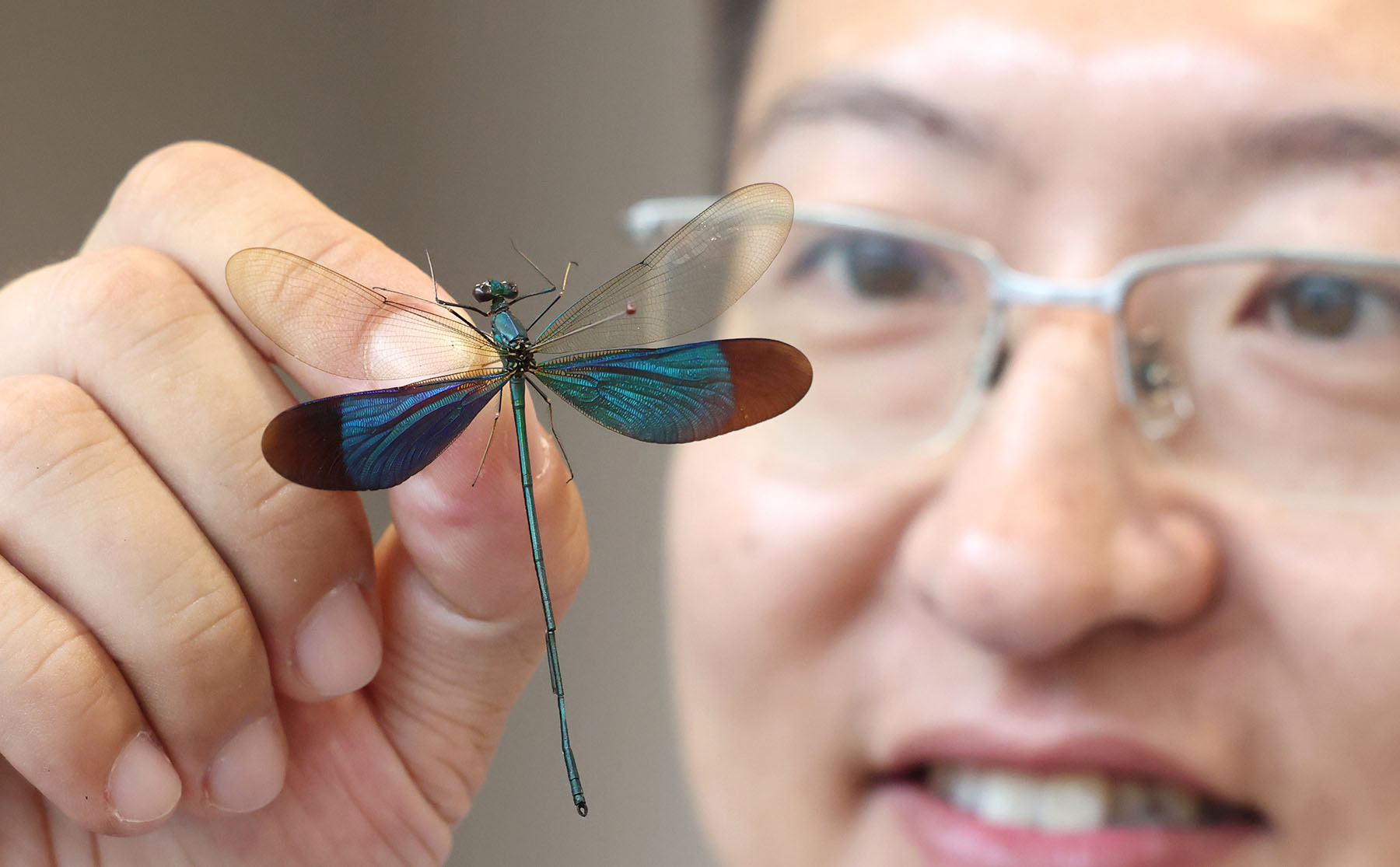
China is one of the world's most important homes of dragonfly diversity, with more than 980 known species. Yet most people are familiar with only the handful that occasionally flash past their eyes on a summer afternoon.
Zhang Haomiao, a researcher at the Kunming Institute of Zoology, published The Illustrated Guide to Dragonflies of China in 2019, a two-volume work that documents 820 dragonfly species found in the country.
The book runs to 1,460 pages and includes more than 3,500 color photographs. It represents one of the most comprehensive attempts to document China's dragonfly diversity. Zhang's guide is, in part, an attempt to make that diversity visible.
A dragonfly hovering over a pond may belong to a species of the insect that has its own habitat requirements and ecological role. The more closely entomologists look, the more complicated the picture becomes.
That complexity is why Huang believes that improving water quality, while essential, is only the beginning.
For years, urban water management focused primarily on pollution. Was the water black and foul-smelling? Did it meet the required environmental standard?
Those questions remain important. But Huang believes people's understanding of a healthy water system is becoming broader.
The question is increasingly not just whether the water is clean, but whether it can support life.
When a restored river has clean water but little wildlife, Huang asks a simple question: What is missing?
Perhaps there are too few aquatic plants. Perhaps there are not enough small organisms to support larger animals. Perhaps the shoreline provides nowhere for wildlife to hide, feed or reproduce.
The answer is not simply to release more fish into the water. "A healthy ecosystem needs different levels of life," Huang said.
She said ecological restoration is not only about creating a finished landscape, but also setting a process in motion.
One major challenge is that cities often prefer nature to look neat. Old reeds are cut down, dead vegetation is removed, riverbanks are straightened and shorelines are covered in stone or concrete. But what looks tidy to humans may offer little to wildlife.
Huang recalled observing a rare dragonfly in Beijing that to the untrained eye is easy to miss. Brownish in color, it blends into dry, yellow reeds.
Its breeding habitat includes reed beds in early spring, before the landscape has turned green. But old reeds are often removed as part of routine maintenance or fire prevention work. "When the yellow reeds are all removed, the breeding habitat becomes very limited," Huang said.
She and other nature enthusiasts have encouraged park managers to leave more vegetation standing where possible.
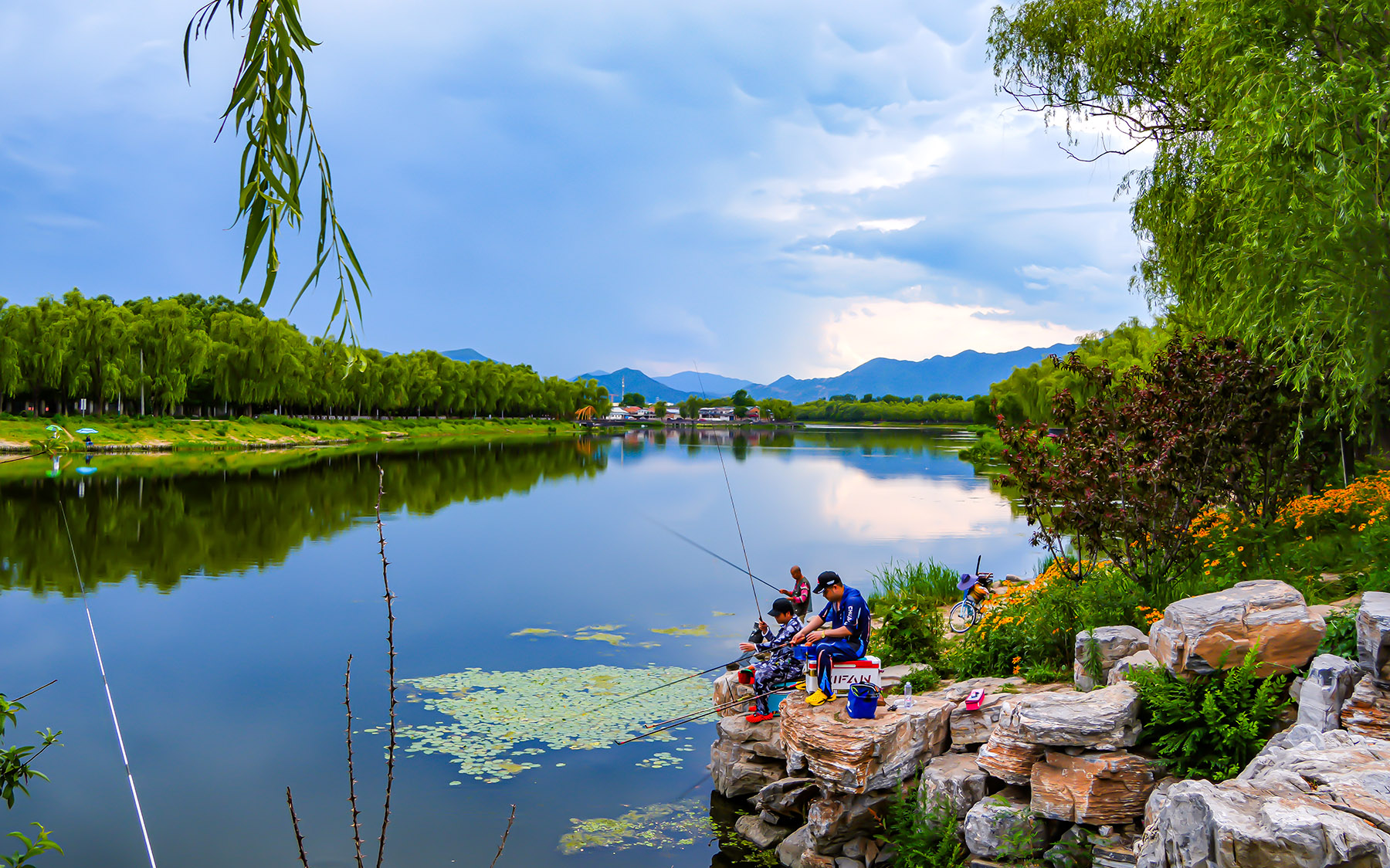
The benefits extend beyond dragonflies. Old reeds can also provide habitats for birds during winter.
Urban disconnect
For Huang, the issue reflects a disconnect between ecological health and ideas about what a city should look like.
A healthy wetland may contain withered plant stems that are dormant during the winter, and the aboveground vegetation can appear dry or decaying.
Riverbanks pose a similar challenge. A gently sloping shoreline with vegetation is generally more welcoming to wildlife than a vertical concrete wall. Plants create shelter and the gradual transition between land and water allows birds and small animals to move between the two environments.
The soil itself is also important, Huang added. Gently sloping soil banks provide bottom-dwelling species with both food and habitats.
However, Huang is also pragmatic about the realities of urban infrastructure designs that need to coexist with ecological systems. She accepts that urban rivers need to carry floodwater, that space is limited, and that soft riverbanks can erode.
The challenge is not to eliminate infrastructure, but to make it more hospitable to wildlife, Huang said.
She cited examples of sensitive design ideas such as stone embankments with gaps and irregular surfaces to provide shelter for wildlife. Sloping gabion banks are more wildlife-friendly than stepped ones and provide a gentler transition between land and water and better habitats for wetland species, she said.
Ecological restoration, Huang said, is ultimately about finding the best possible balance within the limitations of a particular site.
As for dragonflies, she believes their worth in balancing an ecosystem goes beyond preying on mosquitoes. They are both hunters and a food source for animals such as frogs and birds. "If one part of the chain disappears, the system changes," Huang said.
ALSO READ: 'Oriental gem' makes wetland comeback
She said one of the most important contributions city residents can make to helping maintain this balance is simply acting as observers of nature.
The return of dragonflies to parts of Beijing does not mean the work of restoring urban ecosystems is finished. Clean water alone is not enough, and a healthy ecosystem cannot be rebuilt overnight.
On Friday evenings, Feng and his team take children to the Liangshui River for outdoor insect observation activities. There, participants encounter creatures they might otherwise never notice.
For Feng, this reflects a broader shift in the way people see nature in urban settings.
A river is not simply infrastructure carrying water through a city. A park is not just a landscaped space filled with trees and lawns.
With the right conditions, both can become habitats. And dragonflies, he believes, are among the most visible signs of whether those conditions exist.
Contact the writers at chennan@chinadaily.com.cn
