

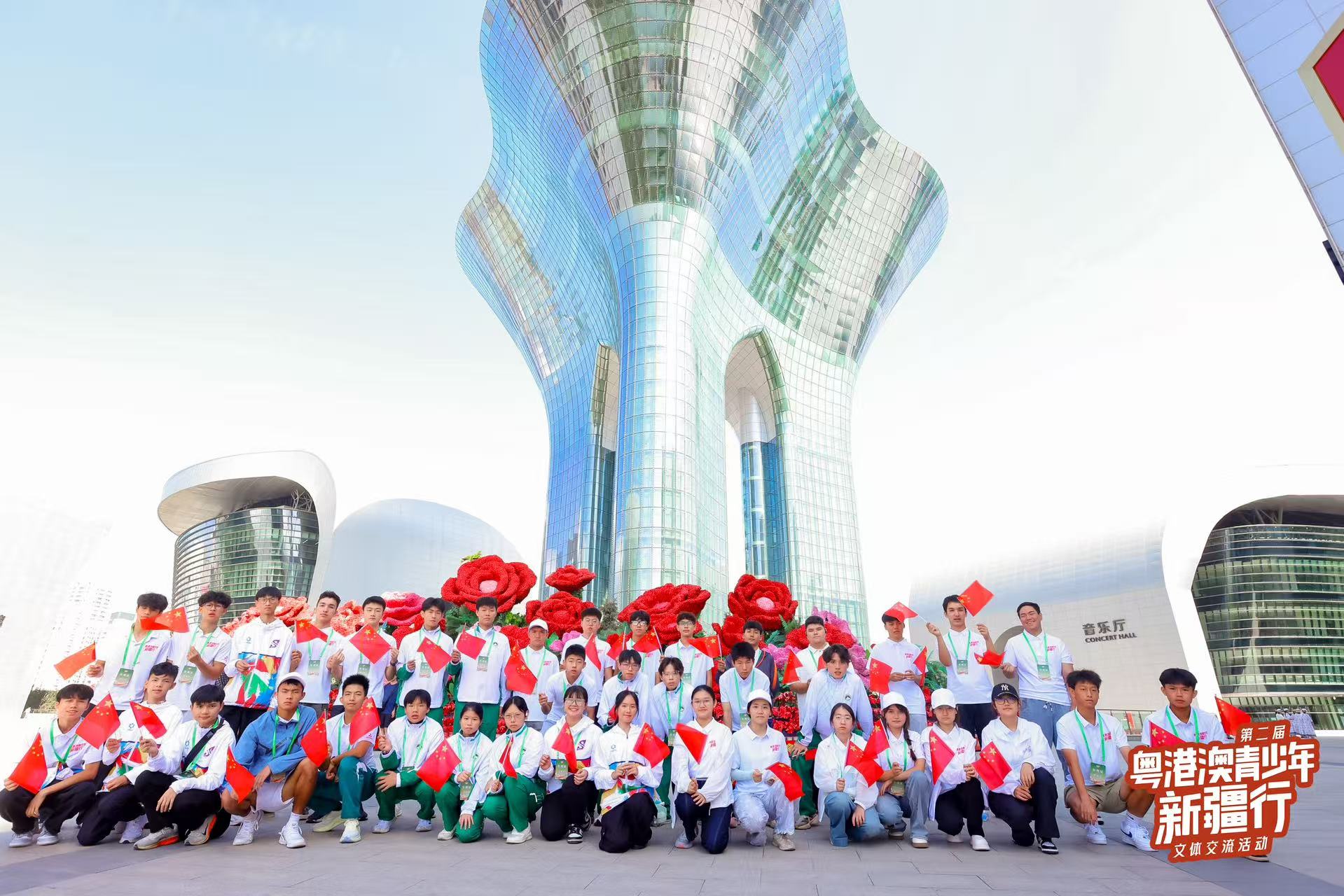
Tours exploring Xinjiang Uygur autonomous region’s wartime history and its contemporary achievements have been a source of inspiration for young students from Xinjiang and the Guangdong-Hong Kong-Macao Greater Bay Area on an exchange visit to the nation’s western region.
The students, who are on an eight-day tour, said national unity and the hard work of successive generations are essential for sustained development.
The tour, which began on Friday and involves some 40 students from Guangdong province, the Hong Kong and Macao special administrative regions and their Xinjiang peers, continued on Sunday in the region’s capital, Urumqi.
ALSO READ: GBA, Xinjiang students to showcase ‘genuine and beautiful’ Xinjiang
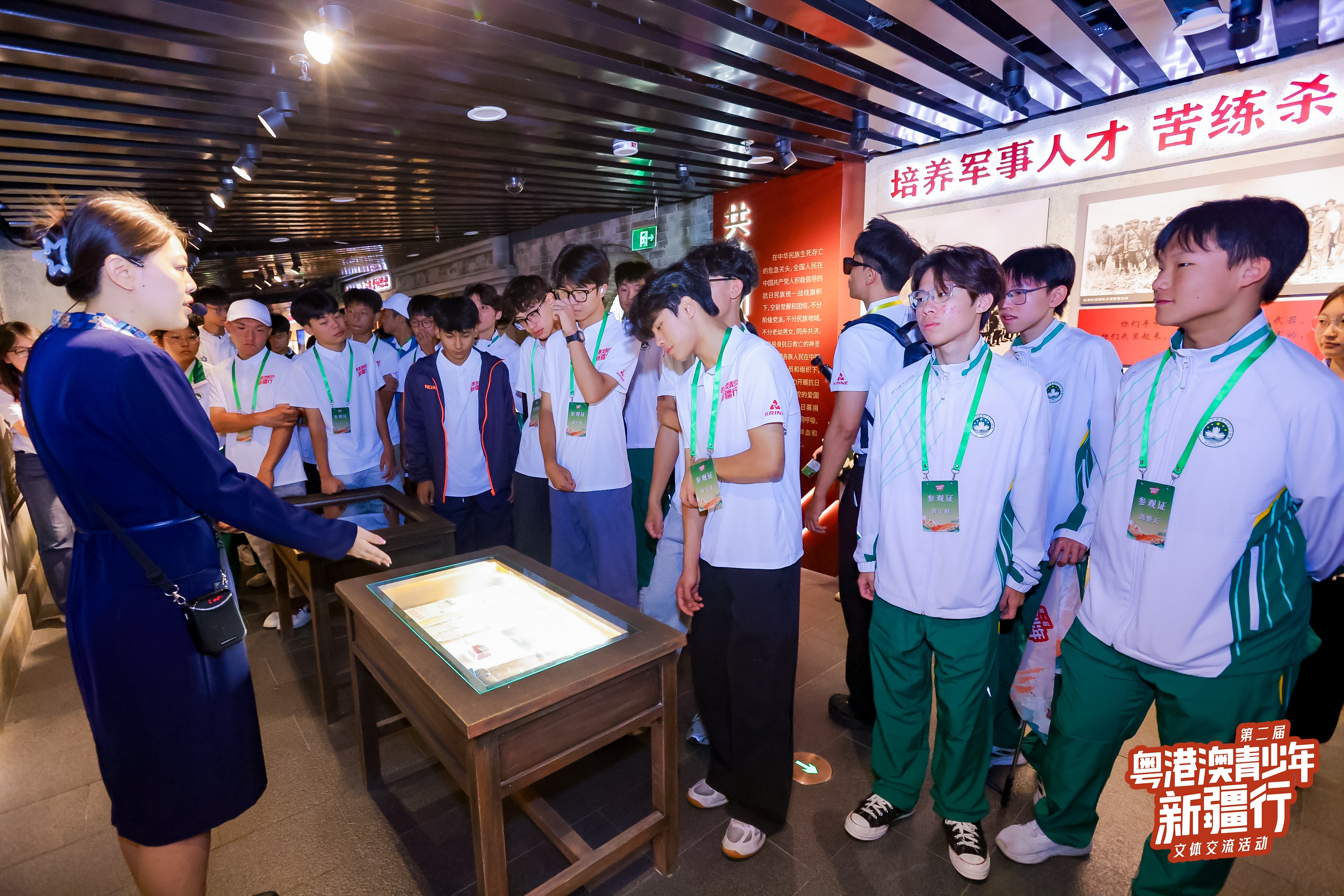
The visitors toured the memorial hall and the former site of the Eighth Route Army’s office in Xinjiang, as well as a new themed exhibition showcasing the autonomous region’s achievements in the past seven decades.
Alkt, a 16-year-old student from Urumqi, said he learned for the first time that the Communist Party of China had contributed to Xinjiang’s development through its work in the region as early as the 1930s, long before Xinjiang’s peaceful liberation in September 1949 and the founding of the autonomous region in 1955 — both landmark moments in the region’s modern history.
The Xinjiang office of the Eighth Route Army in Urumqi served as an important transit, communication, and logistical hub for the CPC during the Chinese People’s War of Resistance Against Japanese Aggression (1931-45). It helped to implement the national united front policies in the border region and facilitated the transport of Soviet military and medical supplies to Yan’an — then the CPC’s revolutionary base.
Alkt said he was also impressed by stories of people in Xinjiang, regardless of their social status and ethnicity, uniting as part of the nation and contributing to the anti-aggression effort. While Chinese compatriots fought on the front lines in the eastern war zones, Xinjiang residents helped transit and donated supplies, and devoted themselves to local infrastructure projects under the CPC’s leadership.
“Even distant lands are still part of our motherland,” he said.
Alkt added that history has demonstrated the strategic significance of Xinjiang’s location and the importance of defending it as an inseparable part of the country’s territory.
Chu Chon-hong of Macao SAR’s Hou Kong Middle School said although Xinjiang and the SAR are far apart, people in both places share the same resolve to resist aggression.
He noted that during World War II, Macao had been under Portuguese administration. However, local Chinese communities, charities and underground networks in Macao had actively provided financial aid, medical supplies and food to support China’s resistance efforts.
“People across the nation were making efforts for the same motherland,” Chu said.
Wong Hei-yi, from South Tuen Mun Government Secondary School in Hong Kong, said she has been awestruck by Xinjiang’s development since arriving in Urumqi. A visit to the themed achievement exhibition at the Urumqi Cultural Center gave her a deeper understanding that the region’s progress has been the result of generations of hard work in “building a more beautiful Xinjiang”.
She was also surprised to learn that through the nation’s massive West-to-East gas transmission project, Hong Kong has been receiving natural gas from western regions, including Xinjiang, since the early 2010s.
READ MORE: Shooting stars: Astrophotographers flock to Xinjiang for celestial light show
Sunday’s visit followed the previous day’s trips to the Xinjiang Museum and Tianchi, or Heavenly Lake, in the Tianshan Mountains.
Huang Zihao, a 17-year-old student from Jiangmen, Guangdong province, said he was most impressed by the national treasure-level “Five Stars Rise in the East, Benefiting Middle Kingdom (China)” brocade arm guard, which was unearthed in Xinjiang in 1995.
He said he was curious about how the intricate pattern was created nearly 2,000 years ago, adding it was interesting that the brocade carries the same characters still used today, but the meanings have changed over time.
The students will continue with their tour through Friday, with visits to scenic sites in the border city of Altay, and friendly soccer matches also on the cards.
