

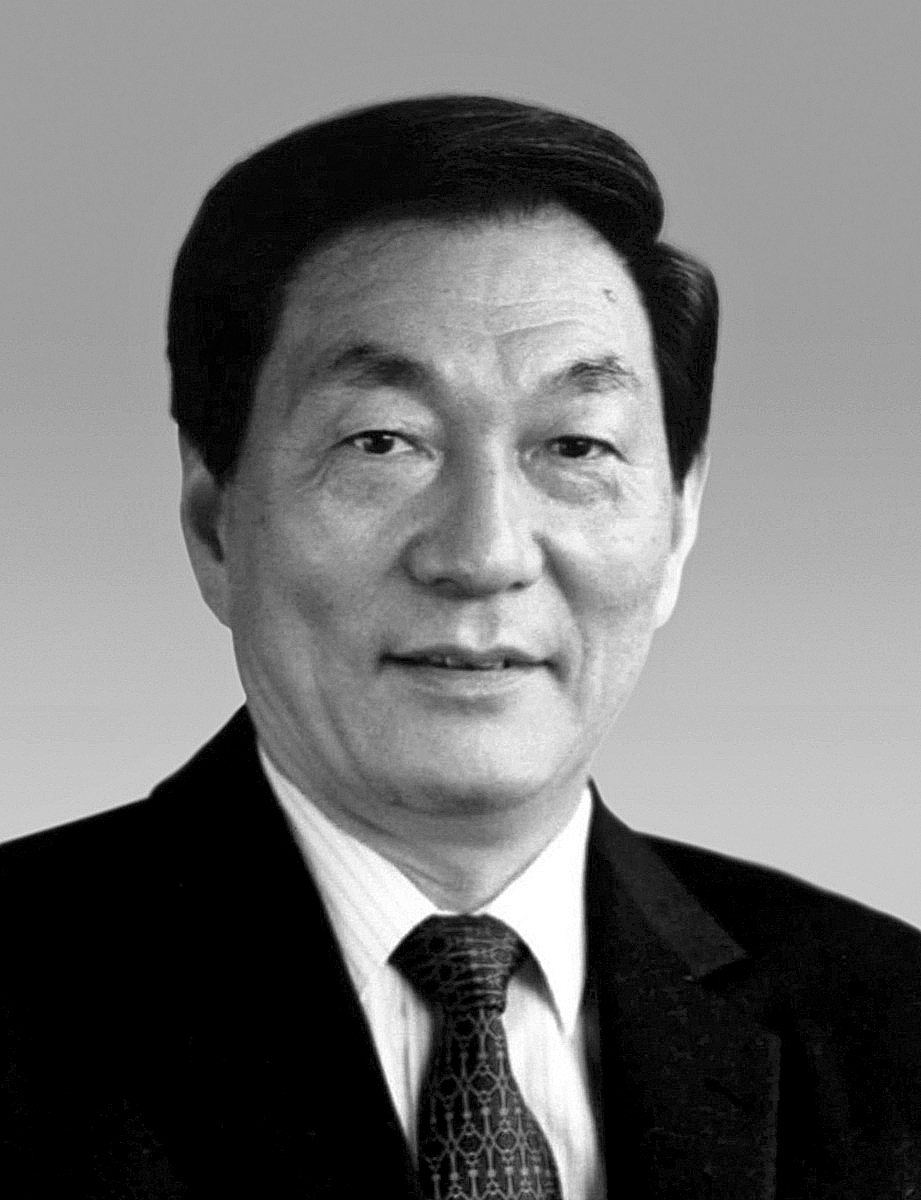
Former premier Zhu Rongji passed away in Beijing on Wednesday. He was 98.
Zhu, who had served as a member of the Standing Committee of the Political Bureau of the 14th and 15th Central Committees of the Communist Party of China, died of illness, according to an official obituary.
The obituary was jointly issued by the CPC Central Committee; the Standing Committee of the National People's Congress, China's top legislature; the State Council, China's Cabinet; and the National Committee of the Chinese People's Political Consultative Conference, China's top political advisory body.
It extolled Zhu as an excellent Party member, a time-tested and loyal communist fighter, and an outstanding proletarian revolutionist, statesman and leader of the Party and the State.
Born in October 1928 in Changsha, Hunan province, Zhu joined revolutionary work in December 1948 and became a CPC member in October 1949.
Between 1987 and 1991, he served successively as deputy secretary of the CPC Shanghai Municipal Committee, mayor of Shanghai, and secretary of the CPC Shanghai Municipal Committee.
During his tenure, he advocated for adjusting the city's industrial structure, developing an export-oriented economy and enhancing its international competitiveness.
READ MORE: HK, Macao SARs mourn Zhu, praising his support
Zhu played a crucial role in advancing the development and opening-up of Shanghai's Pudong New Area. His efforts laid a solid foundation for Shanghai's further reform, opening-up and development, the obituary said.
In 1991, Zhu was appointed vice-premier of the State Council.
In October 1992, he was elected a member of the Political Bureau of the CPC Central Committee and its standing committee, and he was responsible for the executive work of the State Council.
In June 1993, he concurrently served as the governor of the People's Bank of China, the country's central bank.
Zhu studied and developed approaches and measures to strengthen and improve macroeconomic regulation, making significant and effective contributions to curbing an overheated economy, reining in inflation and achieving an economic "soft landing".
He pushed forward efforts to rectify and restore order in the fiscal and taxation sectors, accelerated fiscal and tax reforms and helped improve China's financial regulation system.
In September 1997, Zhu was reelected a member of the Political Bureau of the CPC Central Committee and its standing committee.
In March 1998, he was appointed premier of the State Council, and he later served as the secretary of the leading Party members group of the State Council.
Facing the impact of the Asian financial crisis and the catastrophic flooding in China, Zhu focused on a shift from implementing a moderately tight fiscal and monetary policy to adopting a proactive fiscal policy and a prudent monetary policy, expanding domestic demand and deepening reforms in key areas, thereby maintaining steady and rapid economic growth.
During Zhu's tenure as vice-premier and premier of the State Council, a series of policies and measures were adopted to expand opening-up, encourage exports, keep the renminbi exchange rate stable without devaluation, attract foreign investment, and firmly safeguard the prosperity and stability of the Hong Kong Special Administrative Region as an international financial center.
He also presided over the implementation of major reforms in the social security system, healthcare system, and investment and financing system, among others, promoting the establishment of the basic framework of a socialist market economy.
He oversaw the completion of the arduous negotiations for China's accession to the World Trade Organization.
In March 2003, Zhu no longer served as premier of the State Council. After retiring from leadership posts, he steadfastly upheld and supported the leadership of the CPC Central Committee.
He continued to care about the great cause of socialism with Chinese characteristics and firmly supported efforts to improve conduct, promote integrity and fight corruption.
Zhu's life was a revolutionary, fighting and glorious one, and one that was dedicated to wholeheartedly serving the people and the communist cause, the obituary said, adding that his death is a great loss to the Party and the State.
Xinhua contributed to this story.
Contact the writers at caodesheng@chinadaily.com.cn
