

Director underlines strategies on protection, promotion
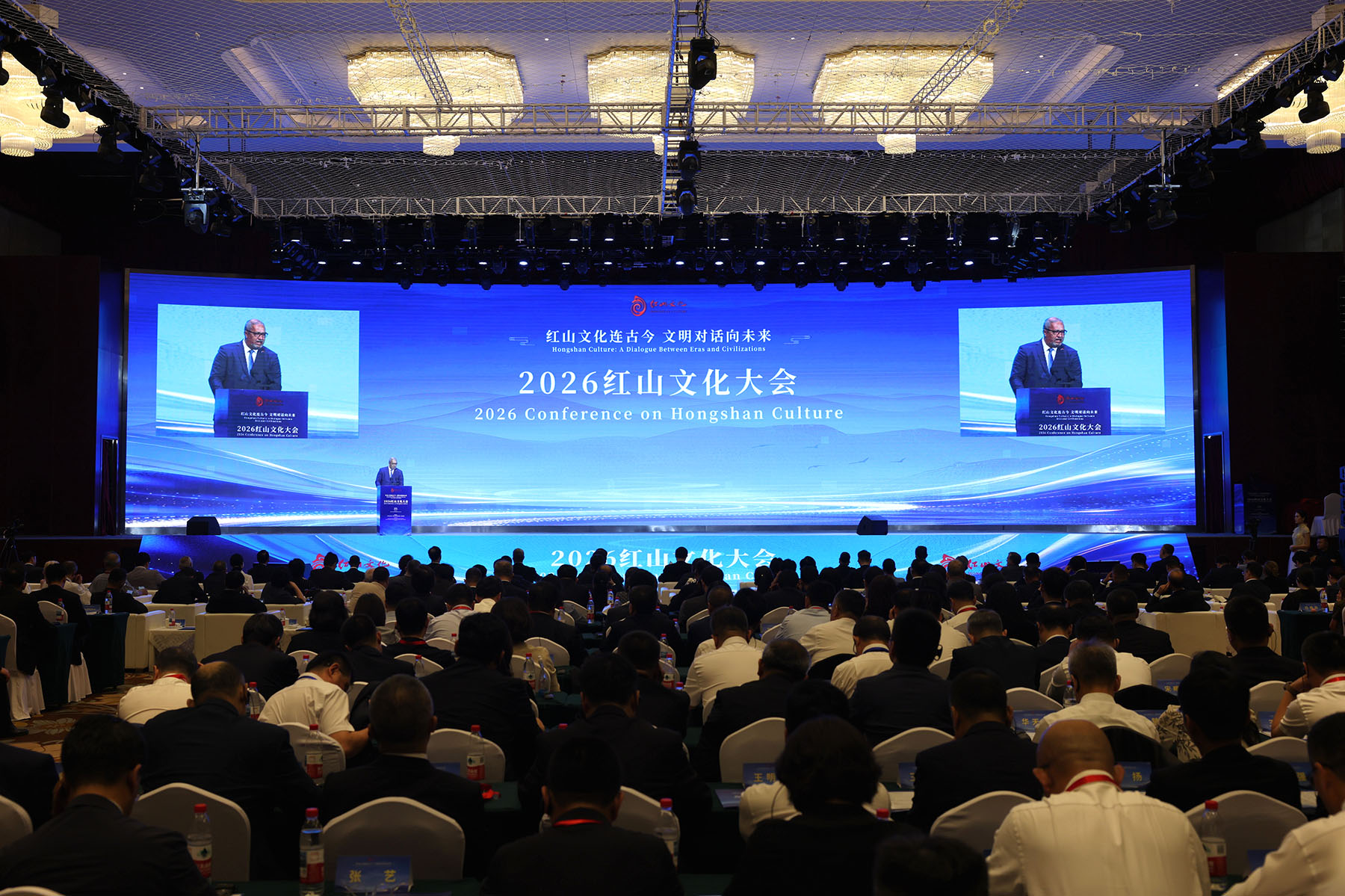
Editor's note: On Wednesday, an event in Chaoyang, Liaoning province — a cradle of the prehistoric Hongshan culture from over 5,000 years ago — brought together experts under the theme "Hongshan Culture: A Dialogue Between Eras and Civilizations". Speakers highlighted the lasting legacy of Hongshan ancestors and advocated for broader cross-cultural dialogue and mutual learning.
The rich archaeological features and unearthed artifacts of Hongshan culture continue to provide scientific evidence supporting the development of China's archaeological theories. By empowering the growth of archaeology tailored to Chinese features, style and ethos, these discoveries contribute a fresh perspective and invaluable wisdom to global studies on how early human civilizations first took shape.
Addressing attendees at the 2026 Conference on Hongshan Culture on Wednesday in Chaoyang, Liaoning province, Rao Quan, director of the National Cultural Heritage Administration, underscored the deep-seated significance of this heritage within Chinese civilization while outlining key strategies for its future preservation and global promotion.
READ MORE: Dialogue highlights Hongshan culture protection
"As a key prehistoric archaeological culture in northern China, Hongshan offers a valuable sample for studying the origins of Chinese civilization through its unique jade ritual system, monumental sacrificial remains, and complex belief system. It demonstrates the pluralistic yet unified nature of Chinese civilization," Rao said. "It also carries the shared cultural memory of the East Asian civilization circle, possessing a natural affinity that transcends national borders and resonates with diverse audiences."
Rao commended the recent, dedicated efforts made by Liaoning and Hebei provinces and the Inner Mongolia autonomous region. By enacting systematic protection measures and seamlessly weaving cultural preservation into modern development, local governments have injected powerful momentum into cultural construction.
"The National Cultural Heritage Administration has long supported the protection and research of Hongshan culture, actively upheld regional governments' efforts, facilitated the construction and opening of the Niuheliang National Archaeological Site Park, and placed Hongshan culture on the World Heritage tentative list," Rao said.
To build on this momentum, he advocated for a comprehensive resource inventory on the basis of the ongoing fourth national census of cultural relics. Upgrading site protection frameworks and cementing cross-provincial safeguards will be vital to keeping these ancient sites intact for future generations.
ALSO READ: International importance of China's ancient past highlighted
"With a sense of responsibility to history and the people, we will make Hongshan cultural sites important venues where people can touch history and feel the depth of civilization. This will lay a solid foundation for deeper academic research and broader preservation and utilization efforts," he added.
Beyond basic preservation, Rao emphasized bringing modern science into the field. By harnessing advanced techniques such as isotope monitoring, paleoenvironmental reconstruction and ancient DNA analysis, researchers can unearth a clearer picture of how Hongshan societies adapted and contributed to early Chinese civilization.
Looking to the international stage, Rao called for dynamic global partnerships, high-profile overseas exhibitions, and joint academic conferences to share the story of Hongshan culture and the roots of Chinese civilization with the world.
"We will make the Hongshan culture an important window through which people around the world can understand the lineage of Chinese civilization," he said.
Contact the writers at wangru1@chinadaily.com.cn
