

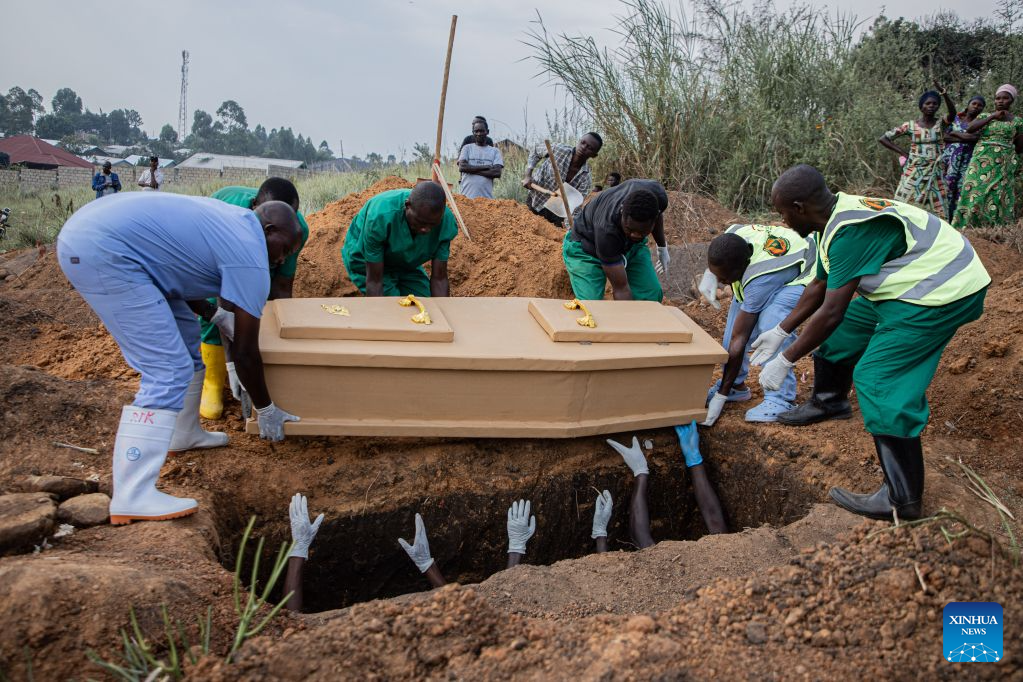
KINSHASA - Confirmed Ebola cases in the Democratic Republic of the Congo (DRC) have surpassed 2,000 as the World Health Organization (WHO) warned the true scale of the outbreak could be "at least two to four times" the reported caseload.
A total of 2,011 confirmed cases, including 754 deaths, were reported, according to the latest report released by the country's health authorities on Tuesday.
The announcement came as the WHO warned earlier in the day that undetected transmission, community deaths and rapid geographic expansion threatened to keep the response behind the epidemic curve.
ALSO READ: DR Congo reports Ebola cases in 5 provinces, caseload nears 1,900
Chikwe Ihekweazu, executive director of the WHO Health Emergencies Programme, said the current outbreak, caused by the Bundibugyo Ebola virus, was growing faster than any Ebola outbreak.
The outbreak, declared in mid-May, has spread to five provinces and is already the third-largest Ebola outbreak ever recorded, according to the WHO.
Fastest growth
"We've seen the fastest growth in a single month since the outbreak started and of all the Ebola outbreaks that we have managed," said Ihekweazu.
"This is a fire," he said, describing the epidemic that is being fuelled in its core areas while simultaneously spreading outward.
The outbreak appears to be entering a "new phase" characterized by progressive geographic expansion beyond its original epicenter in the Ituri province, said a weekly situation report by the WHO regional office for Africa released Tuesday.
The outbreak has newly spread to two more provinces, namely Tshopo and Haut-Uele, increasing the complexity of the response and elevating the risk of further national and cross-border spread, the report said.
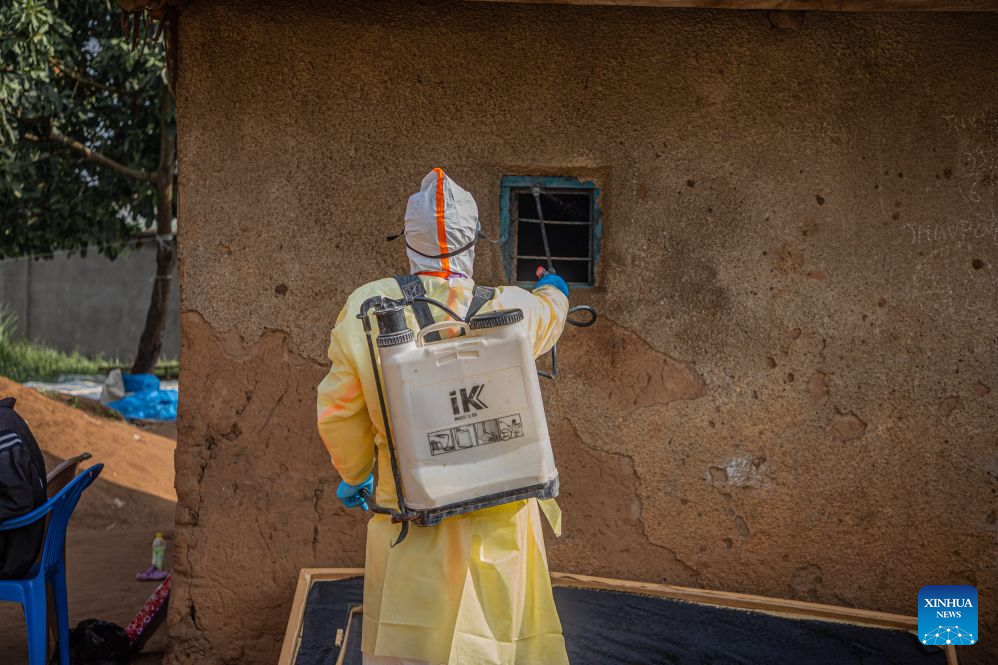
DRC health authorities said on Tuesday that the emergence of new cases in Haut-Uele, which has so far reported 14 cases, including 13 deaths, indicated a further geographical spread, requiring an immediate strengthening of surveillance, diagnostic capacity and operational preparedness.
The detection of cases in Kisangani, a city of more than 1.6 million people and a major transport hub linking east and west of the country, highlighted the risk of wider transmission along key transport corridors, including the Congo River, the UN Office for the Coordination of Humanitarian Affairs warned on Tuesday.
Hidden transmission
Despite improvements in laboratory capacity and contact monitoring, around 80 percent of newly confirmed patients were not previously listed as contacts of known cases, which means they were emerging from "unknown chains of transmission," Ihekweazu said.
As of Monday, 12,430 contacts of confirmed cases have been under surveillance, with the follow-up rate at 67.4 percent, health authorities said, well below the recommended operational target of 95 percent.
The mortality pattern points to the same delays. During the reporting period, 205 confirmed deaths were recorded, nearly 68 percent of which occurred outside treatment facilities, indicating that delayed presentation for care continues to contribute substantially to mortality, said the WHO report.
ALSO READ: DRC Ebola outbreak infects 75 medics since May, WHO says
The current outbreak is caused by the Bundibugyo Ebola virus, for which there is no approved vaccine or specific treatment, unlike the better-known Zaire species.
On Tuesday, a first clinical trial was launched to assess whether the antiviral obeldesivir can prevent Bundibugyo Ebola infection after exposure.
The trial is being conducted in the DRC and Uganda and aims to enroll nearly 1,000 adults and children aged over 12, said the WHO. Eligible participants must have had direct contact with a confirmed patient, an infected body or a contaminated needle within the previous five days. Recruitment will continue in line with the evolution of the outbreak.
A separate WHO-backed trial, PARTNERS, was launched in the DRC on July 2 to evaluate treatments for patients already infected, as the trial is assessing the monoclonal antibody MBP134 and the antiviral remdesivir, individually and in combination.
Wider crisis
The Ebola response is unfolding against the backdrop of a much broader humanitarian emergency in eastern DRC, where armed violence, mass displacement, food insecurity and multiple disease outbreaks are competing for already limited resources.
Treatment capacity is under mounting strain. As of Monday, 753 patients were in isolation or hospitalization, while Ebola treatment and care facilities were operating at an average of 87.4 percent occupancy nationwide and at or near full capacity in several high-transmission areas, said authorities.
The response has been further complicated by insecurity, attacks on health workers and facilities, community mistrust, patients leaving treatment centers before completing care, and protests by frontline responders over working conditions and unpaid allowances.
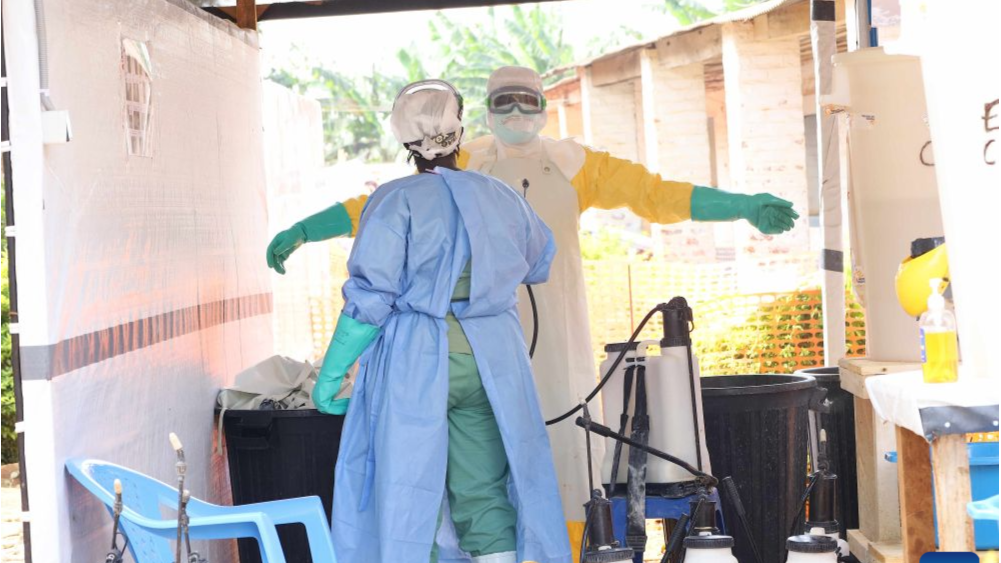
A total of 114 health workers had been infected, and 36 had died, authorities said, underscoring persistent gaps in infection prevention and control at health facilities.
Ihekweazu said reducing resistance and preventing further attacks would require greater transparency, the early involvement of community leaders and clear assurances that patients would not be isolated and abandoned.
Beyond the treatment centers, the outbreak is spreading through provinces already deeply affected by conflict and displacement. UN humanitarian figures showed that the DRC had hosted about 5.8 million internally displaced people by the end of March, including some 923,000 in Ituri and 1.2 million in North Kivu, the two provinces bearing the heaviest burden of Ebola transmission. Around 307,000 people had been newly displaced nationwide since the beginning of the year.
READ MORE: WHO says Ebola outbreak expands fast in DRC, spreads to Uganda
The outbreak is also competing for attention and resources with other major public health emergencies. During the first 26 weeks of 2026, the country reported about 32,100 cholera cases, 99,200 measles cases and 22,800 mpox cases, according to UN humanitarian data released on Tuesday.
Despite the pace of transmission, Ihekweazu urged governments and international partners not to become resigned to the outbreak.
"We need the world to come together, not just out of charity or out of support for the DRC, but in our own enlightened best interest," he said. "The more we do right now, the better placed we will be in the future."
