

Middle East conflict flares up, raising concerns as global oil prices increase
The Middle East conflict flared up dramatically on Wednesday as the United States and Iran exchanged strikes, raising fears that the war could reignite as the world looks to push for a lasting ceasefire and the full reopening of the strategically vital Strait of Hormuz.
US President Donald Trump said on Wednesday that the memorandum of understanding signed with Iran to end the conflict was "over", though he left room to continue diplomatic talks. "It's just a waste of time dealing with them. I'll let our wonderful negotiators keep talking if they want, but I don't see it," he told reporters in Ankara, Turkiye.
Hours after he said the ceasefire was over, Trump said that the US is preparing for another night of strikes against Iran.
READ MORE: US forces strike Iran for second straight day
Global oil prices surged nearly 6 percent immediately after his remarks, with Brent crude climbing above $78 per barrel. Crude benchmarks had cooled off recently, falling from peaks above $100 a barrel to levels seen before the conflict began in late February.
China called on both sides to fully implement the signed MoU, resolve disputes through dialogue and negotiations, and refrain from resorting to force.
"We are closely monitoring the latest developments. A renewed conflict serves no party's interests and military measures cannot resolve fundamental issues," Foreign Ministry spokeswoman Mao Ning said.
Iranian state media on Wednesday reported a wave of explosions around the strait, including six on the island of Qeshm, seven in the city of Sirik and more in the major port city of Bandar Abbas. It later reported a series of blasts in the port city of Bushehr, which hosts the country's only civilian nuclear power plant and lies near Kharg Island, the main oil terminal through which 90 percent of the nation's crude exports transit.
Washington's targets
The US military said it had earlier launched "powerful strikes" against Iran after attacks on three commercial ships in the strait, including Qatari and Saudi tankers, despite no claim of responsibility from Tehran. Washington's targets covered Iranian air defense systems, radar sites and over 60 small military boats, marking the largest US military operation against Iranian assets since the April ceasefire took effect.
Tehran's reply came quickly, with the Islamic Revolutionary Guard Corps saying they hit 85 US military facilities in Bahrain and Kuwait. Missile alert sirens blared across both host nations — Bahrain hosts the US Navy's Fifth Fleet, while Kuwait stations US Army troops. The IRGC also claimed it shot down a US MQ-9 surveillance drone over southern Iranian territory.
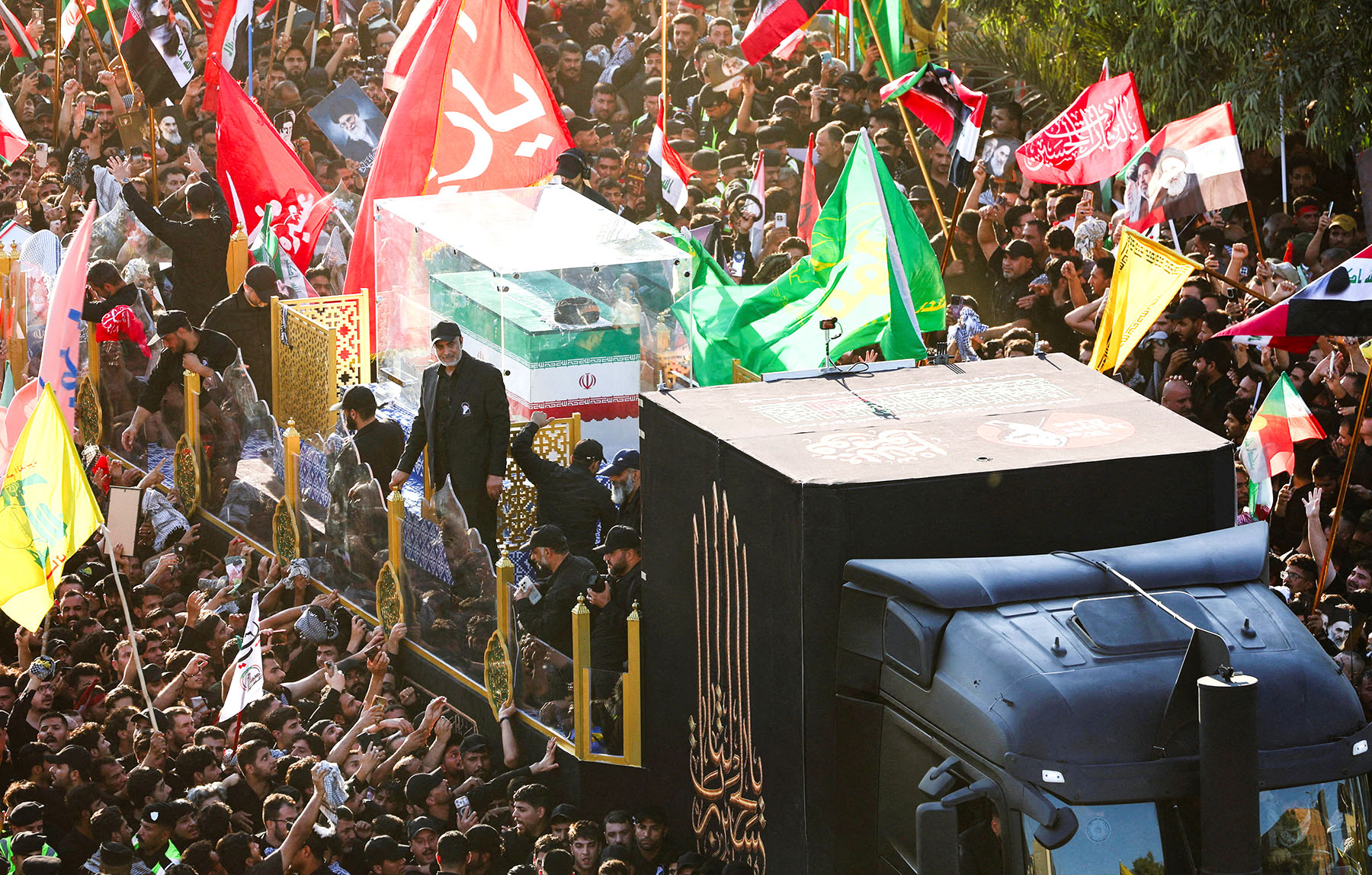
The dangerous escalation unfolded amid multiday national mourning rites for the late Iranian supreme leader Ali Khamenei, killed in US-Israeli airstrikes on Feb 28. The funeral period, set to conclude on Thursday, had been widely expected to bring a temporary lull in tensions.
Negotiations to reach a final deal had been due to start after Khamenei's burial and focus on the toughest matters, including fully reopening the strait and rolling back Tehran's nuclear program. But the tit-for-tat strikes have cast major doubts over those planned talks.
Iran's Parliament Speaker Mohammad Baqer Qalibaf described the US attacks as "major violations" of the MoU. "The era of bullying and extortion is over," he wrote on X. "It leads nowhere. We don't fold."
ALSO READ: Body of Iran's late supreme leader arrives in Iraq for funeral processions
Earlier, Iranian Foreign Minister Seyed Abbas Araghchi said negotiations on a final agreement with the US "will not commence" if threats continue.
The exchange of fire "further complicates already fraught talks to end the war", the European Union's top diplomat Kaja Kallas said on Wednesday on X, adding that EU foreign ministers would discuss with their Gulf counterparts on Monday how to "preserve freedom of navigation" in the Strait of Hormuz and Red Sea.
Anwar Gargash, a senior diplomat in the United Arab Emirates, called Iran's retaliatory attacks on Bahrain and Kuwait "a clear indicator that Tehran remains incapable of committing to the requirements of de-escalation and turning the page on war".
Zhang Yunbi in Beijing contributed to this story.
Contact the writers at cuihaipei@chinadaily.com.cn
