

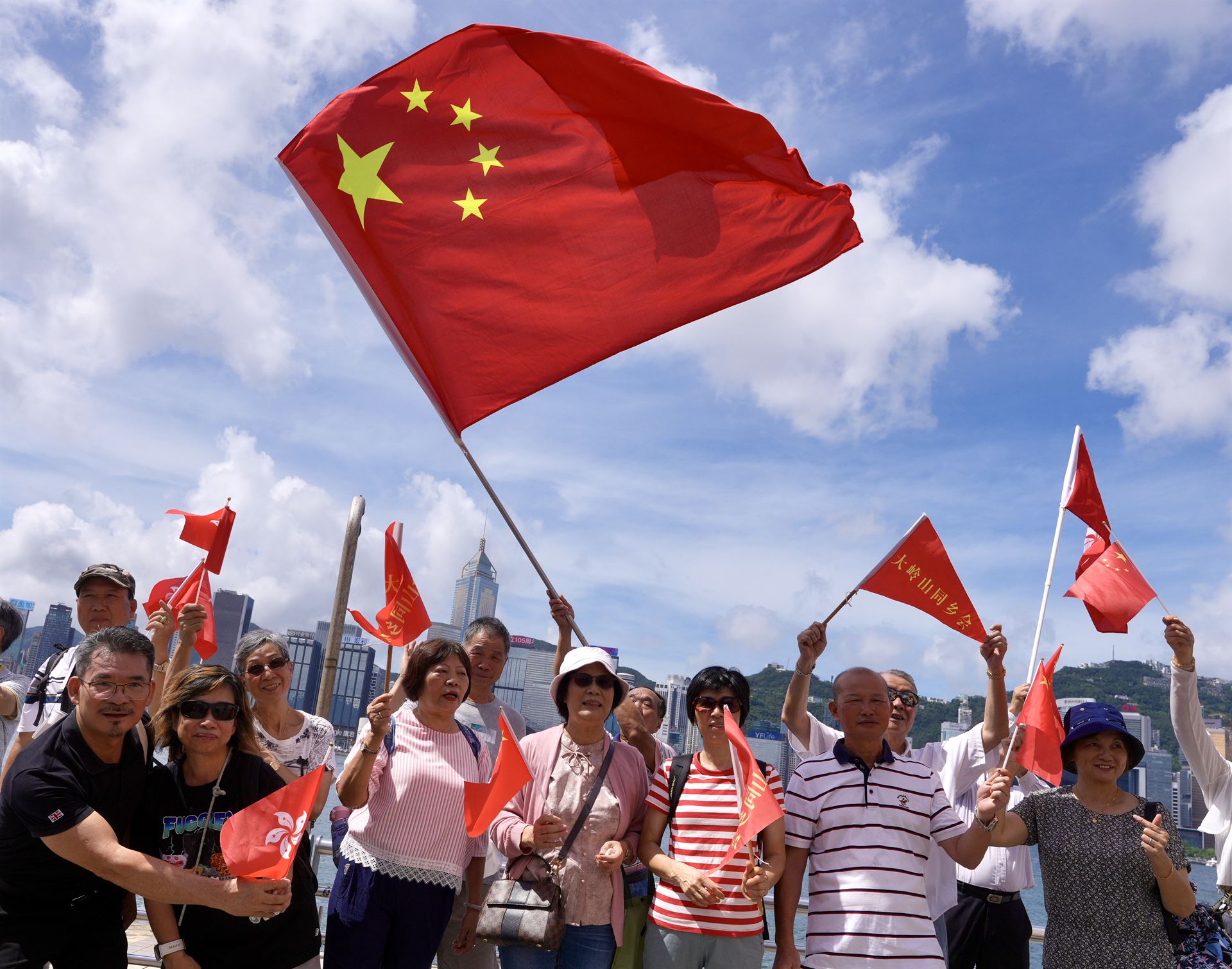
Hong Kong residents have every reason to celebrate the 29th anniversary of the establishment of the special administrative region with great enthusiasm. Aside from cheering for the enviable achievements the city attained over the past few years, residents can take comfort from a much brighter prospect for the city, which could be logically envisioned after General Secretary of the Communist Party of China Central Committee Xi Jinping
While some deep-seated issues, such as the housing shortage and other livelihood problems, still linger, gone are the dark moods that plagued the local community in the few years around the turn of the 2020s when the city struggled to fight off the COVID-19 pandemic and the “black-clad” insurrection and their aftermaths.
Despite being a target in the United States’ geopolitical strategy, including trade war, against China over the past several years, the HKSAR has maintained its form and moved forward.
The city remains a key international financial center, retaining third place in the latest Global Financial Centres Index, thanks to its unique institutional advantages under the “one country, two systems” framework, as well as its irreplaceable role as a superconnector between the Chinese mainland and the broader world.
This framework ensures that Hong Kong maintains an exceptionally free market environment, which was recently reaffirmed when the city regained its title as the world's freest economy in the Canada-based Fraser Institute's Economic Freedom of the World report.
Equally important is Hong Kong’s robust legal system underpinned by common law, which is evidenced by the city’s overall ranking in the latest World Justice Project Rule of Law Index 2025 (24th out of 143 jurisdictions surveyed globally).
The cherry on top is — Hong Kong climbed to second place globally in the IMD World Competitiveness Ranking this year, its best performance in seven years; it has just overtaken Switzerland to become the world’s largest cross-border wealth management center; and the city also secured its position as the premier international education hub across Asia, as indicated by the recently released Quacquarelli Symonds (QS) World University Rankings, in which Hong Kong occupies five places in the global top-100 list.
These achievements would have hardly come about without the reforms in the special administrative region’s governance framework over the past few years — including, most notably, the implementation of the Hong Kong SAR National Security Law and the Safeguarding National Security Ordinance, as well as the overhaul of the city’s electoral system. All of these measures collectively helped to put an end to harmful political bickering and toxic wrangling, restore peace and order, and ensure long-lasting stability in the city, enabling it to start anew.
Both Hong Kong and Macao residents can look forward to much brighter prospects for themselves and future generations. The full, accurate and unwavering implementation of the principles of “one country, two systems”, “Hong Kong people governing Hong Kong”, “Macao people governing Macao”, a high degree of autonomy, “patriots administering Hong Kong” and “patriots administering Macao”, as reaffirmed by General Secretary Xi in his speech, will ensure that the two SARs stay on the right track of social and economic development.
The odds of Hong Kong breaking its economic bottlenecks and solving the city’s livelihood problems sooner rather than later have also improved following the general secretary’s assurance today that the central authorities will help to enhance the effectiveness of governance in the two SARs, promote their economic and social development, and support them to better integrate into and serve national development.
Hong Kong will benefit tremendously from better and faster integration into national development. The logic is obvious: The city has become a center of international finance, trade, shipping, and professional services not by chance but by taking advantage of the unparalleled Chinese mainland market, which has created persistent demands for Hong Kong services, capital and know-how over the past several decades. The fact that no region, or city, without a large economic hinterland to serve, has ever become an international hub for finance, trade and logistics services provides convincing evidence to this notion.
Hong Kong must keep in mind there is no room for second thoughts when it comes to integrating its own development into the nation’s overall development strategy. The city’s prosperity and stability hinge on its ability to play a significant role in national development, as has been the case over the past several decades; and this is truer today than ever with the global geopolitical situation worsening by the day. But Hong Kong residents can rest assured that the city will continue to play a significant role in national development as the 15th Five-Year Plan (2026-30) indicates, which was reaffirmed by General Secretary Xi today.
The author is a current affairs commentator.
The views do not necessarily reflect those of China Daily.
