

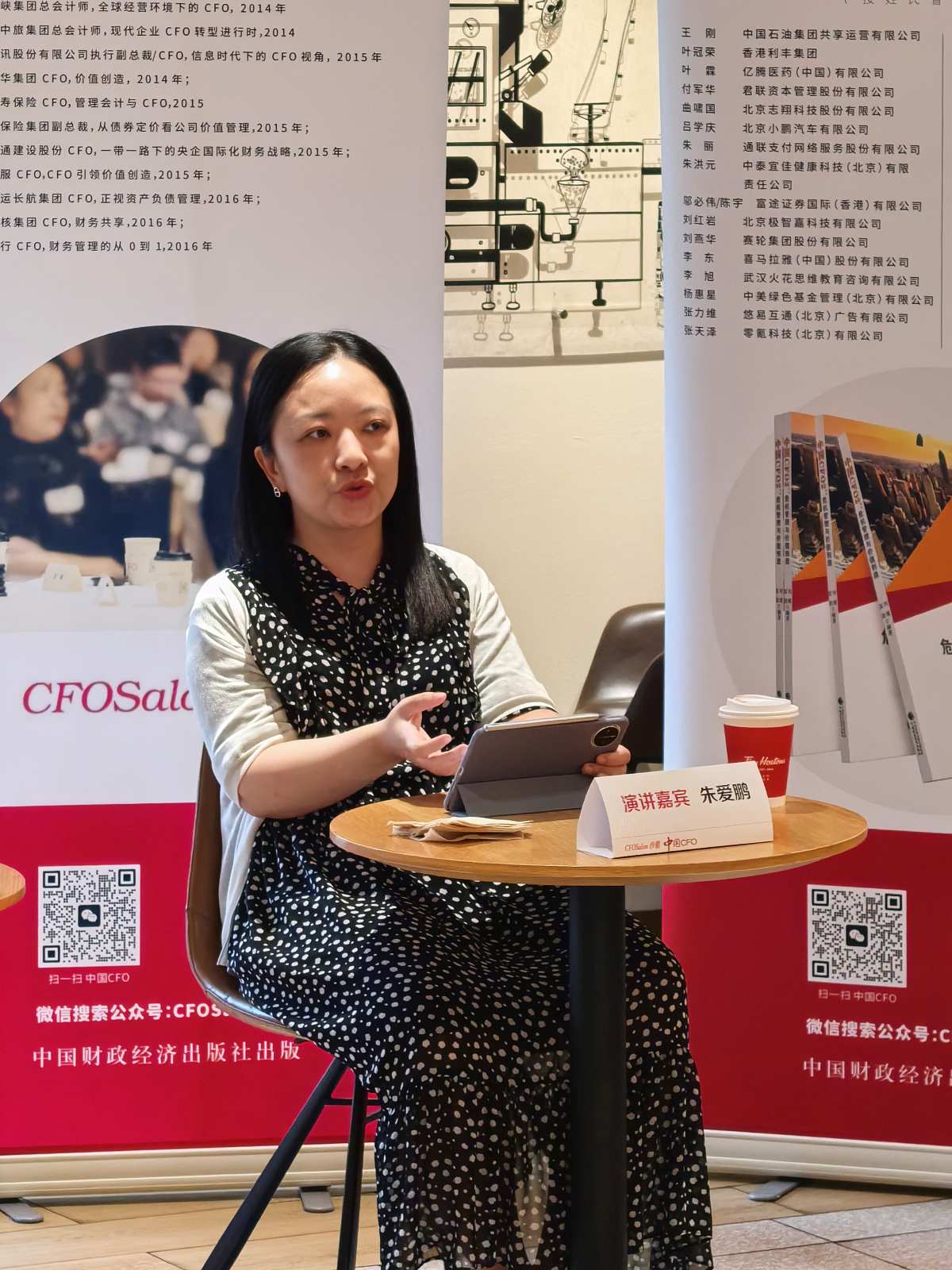
Leveraging China’s robust electronic manufacturing supply chain, Orange Automation has formulated a clear long-term strategy responding to the evolving industry paradigm, according to Jessie Zhu, CFO of the company.
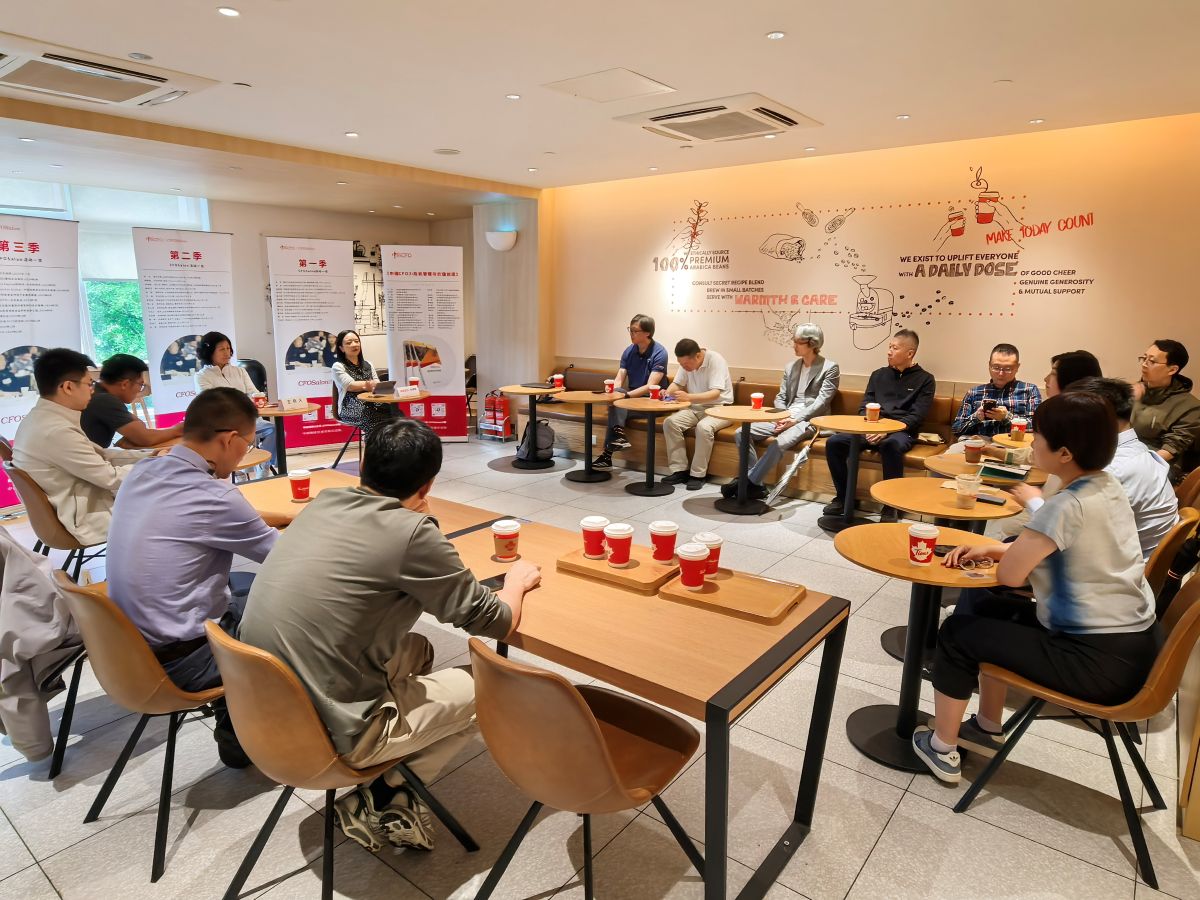
Zhu said this while presenting her keynote at the fourth season of the CFO Salon held in Beijing on May 17. She focused on the competitive landscape of the general electronic testing industry, Orange Automation’s phased overseas expansion strategies and differentiated product innovation initiatives.
She started her career at one of the Big Four accounting firms before moving to the Investment Banking Division of Huatai United Securities, where she worked for nearly a decade. She joined Orange Automation four years ago, marking a notable career shift from the financial industry to the technology manufacturing sector.
Drawing on her rich cross-industry experience and the company’s practical operations, Zhu engaged in in-depth exchanges with participating guests.
Oligopolistic industrial landscape
The electronic testing industry is divided into two core segments: general electronic testing and specialized electronic testing. Semiconductor testing, a widely recognized track, falls under specialized electronic testing, with leading domestic players including Naura Technology and Advanced Micro-Fabrication Equipment (AMEC). Orange Automation, by contrast, focuses exclusively on the general electronic testing sector.
Similar to its specialized counterpart, the general electronic testing industry boasts high technical barriers, with Chinese indigenous enterprises still facing a substantial gap compared with top-tier European and American players. The global market is currently defined by a distinct oligopolistic landscape.
The first tier is dominated by Keysight Technologies of the US and Rohde & Schwarz of Germany. The two giants hold a near-monopoly position in communications, military, and industrial high-frequency signal testing, capturing approximately 90 percent of the high-end market and accounting for more than 50 percent of the overall global market share.
MORE IN CFO SERIES:
- ‘Embrace the trend, accompany with resilience’
- Exploring the path of fitness technology
- Ma Jin discusses application of ai agents in marketing and sales
- CFO salon hosts media management expert Zhou Jingdong
Founded in the 1930s, both companies have benefited from unique historical opportunities that underpinned their core technology accumulation and explosive growth. They have completed a full industrial cycle, evolving from military technology research and development to empowering civilian market applications. Today, Keysight has accumulated over eight decades of testing data and is accelerating its software-oriented transformation. Leveraging artificial intelligence technology to process and analyze massive testing datasets, the company has built an impregnable competitive moat.
The gap between Orange Automation and first-tier players extends beyond mere technological generation differences, Zhu pointed out. It represents a comprehensive disparity in long-term industry accumulation, data assets, and industrial ecosystems. As such, overtaking these leaders in the short term is unrealistic. The most viable strategy is to learn from their long-term development philosophies and build capabilities steadily.
Meanwhile, the second tier consists of four to five enterprises, represented by the US-based Tektronix and National Instruments. These companies feature diversified product portfolios and flagship mid-to-high-end products, leaving room for Orange Automation to catch up through sustained long-term investment.
The third tier comprises numerous enterprises from Italy, Japan, China and other regions, which generally feature relatively single product lines.
According to Zhu, Orange Automation is currently positioned in the lower-middle segment of the third tier. Backed by China’s robust electronic industry supply chain, the company has forged prominent advantages in product cost performance and delivery efficiency. Its shipment volume of flying probe test equipment has risen from fourth to second worldwide and is on track to rank first globally within this year.
Phased overseas expansion
While discussing the company’s overseas expansion strategy, Jessie Zhu said Orange Automation, as a small and medium-sized technology innovation enterprise, adopts a distinctly different global expansion path from large corporations. Instead of focusing on production capacity export or passively following client relocation, the company’s overseas layout is a proactive strategic choice based on its industrial chain positioning and global competitive dynamics.
The first phase of overseas expansion spanned from 2022 to 2023, when the company’s core product models achieved comprehensive technical maturity. Facing high market education costs for domestic clients, the company shifted its strategic focus to overseas markets. Market analysis showed that Penang, Malaysia hosts concentrated production lines of global leading electronic manufacturers compatible with the company’s core testing equipment. The local market demonstrates high acceptance of testing equipment with lower user education thresholds.
While Japanese competitors dominate the local market, their products deliver relatively low cost performance. Against this backdrop, Orange Automation selected Penang as its first overseas foothold. By partnering with professional local distributors and recruiting local talent, the company achieved remarkable brand influence growth in the region within two years.
She stressed that this initial phase prioritized brand building and market validation rather than simple order acquisition. The successful market breakthrough in Penang also generated positive feedback for the company’s domestic business. As major global manufacturers with local operations in China recognized Orange Automation’s overseas performance, international market recognition quickly translated into domestic market credibility, forming a virtuous business cycle.
Entering the second phase of expansion, the company has expanded its mature product lineup from two models to more than 20, prompting the company to roll out long-term strategic layouts spanning one to two decades. Amid escalating de-globalization trends, the team has reassessed the priority of global regional markets.
Driven by shifting international geopolitical dynamics and local manufacturing demands, the European market, previously ranked low in the company’s layout plan, has witnessed significant strategic value upgrades. Distributors from Italy, the United Kingdom and other European regions have proactively reached out to Orange Automation via online channels to seek exclusive partnership opportunities.
Zhu pointed out that the South Korean market, meanwhile, has achieved major breakthroughs. A leading global electronic manufacturing service provider, driven by operational demands from Samsung’s Vietnamese factories, placed a large-scale order with Orange Automation for flying probe test equipment to detect defective circuit boards, with the initial order volume reaching the hundred-unit level.
Building on these positive market changes, Orange Automation has designated Eastern Europe, Western Europe and South Korea as the core focus of its second-phase overseas expansion, while adopting a prudent and wait-and-see approach toward the Japanese and US markets.
Reshaping demands
Elaborating on Orange Automation’s innovative thinking in product definition, the CFO said traditionally, flying probe testers are mainly deployed in the New Product Introduction (NPI) pilot production phase. Italian competitors estimate the global flying probe market size at merely RMB 2 billion annually.
She said Orange Automation has keenly captured the trend of flexible production in the electronics manufacturing industry and pioneered the concept of online flying probe testing. The solution integrates flying probe equipment into mass production lines and adopts a parallel multi-unit setup to optimize overall production line efficiency, achieving optimal application scenarios in flexible electronics manufacturing.
Innovative model
Technology Group, a leading domestic PCBA manufacturer renowned for its small-batch and multi-variety production strategy. Orange Automation has deployed approximately 200 sets of online flying probe testing equipment for the client, enabling intelligent mold and program switching within 10 minutes. This upgrade transforms testing procedures from an offline auxiliary process into a core productive asset, which has been fully integrated into JLC’s online billing system.
The solution has also been successfully implemented by a top-tier automotive electronics manufacturer. This groundbreaking innovation has substantially lifted the market ceiling for flying probe testing equipment, expanding the industry scale from the original RMB 2 billion to the RMB 10 billion level, according to Zhu.
Looking ahead, Zhu shared Orange Automation’s strategic judgment on the future industrial landscape. Global industry leader Keysight is accelerating its transformation from a hardware-centric operation to software-driven development, underpinned by its invaluable cross-industry testing data accumulated over eight decades. In the AI era, such massive datasets enable intelligent analysis and predictive testing solution delivery for clients, proving that hardware serves only as an entry point while data and software constitute the core competitive strength.
The company has also relocated its headquarters registration to Guiyang to access local computing resources, building robust capabilities for testing data storage and intelligent analysis to foster differentiated competitive advantages in the AI era.
