Program development highlights inno-tech, aligned with Hong Kong SAR’s Policy Address and first Five-Year Plan
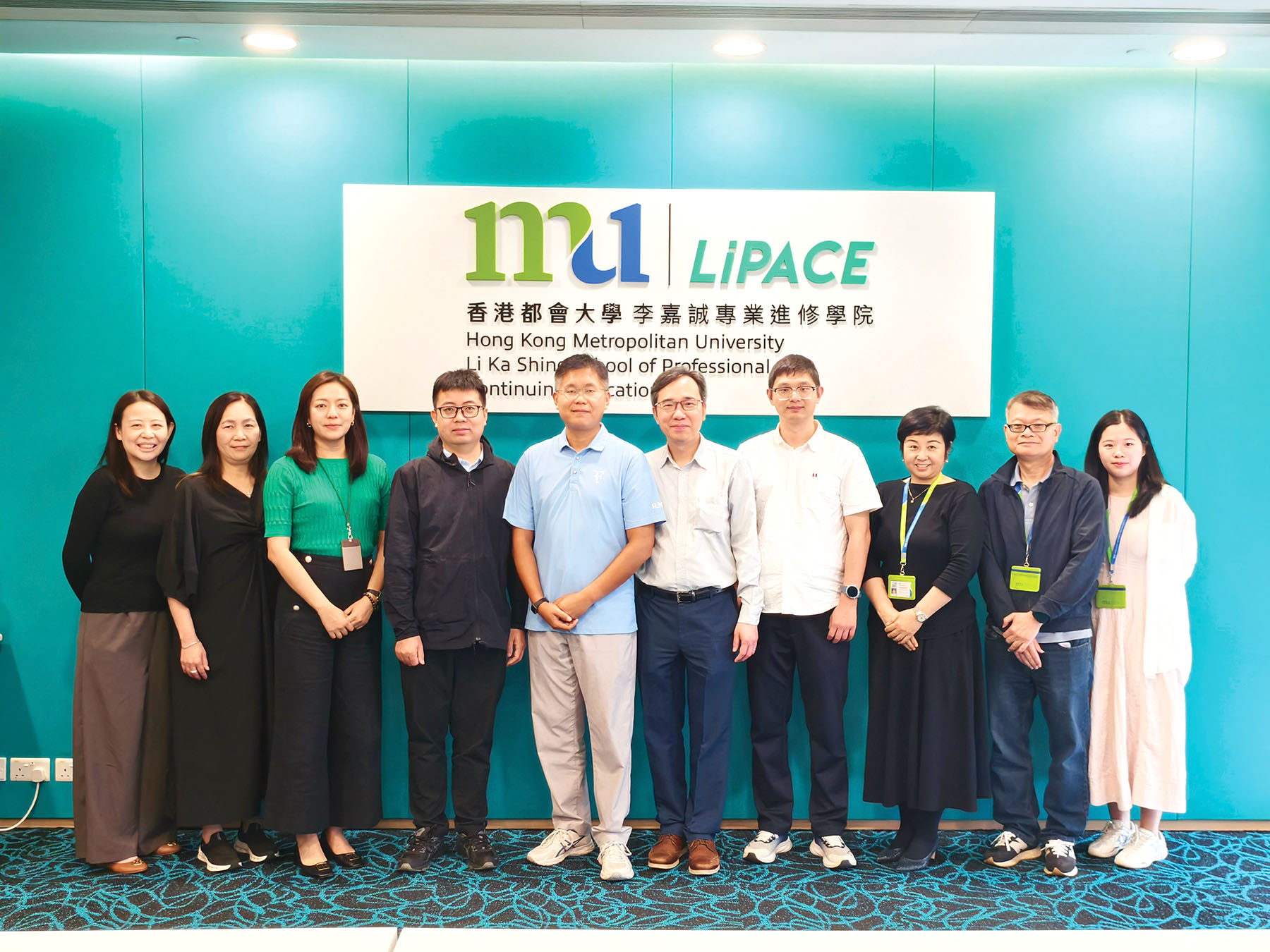
A school in the Hong Kong Special Administrative Region and one in Shenzhen have codeveloped a new higher diploma program aimed at cultivating a new generation of professionals who combine strong business acumen with digital agility.
The Higher Diploma in Digital Business Practice (FHDDBP) was jointly developed by Hong Kong Metropolitan University’s Li Ka Shing School of Professional and Continuing Education (HKMU LiPACE), and the School of Computer and Software at Shenzhen University of Information Technology (SUIT). Drawing on the educational strengths and shared vision of the institutions on both sides of the border, the program aims to contribute to the economic development of the Guangdong-Hong Kong-Macao Greater Bay Area, particularly the HKSAR, over the next decade.
Designed to respond to the accelerating trend of digital transformation, with artificial intelligence becoming essential to corporate survival, this initiative aligns with the Hong Kong Chief Executive John Lee Ka-chiu’s Policy Address, which identified an urgent need for cross-disciplinary talent capable of seamlessly integrating business strategy with technological expertise.
The emphasis on innovation, technology, and industrial development is expected to be further reinforced in the First Five-Year Plan for Economic and Social Development of the Hong Kong Special Administrative Region, which is currently under public consultation.
LiPACE, one of the schools of HKMU, the first university of applied sciences in Hong Kong, provides 13 higher diploma programs, while maintaining a strong collaboration network with mainland higher vocational institutions as well as overseas colleges and universities.
Its collaboration partner, SUIT, is a public vocational institute specializing in information and communications technology. Its School of Computer and Software, one of the first National Pilot Software Engineering Schools, is among the first national-level vocational education teacher innovation teams.
This cross-boundary educational initiative highlights the unique features of both cities, as Hong Kong is renowned as a global metropolis with distinct advantages for international business development and world-class educational resources, while Shenzhen is widely recognized as a pioneer in innovation and technology (I&T).
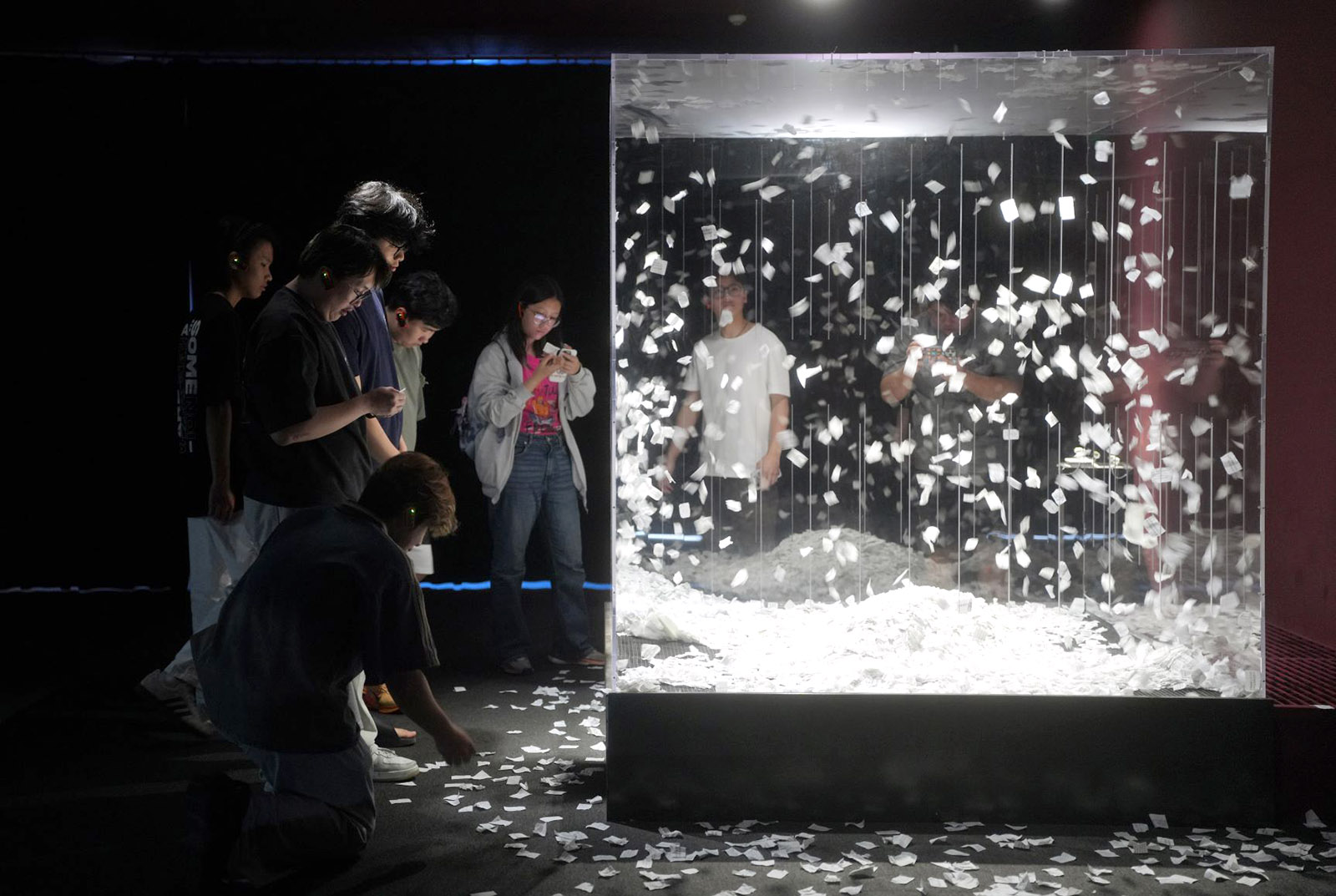
Hands-on, tech-driven learning
The Higher Diploma program uses a hands-on-learning, technology-focused curriculum, prioritizing real-world problem-solving to enable students to master high-tech industry workflows before graduation. It covers a variety of trending topics to equip students with sought-after skills in emerging technologies and support enterprises navigating digital transformation.
Students will leverage big data and machine learning to predict market trends and guide strategic decision-making. They will also be tasked with designing automated systems to reduce repetitive tasks and boost corporate efficiency through robotic process automation.
In cloud service operations, students will gain experience building and deploying active commercial systems on mainstream cloud platforms. Mastering cybersecurity protocols is an equally essential skill to protect vital enterprise data.
Beyond direct exposure to corporate settings, graduates will have opportunities to pursue further studies by applying for relevant undergraduate programs, including those offered by HKMU and other universities, subject to their admission requirements.
Students said this interdisciplinary program not only lays the foundation for their future careers, but also provides a broader space for them to explore their interests, rather than limiting their paths to a specific discipline at an early stage.
“As digital transformation advances, the demand for versatile talent is increasing. Mastering both business and digital technologies will enable us to adapt to future workplaces and enhance our competitiveness, achieving a two-way empowerment of both disciplines,” said Wang Jiayi.
Finding both business and I&T subjects intriguing, another student Ma Ho-ching said that this program will allow him to “have diverse choices when considering further studies as students will not be bound by a single framework”.
Echoing their views, Huang Xinrong said this program reflects the dual characteristics of Shenzhen and Hong Kong, giving students both technological and business literacy by unleashing the synergy of the two cities and disciplines.
“The knowledge will benefit my future entrepreneurial endeavors, providing insights into business operations,” he said. “Furthermore, the current trend of technological development will keep moving forward and driving digital transformation, in turn taking business development to new heights.”
Learning by doing
Focusing on highly practical skills, the program aims to boost students’ career readiness, enabling graduates to enter the workforce and resolve modern business challenges from day one.
In their first semester at HKMU LiPACE, students unlocked their potential in building a cloud service platform, a mini program and an e-commerce website. All these involved the basics of business management, e-commerce, marketing, information security and cloud services.
During the Cloud Service Basics course, students completed programming tasks thanks to their dedicated instructor, peer support, and tailor-made curriculum resources jointly developed by both institutes.
Undeterred by computer codes, Chen Jiajie from the mainland found it rewarding to see her progress after constant practice. “Even though I am new to programming, I was able to create an application after trial and error, with the help of my instructor and AI tools,” she said.
Wang attributed her success in coding to her teacher’s step-by-step guidance. She learned to develop a webpage independently, giving her a sense of fulfillment.
Students can do self-study before classes through the online curriculum resources, or support one another in an inclusive learning atmosphere. Chen Weiliang cited the care he received from his classmates after their Cloud Service Basics instructor encouraged everyone in the class to assist each other.
After completing an assignment, students can share their work with family and friends via a QR code or a link. This was “a real sense of satisfaction for our students”, said Dong Chunkeng, an instructor in Cloud Service Basics from SUIT’s School of Computer and Software.
As the course is mainly project-driven rather than purely theoretical, “learning by doing” is emphasized throughout the teaching, he said. “The teaching cases and the AI tools we use are carefully designed. Even if students are not proficient in computer programming, AI is here to support them.”
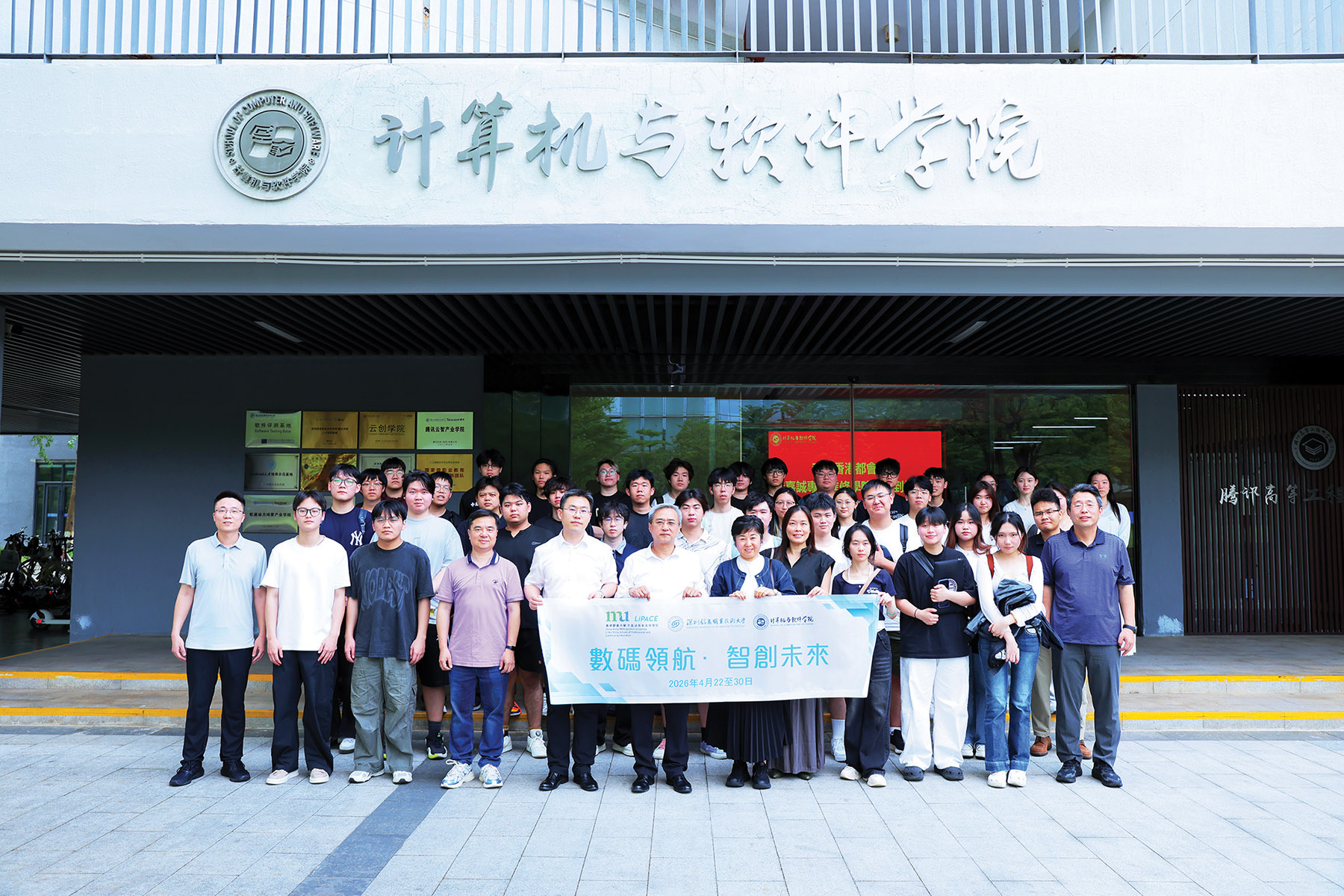
Teaching at HKMU LiPACE, Dong said that studying in Shenzhen and Hong Kong gives the students an edge. “While pursuing their studies in Hong Kong, students will be immersed in the international horizons. Meanwhile, a number of technological companies are based in Shenzhen, where students will see that innovative concepts can be rapidly transformed into real-world applications,” he said.
At HKMU LiPACE, business teachers aim to facilitate independent learning through case studies, group discussions, and project assignments among the learning methods.
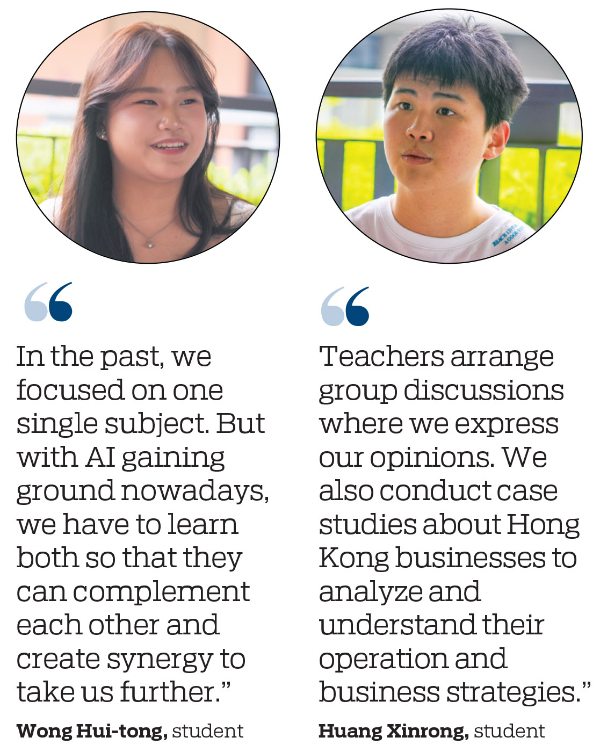
“Teachers arrange group discussions where we express our opinions. We also conduct case studies about Hong Kong businesses to analyze and understand their operation and business strategies,” said Huang. For certain business knowledge, instructors provide only introductions and let him explore the rest on his own.
Working with his classmates on group projects, especially presenting a final project report, was a new experience for Chen Weiliang. “The project presentation made me realize the importance of teamwork and cooperation between classmates.”
He also made much progress on his English proficiency after several English tutoring sessions as courses on English communication are available for students to adapt to the English learning environment at HKMU LiPACE and prepare for future business settings.
Industry experience matters in vocational education. Teachers acquire practical work experience in a bid to master the industry operation and become an instructor like Dong, who served as a software engineer for seven years at a prominent technological company.
“Our courses’ resources are developed by teachers from both institutes. Based on students’ capabilities and the demands of the industries, we have designed real-world situations faced by enterprises as case studies suitable for classroom teaching,” Dong said.
Real-world immersion
At SUIT, state-of-the-art industrial-grade equipment and training bases from renowned companies allow students to experience real application scenarios. One highlight is the Cloud Innovation School, an enterprise-school project initiated by the Ministry of Education and Amazon Web Services, which keeps students at the forefront of digital technology.
“Amazon provides us its latest technical specifications every year. We then make use of them to enable SUIT and our students to catch up on market trends,” Dong said, adding that these educational resources are utilized not only for academic purposes but also for staff training within enterprises.
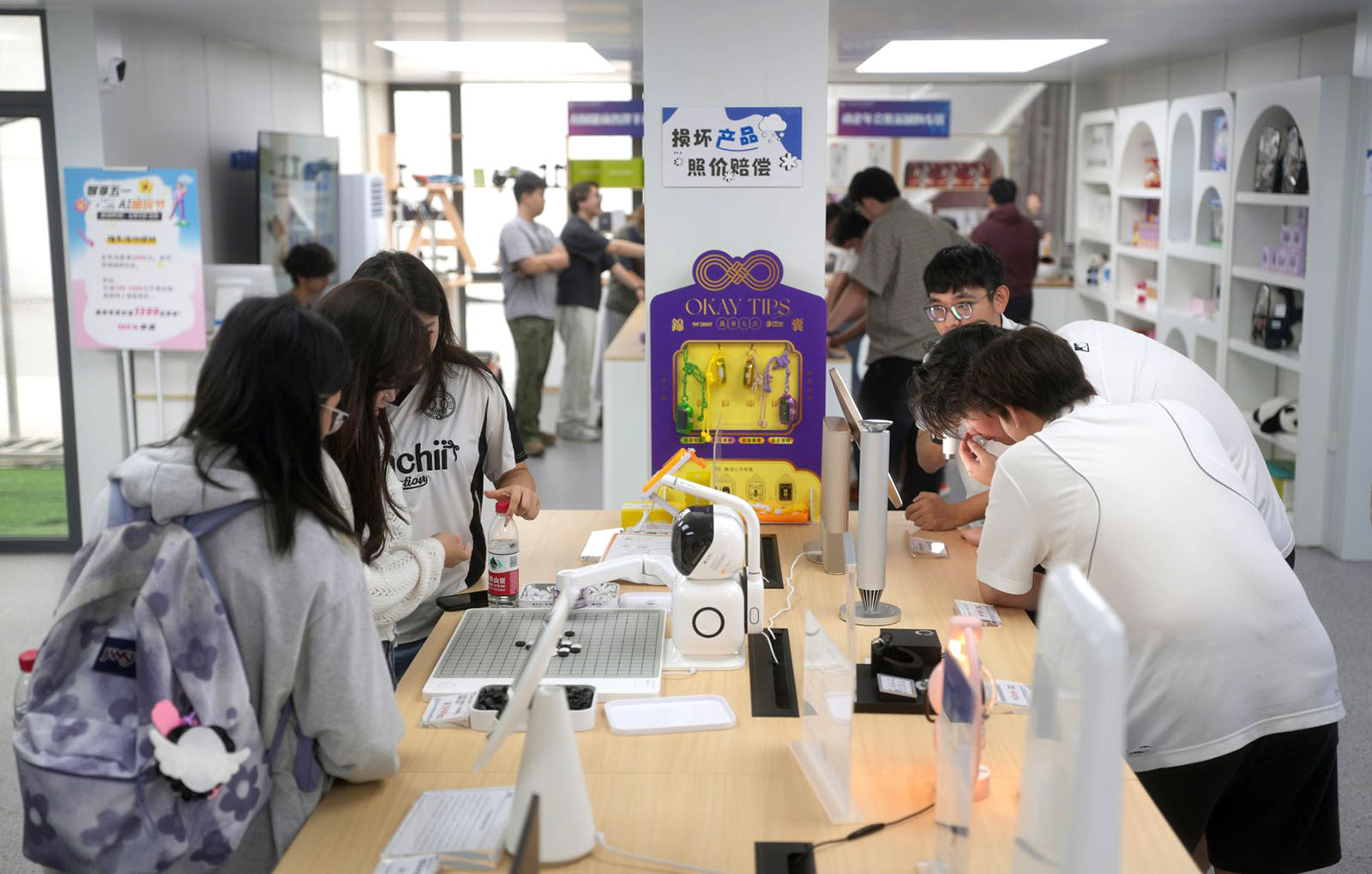
Students have opportunities to make site visits as out-of-classroom activities. In April, they visited the world’s first AI “6S” store in Shenzhen’s Longgang district. It is both an experience center for cutting-edge products and an incubation factory for research and development support, prototyping and production.
Representatives from leading enterprises frequently give lectures at SUIT. Students are awarded certificates by the enterprises as proof of their capabilities after completing certain tasks.
“Students have to understand what the industry needs and why it operates in this way. They will never know how something is accomplished if they do not put what they have learned into practice,” said Wang, vice-dean of SUIT’s School of Computer and Software.
“Our students have experience in conducting technological tasks with the industrial-grade equipment. If they also win awards in international competitions, companies will be more assured (of our graduates’ capabilities),” Wang said.
SUIT is poised for deeper cooperation with top corporations after gaining approval from the Ministry of Education for an upgrade to its university status in 2025, bringing a win-win-win situation for the institute, enterprises and students.
All these factors intend to “allow students to realize they are at the forefront, not far away from the application scenarios. This is a key characteristic in our curriculum design”, Wang added.
Describing the combination of business and digital technologies in one program as “innovative”, student Wong Hui-tong said she believes that working with emerging technologies gives students more possibilities.
“In the past, we focused on one single subject. But with AI gaining ground nowadays, we have to learn both so that they can complement each other and create synergy to take us further,” she said.
This program exemplifies a mutually reinforcing cross-boundary model, where Shenzhen’s industrial strengths in innovation and technology complement Hong Kong’s internationally oriented business and educational environment.