

Building stable, efficient supply chains a priority
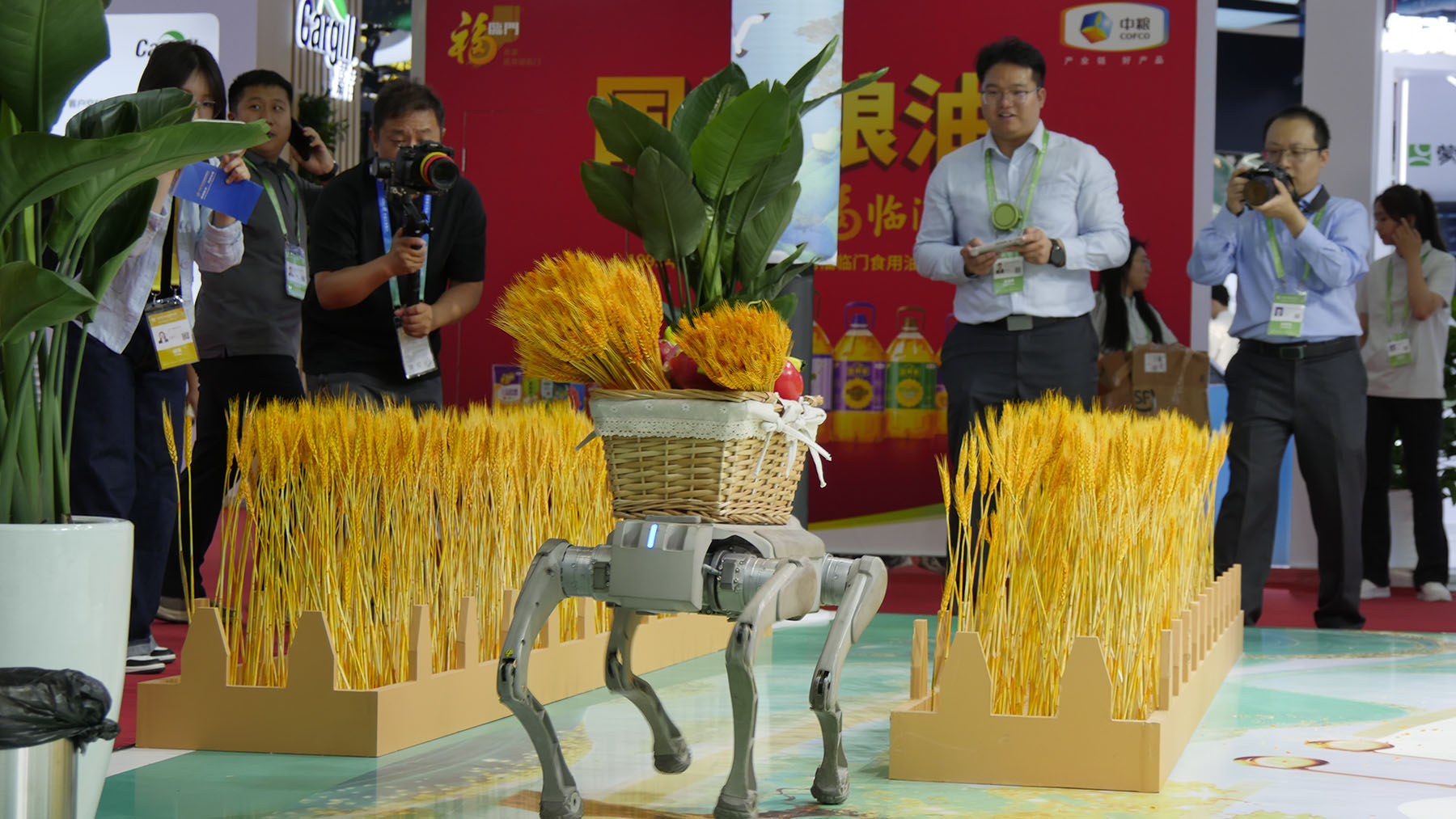
Against mounting cost pressures and evolving geopolitical headwinds, deeper supply chain integration and closer industrial collaboration have become ever more pivotal for global businesses to sustain innovation momentum and bolster trade growth, senior government officials and business leaders said on Monday.
Addressing the opening ceremony of the 4th China International Supply Chain Expo in Beijing, Vice-Premier Ding Xuexiang said that global supply chains, industrial chains and value chains are closely interconnected, with every country serving as a link in the chain of cooperation.
Ding emphasized that safeguarding the stability and smooth operation of global industrial and supply chains calls for concerted efforts from all stakeholders.
READ MORE: Survey: US companies see Chinese market as essential
Running from Monday to Friday, the expo has attracted over 676 companies and institutions from 85 countries, regions and international organizations this year, according to the Beijing-based China Council for the Promotion of International Trade, or CCPIT, the expo's organizer.
Echoing the vision of enhanced international cooperation, South African Deputy President Paul Mashatile said that the world stands at a critical juncture. He said that geopolitical shifts, technological breakthroughs, climate challenges and shifting production paradigms are collectively reshaping the global trade landscape.
Governments and business worldwide are now prioritizing greater resilience, diversification, decarbonization and sustainability throughout supply chain systems, Mashatile said, adding that in this context, restoring confidence in the multilateral trading system and advancing inclusive, sustainable economic growth have emerged as pressing global imperatives.
John Denton, secretary general of the Paris-based International Chamber of Commerce, warned that prevailing uncertainties may curb global business and investment activities by up to $400 billion this year alone.
However, he said, "Bolstering supply chains through digital transformation, refined operational approaches and modern trade practices could unlock over $3 trillion in additional global economic output over the next five years."
Intensifying efforts
China has also sought to reinforce these efforts through a series of policy measures, with the government rolling out a new action plan to stabilize foreign investment. The package pledges broader market access, streamlined investment procedures and more robust support for foreign businesses operating in the Chinese market, according to information released by the Ministry of Commerce on Monday.
Zhao Ping, head of the CCPIT's academy, said China's commitment to wider opening-up, advanced manufacturing development and industrial ecosystem improvement has underpinned the resilience and stability of global industrial and supply chains.
China's foreign trade grew 15.3 percent year-on-year to 20.68 trillion yuan ($3.05 trillion) in the first five months of 2026, while foreign-invested businesses in the country recorded 6.02 trillion yuan in imports and exports, up 15.7 percent year-on-year, data from the General Administration of Customs showed.
Business leaders said that against the backdrop of profound shifts in the global economy, building secure, stable and efficient supply chains has become a shared priority for businesses worldwide.
Landon Loomis, president for China at Boeing Co, said that the United States-based aircraft manufacturer works with around 40 suppliers in China, with components produced by these suppliers incorporated into Boeing aircraft delivered worldwide.
ALSO READ: Survey: China critical for US businesses
Boeing inaugurated a new maintenance facility in Shanghai last week that was developed in cooperation with Chinese partners and is one of the largest such facilities in Asia.
Silvia Ding, managing director for China at Danish shipping company Maersk, said that amid evolving trade policies, geopolitical shifts and changing cost and demand dynamics, Chinese companies have increasingly expanded their overseas supply chains across multiple regions and nodes, bringing greater complexity.
"With the continued development of China's advanced manufacturing sector, industries such as electronics, automotive and new energy equipment are accelerating the expansion of their global manufacturing footprint," she said, adding that the group has been supporting Chinese companies in the new energy sector to establish production facilities in regions such as Africa and Southeast Asia.
Contact the writers at zhongnan@chinadaily.com.cn
