

Shanxi Museum displays artifacts that offer glimpse into SE. Asia's ancient kingdom
Editor's note: In this weekly feature China Daily gives voice to Asia and its people. The stories presented come mainly from the Asia News Network (ANN), of which China Daily is among its 20 leading titles.
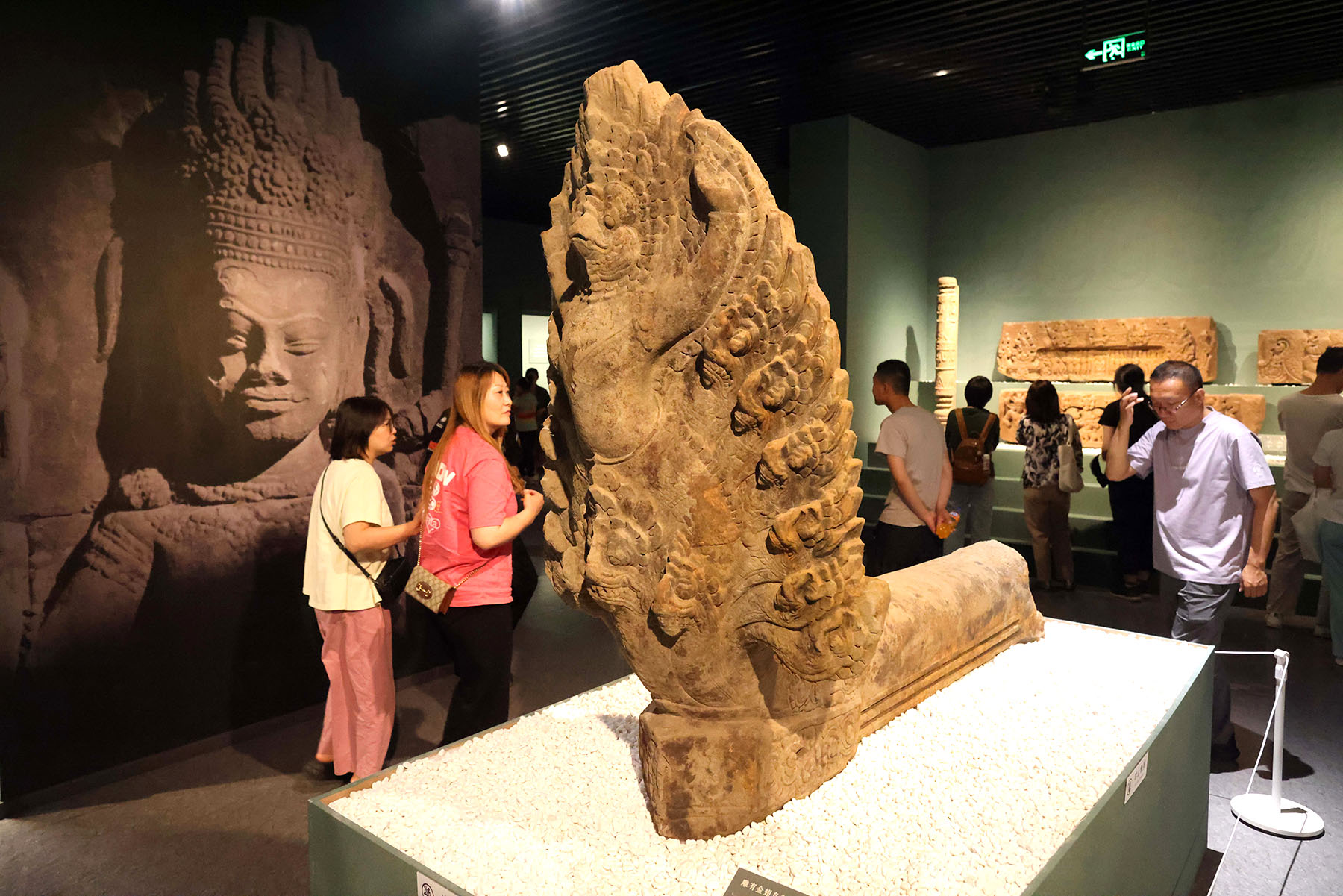
For centuries, the stone faces of Angkor have gazed across Cambodia's tropical plains. Now, some of the civilization's finest treasures have traveled thousands of kilometers to North China, offering visitors a rare glimpse into one of Southeast Asia's greatest ancient kingdoms.
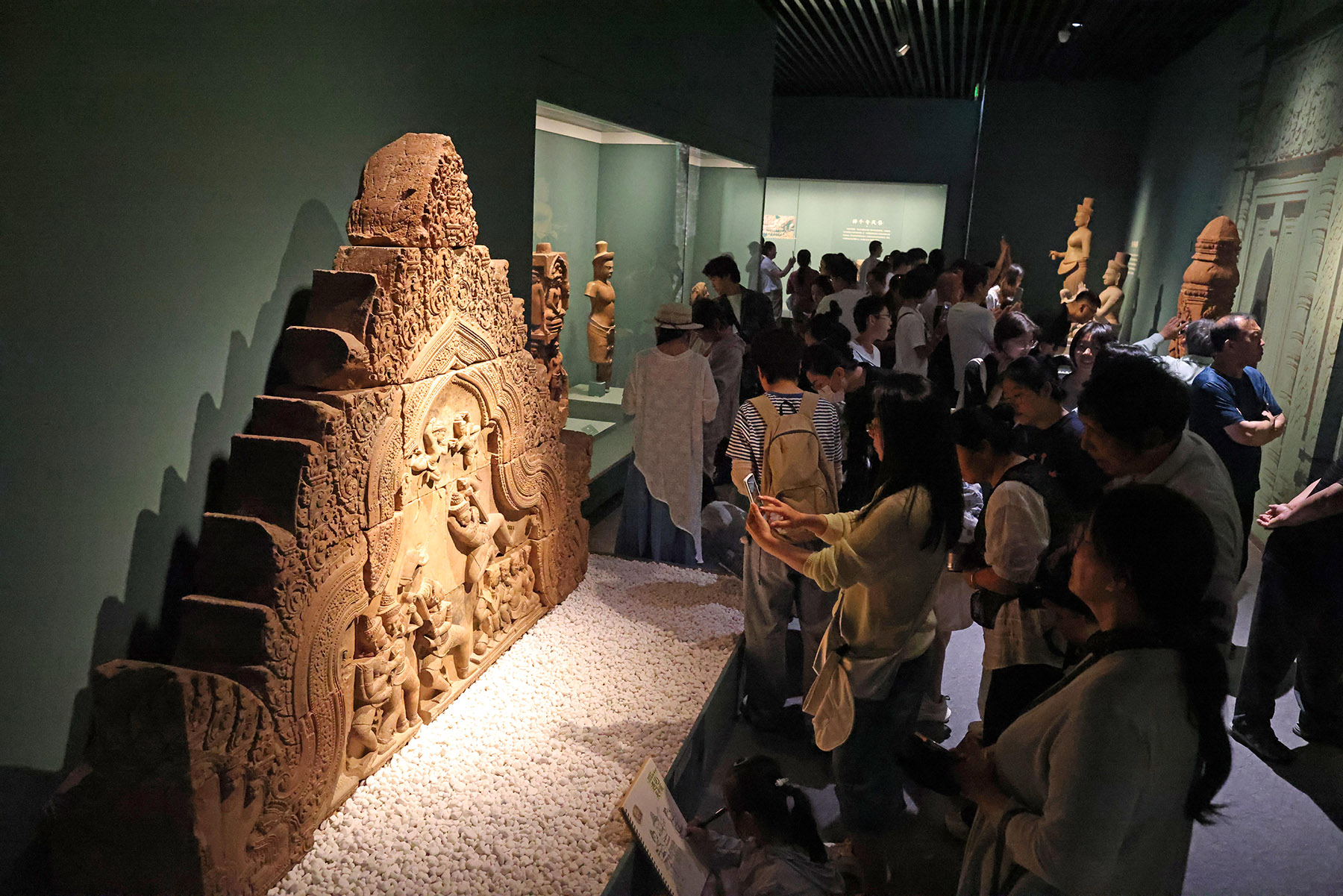
An exhibition showcasing the splendor of ancient Khmer civilization opened at Shanxi Museum on June 5, bringing over 130 artifacts from the collection of the National Museum of Cambodia.
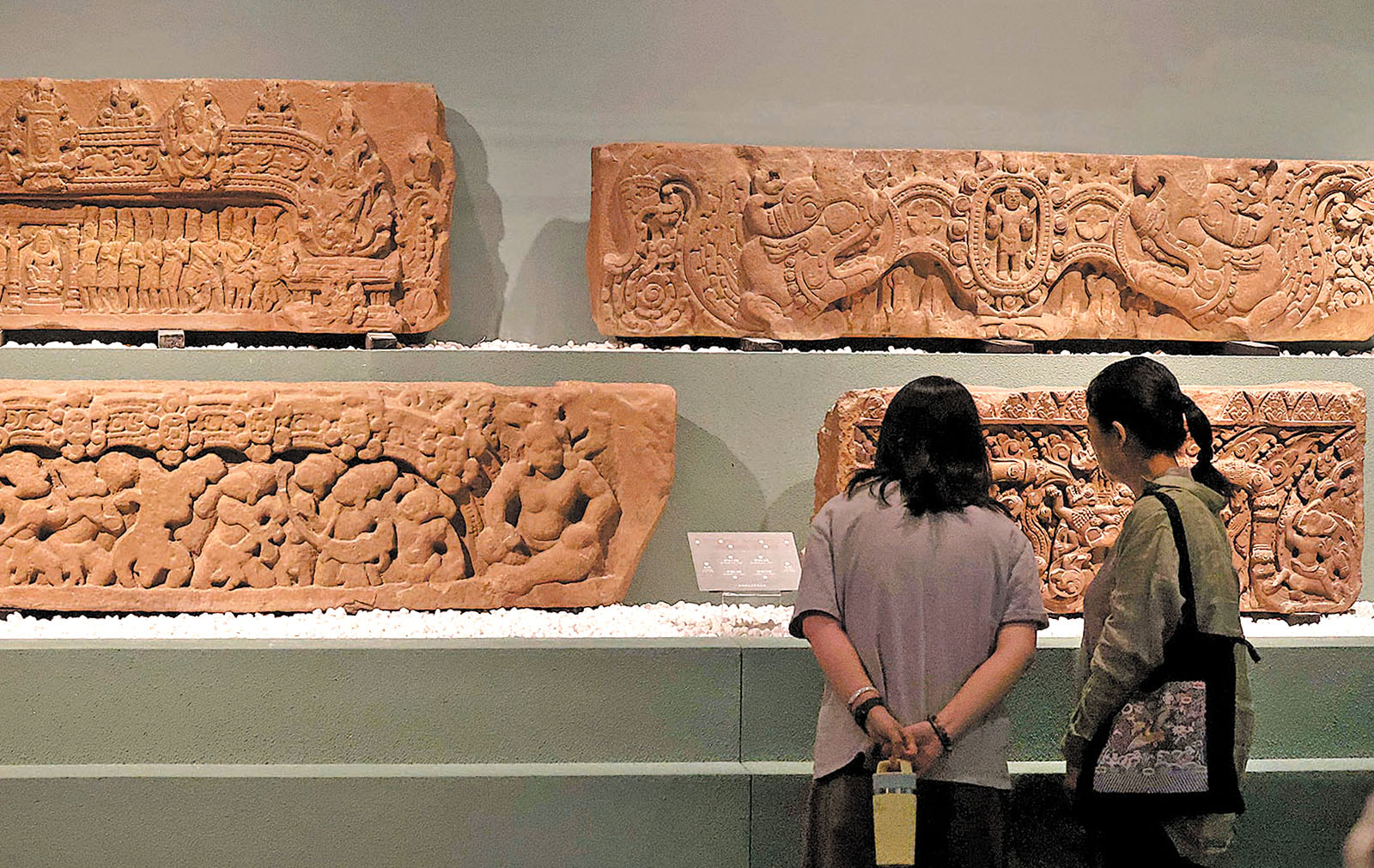
Titled "A Millennium Treasure of Ancient Khmer Civilization", the exhibition brings together Buddhist sculptures, architectural fragments, ceramics and relief carvings that chart the rise of the kingdom of Angkor from its early origins to its zenith. The display offers insights into the region's artistic achievements, religious beliefs and everyday life.
It is the first major exhibition of Khmer antiquities ever held in Shanxi province, and most of the objects are being shown in China for the first time. Many artifacts have never before left Cambodia, according to Shanxi Museum.
Together, the artifacts tell the story of the Angkor civilization, which flourished from around the 9th century to the 15th century. At its height, Angkor served as the political and spiritual center of the Khmer Empire, whose influence extended across much of mainland Southeast Asia. Its most celebrated legacy, Angkor Wat, remains the largest religious monument in the world.
Much of what is known about life in Angkor comes from the writings of Zhou Daguan, a Chinese envoy of the Yuan Dynasty (1271–1368) who spent nearly a year in the kingdom in the late 13th century. His records show centuries of ceramic trade between China and Cambodia — a proof of the long-standing connections between the two countries.
Li Zhuoming, a guide at Shanxi Museum, highlighted an elephant-shaped jar from Angkor period made of celadon, a type of ceramic known for its distinctive green glaze that originated in China. Li said it is a striking example of cultural exchanges between ancient China and Cambodia.
"Combining techniques and aesthetic influences associated with Chinese ceramics with Cambodia's indigenous elephant symbolism, the vessel reflects the cultural interactions that flourished along the ancient Maritime Silk Road," Li said.
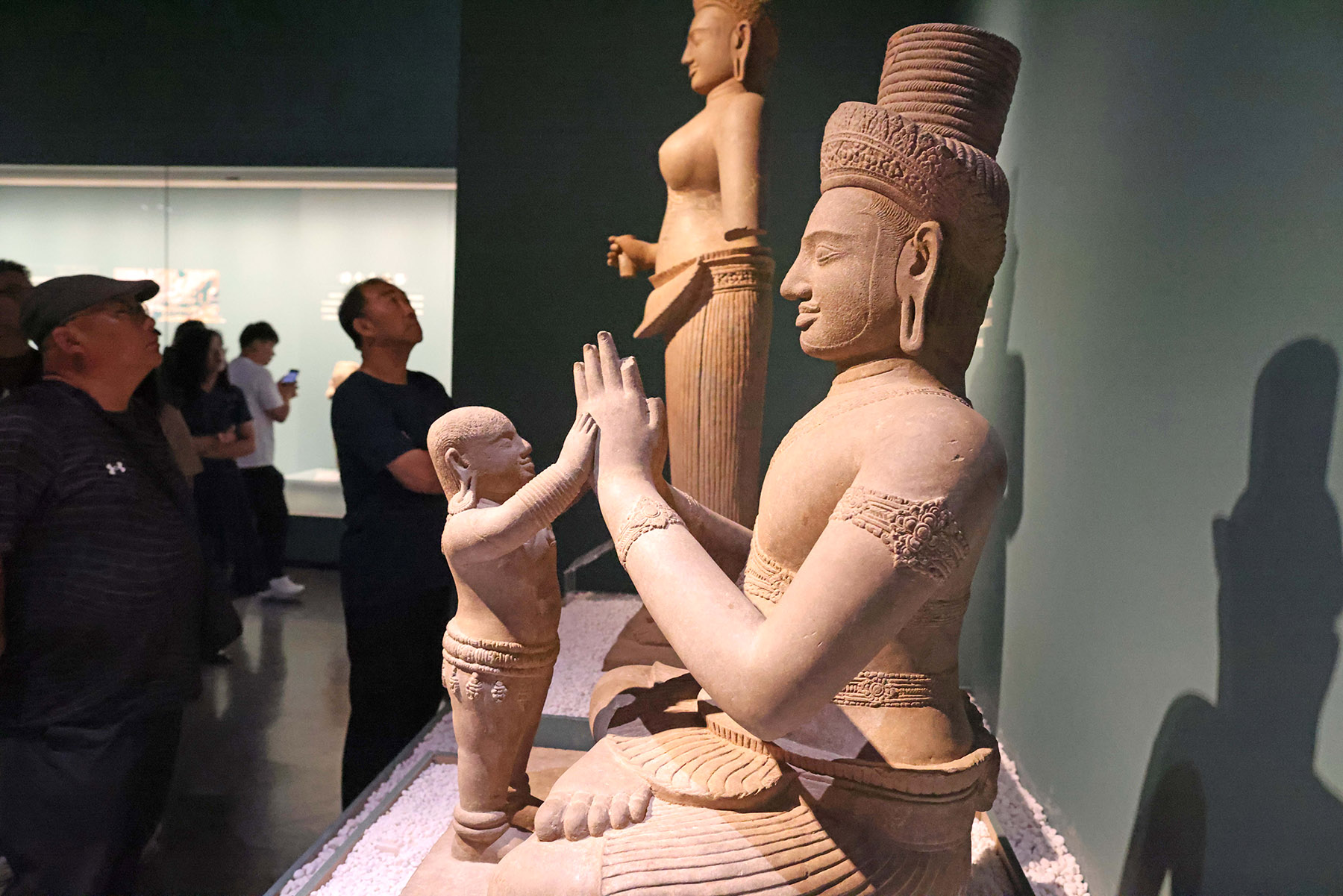
In a corner of the exhibition hall, 12-year-old Deng Huimu was viewing an idol of Hindu god Shiva blessing his son.
"What touched me most was the look in Shiva's eyes — the love there felt so warm," she said. To her, the Khmer and Chinese civilizations share something in common. "The love between parents and children — it's the same," she said.
Another visitor, Zhang Xiaoyan, a student at Taiyuan Normal University, told CGTN that what impressed her most was the building part carved with the images of Garuda and Naga, the divine eagle and serpent deity, respectively, in Hindu mythology.
"The piece has a strong visual impact. I've learned about Garuda through the classic Chinese novel Journey to the West, so I was particularly eager to see it in person. It brought back fond memories and made the exhibition more engaging."
In April 2025, China and Cambodia issued a joint statement calling for the building of an all-weather China-Cambodia community with a shared future in the new era.
Both sides said the exhibition demonstrates how cultural cooperation between the two countries continues to deepen through practical exchanges.
Ly Vanna, secretary of state of Cambodia's Ministry of Culture and Fine Arts, said at the opening ceremony that the exhibition serves as both a showcase of Cambodia's rich cultural heritage and a testament to the enduring ties between Cambodia and China.
Over the past three decades, China has played an important role in the restoration and preservation of Angkor's monuments, sharing conservation expertise and technologies with Cambodia, Ly said.
"This exhibition is more than an international showcase of cultural relics and art," he said. "It is a bridge of friendship linking the civilizations of Cambodia and China."
Yu Zhenlong, deputy director of the Shanxi Culture Relics Bureau, said exchanges between the two countries have evolved from the trade routes of the ancient Maritime Silk Road to modern cooperation in cultural heritage preservation.
He said the exhibition provides an opportunity to further expand collaboration in areas, including heritage conservation, artistic exchanges and professional training.
Sister-province ties
The exhibition also reflects broader cooperation between Shanxi and Cambodia. In 2018, Shanxi signed minutes on establishing a sister-province relationship with Siem Reap, home to the Angkor archaeological complex, and the two sides have since expanded exchanges in cultural heritage preservation, tourism and trade.
Cooperation has also extended to infrastructure development. The Siem Reap Angkor International Airport, one of Cambodia's largest infrastructure projects built with Chinese participation, is another symbol of growing ties between the two sides.
For Nann Sreynith, 19, the Silk Road Education program brought her to Shanxi. Now at Shanxi University, she was surprised to see her homeland's treasures so far from home. "It made me feel like I had returned to Cambodia," she said."This exhibition is a bridge between our two cultures."
Vorn Muykeang, 20, came through the same program. She sees a connection between Shanxi and Cambodia."Both places have ancient temples and Buddha statues," she said. "Living in Shanxi feels familiar in a way."
The exhibition will run through Oct 7 at Shanxi Museum and is open to the public free of charge.
Li Jialu contributed to this story.
Contact the writers at houchenchen@chinadaily.com.cn
