

Experts gather to boost global cooperation in aviation rescue
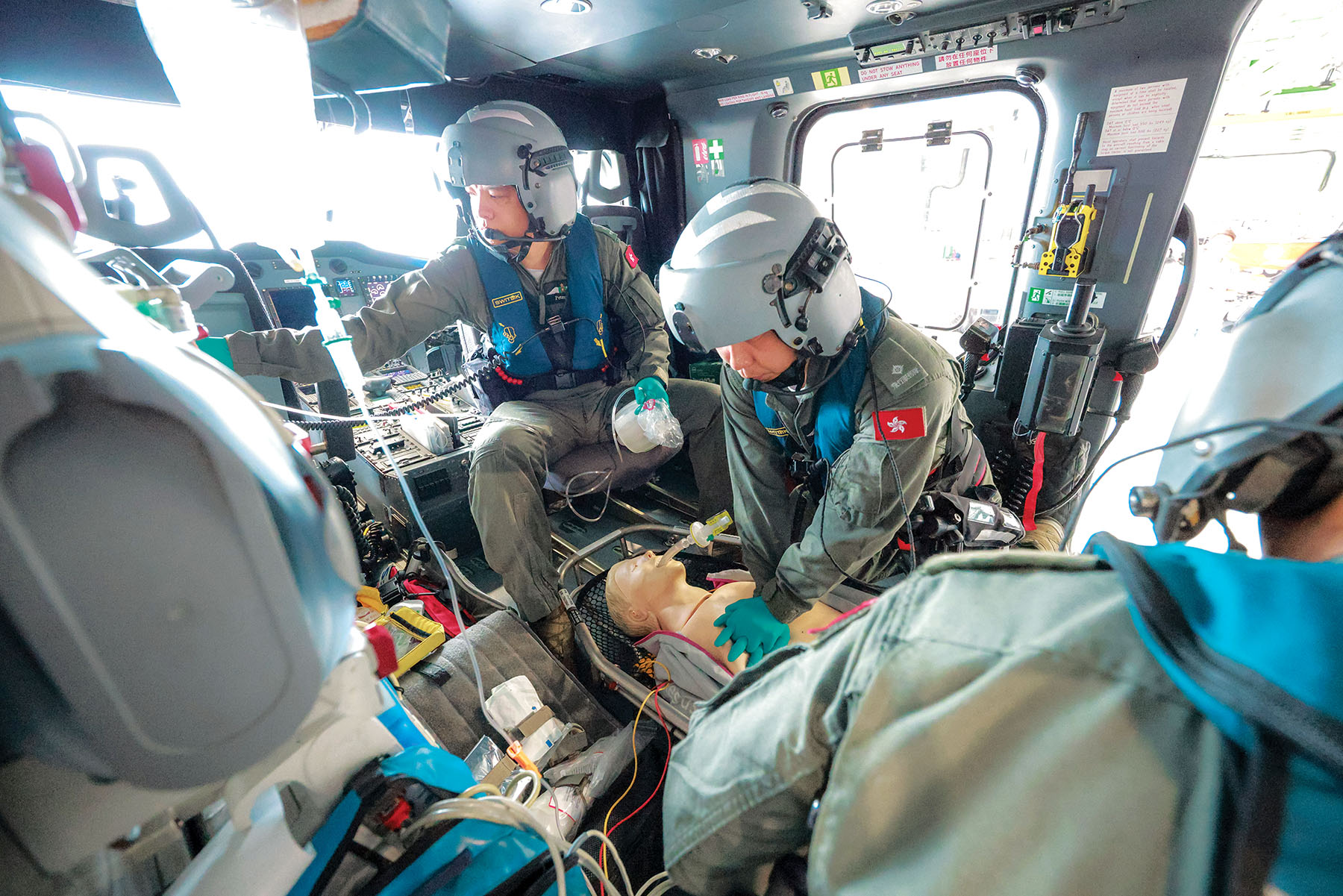
Hong Kong’s Government Flying Service will host the first international emergency response and aeromedical service forum from Tuesday to Thursday, aiming to enhance multilateral cooperation with local and overseas professional entities.
The International Symposium on Emergency Response and Aeromedical Services is expected to gather 250 leading experts and policymakers from around the world, representing aviation rescue, emergency management, medical institutions, government departments, and professional training organizations.
During the symposium, the discipline service will sign four memorandums of understanding with the Ministry of Transport of China, the Hong Kong College of Emergency Medicine, and two aeromedical training institutions from the United Kingdom and Australia — covering professional training, technical sharing, and operational experience exchange.
READ MORE: HK deploys drones in aviation search and rescue exercise
Controller Eddie Liu Ka-chun, head of the GFS, said that with its unique characteristics — backed by the motherland and connected to the world — Hong Kong will develop international cutting-edge innovation and smart medical technologies, promote industry standardization, and boost efficient aeromedical cooperation.
“As a platform for international exchange, the symposium can help foster closer cooperation among different regions in the areas of emergency response coordination, resource sharing, and professional training,” Liu added.
The three-day event will feature high-level talks and practical demonstrations, with 20 local and international experts sharing insights on emergency and disaster response strategies and the role of aeromedical services.
Guests will also tour Kai Tak, the city’s newly developed area, to observe major infrastructures and emergency installation projects, and gain firsthand experience of Hong Kong’s urban planning and preparedness.
The event will conclude with a static display and a counterterrorism drill at the GFS’s Kai Tak Division, showcasing on-site command coordination, cross-departmental efficiency, and emergency medical professionalism.
“By presenting real operational experiences and the established professional standards, and also success in the cross-departmental coordination, it helps to convey to the world a credible and compelling Hong Kong story,” said Emily Wong Wing-yin, the first female chief pilot in the service’s history.
As a front-line operator, Wong added that she hopes discussions on cross-border collaboration, common standards, and joint training will further deepen international partnerships and contribute to the sector’s long-term development.
Currently, GFS comprises 46 pilots, 48 air crew officers, 43 air medical officers, and 29 air medical nursing officers, offering around-the-clock aeromedical services.
In 2025, the service performed over 2,200 aeromedical missions and over 500 search-and-rescue operations. As of May 31, the numbers for this year have reached over 930 and 214 respectively. Its mission also includes providing aerial support based on the government’s needs, with safeguarding national security as a top priority, Liu added.
Looking ahead, Wong said future development will focus on “technology adoption” and “regional collaboration”. The force will advance medical equipment, data analytics, and communications to improve efficiency and accuracy. In the meantime, it will deepen strategic ties within the Guangdong-Hong Kong-Macao Greater Bay Area and beyond to promote cross-jurisdictional experience sharing and technical complementarity.
“We will continue strengthening exchanges and cooperation with Chinese mainland counterparts to achieve complementary advantages and jointly enhance the ability to respond to major incidents, particularly cross-regional emergencies, to safeguard the safety of every resident,” Wong said.
Liu said that the department will keep pace with the times, embrace technological developments, and actively explore emerging technologies such as drones, electric vertical take-off and landing aircraft, and artificial intelligence to meet future challenges.
In terms of talent cultivation, the service established the Aviation Inspiration International Academy in March, offering professional training sessions and experiential activities to inspire young people’s interest.
Liu also highlighted a “very positive trend” of the rising number of female applicants and growing female strength within the service.
Wong said the first step for women in aviation is realizing the possibility — beyond gender limits. She said that self-doubt may arise over whether being female puts one at a disadvantage, but what truly matters is resilience and the perseverance to pursue.
Contact the writers at stacyshi@chinadailyhk.com
