

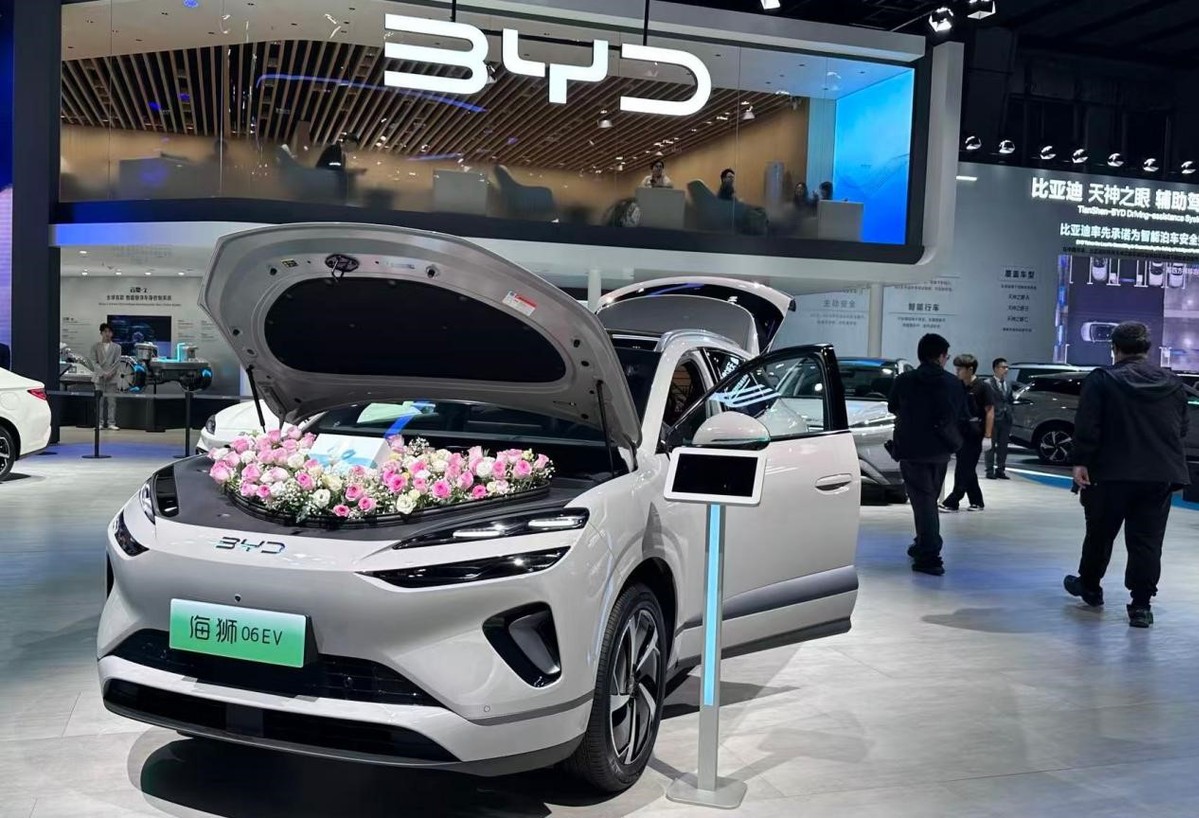
Battery-electric vehicles made up one in five of all new vehicle sales in Australia in May, hitting a record high and marking a major shift away from fossil fuels on the back of more Chinese carmakers helping to power the green transition, according to latest industry figures.
More broadly, electric vehicles — which include battery, conventional hybrid and plug-in hybrid versions — accounted for nearly half or 46 percent of a total of 100,206 new vehicle sales in May, the Federal Chamber of Automotive Industries, or FCAI, said in a statement on Wednesday.
The FCAI, which is the apex industry body for the automotive sector in Australia, highlighted the considerable gains made by major Chinese makers such as BYD, Omoda Jaecoo and Geely. BYD, fueled by its popular Sealion EV series, alone achieved sales of 8,211 vehicles in May, a 155 percent increase year-on-year.
READ MORE: Chinese automakers gain ground in Australia as market share, sales surge
Three Chinese carmakers are among the top 10 models by sales volume for the month, according to the FCAI.
Hussein Dia, a professor of transport technology and sustainability at the Swinburne University of Technology in Melbourne, told China Daily the latest figures are significant because "they suggest Australia may be moving beyond the early adopter phase of the EV transition and into a more mainstream phase of market acceptance".
He pointed to a broader shift in consumer preference away from conventional gasoline and diesel vehicles.
Dia said the factors behind the move include the recent fuel-price volatility and concerns about energy security that remind consumers of Australia's exposure to global oil market volatility, a result of supply chain disruptions due to the ongoing conflict in the Middle East.
The growing influence of Chinese manufacturers is "difficult to ignore" amid these developments, he said.
"Their success reflects the increasing availability of competitively priced electrified vehicles and greater consumer choice. By bringing more affordable models to market, these manufacturers have helped accelerate EV adoption (rates) and increased competition across the broader automotive sector," Dia said.
"These figures also highlight how quickly the competitive landscape is changing. The transition is no longer being driven solely by traditional automotive manufacturers. New entrants, particularly from China, are playing an increasingly important role in shaping consumer choice, pricing and the pace of electrification in Australia," he said.
Similarly, Electric Vehicle Council CEO Julie Delvecchio said in a statement that the figures marked a significant milestone in Australia's transition to cleaner and more affordable transportation.
"We know Australians buy cars that save them money, suit their lifestyle and perform well. Record EV sales suggest more Australians are finding electric vehicles tick all three boxes," she said.
Cost of living pressures
Delvecchio said that cost of living pressures were continuing to drive interest in EVs. The council is the national body that represents the EV industry in Australia.
She said the record sales data and continued strong interest in EV ownership highlight the urgent need for an accelerated national EV infrastructure plan.
"While the government has rightly invested in charging infrastructure, with adoption increasing, the federal, state and local governments all need to work together to redouble efforts to meet demand," she said.
Stronger EV adoption places greater pressure on charging infrastructure, according to the FCAI.
"As the number of EVs on the road continues to grow, charging infrastructure must become more of a priority. Continued investment and enabling policy settings will be essential to ensure infrastructure keeps pace with consumer adoption," FCAI Chief Executive Tony Weber said.
ALSO READ: Chinese automakers move toward pole position in Australia amid green trends
Dia also pointed to vehicle supply "improving faster than charging infrastructure in some parts of the country, particularly for apartment residents, renters and regional communities".
The next phase of the green transition will depend not only on vehicle affordability but also on the accessibility of EV chargers and customer confidence, he said.
"Both government and industry have important roles to play. Governments can help ensure charging infrastructure keeps pace with adoption and provide clear long-term policy signals. Industry, meanwhile, must continue improving customer support, servicing networks and spare parts availability as EV sales grow," Dia said.
Contact the writers at alexishooi@chinadaily.com.cn
