

Hong Kong’s financial markets have been gripped by euphoria this year. Each new initial public offering from the Chinese mainland’s innovation economy has delivered nearly guaranteed subscription gains and debut-day pops. The city has engineered a powerful magnet for mainland high-tech firms.
 In the meantime, at the early Hong Kong Web3 Festival, the Asia-Pacific’s flagship digital asset gathering, Financial Secretary Paul Chan Mo-po and senior regulators stood alongside blockchain pioneers. Unlike grassroots crypto meetups, this was a showcase of institutional legitimacy: regulatory clarity, government endorsement, and a signal that Hong Kong intends to set the rules of engagement in the sector.
In 2026, Hong Kong has reaffirmed its standing as a global financial hub through a strategic calendar of high-level meetings. From the Asian Financial Forum and Wealth for Good in Hong Kong Summit to the Web3 Festival in April, the city has integrated traditional finance with fintech innovation. Hosting tens of thousands of global leaders to deliberate on real world asset tokenization, artificial intelligence-driven finance, and family office governance, the Hong Kong Special Administrative Region positions itself not just as a center for capital flow, but as the primary stage for shaping the future of the global digital economy.
The real question is whether the HKSAR will settle for being a gateway or connector, or whether it will embrace the harder role: becoming nation’s financial power accelerator. A gateway facilitates flows. A connector builds bridges. An accelerator multiplies influence, strengthens China’s hand in global finance, and pilots next-generation infrastructure for the country. Under the 15th Five-Year Plan (2026-30), Hong Kong has the mandate and the responsibility to play this role. But to do so, it must address its own gaps, temper ambition with realism, and turn short-term hype into long-term strength.
Start with offshore renminbi, Hong Kong’s greatest existing strength. Hong Kong already processes more than 70 percent of global offshore RMB payments. Through the Bond Connect, Swap Connect, and Southbound Stock Connect, it has built the world’s most sophisticated offshore RMB ecosystem, reducing reliance on the US dollar and reinforcing China’s monetary sovereignty. This is the clearest example of the HKSAR acting not just as a gateway, but as an accelerator of China’s financial influence.
Yet the market’s limitations are obvious. Liquidity outside Hong Kong remains thin, convertibility is restricted, and global investors still lack the tools to hedge or trade RMB assets at scale. Hong Kong should focus on building a deeper offshore RMB bond curve with trusted benchmark tenors and small-scale, institutional gold futures. This gradual approach builds liquidity without provocation, making RMB internationalization substantive rather than symbolic, while working within the constraints of mainland capital account controls, which Hong Kong cannot unilaterally resolve.
Hong Kong’s expanding gold reserves tell a similar story. The city is steadily positioning itself as a global hub for gold trading and custody, which provides a hard-asset anchor to the offshore RMB system and a hedge against the risk of US sanctions. For Hong Kong, it reinforces financial stability and underpins confidence in the Hong Kong dollar peg.
Yet custody alone does not create influence. Without transparent, liquid gold-backed instruments that global investors can trade alongside RMB assets, Hong Kong’s role remains limited.
The next step is clear: Scale RMB-settled gold futures into a deep, liquid market by synchronizing physical storage hubs with the ‘Gold Connect’ infrastructure. By establishing an RMB-denominated benchmark for Asian time zones, the HKSAR can command global influence alongside London and New York. This pivot offers a robust alternative to dollar-centric trading and empowers China to reclaim pricing authority in a market long dominated by Western hubs. If Hong Kong delivers, it evolves from a mere custodian of gold into a catalyst for reshaping global financial benchmarks.
Hong Kong has reclaimed its IPO crown, built the leading offshore RMB hub, expanded gold reserves, and pioneered Web3 regulation. But milestones alone do not make a strategy. Gateway is not enough. Connector is not enough. Accelerator is the role Hong Kong must embrace: deepening RMB markets incrementally, building a regional gold-RMB hub, stabilizing tech liquidity, and owning Web3 credibility through legal clarity
Hong Kong has become the premier IPO venue for mainland tech, new energy, and biotech firms. This reality reflects the depth of global demand for China’s innovation economy, especially at a time when US listing channels remain constrained. But enthusiasm at the debut does not guarantee market depth.
However, the Hang Seng Tech Index has fallen dramatically in recent months, weighed down by weak earnings, heavy short-selling against big tech firms, and cautious institutional sentiment. Liquidity is part of the problem: Too many high-tech stocks see volatility and thin trading once the initial hype fades, leaving long-term investors hesitant.
Hong Kong’s ambition to accelerate the mainland’s innovation economy requires more than serving as a listing venue. The city could pioneer a government‑backed liquidity facility for strategic stocks as part of its repositioning strategy. It would demonstrate commitment to the country’s innovation economy and attract long‑term capital. A government‑backed liquidity facility for strategic sector stocks would anchor post‑IPO trading, reduce volatility, and attract long‑term institutional investors such as pension funds and endowments. Without such depth, the city risks being seen as a speculative venue rather than a true accelerator of China’s innovation economy.
The Web3 frontier, meanwhile, is Hong Kong’s biggest opportunity to lead. The Hong Kong Web3 Festival showcased a government-backed digital asset ecosystem with regulatory clarity rare in the United States or Europe, signaling the city’s role as China’s offshore testing ground for tokenization and blockchain finance. But legal uncertainty remains the biggest barrier: Without clear rules on smart contracts, decentralized autonomous organizations, or crypto bankruptcy, global firms will hesitate.
Singapore and Dubai are already moving faster. Establishing a dedicated digital asset court, staffed with judges trained in blockchain disputes, and publishing clear judicial guidance would make Hong Kong the first common-law hub to institutionalize digital asset resolution. That’s how Hong Kong can win the Web3 race — not by being the most permissive, but by being the most trusted.
Policies mean little without people. Hong Kong still trails Singapore and Dubai in talent density — Web3 engineers, digital asset lawyers, crypto-native fund managers. Without a critical mass, the ecosystem cannot mature. A targeted global talent visa, university‑industry programs in Web3 and AI to stay cutting‑edge, and a government‑backed venture fund would help build the base Hong Kong needs.
Narrative is equally critical. With more expatriates returning and the crisis in the Middle East unfolding, the city must strengthen its image as China’s financial power accelerator. Perception drives capital, and capital drives influence.
None of this can happen without navigating geopolitics wisely. Hong Kong cannot ignore the risk of US sanctions or its reliance on Western financial systems. RMB-settled payment alternatives, expanded swap lines with Belt and Road partners, and gold- or RMB-denominated commodity benchmarks are smart steps to reduce reliance — but they should be framed as “financial resilience tools”. The goal is de-risking, not de-dollarization.
Hong Kong has reclaimed its IPO crown, built the leading offshore RMB hub, expanded gold reserves, and pioneered Web3 regulation. But milestones alone do not make a strategy. Gateway is not enough. Connector is not enough. Accelerator is the role Hong Kong must embrace: deepening RMB markets incrementally, building a regional gold-RMB hub, stabilizing tech liquidity, and owning Web3 credibility through legal clarity. This will determine whether it becomes a footnote in nation’s financial rise, or the driving force behind it. Credibility depends on resilience. Without it, Hong Kong cannot claim to be China’s financial accelerator under the Five Year Plan.
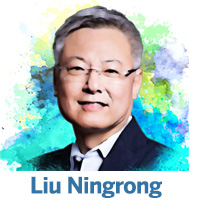
The author is a professor of globalization and business at the City University of Hong Kong.
The views do not necessarily reflect those of China Daily.
