

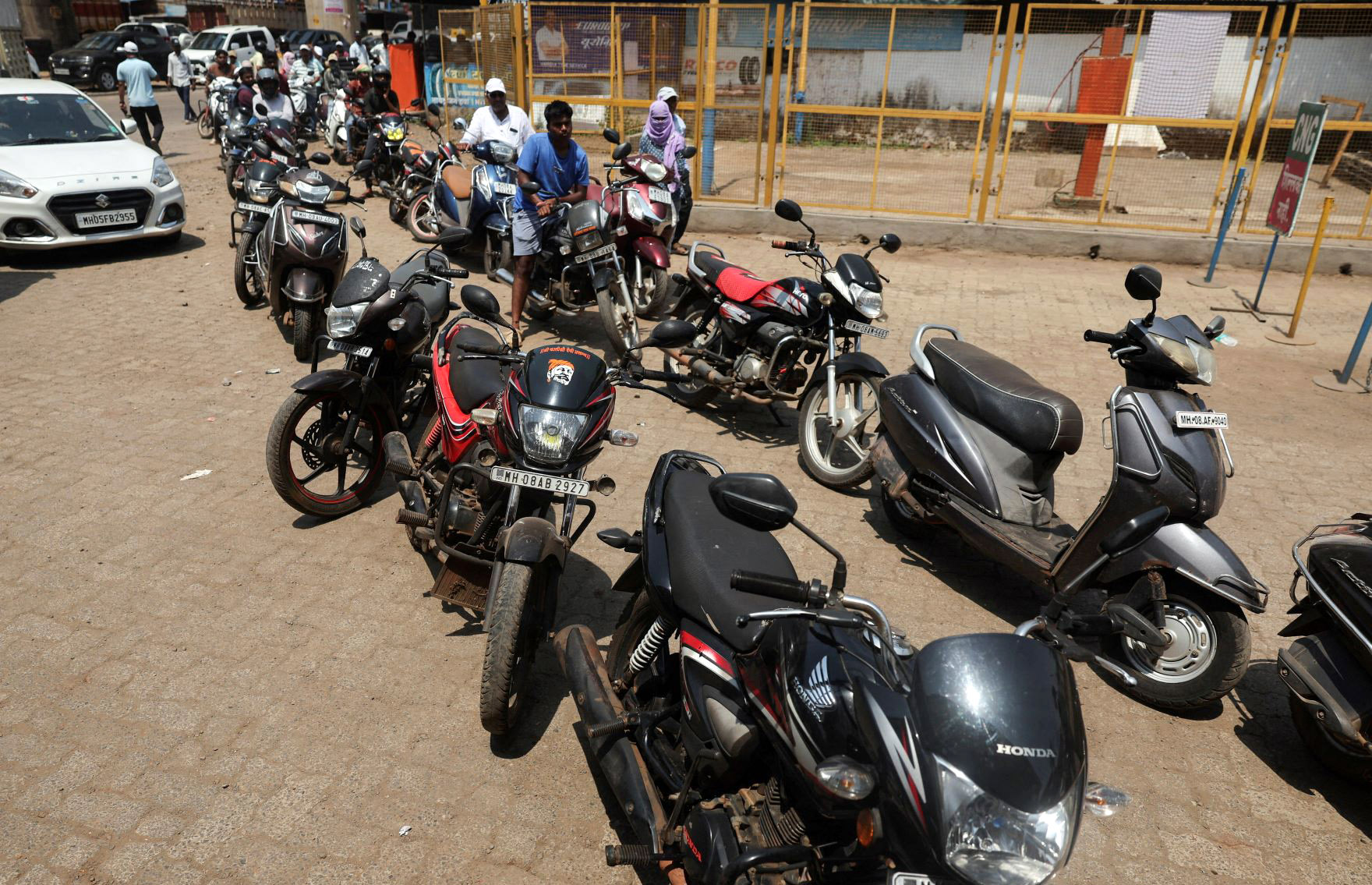
India's economy could slow down as prolonged disruptions to supplies of energy, petrochemicals and fertilizers from the Middle East crisis continue to bite, experts say.
With the effective closure of the Strait of Hormuz now stretching nearly three months, India, heavily dependent on imports of critical resources, is feeling the pain, they said. The shutdown is estimated to have removed about 14 million barrels of oil and petroleum products a day from global markets.
Experts warned the fallout for India goes beyond energy shortages, with the crisis threatening sectors ranging from manufacturing to agriculture and even food security.
READ MORE: US, Iran trade strikes amid ceasefire talks
"The disruption of fertilizer supply comes at a time when the sowing season is about to begin across India," said Amarjyoti Das, former chief general manager at Oil and Natural Gas Corporation, India's largest crude oil and natural gas producer, which contributes more than 71 percent to domestic output.
India remains highly reliant on the Strait of Hormuz for imports of crude oil, liquefied natural gas and ammonia, Das said. About 40 to 50 percent of the country's crude oil imports and 90 percent of its liquefied petroleum gas imports pass through the strategic waterway.
LPG, LNG and ammonia are critical building blocks across industries, including fertilizer, plastics, synthetic fibers and explosives.
"Currently, India coughs up $110 a barrel (for crude oil)," Das said. "The alternative option is Canada, but that will add to the logistics costs, and the price will shoot up to $130 a barrel."
Abhirup Sarkar, a former economics professor at the Indian Statistical Institute in Kolkata, said the crisis is driving up prices and straining India's import bill, placing heavy pressure on the economy.
If the conflict does not end soon, India could face a period of economic stagnation, he said, adding that signs of distress are already evident.
"The rupee is falling … (and) the specter of inflation is becoming more and more real in both wholesale price index and consumer price index," he said.
The need of the hour is coordinated action by all stakeholders, including the government, regulators and consumers, Sarkar said.
Untapped resources
Shantanu Bhowmik, who teaches at the Amrita Vishwa Vidyapeetham university in the southern Indian state of Tamil Nadu, warned that the Middle East energy crisis may even push India back toward greater reliance on coal.
"While our search for scalable and sustainable energy alternatives is on, we need to turn our focus on untapped resources," he said.
Bhowmik, a recipient of a leadership and excellence award from the UNESCO Center for Peace, said India generates huge volumes of agricultural residue, food waste, sewage sludge and other organic waste in urban areas, much of which "isn't managed well".
Purva Jain, lead energy specialist for South Asia at the Institute for Energy Economics and Financial Analysis, wrote in a recent paper that the Middle East crisis and the resulting rise in LPG prices have exposed the vulnerabilities in India's cooking fuel system.
"A more resilient approach would require a diversified multifuel strategy," she said.
ALSO READ: Indonesia steps up coal gasification amid fuel shocks
Electricity-based cooking, or e-cooking, is more affordable for urban households than both LPG and piped natural gas, she said. Even with gas subsidies, e-cooking remains about 25 percent cheaper than LPG, while cooking with piped natural gas is around 14 percent more expensive and could become costlier still, she added.
"While e-cooking is a promising solution for urban areas, rural India requires complementary alternatives, such as concentrated solar cooking and biogas cook-stoves for community kitchens," Jain wrote.
"Biogas, in particular, offers a dual benefit by reducing import dependence while helping manage agricultural waste."
Arunava Das is a freelance journalist for China Daily.
Contact the writers at vivienxu@chinadailyapac.com
