

Top leader calls for bolstering nation’s sci-tech foundation via innovations
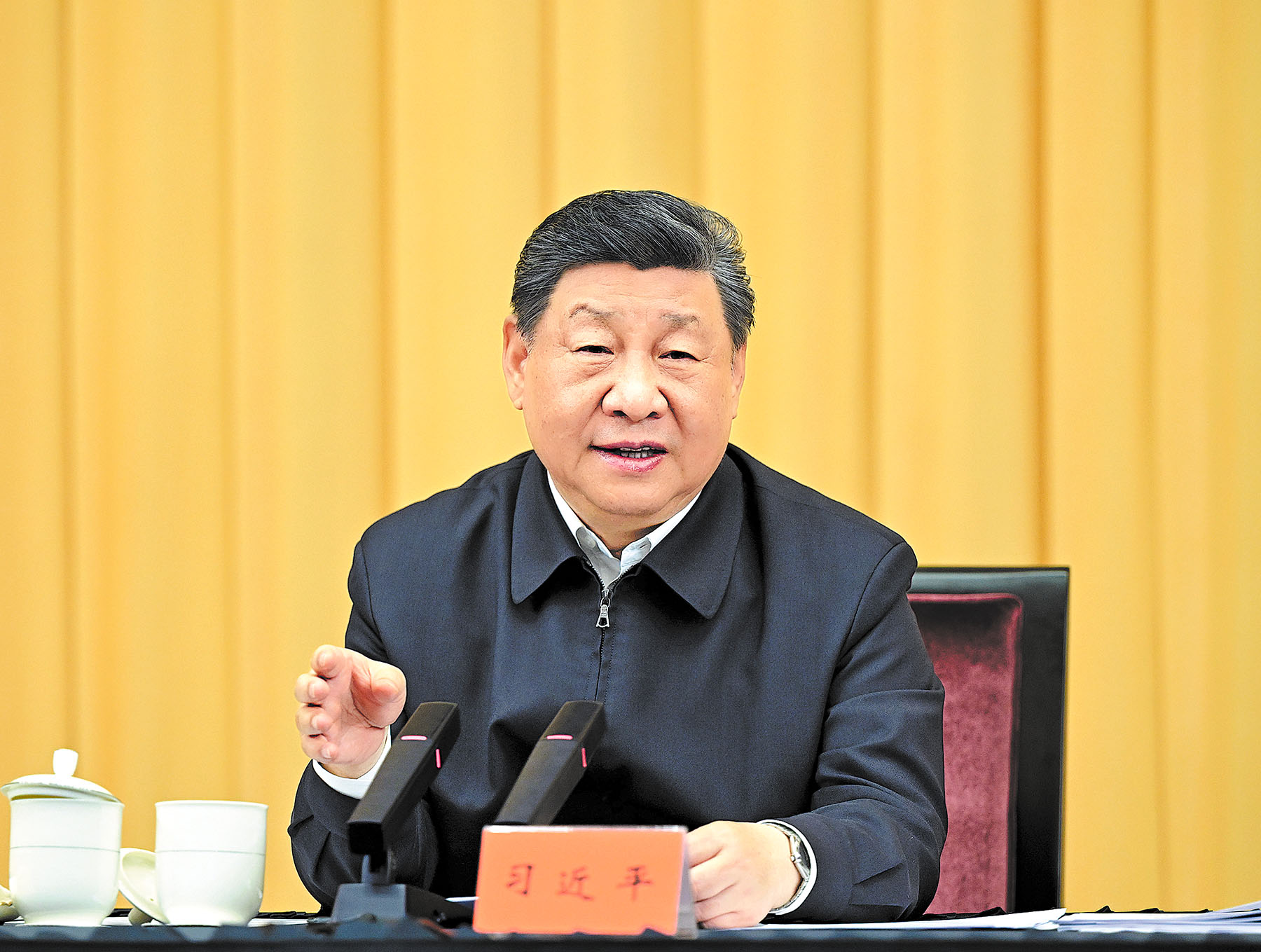
President Xi Jinping has called for greater efforts and more solid measures to strengthen basic research, enhance China’s capacity for original innovation, and further solidify the foundation for building the nation’s strength in science and technology.
Xi, who is also general secretary of the Communist Party of China Central Committee and chairman of the Central Military Commission, made the remarks on April 30 in Shanghai when attending a symposium on strengthening basic research.
A new round of sci-tech revolution and industrial transformation is rapidly evolving, and global technological competition is increasingly focusing on fundamental cutting-edge fields, he said, adding that the importance of developing original and groundbreaking innovations is becoming more prominent.
Xi emphasized the need to seize opportunities, rise to the challenges, prioritize basic research, and make consistent efforts to attain new achievements.
The symposium took place as China has been paying greater attention to boosting basic research in recent years in order to advance the nation’s scientific and technological self-reliance and strength amid intensifying global competition.
The new innovation model has paid dividends, enabling the country to funnel vast resources into key sectors such as artificial intelligence, quantum technologies, and semiconductors.
Addressing the symposium, Xi underlined the need for coordinated planning and top-level design to optimize the systematic layout of basic research, and to further identify the main directions and key areas of basic research.
It is important to strengthen the leading role of national research institutions and high-level research universities, as well as encourage and regulate the development of new types of research and development institutions, he said.
Xi highlighted the importance of promoting the deep integration of industry and academia, led by enterprises, to link the innovation chain — from basic research to application development — until research achievements are fully transformed into industrial applications.
It is essential to strengthen the construction of basic disciplines and promote the coordinated development of applied and basic disciplines, he said.
Xi said the nation will allocate a greater proportion of its science and technology expenditures toward basic research and also shape a diversified investment pattern.
It is also necessary to plan and build major sci-tech infrastructure in a systematic way, he said, calling for building intelligent research platforms.
This year’s Government Work Report, which was adopted at the annual session of the National People’s Congress, China’s top legislature, in March, indicates a strategic shift in funding allocation for basic research, which aligns with the nation’s long-term goals of becoming a global leader in science and technology.
According to data from the Ministry of Science and Technology, China’s total R&D investment exceeded 3.92 trillion yuan ($574 billion) in 2025, accounting for 2.8 percent of its GDP. Basic research funding last year hit nearly 280 billion yuan, accounting for 7.08 percent of total R&D spending, making it the first time the funding surpassed the 7 percent threshold.
Government officials noted that investing in basic research is vital for addressing both current and future challenges, particularly in fields such as renewable energy, AI, biotech, and materials science.
China expects an annual average rise of at least 7 percent in nationwide R&D spending during the 15th Five-Year Plan (2026-30) period.
During the symposium, Xi pointed out the importance of actively integrating into the global innovation network, deepening international exchanges and cooperation in basic research, jointly tackling major scientific issues such as climate change, energy, environment, life science, and health, and actively participating in global science and technology governance.
While emphasizing the need to advance talent development in the field of science and technology, he called for improving the working and living conditions of professionals who engage in basic research and fostering an open, inclusive, and failure-tolerant innovation environment.
Contact the writers at caodesheng@chinadaily.com.cn
