

Ponant targets new-generation travelers pursuing exclusive, immersive journeys
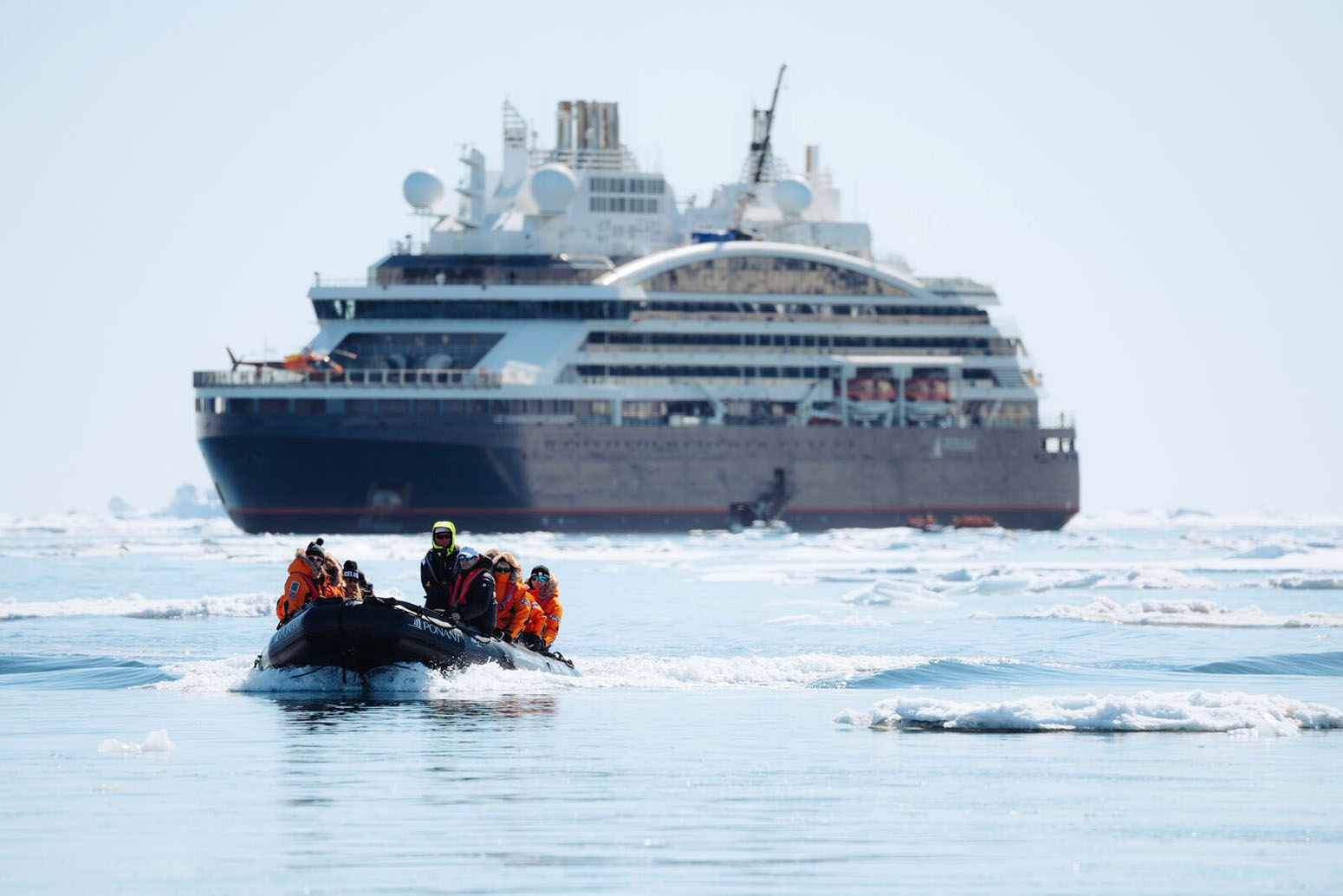
Ponant Explorations Group, a French expedition cruise operator, is pushing deeper into China, targeting a new generation of travelers — one less interested in ticking off destinations than in pursuing more immersive journeys to some of the world's most remote destinations.
After serving more than 3,200 Chinese travelers in 2025 and outperforming its closest competitor by a wide margin, the Marseille-based company plans to deploy a dedicated vessel for the Chinese market on Antarctic itineraries for its 2027–28 season (Nov 2027 to Mar 2028) to capture growing demand.
Benoit-Etienne Domenget, the group's CEO, said China is not merely a growth market, but a strategic priority, adding that the company has made significant investments to tailor its offerings to Chinese travelers.
Established in 1988, Ponant currently operates 20 ships serving more than 120 destinations worldwide, from Antarctica to the North Pole.
At the core of its "North Star" strategy is to further expand in meaningful exploration voyages, built on access, scarcity and depth as demand for high-end, purpose-driven travel rises.
The shift is especially pronounced among Chinese travelers, with demand moving beyond logo-driven luxury toward immersive, knowledge-rich experiences that emphasize depth and meaning, he added.
Data from the Beijing-based China Tourism Academy show that long-haul trips by affluent Chinese travelers now often exceed two weeks, with spending frequently surpassing 100,000 yuan ($14,630) per trip, as demand shifts toward private tours, wellness retreats, niche adventure travel and tailor-made cultural experiences.
Outbound travel from China has grown strongly in recent years, supported by rising incomes, expanding visa facilitation and improved flight connectivity, while demand increasingly shifts toward high-value, experience-driven and long-haul journeys, according to the academy.
Statistics from the National Immigration Administration show that Chinese mainland residents recorded 335 million cross-border trips in 2025, up 15.1 percent year-on-year.
Against this backdrop, Ponant is expanding beyond its traditional stronghold in the Arctic and Antarctic to introduce Chinese travelers to more remote and less-charted destinations, including French Polynesia, Papua New Guinea, Indonesia and Australia's Kimberley region.
The company's approach centers on providing access to what it calls "uncharted worlds" — destinations that remain out of reach for conventional tourism.
"We go where others don't go," Domenget said, highlighting unique offerings such as voyages to the geographic North Pole and full Antarctic circumnavigation itineraries — experiences that remain rare globally.
To support its China strategy, Ponant has built a dedicated team focused on localization, covering marketing, product development and service delivery. This includes Mandarin-speaking expedition teams, Chinese-language onboard materials, and dining options adapted to Chinese preferences while maintaining French culinary standards.
The French company is also leveraging technology to enhance the guest experience, including real-time speech-to-text translation during onboard lectures and artificial intelligence-driven language support for menus and daily programs, as part of its efforts to deliver more personalized and seamless travel experiences.
As Chinese consumers increasingly seek "once-in-a-lifetime" journeys, Domenget said his company sees strong growth potential in the segment, driven by rising demand for authenticity, exclusivity and emotional value.
"Travel today is about collecting experiences, not just visiting places," said Domenget. "That trend is particularly strong in China, and it aligns closely with what we offer."
ALSO READ: Experience tourism spurs China's holiday surge
Driven by rising market demand and companies' expansion needs, and with China already a major shipbuilding powerhouse, he said Ponant is open to working with Chinese shipyards as it explores fleet expansion, though discussions remain at an early stage with no final decisions made.
Jiang Yiyi, dean of the school of leisure sports and tourism at Beijing Sport University, said Chinese travelers are upgrading their spending, choosing premium hotels, fine dining, expedition cruises and curated cultural experiences as tourism shifts toward more experience-driven consumption.
This trend is reflected in data from the International Association of Antarctica Tour Operators, a Rhode Island, United States-based international organization promoting responsible travel to the continent, showing that around 120,000 people, including 11,705 Chinese visitors, traveled to Antarctica during the 2024–25 season from October 2024 to March 2025.
Contact the writers at zhongnan@chinadaily.com.cn
