

Foreign-funded R&D centers expand quantitatively and qualitatively
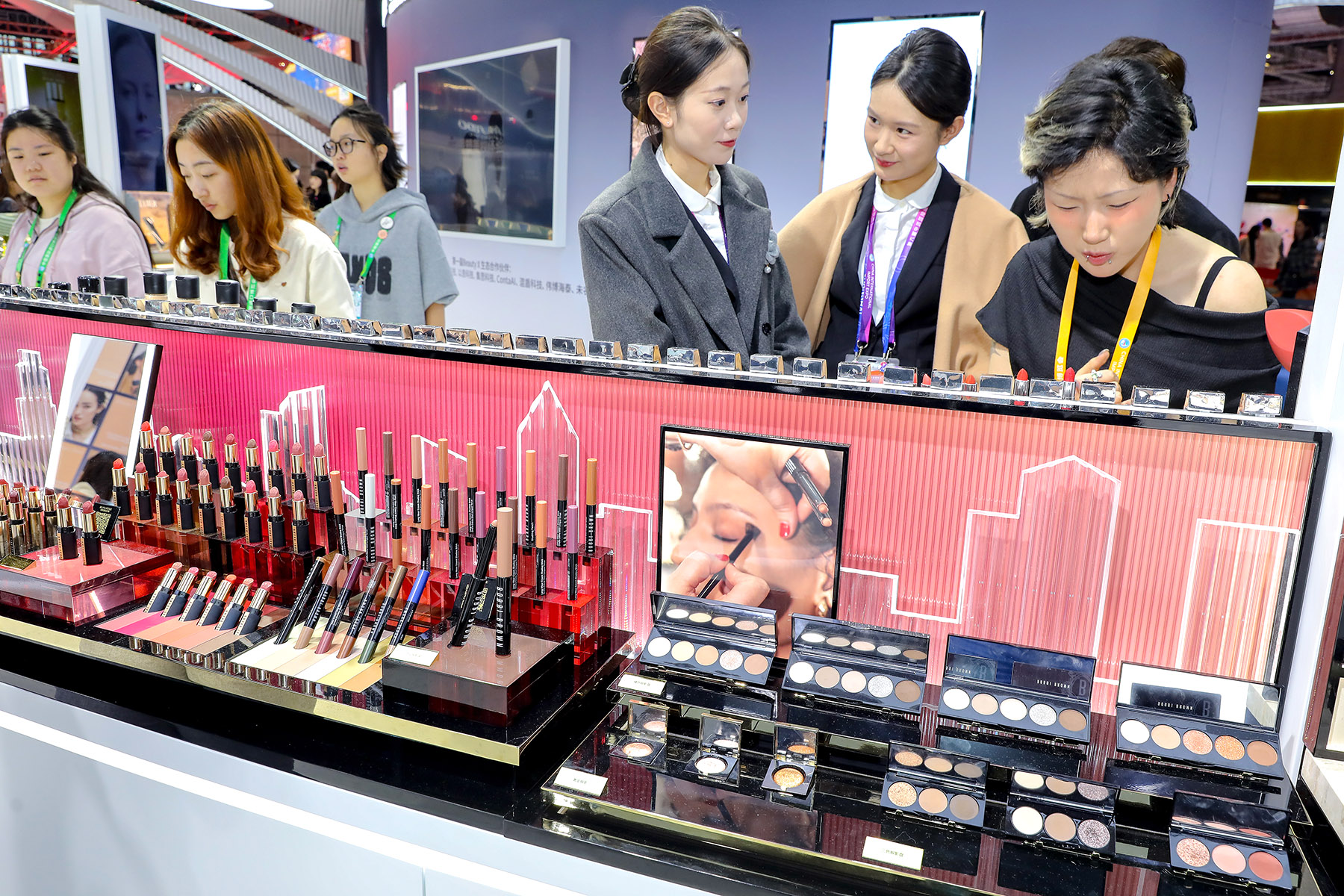
Multinational companies once measured their presence in China by the number of factories they operated and the scale of their supply chains. Today, those metrics no longer fully capture their footprint.
The number of research and development centers has emerged as a more telling indicator of how deeply foreign businesses are embedded in the Chinese market and how committed they are to long-term innovation.
As of March this year, Beijing had 332 foreign-funded R&D centers, with 55 newly established this year, while Shanghai had 647 such centers, including 15 new additions this year, data from the Ministry of Commerce showed.
READ MORE: China draws foreign investors as evolving economy meets proactive policies
That shift is also becoming more evident in capital flows. The actual use of foreign direct investment in China's high-tech industries rose 30.7 percent year-on-year to 102.73 billion yuan ($15.05 billion) in the first quarter of 2026, accounting for 41.2 percent of the country's total FDI, according to the ministry data.
Of this, the actual use of FDI in R&D and design services rose by 127.8 percent on a yearly basis.
Zhao Yang, an official with the Ministry of Commerce's department of foreign investment administration, said China's industrial and innovation strengths are translating into tangible advantages.
Foreign-funded R&D centers are entering a phase of both quantitative expansion and qualitative upgrading, shifting from local adaptation hubs to integral nodes in multinational companies' global innovation networks, said Zhao.
Yin Zheng, executive vice-president of China and East Asia operations at Schneider Electric, said that running businesses, especially in the manufacturing sector, is no longer about simply taking orders and scaling up production in China.
"For many multinational corporations today, the country has evolved from a cost-efficient production base into a critical hub for innovation, market expansion and long-term strategic positioning," Yin said.
The French industrial group is currently building two new plants in Xiamen, Fujian province, and Wuxi, Jiangsu province, while upgrading its Beijing R&D center, focusing on energy management, optimization, efficiency and digitalization.
Bai Ming, a researcher at the Chinese Academy of International Trade and Economic Cooperation in Beijing, said the trend reflects growing confidence among foreign investors in China's economic resilience and its capacity for sustained innovation.
As a result, investment decisions that were once seen as optional are increasingly being elevated to strategic imperatives, particularly in high-tech and consumer goods sectors, Bai said.
Sean Stein, president of the US-China Business Council, said the shift is evident.
"Twenty-five years ago, no one came to China to do R&D. Now, what I am seeing is that the best companies are doing some of their most important R&D in China," said Stein.
For example, US cosmetics group Estee Lauder is tailoring products for Chinese consumers, not only in packaging, but also in formulations and research and development. Tapestry Inc, the parent company of US fashion brands Coach and Kate Spade, has established an R&D center in Dongguan, Guangdong province, he added.
As part of its expansion in China, Estee Lauder launched two projects in Shanghai in late March -the China Fulfillment Center and the Group Open Innovation Center- to boost its research and development and intelligent supply chain operations.
"China is more than one of the world's largest beauty markets. It is a global leader in shaping consumer trends, digital innovation and the future of our industry," said Stephane de La Faverie, the group's president and CEO.
Similar momentum is seen in other sectors. Louis Dreyfus Company, a Rotterdam-headquartered multinational trader and processor of agricultural commodities, has continued to expand its footprint in China, investing in four greenfield projects to strengthen processing capabilities.
James Zhou, LDC's chief commercial officer, said his group has already set up a global R&D center in Shanghai and launched two production lines for specialty feed ingredients in Tianjin, aiming to translate research into commercial applications.
"We are looking to expand our integrated specialty phospholipid production model — pioneered through innovation and advanced oilseed processing capabilities in China — to other LDC plants worldwide," said Zhou. "Meanwhile, we have launched various plant-based food and feed ingredients and solutions, tailored to evolving needs in China."
Pan Yuanyuan, deputy director of the international investment unit at the Chinese Academy of Social Sciences' Institute of World Economics and Politics, said foreign investment is becoming an increasingly important driver of employment and services sector development in China.
"In high-tech areas such as advanced manufacturing, green and low-carbon development, digital infrastructure and scientific research, multinational companies are increasingly leveraging China's industrial and supply chains to scale up innovation and accelerate its commercial application, integrating the country more deeply into their global production and innovation networks," she added.
Seeing great growth potential in the Chinese market, German anchoring system manufacturer Fischer expanded and upgraded its existing production base in Taicang, Jiangsu province in March.
Its new heavy-duty anchoring and structural reinforcement product lines have been put into operation, with products set to be supplied to the Chinese market from this month and expanded to cover the broader Asian market from November.
Alexander Bassler, CEO of Fischer, said that the Chinese market is one of the most dynamic and forward-looking globally for the group, with the speed at which innovations emerge and are implemented at scale standing out in particular. The company also sees new growth opportunities in areas such as digitalization, smart infrastructure, sustainable construction and high-tech industries, Bassler added.
"At the same time, demand is rising for high-quality, durable and technologically sophisticated solutions. This opens up excellent prospects for our company. Our fastening and system solutions are used in many modern-day industrial and construction projects and make a valuable contribution to efficient and sustainable solutions," he said.
Kim Fausing, president and CEO of Danfoss Group, said the Danish industrial conglomerate aims to deploy more resources in China's data center sector, drawing on its global expertise and technologies to support scalable, energy-efficient infrastructure for artificial intelligence-led digital expansion.
"China has become a key player in global digital and energy transitions, as data centers play a growing role in the energy system, driven by rising electricity demand from artificial intelligence and cloud computing," said Fausing.
As its sales in China more than doubled over the past decade to exceed 10 billion yuan, Danfoss, which operates 12 manufacturing bases and four innovation facilities across the country, posted a 13 percent sales growth year-on-year in 2025, driven by strong momentum in sectors such as data centers and marine industries, where demand for energy-efficient solutions is rising.
As China strives to drive high-quality economic development through higher-level opening-up, this year's Government Work Report called for steadily expanding institutional opening-up, promoting the reinvestment of foreign capital and the expansion of localized production, and improving services for foreign-funded enterprises.
More than 6,200 foreign-invested enterprises were registered with customs authorities in the first quarter, while the number of such companies with import and export activity rose by more than 1,000 from a year earlier to reach 69,000, statistics from the General Administration of Customs showed.
ALSO READ: Foreign tech giants sanguine on China ops
These companies recorded 3.47 trillion yuan in trade between January and March, up 16.1 percent year-on-year, marking the eighth consecutive quarter of growth.
"Multinational companies are playing a key role in driving new quality productive forces, and their trade outlook in China remains strong," said Wang Jun, GAC's vice-minister, adding that stable policy expectations and an open business environment are helping them select more trading partners and tap into more markets.
Wang said global businesses' integration with China's manufacturing sector is deepening.
In China, foreign-invested firms accounted for more than 30 percent of each sector's total trade in industries such as automobile manufacturing, instrumentation and pharmaceuticals during the January-March period, according to the GAC.
Meanwhile, these companies accounted for more than 30 percent and 60 percent of China's industrial robot and 3D printer exports, respectively, with growth in both categories outpacing the national average.
Contact the writers at zhongnan@chinadaily.com.cn
