

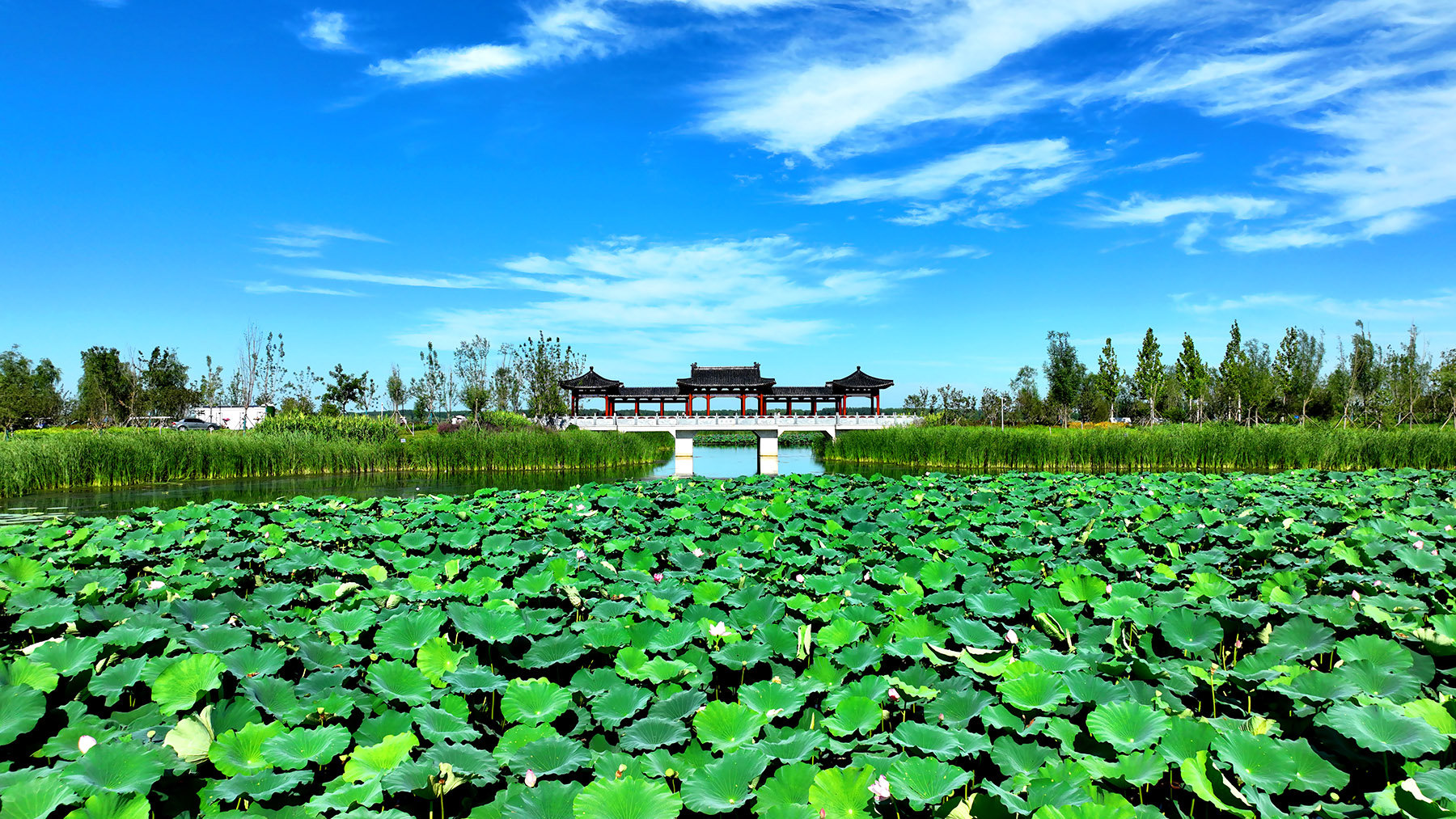
After years of restoration, Baiyangdian Lake in Anxin county, part of the Xiong'an New Area in Hebei province, has regained its historical beauty, with over 360 square kilometers of interconnected lakes now teeming with life.
In late spring, the reed beds begin to rise above the water, while birds skim the surface, dive for food, or gather in the shallows.
From Xiong'an's city center, it's a 30-minute drive to Yannan Causeway, a long scenic dike and one of the wetland's most striking attractions. The shift is immediate — from a city defined by cutting-edge design to the tranquil expanse known as the "Pearl of North China".
READ MORE: The city of tomorrow
One of the largest freshwater lakes in northern China, Baiyangdian is actually a network of over 140 smaller lakes and ponds. Since dredging and restoration began in 2019, most of these waters have been reconnected, revitalizing the entire ecosystem. Improved water quality and a healthier environment have drawn back wildlife.
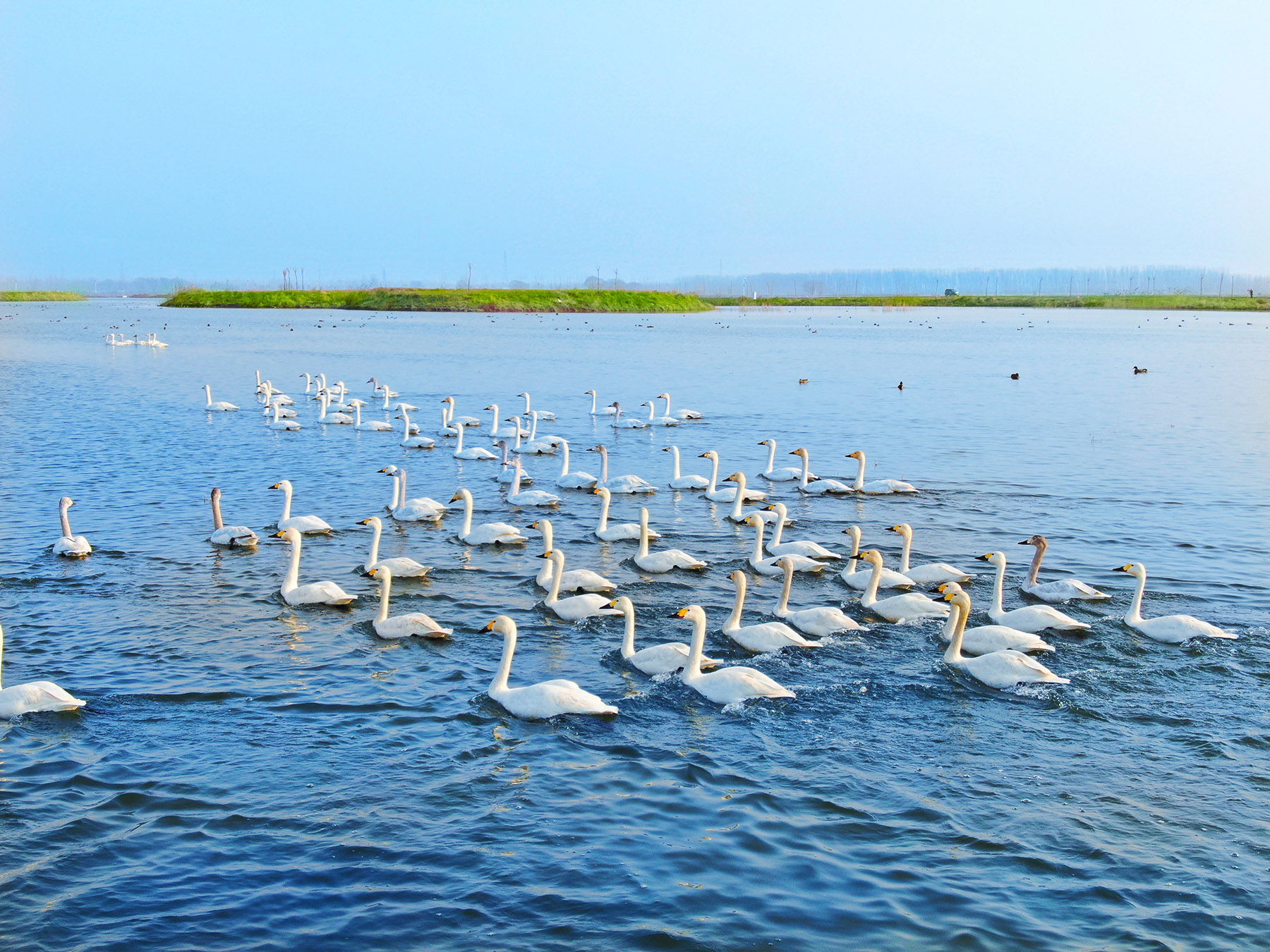
Ma Tengyun, who has worked on the dredging and restoration project for years, says that this past winter, more than 300 whooper swans gathered here, while rare bird species became a common sight.
As we stood talking on a wooden boardwalk by the water, a whiskered tern perched briefly by the shore. A little farther out, a Baer's pochard glided across the surface, one of the reed marshes' most treasured inhabitants.
"Since the water improved, bird life here has flourished. Bird-watchers visit all the time," Ma says.
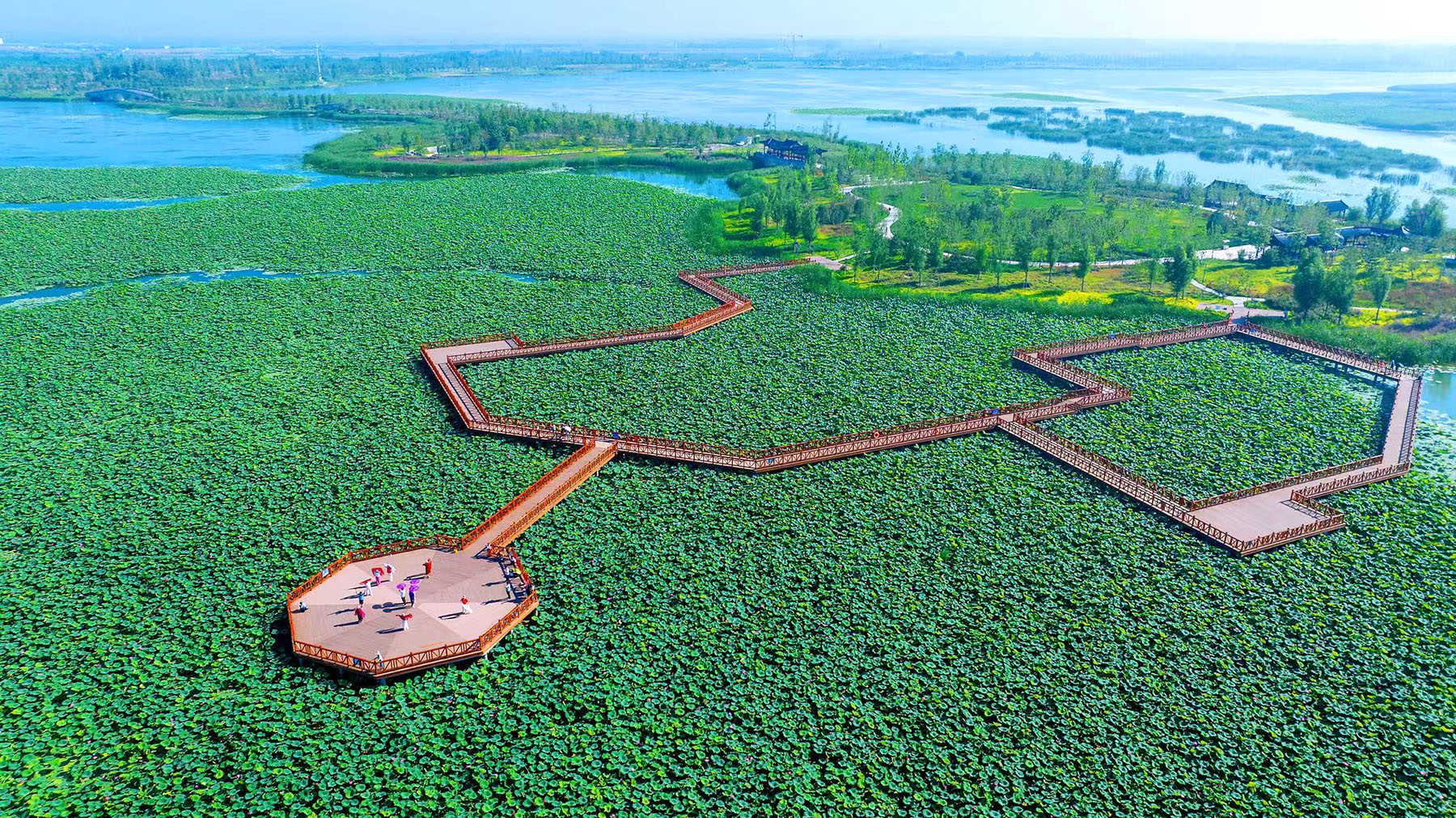
To protect this growing biodiversity, certain areas remain strictly off-limits. An ecological island is reserved for birds, and even enthusiasts can only observe from boats. The long park extending into the lake is open to visitors free of charge, while the Baiyangdian scenic area nearby charges an entrance fee of 40 yuan ($5.85).
The scenic area reopened to visitors at the end of April. As summer approaches, the lake becomes a dreamlike destination for boating through lotus flowers. Summer and early autumn are widely considered the best times to visit.
In summer, Baiyangdian transforms into a sea of soft pink and white lotus blossoms. Boats glide through fragrant corridors of flowers and reeds, cutting gently across calm waters. Birds dart overhead, and light shifts constantly across the rippling surface.
By autumn, the scene changes again. Reeds turn golden, their tall stalks swaying like waves of amber, and the lake takes on the stillness of a painting.
Baiyangdian's history stretches back to the Warring States Period (475-221 BC), when early settlements first emerged in the region.
Over centuries, it became strategically important. During the Ming (1368-1644) and Qing (1644-1911) dynasties, it served as a key waterway hub, supporting trade and local economies.
In the 20th century, Baiyangdian became famous for its role in the Chinese People's War of Resistance Against Japanese Aggression (1931-45). Its intricate waterways offered natural cover for guerrilla forces operating across central Hebei.
Today, traces of that past remain in the villages scattered across the lake. Communities live by fishing and reed harvesting, preserving a way of life that feels untouched by time.
A 40-minute drive from Xiong'an brings visitors to Juantou village, where tradition continues. Homes face the water, families keep boats, and private docks line the shore. Fishing vessels drift quietly across the surface.
Visitors can hire a boat for around 300 yuan to explore the reed marshes, or try catching fish and shrimp. Cormorant fishing demonstrations — a centuries-old practice — are still performed by local fishermen.
ALSO READ: Building a smart metropolis
Many residents run homestays, with rooms priced between 200 and 300 yuan per night. After experiencing Xiong'an's modern ambitions, the village offers a stark contrast: a slower rhythm shaped by water and the seasons.
Mornings begin with mist rising over the lake. Evenings end with boats returning under fading light. The only sounds are oars, birds and the gentle movement of water.
It feels like stepping into another world — a place where time softens, and the pace of life follows the lake itself.
