

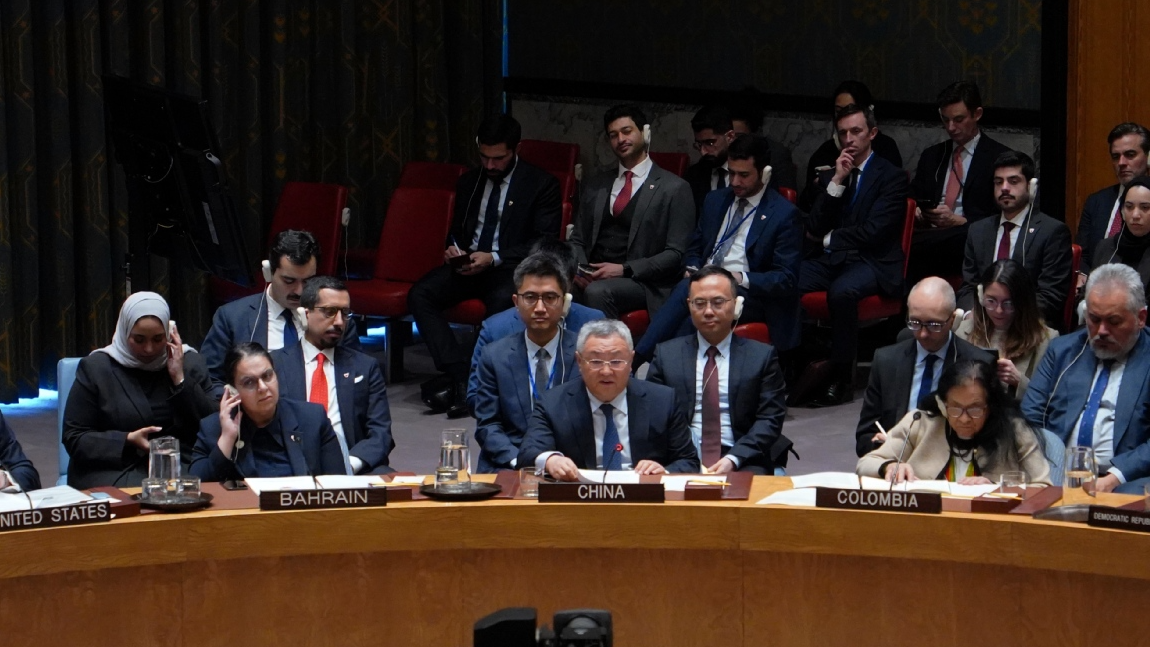
China's permanent representative to the United Nations, Fu Cong, urged countries to resolve maritime security tensions through political means, warning that military action risks deepening instability in key global shipping lanes.
Addressing a high-level debate at the United Nations Security Council on Monday, Fu said maritime security challenges are increasingly intertwined with geopolitical conflicts.
"Maritime security issues are becoming intertwined with geopolitical conflicts and both traditional and non-traditional security risks," Fu said, calling on countries to "seek comprehensive solutions that address both symptoms and root causes".
He noted the importance of dialogue, saying that "only through dialogue and consultation" can tensions be eased and a stable environment for global shipping be maintained.
ALSO READ: China says Strait of Hormuz security serves common interests
"Abusing military means cannot fundamentally resolve risks," he said, warning that such actions "will only intensify confrontation and create greater security crises".
Fu pointed to the Strait of Hormuz as a critical artery for global trade, saying its stability is in the common interest of the international community.
He said disruptions to navigation in the Strait are the result of "illegal military actions" by the United States and Israel against Iran, and described additional military deployments and "targeted blockade measures" as "dangerous and irresponsible".
The way out, according to Fu, is to "achieve a comprehensive and lasting ceasefire as soon as possible" and to pursue political and diplomatic solutions to disputes.
ALSO READ: China calls for de-escalation amid Strait of Hormuz concerns
Iran's Ambassador Amir Saeid Iravani, speaking at the same meeting, sharply criticized US actions, accusing Washington of imposing a maritime blockade and conducting "unlawful" seizures of Iranian vessels.
Iravani said such actions "constitute piracy and hostage-taking" and violate international law and the UN Charter.
Iran, he said, has taken measures in the Strait of Hormuz "grounded in its rights and obligations under the law of the sea" to balance coastal security with safe navigation.
Fu urged countries to fully and "in good faith" implement the United Nations Convention on the Law of the Sea and reject "double standards" in its application.
Countries should "exercise their right to freedom of navigation in good faith," he said, while respecting the sovereignty and security concerns of coastal states.
READ MORE: Rising maritime threats test global trade lifeline
He called for stronger international cooperation to combat maritime crime, noting rising incidents of piracy and trafficking, and stressed the need to address root causes through development.
"Only by upholding the principle of extensive consultation, joint contribution, and shared benefits, can we build a more just and equitable global maritime governance system," Fu said.
China remains "a firm defender and builder of international maritime rule of law", Fu added, highlighting its anti-piracy escort missions in the Gulf of Aden and participation in global ocean governance initiatives.
China, Fu said, stands ready to work with the international community to "safeguard maritime security and build a maritime community with a shared future".
Contact the writers at minluzhang@chinadailyusa.com
