

Ferrari, doubling down on driving emotion, prepares to reveal further details of its first fully electric vehicle in May
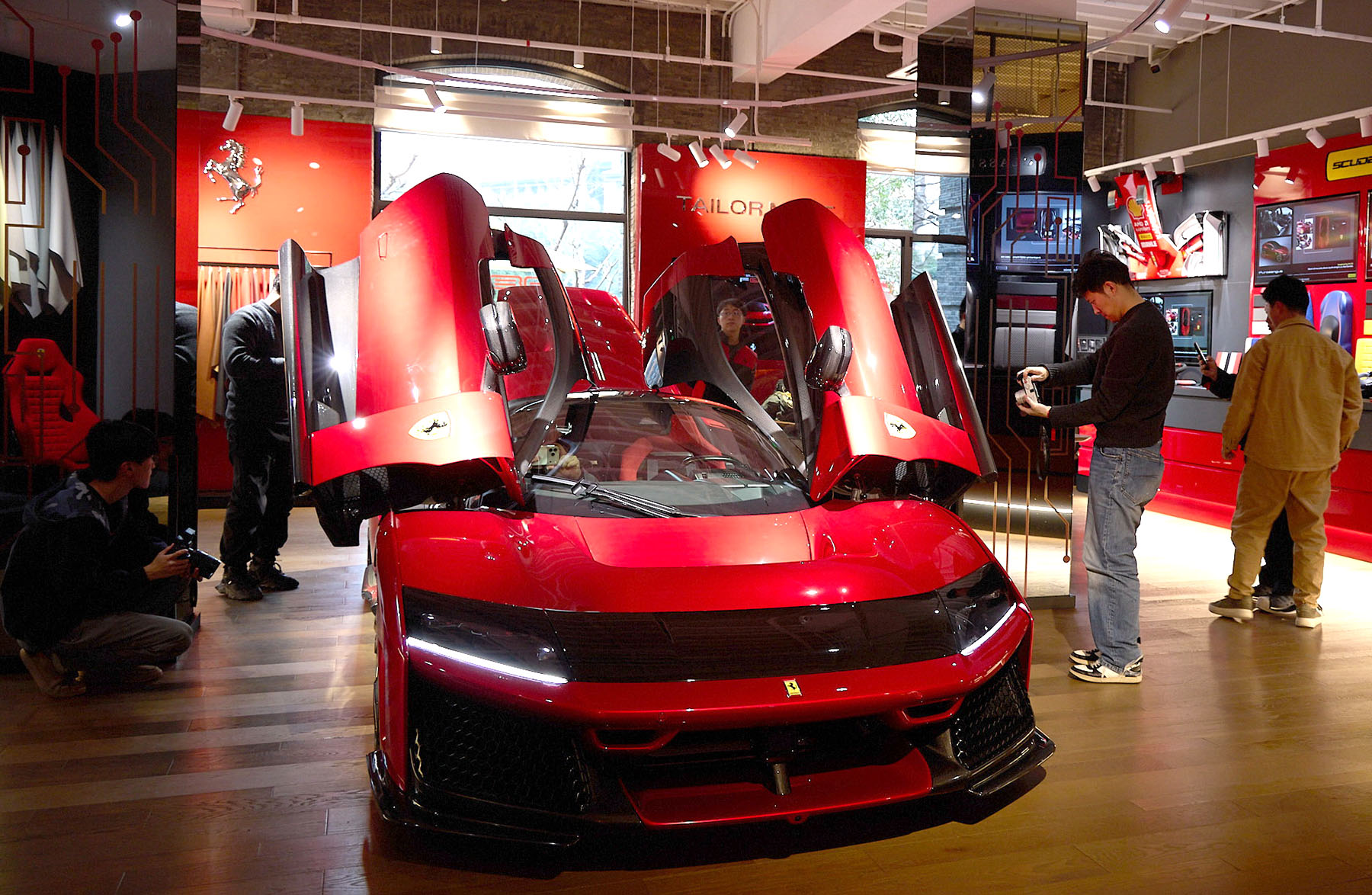
Ferrari NV is doubling down on China as a long-term growth engine, believing that the world's second-largest luxury market is not just recovering, but reshaping itself around a more resilient, top-end consumer base.
In the first quarter, the luxury market in the country showed early signs of stabilization. Demand at the very top held up, with ultra-high-net-worth consumers continuing to show an appetite for high-ticket goods and curated experiences. Global luxury groups including LVMH reported solid demand in China during the period.
That resilience is increasingly visible in the luxury car sector. As China accelerates its shift toward electrification and digital mobility, the competitive landscape is being rewritten. Yet ultra-luxury brands are not rushing, they are balancing innovation with heritage and performance.
Against this backdrop, Ferrari remains, at its core, a luxury brand, with its presence extending beyond cars into a broader lifestyle narrative.
READ MORE: Leading luxury goods group sees signs of recovery in China
"The luxury market in China is reliable, resilient … and I'm pretty bullish on the future of China as a market in general and for luxury specifically," said Jan Hendrik Voss, president of Ferrari China. Voss assumed the role in September 2025 after more than a decade with Ferrari across Europe, the Americas and Australasia.
For the Italian brand, China sits at the center of its strategy. The company defines itself on three pillars: sports cars, racing and lifestyle.
Supply discipline remains strict, with exclusivity a priority even as demand in China stays strong. Even today, the company still follows founder Enzo Ferrari's principle — "always deliver one car less than the market demand".
In 2025, Ferrari posted revenue up 7 percent to over 7.1 billion euros ($8.3 billion). Demand for Ferrari remains very solid and is managed with discipline in every market. In China, deliveries have moderated in recent years as part of its disciplined allocation strategy, while still maintaining strong growth compared with pre-pandemic levels, the company said.
However, the market for luxury vehicles in China is shifting fast. According to data from Gasgoo Automotive Research Institute, the market share of new energy luxury vehicles in the country had surged from 10.8 percent in 2020 to 60.8 percent in 2024. Electrification and intelligent systems have become the main growth drivers in the country's luxury car segment.
Yet ultra-luxury brands have largely lagged in full electric rollouts. Most still rely on hybrids, and high-performance internal combustion engines remain important. Pure electric supercars remain limited in number, as performance trade-offs around weight and dynamics remain unresolved.
As a result, several brands have slowed their electrification timelines. Even Porsche AG is pacing its rollout. The company is unveiling its first all-electric Cayenne Turbo model at the ongoing 2026 Beijing auto show, with an electric 718 expected to follow. Official prices for the Cayenne Turbo will start from around 1.12 million yuan ($163,700) and the car will be able to accelerate from 0 to 100 kilometers per hour in just 2.5 seconds, and from 0 to 200 km/h in 7.4 seconds.
Ferrari, however, is moving ahead on its own terms. The Italian carmaker has already confirmed the launch of its first fully electric model, the Ferrari Luce, and is expected to unveil the car's exterior design in May, after revealing some of the car's interior design earlier this year.
China will be a key proving ground. "Chinese customers are very ready," Voss said. "They're already used to electric cars — they've just never driven an electric Ferrari."
Instead of competing on software-driven features such as autonomous driving or digital cockpits — areas dominated by domestic electric vehicle makers — Ferrari is doubling down on driving emotion: acceleration, handling and sensory experience.
Technology is not used for its own sake, but is integrated in a way that enhances performance and drives emotion, the president added.
At the same time, Ferrari's customer base in China is relatively young, in line with the country's affluent demographic.
According to the results of a Chinese luxury consumer survey released by Hurun Research Institute in January, the average age of respondents is 36, with those under 35 accounting for 51 percent. Among ultra-high-net-worth individuals who are considering purchasing a car in the next two years, 27 percent list sports cars as their preferred category.
China stands out in its global footprint for a younger, more tech-oriented customer base. "They are very young, tech-savvy and have an appreciation for things with history, value and legacy. They also include a higher proportion of women compared with many other markets," Voss said.
He added that motivations are evolving. "People love things that have status, but not for status itself — more for craftsmanship, heritage and technological sophistication. They look for experiences and a sense of belonging."
Beyond car ownership, Ferrari is expanding its experiential ecosystem in China through track days, racing programs, Ferrari tours and personalization, including tailor-made options, with Casa Ferrari Shanghai serving as a dedicated space.
As an example of its localized approach, the Ferrari Amalfi Spider will make its China debut in May, featuring five configurations within a limited allocation of 50 units.
The company is accelerating its lifestyle push in China, including fashion, experiences and its recently launched hyper-sail project. The aim is to extend brand equity beyond cars into culture and aspiration.
ALSO READ: BYD launches electric supercar to rival Lamborghini, Ferrari
Motorsport is also reinforcing that positioning. Interest in Formula 1 has risen sharply, helped by global media exposure such as Drive to Survive and recent F1-related films. The 2026 Formula 1 Chinese Grand Prix in Shanghai drew more than 230,000 attendees over three days, a record for nearly two decades, with ticket revenue up more than 30 percent year-on-year.
Ferrari's long-standing Formula 1 heritage remains central to further elevating its presence among its customers and sports fans. As the only team to have competed continuously since the inaugural Formula 1 World Championship in 1950, Scuderia Ferrari has won 16 world constructors' and 15 world drivers' championships.
The company sees China not as a single market, but as an evolving ecosystem of wealth, culture and technology. "Ferrari is here to stay for a long time," Voss said.
wangzhuoqiong@chinadaily.com.cn
