

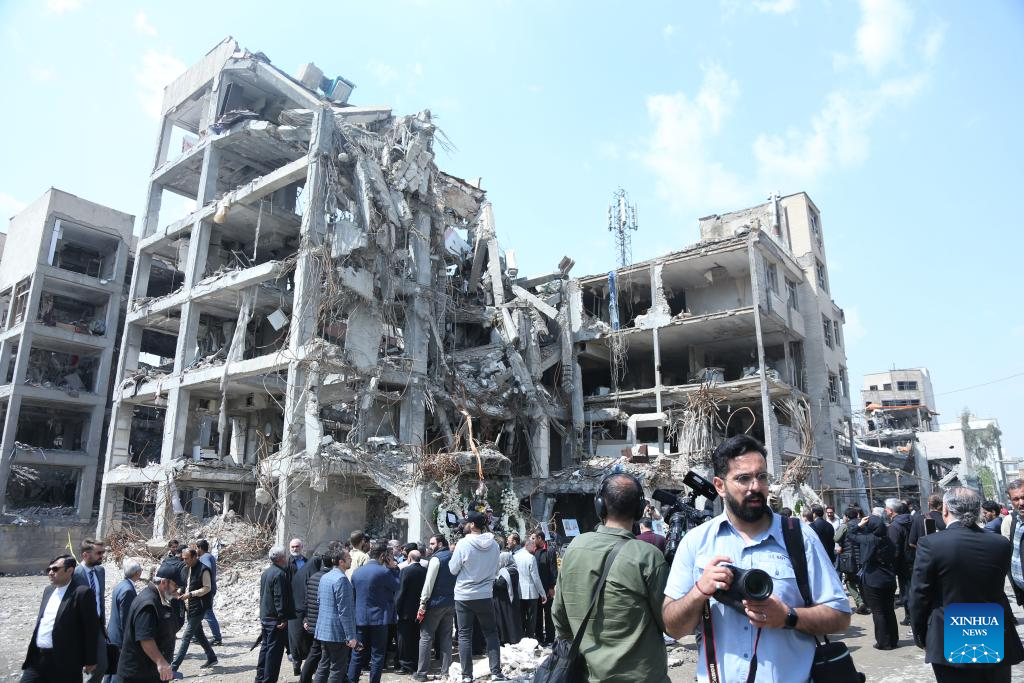
TEHRAN/BERLIN/UNITED NATIONS/WASHINGTON – US President Donald Trump is not satisfied with Iran's latest peace proposal, which seeks to reopen the Strait of Hormuz and end the US naval blockade of Iran's ports, while leaving its nuclear program for later negotiations, US media reported on Monday, citing several White House officials.
The president discussed Iran's proposal with his top national security officials at a meeting in the White House Situation Room on Monday afternoon, said the reports.
One of the people attending the meeting said Trump was not likely to accept Iran's proposal, which was delivered to the United States over the last few days, CNN reported.
A US official told The New York Times that accepting the proposal could appear to deny Trump a victory since the president has repeatedly insisted that Iran cannot have nuclear weapons.
In an interview with Fox News on Monday, US Secretary of State Marco Rubio said Iran's new proposal "is better than what we thought they were going to submit," but stressed any deal must bar Tehran from developing a nuclear weapon.
Trump insisted last week that any peace deal with Iran would be made on US terms and his timeline, claiming there is "no time frame" for ending the US-Israeli war with Iran and "no time pressure" on either the extended ceasefire or stalled talks.
Iran: US continued "destructive habits" are slowing diplomatic progress
Iranian Foreign Minister Seyed Abbas Araghchi on Monday blamed the slow progress of diplomacy between Iran and the United States on the latter's continuation of its "destructive habits."
He made the remarks in a meeting with Russian President Vladimir Putin in Saint Petersburg, which was also attended by Russian Foreign Minister Sergey Lavrov, among others, read a statement released by the Iranian Foreign Ministry.
Elaborating on the diplomatic process mediated by Pakistan to end the war and establish peace and security in the West Asia region and the Strait of Hormuz, Araghchi said, "The main reasons for the slow progress of diplomacy are the US continuation of its destructive habits, especially its insistence on putting forward unreasonable demands, frequently changing positions, rhetoric of threat and recurrent breaking of promises."
He said Iran will make an appropriate decision about the current diplomatic process while taking into consideration its previous experiences, "especially the two military aggressions (by the US and Israel) against the country in the middle of diplomatic negotiations, attacks on its peaceful nuclear facilities as well as the US addiction to sanctions and economic pressure and continued piracy against Iranian commercial vessels."
Putin, for his part, voiced Russia's readiness to provide assistance to completely ending the war and establishing peace in the region, expressing hope that diplomatic processes in that direction would lead to a favorable outcome for peace and stability, read the statement.
Putin underlined Russia's determination to further strengthen bilateral ties in all areas of common interest and expand bilateral cooperation in different sectors. He said he has received a message from Iran's Supreme Leader Mojtaba Khamenei.
Araghchi arrived in Russia early Monday on the last leg of a tour that has taken him to Pakistan twice and to Oman.
ALSO READ: Iran's Araghchi slams US for failed Pakistan talks
Actions in Strait of Hormuz
Also on Monday, a senior Iranian lawmaker said the general staff of Iran's armed forces has been decided to be the authority responsible for taking action in the Strait of Hormuz in the draft of a parliamentary plan to ensure security in the waterway.
Ebrahim Azizi, chairman of the Iranian parliament's national security and foreign policy committee, made the remarks in an interview with state-run IRIB TV while elaborating on the articles of the finalized draft of the "Strategic Action Plan to Ensure Security and Progress in the Strait of Hormuz and the Gulf," which is set to be voted on by the legislative body.
US seizure of vessels carrying Iranian oil
Iran's Foreign Ministry spokesman Esmaeil Baghaei on Monday strongly condemned the US seizure of vessels carrying Iranian oil on the high seas.
"This is the outright legalization of piracy and armed robbery on the high seas. Welcome to the return of the pirates -- only now, they operate with government-issued warrants, sail under official flags, and call their plunder 'law enforcement,'" said Baghaei on the social media platform X.
Merz criticizes US strategy
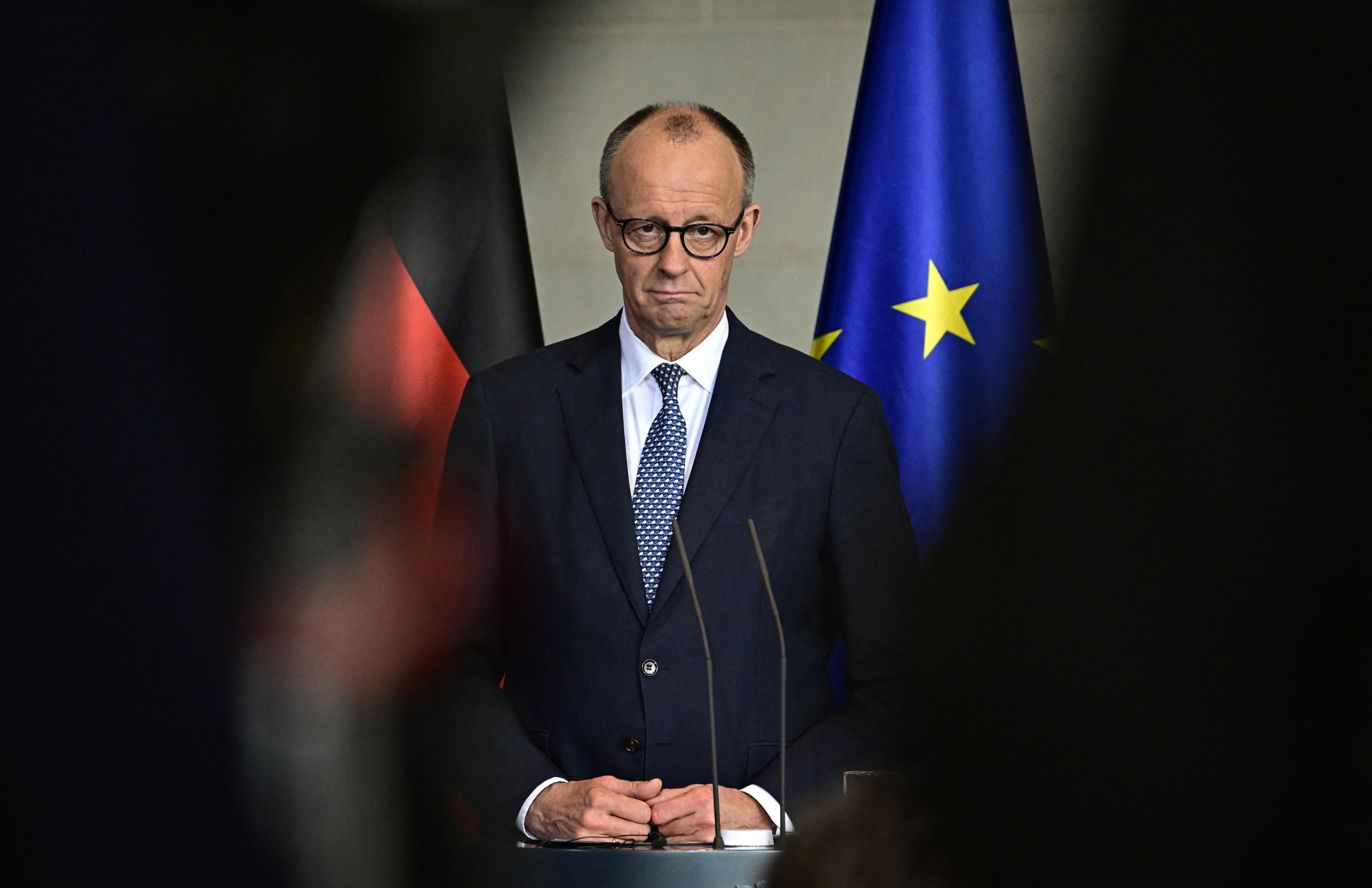
German Chancellor Friedrich Merz on Monday criticized the United States for its "planless" military engagement in Iran, adding that the United States "is being humiliated by the Iranian leadership."
Speaking at the Carolus-Magnus-Gymnasium, a school in Marsberg, North Rhine-Westphalia, Merz expressed his skepticism about Washington's ability to quickly conclude its war with Iran.
The United States "obviously went into this war without any strategy," Merz was quoted by the German magazine Spiegel as saying, adding that the Iranian side is negotiating highly skillfully.
IMO chief urges international support
International Maritime Organization (IMO) Secretary-General Arsenio Dominguez on Monday called for international support for the evacuation of seafarers trapped in the Strait of Hormuz.
In his briefing to a Security Council open debate on "The safety and protection of waterways in the maritime domain," Dominguez asked states to support the IMO's plan to facilitate the evacuation of affected seafarers.
The geopolitical conflict around the Strait of Hormuz is having a very negative effect on seafarers and shipping, and on the global population and economy. About 20,000 seafarers and nearly 2,000 vessels remain trapped in the Persian Gulf, said Dominguez.
Guterres calls for reopening of Strait of Hormuz
UN Secretary-General Antonio Guterres on Monday called for the reopening of the Strait of Hormuz.
"Navigational rights and freedoms through the Strait of Hormuz must be respected ... These principles must be upheld in full, and without delay," he said at a Security Council open debate on the safety and protection of waterways in the maritime domain.
