

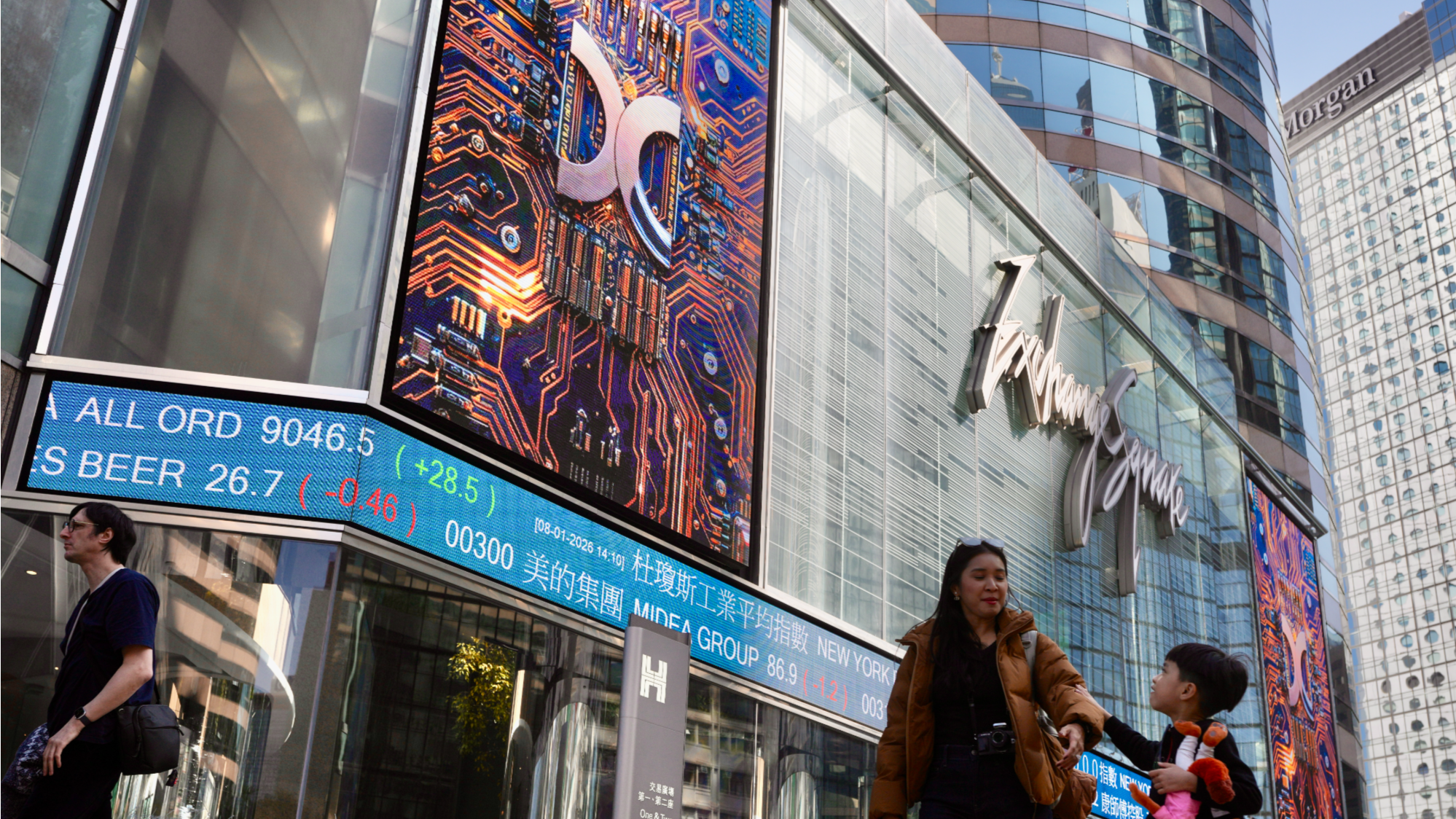
Lightelligence, a Chinese mainland optical-computing provider, surged in its Hong Kong Special Administrative Region trading debut, underscoring investor interest in an industry seen as critical to supplying parts for the artificial-intelligence buildout.
Shares rose as much as 408 percent after the firm raised HK$2.5 billion ($323 million) in an initial public offering. The pop at market open is the biggest ever among IPOs that raised at least $100 million in the city, according to Bloomberg-compiled data that goes back to 1985.
The listing of the company, formally known as Shanghai Xizhi Technology Co, attracted cornerstone investors including Alibaba Investment, GIC and Temasek, which together subscribed more than 71 percent of the offering.
Mainland optical stocks have rallied recently on expectations that AI‑driven demand will fuel the industry’s next leg of gains. Lightelligence says it aims to leverage its first‑mover advantage in optical computing chips for AI inference, a market where penetration in the mainland remains below 0.5 percent but is projected to climb to 20 percent by 2040, according to the consultancy Frost & Sullivan.
ALSO READ: Hong Kong IPOs lead global ranking
“The IPO’s strong performance today reflects the momentum that’s been seen in China’s ‘optical trio’ over the past month,” said Bloomberg Intelligence analyst Marvin Chen, referring to gains in Zhongji Innolight Co, Suzhou TFC Optical Communication Co, and Eoptolink Technology Inc.
“Tech hardware names are seeing strong momentum in the April rebound as the AI investment cycle continues to broaden out.”
Momentum in the sector was further highlighted last week when Semight Instruments Co, a optical‑communication test‑equipment maker, soared 876 percent in its Shanghai trading debut.
READ MORE: Capital inflows into HK continue amid global market uncertainties
Founded in 2017, Lightelligence develops optical‑interconnect and optical‑computing solutions aimed at meeting the surging demand for computing‑power driven by generative AI.
Optical technology uses light to transfer data and perform computing, enabling faster speeds with lower power consumption.
The company planned to use about 70 percent of net proceeds for research and development, including on chip-design technology and optical-computing products. It generated a loss of 1.3 billion yuan ($191 million) in 2025, while research and development expenses rose to about 480 million yuan, according to its listing document.
