

Driven by passion and purpose, Wang Miao inspires a new generation to protect the oceans through science and citizen action.
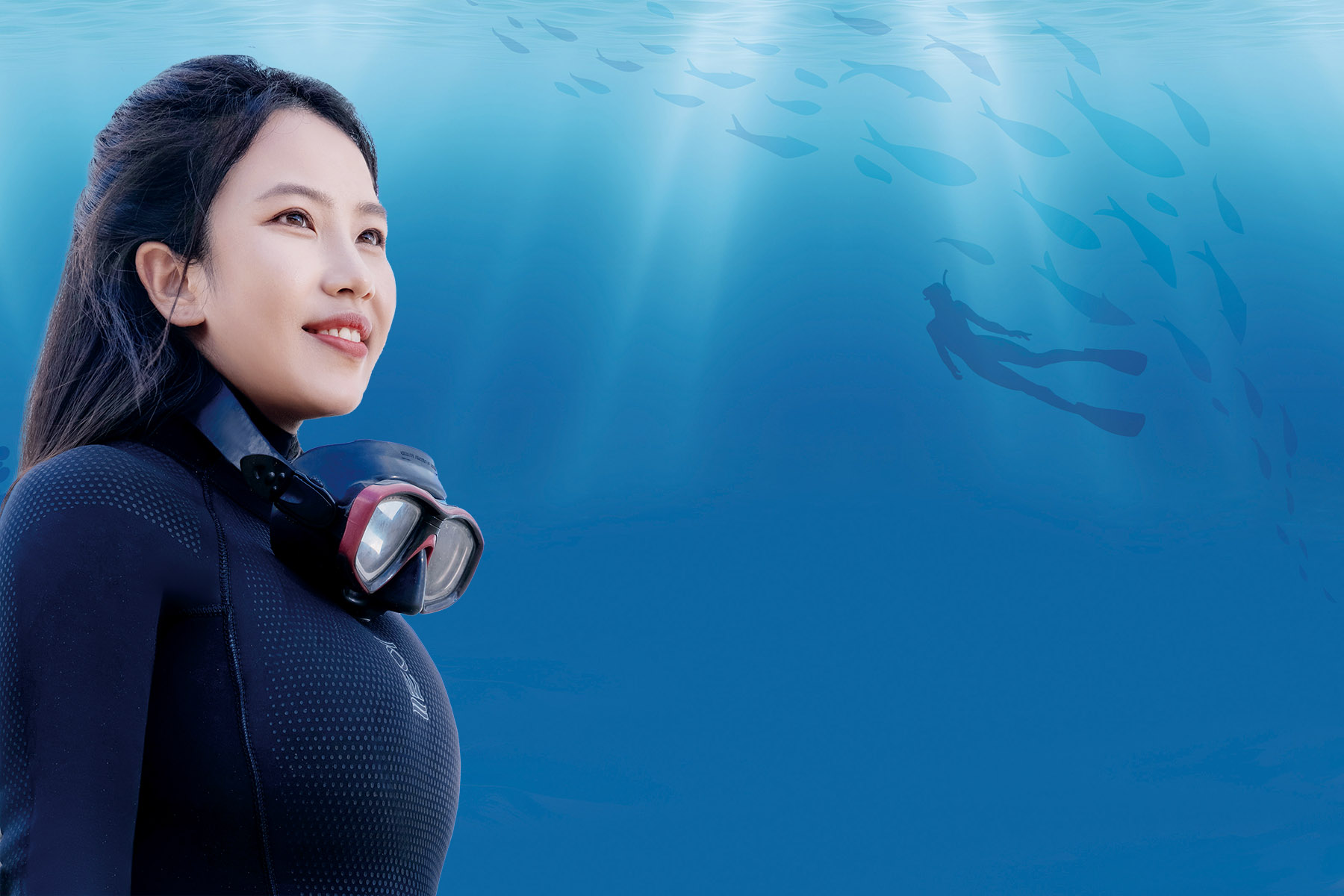
"Don't rush to chase success as others define it. Be the change you wish to see and stay true to yourself."
When Wang Miao became the first Chinese recipient of the United Nations Young Champions of the Earth award in 2018, she shared these words on social media, echoing a dream she had held since her school days: to work for the UN.
In many ways, that dream has been realized through her work in marine conservation.
As the founder of Better Blue, an NGO that promotes science-based and ocean-friendly interactions with marine ecosystems, Wang has dedicated herself to giving a voice to the oceans.
Eight years on, her influence continues to grow. Now 38, she has spoken at major global forums, including the UN General Assembly and the UN Environment Assembly, and has received further recognition — most recently as the China winner of the Social Action Award in the Study UK Alumni Awards 2026, presented by the British Council, honoring her leadership in global ocean conservation.
READ MORE: Guardian of the reef
Her journey has not been easy, as she chose a path many would consider unconventional.
Wang's connection to marine conservation began far from the sea, on the Qinghai-Tibet Plateau. After studying international development in the UK, she returned to China to work on an international project in the Xizang autonomous region. It was there, while hosting backpackers traveling through the area, that she discovered scuba diving — and quickly fell in love with it.
As she spent more time in the water, she began to see not only the ocean's beauty but also its suffering.
"Every time I see marine life trapped in abandoned fishing nets on the ocean floor, I feel an urgent need to act — even if one person's efforts may seem small," Wang said.
She started looking for ways to combine her love for the ocean with a career in the nonprofit sector, which eventually led her to found Better Blue in 2017.
In the early days, the biggest challenge wasn't funding or staffing — it was a lack of public awareness.
Marine conservation organizations were scarce among domestic nonprofits, and many people believed ocean pollution had little to do with them.
"Often, I felt as if I was working in isolation," Wang recalled. "People thought the ocean's problems didn't affect them, especially if they lived far from the coast."
Even basic concepts were difficult to communicate. For example, explaining how "destructive beachcombing" damages sea grass beds proved challenging.
"We didn't yet have the baseline data to clearly show why these actions matter," she said.
What kept her going was the support of the diving community. In Wang's eyes, divers are natural advocates for marine conservation.
"They have a deep connection to the ocean and are willing to dive for a cause," she explained.
Diving for change
Wang and her team have been promoting the concept of citizen science, supporting divers each year in coral reef monitoring and marine debris investigations.
"It transforms diving into meaningful scientific exploration and makes it a powerful tool for marine conservation," Wang said.
As diving grows more popular among young people, Wang sees them playing an increasingly important role in protecting the oceans. "They don't have to be just tourists," she added. "They can become guardians of the ocean."
However, marine conservation cannot be limited to divers. "We need to break out of the bubble," Wang noted.
To reach a wider audience, Better Blue has worked as an advisor for popular variety shows such as Day Day Up and Sisters Who Make Waves, collaborating with artists to promote ocean protection.
In 2023, responding to the UN's call for urgent environmental action, Wang's team invited actors Zhang Yi and Wu Qian to Antarctica to film a short documentary on climate change. The film was released jointly with the UN Environment Programme on World Environment Day, June 5, 2024.
"This allows fans who may never have paid attention to environmental issues to learn about coral bleaching or plastic pollution through the actions of their idols," Wang said.
Over the past few years, marine conservation has gradually shifted from a niche topic to a more mainstream — and even fashionable — cause.
"More young people are asking how their studies can contribute to protecting the oceans," Wang said. "Seeing this awareness grow is what gives me the greatest sense of satisfaction."
ALSO READ: Hainan leads the way in protecting, restoring coral reefs
From a broader perspective, China is transitioning from being a participant in global ocean governance to becoming a leading voice. As someone working on the front line, Wang has witnessed this transformation firsthand.
"Nonprofits like Better Blue are presenting the ideas and solutions of Chinese youth on the international stage. Our efforts are increasingly recognized," she said.
Looking ahead, Wang plans to showcase the vitality of the ocean through cross-sector collaborations and new media campaigns, hoping to inspire more people to adopt ocean-friendly habits in their daily lives.
And now, she knows she is no longer alone.
Contact the writers at wangxingwei@i21st.cn
