

As China pushes to integrate artificial intelligence more deeply into consumer markets and the real economy, Alibaba Group's domestic e-commerce arm is using the China International Consumer Products Expo to showcase how AI can reshape both online shopping and manufacturing.
At the ongoing expo in Hainan province, Taobao and Tmall Group presented a range of AI-powered tools designed to improve how consumers discover products and how factories develop and sell them.
"The platforms of Taobao and Tmall already have massive users, merchants and products, which makes them one of the best commercial testing grounds for AI," said Song Tao, vice-president of Taobao and Tmall Group, in an exclusive interview with China Daily.
READ MORE: AI glasses heading toward mass adoption in China
Rather than focusing solely on technology, Song said the company's priority is to build AI systems that solve consumer pain points while helping merchants grow.
"We believe useful AI must do two things at the same time: improve the consumer experience and create growth for merchants," he said.
The company's push comes as Chinese policymakers move to strengthen the role of e-commerce in supporting the real economy.
Six Chinese government departments, including the Ministry of Commerce and the Ministry of Industry and Information Technology, recently issued guidelines to promote high-quality development of e-commerce.
The document calls for deeper integration between the digital and real economies, including using e-commerce to support small and medium-sized enterprises and rural areas, advancing industrial digitalization and encouraging technological innovation to upgrade consumption.
It also emphasizes expanding high-standard opening-up through cross-border e-commerce and the Silk Road e-commerce initiative, while improving regulatory frameworks and encouraging Chinese e-commerce companies to expand overseas in compliance with relevant rules.
Alibaba's decision to spotlight its AI strategy at the expo also reflects a broader policy upgrade linked to the development of Hainan Free Trade Port.
This year marks the first year of the Hainan FTP island-wide special customs operations, giving the Hainan expo added significance, Song said.
"It is not only a showcase, but also a place to test, launch and sell new products," he said, adding that the expo has increasingly become a gateway for international brands seeking entry into China's consumer market while offering Chinese companies a platform to expand globally.
Located near Southeast Asia and close to the Guangdong-Hong Kong-Macao Greater Bay Area, the Hainan Free Trade Port can also serve as a hub linking Chinese brands with a wider regional consumer base, Song added.
Taobao and Tmall platforms are deploying AI tools across both consumer-facing services and merchant operations. The platforms are also using AI to help bring traditional manufacturers — particularly small factories with limited e-commerce experience — onto their marketplaces.
Through Taobao Factory's "Spark" system, factories can use platform data to identify trending categories, optimal price ranges and common consumer complaints, helping guide product development before production begins.
The system can also generate product descriptions, marketing copy and short video scripts, translating factory-level product advantages into consumer-friendly selling points.
It further automates customer service, order processing, logistics coordination and after-sales services, allowing factories to operate online stores with fewer resources.
"In the past, factories were good at making products but not necessarily good at selling them," Song said. "AI can bridge that gap."
Song said China holds several structural advantages in developing AI-driven consumer applications.
ALSO READ: China's AI chip sector charges ahead
The country's large consumer market generates vast volumes of real-time data that help AI systems understand demand more accurately. China also has a highly integrated manufacturing and digital supply chain that allows new AI products to move quickly from development to mass production.
In addition, Chinese consumers are generally open to experimenting with new technologies, creating rapid feedback loops that help companies refine products.
"These factors mean AI consumer applications in China are not only technically feasible,"Song said. "They are also commercially scalable."
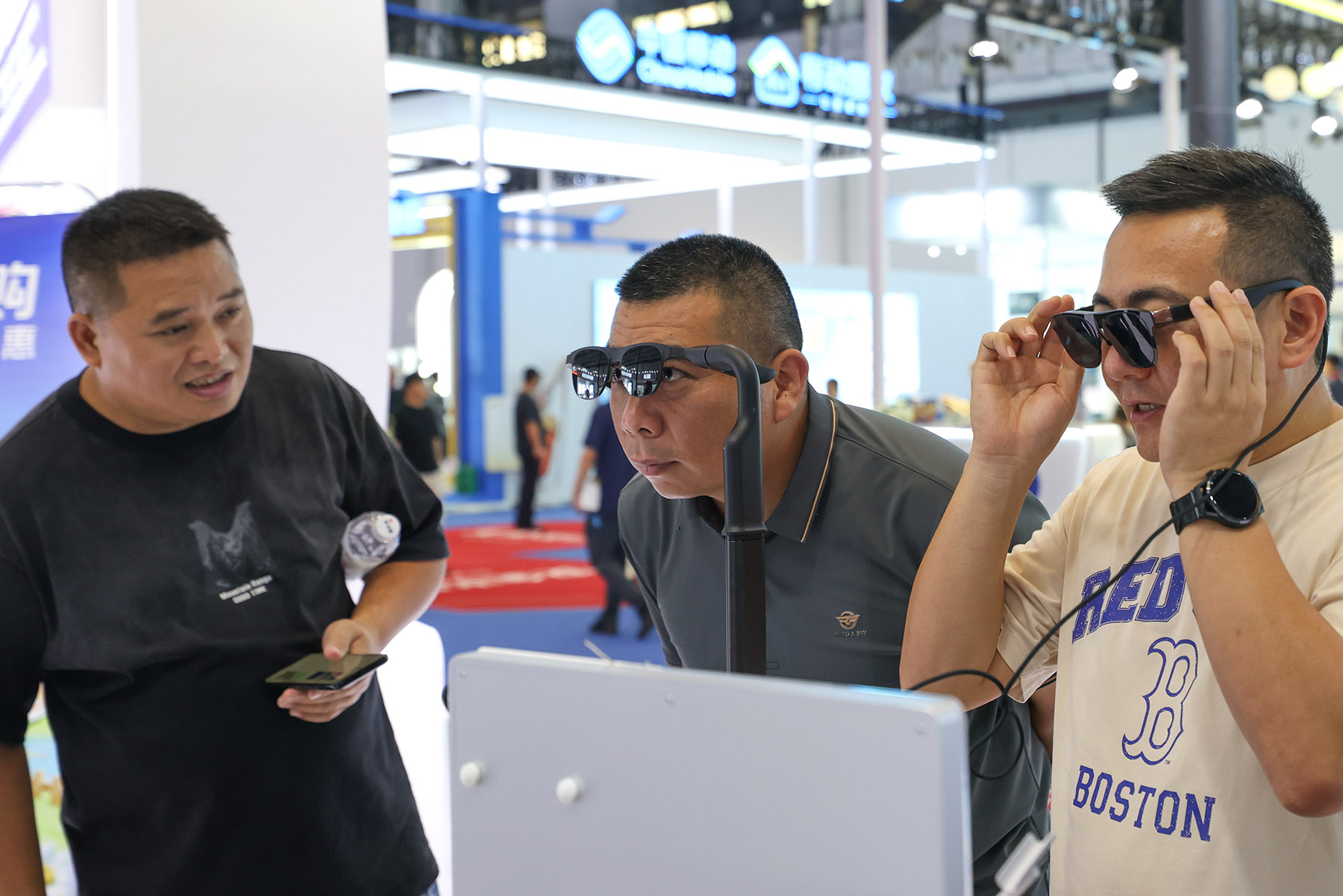
At the expo, Taobao and Tmall Group is also displaying AI glasses from Chinese technology brands alongside robotics and smart devices from companies such as Unitree Robotics and iFlytek.
Contact the writers at lijing2009@chinadaily.com.cn
