

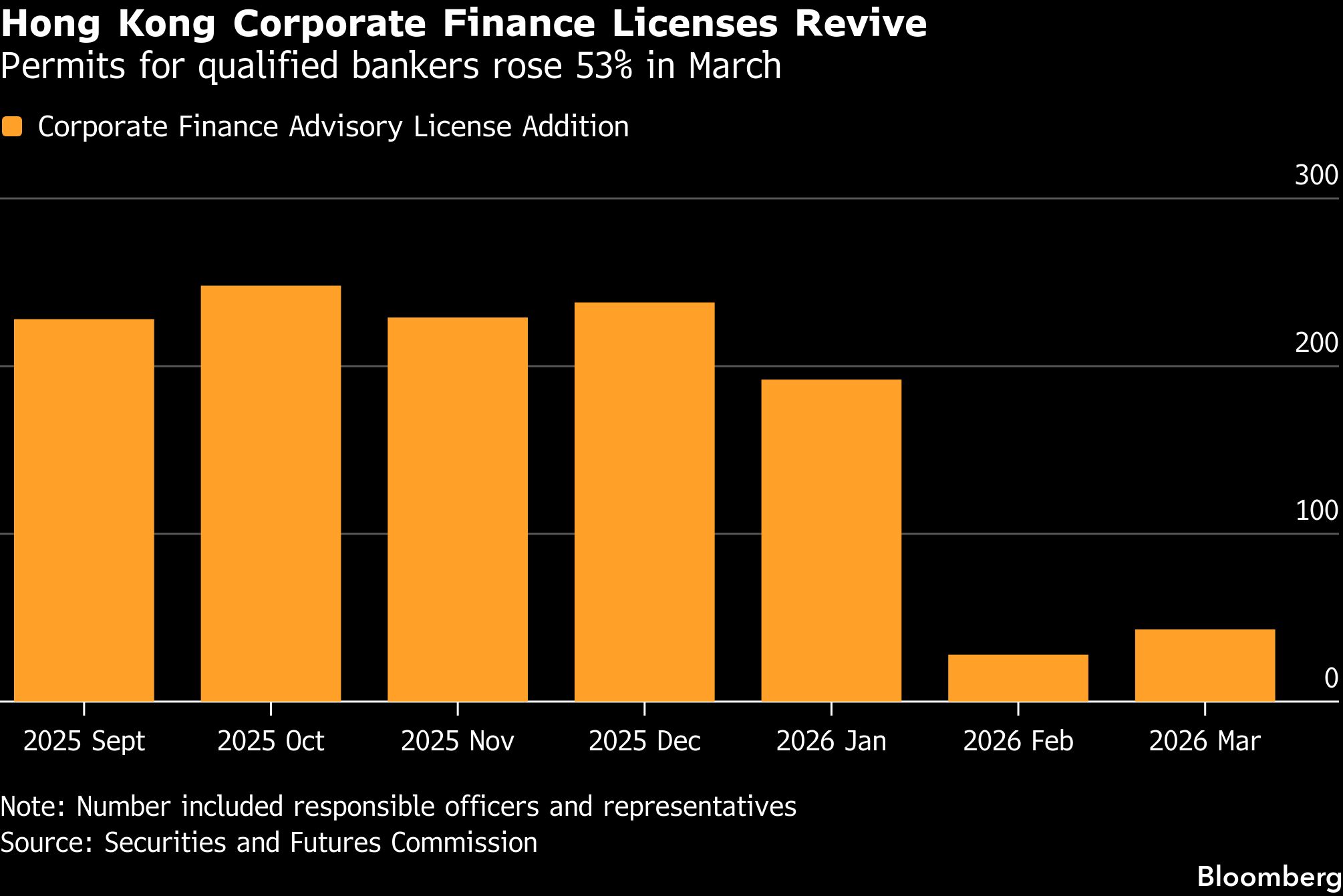
Hong Kong issued 53 percent more permits for bankers specializing in initial public offerings last month, signaling a tentative recovery even as the regulator maintains a high bar for industry entry.
The Securities and Futures Commission granted 43 new licenses to advise on corporate finance in March, up from a low in February, according to official data. Despite the rebound, the figures remain well below the historical average of more than 100 a month, a pace seen before the watchdog issued warnings to the industry over substandard IPO application work.
“It appears the SFC is attempting to accelerate the process while maintaining a strictly high quality threshold,” said Clara Chiu, founder of regulatory advisory firm QReg and former SFC licensing director.
The licensing activity serves as a barometer for the health of Hong Kong’s capital markets. While the month-on-month jump is significant, the industry is still recalibrating after a period of intense scrutiny.
The market regulator started scolding banks late last year over inadequate resources leading to sloppy work. The tightening came as Hong Kong was celebrating a four-year high in IPO fundraising and bracing for its busiest-ever start to a year.
Eric Yip, SFC’s executive director of intermediaries, said the regulator has “been encouraged by the proactive responses in the way sponsors are approaching resource allocation.”
“Our regulatory approach is pragmatic and results oriented, and we will continue to observe whether the sponsor firms’ efforts will translate into observable improvements in the quality of IPO work in the coming months,” Yip said in a statement.
Current SFC guidance now restricts signing principals, the bankers held ultimately responsible for listing deals, to a maximum of five active mandates at any one time.
As equity capital market activity picks up “firms appear to be responding to both improving market demand and to the SFC’s supervisory messaging by strengthening their staffing,” said Kenneth Hui, a partner at law firm Simmons & Simmons.
