

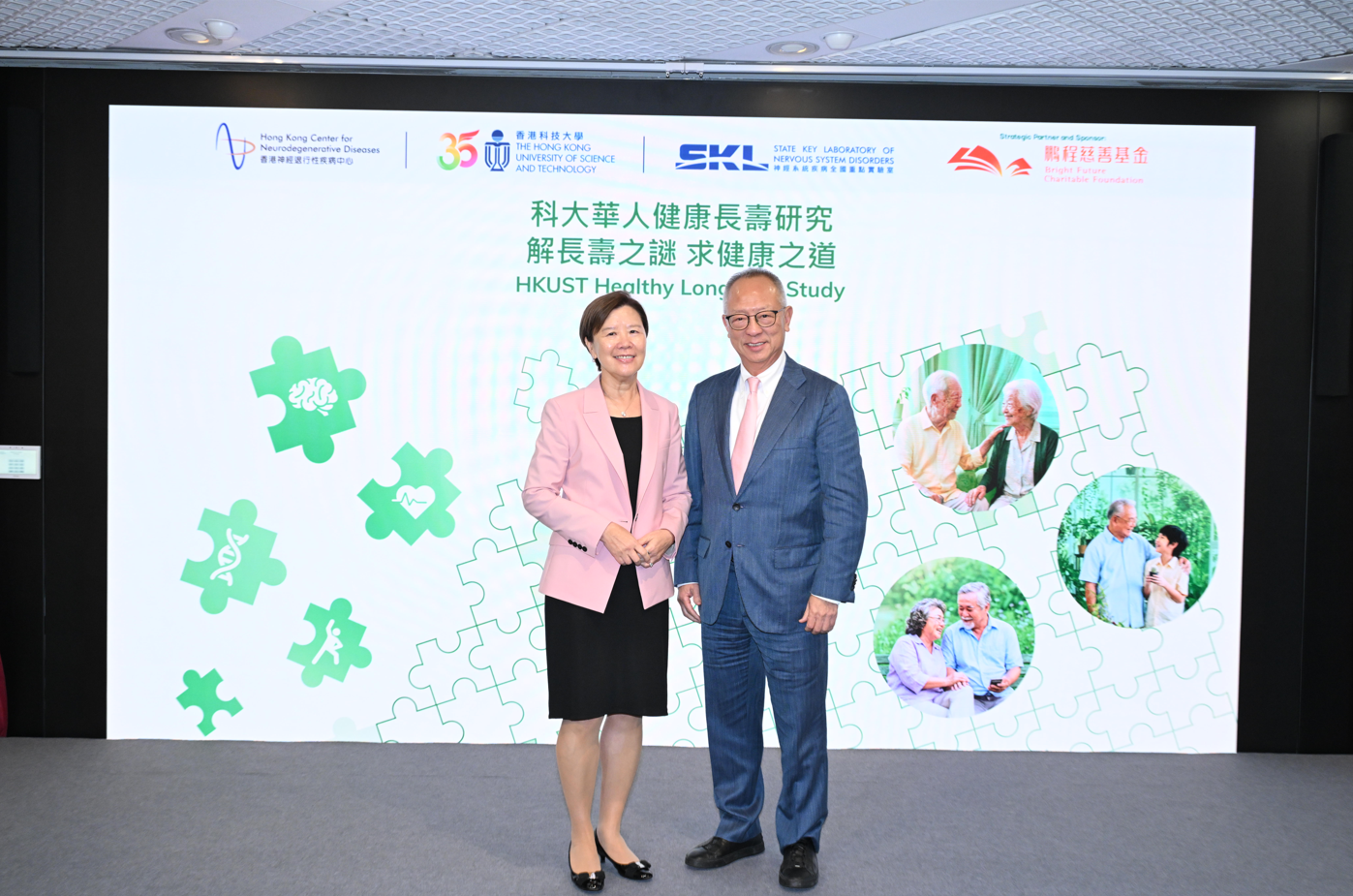
The Hong Kong University of Science and Technology (HKUST) launched on Wednesday a five year research initiative to identify the biological, genetic and lifestyle factors that underpin “healthy longevity” among Chinese seniors.
The HKUST Healthy Longevity Study, led by HKUST President and Morningside Professor of Life Science Nancy Ip, will recruit 500 Chinese residents of Hong Kong aged 90 to get insights on their healthy aging.
“Population aging is a major challenge facing Hong Kong and the rest of the world, and healthy longevity is a matter of significant social importance,” Ip said.
The study is funded by the Bright Future Charitable Foundation and will offer participants complimentary blood tests and basic health assessments while collecting detailed information about their lifestyles.
Ip outlined three core objectives for the project: to identify factors — especially modifiable ones — associated with healthy longevity; detect genetic contributors to long life in the Chinese population; and establish a biobank of biological samples from long lived Chinese individuals for future research.
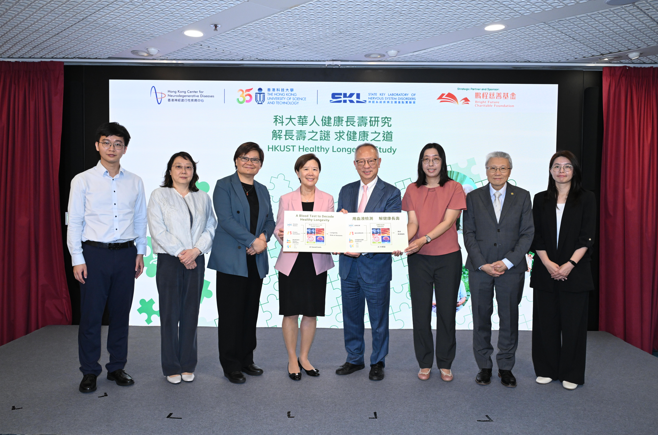
Hong Kong has been ranked the world’s longest living region for ten consecutive years, and its population aged 90 or above more than doubled from roughly 46,000 in 2011 to about 102,000 in 2021.
This growing cohort of long lived residents represents a valuable resource for studying the characteristics and biological diversity of healthy aging in a local Chinese context, according to HKUST.
Although prior research pointed to a combination of genetics, environment and lifestyle as determinants of longevity — with modifiable habits such as regular physical activity and balanced diets linked to longer lifespans — HKUST noted that most large scale studies to date have been observational and have focused largely on European populations.
The university said the biological mechanisms underlying healthy longevity in Chinese populations remain insufficiently explored.
ALSO READ: HKUST starts free Alzheimer’s screening for 6,000 seniors
The new study will leverage HKUST’s advanced blood testing capabilities and multi omics data platforms, together with artificial intelligence models, to perform integrative analyses of blood based biomarkers, clinical data and participants’ lifestyle information.
Recent advances in biomarker detection now make it possible to assess brain health, vascular function, metabolic status and inflammatory responses from blood samples with much greater depth, HKUST said.
The research team hopes to identify biomarkers and molecular pathways associated with healthy longevity that could inform personalized disease risk prediction and tailored health management strategies.
Roy Chung, founder and chairman of the Bright Future Charitable Foundation, said the Foundation’s support reflects a desire not only to extend lifespan but to improve “healthspan.”
“By integrating cutting edge science and technology, the study addresses pressing societal needs and is expected to generate practical, evidence based insights for personal health management and elderly care,” he said, urging seniors to take part.
