

Accumulation buffers financial risks, underpins RMB internationalization
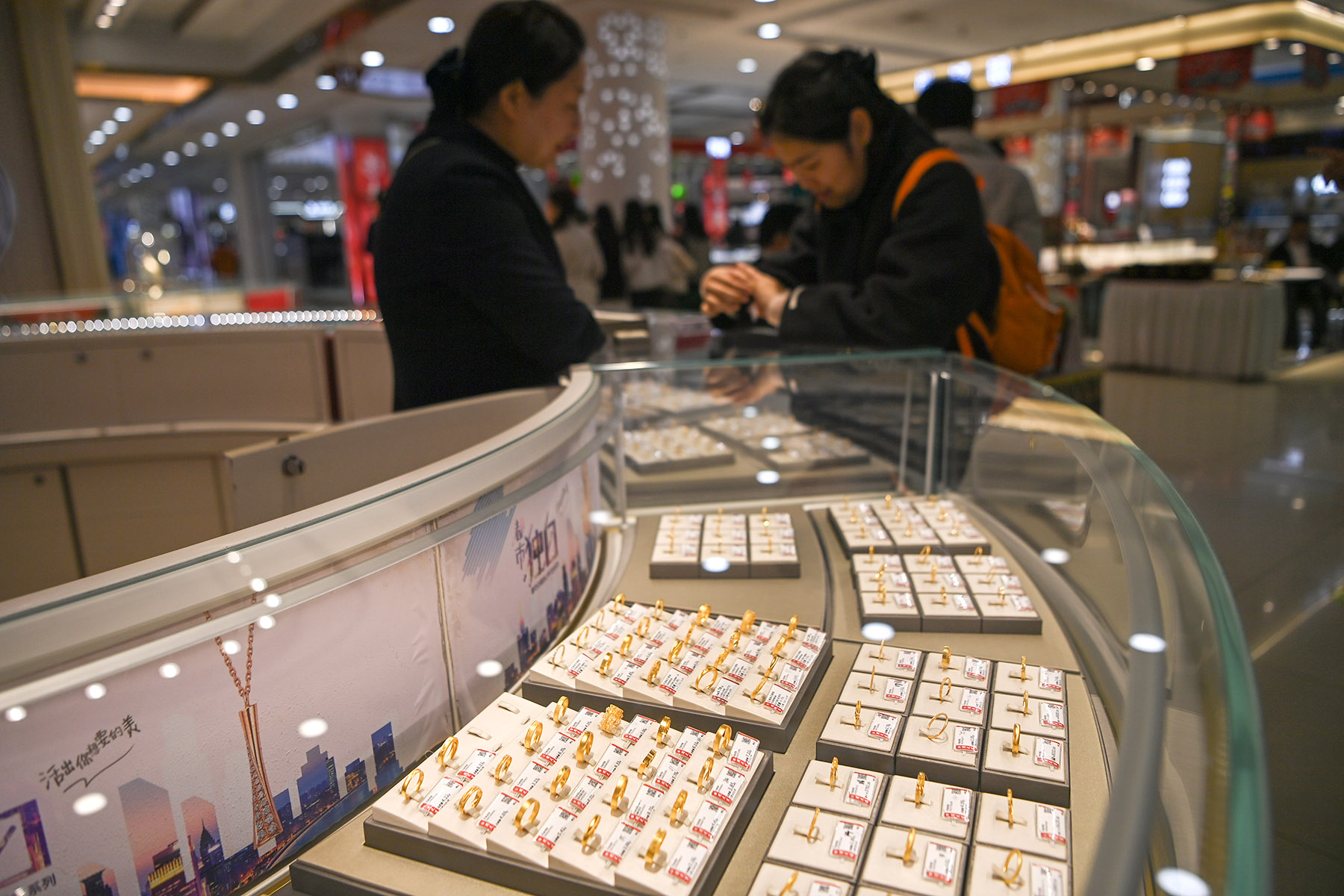
China's ramped-up increase in gold reserves — even as some central banks have turned to selling — may highlight its strategic, long-term approach to gold accumulation, aimed at buffering against risks and backing the renminbi's internationalization, experts said.
Amid heightened volatility in gold prices, such sustained and relatively price-insensitive demand is likely to continue, providing a stabilizing force and underscoring China's growing role in shaping global gold prices, they added.
The People's Bank of China, the country's central bank, increased its gold reserves for the 17th consecutive month in March, bringing China's official gold holdings to 74.38 million ounces at the end of last month, up from 74.22 million ounces at the end of February, official data showed on Tuesday.
READ MORE: Experts: Gold remains a safe haven amid market turbulence
The increment of 160,000 ounces marked the highest in 13 months, according to analysis from Orient Golden Credit Rating International, even as some other central banks, such as those in Turkiye and Russia, have reportedly moved to offload the precious metal, sending market participants diverging on the prospects for gold prices.
Gold prices recorded one of the sharpest declines in March, as geopolitical tensions in the Middle East drove up energy prices, fueled inflation expectations and raised the possibility of sustained high interest rates in the United States, weighing on the non-yielding yellow metal.
Prices rebounded on Wednesday, as markets reassessed geopolitical risks following signs of a temporary easing in tensions after a two-week ceasefire was agreed.
"China's central bank acts more like a long-term allocator than a short-term trader," said Shao Yu, chief economist at the innovation center of Fudan University's School of Management, adding that its gold purchases reflect both strategic positioning and efforts to optimize costs over time.
"In contrast, some central banks selling gold are more like urgent traders seeking liquidity, cashing in gains to meet short-term funding gaps," Shao said.
Shao added that the PBOC is likely to continue its "small but steady" approach to increasing gold holdings, adjusting the pace flexibly — slowing purchases when prices rise significantly, while stepping up buying during precipitous declines.
The PBOC resumed gold purchases in November 2024. Since then, monthly additions have ranged from 30,000 to 330,000 ounces, according to market tracker Wind Info, with purchases falling to 30,000 ounces in February this year amid rapid price increases.
China's sustained gold buying, Shao said, is providing a stabilizing effect on the global gold market, effectively providing a "put option" for market participants by limiting downside risks through steady demand.
He added that the country's continued gold accumulation may reflect long-term risk management considerations, particularly in preparing for risks associated with mounting US debt, while also supporting RMB internationalization by strengthening the Chinese currency's backing with gold reserves.
Zhu Hexin, deputy governor of the PBOC, said earlier this year in an article that China will refine foreign exchange reserve management to ensure asset safety, liquidity, value preservation and appreciation.
Morton Lo, a market analyst at financial trading platform FXTM, said the persistent volatility in US dollar-denominated assets amid geopolitical tensions has elevated the strategic importance of non-freezable physical assets such as gold.
"Gold is no longer just a traditional safe-haven asset, but a foundational asset tied to the security of foreign exchange reserves and the credibility of currencies," Lo said.
ALSO READ: China's gold output increases, investment demand surges in 2025
Therefore, China's gold accumulation may reflect long-term preparations to buffer against potential disruptions in the global financial order, while also reinforcing the foundation for RMB internationalization, rather than pursuing short-term returns, Lo added.
"The PBOC's goal may not be moving the gold market or hedging short-term volatility, but to increase certainty in an increasingly uncertain world," he said.
The value of China's official gold reserves fell to $342.76 billion at the end of March, down from $387.59 billion a month earlier, official data showed. The drop, reflecting the gold price slump, was the first decline in the value since May.
Contact the writers at zhoulanxv@chinadaily.com.cn
