

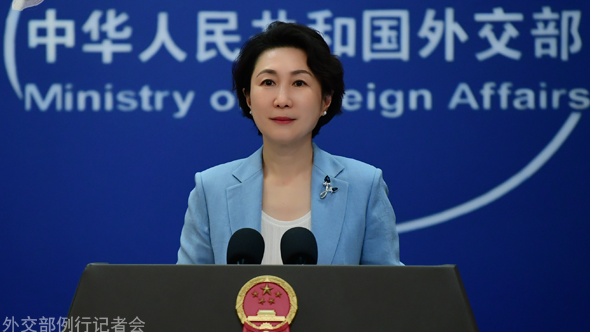
China hosted a week of informal talks in Urumqi, capital of the Xinjiang Uygur autonomous region, from April 1 to 7 involving representatives from China, Afghanistan and Pakistan, Foreign Ministry spokeswoman Mao Ning said on Wednesday.
Speaking at a regular news briefing, Mao said the three delegations, made up of officials from diplomatic, defense and security departments, held candid and pragmatic discussions in a constructive atmosphere, demonstrating a problem-oriented, results-oriented and action-oriented approach.
She said the Afghan and Pakistani delegations both expressed appreciation and gratitude for China's mediation efforts and its thoughtful arrangements as host.
READ MORE: Afghanistan, Pakistan announce temporary ceasefire during Eid al-Fitr
According to Mao, Afghanistan and Pakistan reaffirmed their commitment to resolving differences as soon as possible and putting bilateral relations back on track, and agreed not to take actions that could escalate or further complicate the situation.
China will continue to stay in communication with both sides, provide a platform for dialogue, and play a constructive role in improving and developing Afghanistan-Pakistan relations as well as advancing practical trilateral cooperation, she said.
Mao said China had taken note of the outcomes of the meeting and summarized the following understandings reached by the three sides.
Afghanistan and Pakistan reaffirmed that they are Muslim brothers and close neighbors, while all three sides agreed that, amid a turbulent international and regional landscape, maintaining good-neighborly and friendly relations between Afghanistan and Pakistan is vital to the peoples of both countries and to peace and stability in South Asia.
The three sides stressed that dialogue and consultation are a realistic and effective way to resolve complex international disputes, including the differences between Afghanistan and Pakistan.
READ MORE: Afghan official: Pakistan airstrike hits hospital in Kabul, killing 400
They also agreed to explore a comprehensive solution to the problems affecting Afghanistan-Pakistan relations. China emphasized that terrorism is the core issue affecting ties between Afghanistan and Pakistan, and all three sides agreed that the Urumqi process is of substantive significance and would continue communication and dialogue.
