

Industry seeks to combine ancient medical theory with modern tech
At a teaching clinic run by the Shanghai University of Traditional Chinese Medicine, acupuncture students are testing a new digital assistant designed to analyze needle techniques using artificial intelligence.
The application, known as AcuAssistant, uses motion-analysis software and sensor-based tracking to evaluate how practitioners lift, thrust and rotate acupuncture needles — techniques traditionally taught through observation and experience. Developers say the tool could help standardize training and generate data for clinical research.
The experiment offers a glimpse of a broader transformation underway in China's millennia-old traditional Chinese medicine sector, as policymakers and industry leaders seek to combine ancient medical theory with modern technology.
China hopes AI, stricter quality and regulatory standards and industrial policy support can turn TCM from a largely domestic healthcare practice into a modern pharmaceutical sector with stronger global reach.
Support for the industry featured prominently during the recent two sessions — the annual meetings of China's top legislature and political advisory body — where the government pledged to "advance the inheritance and innovation of TCM and strengthen the integration of Chinese and Western medical practices", according to the 2026 Government Work Report.
The modernization drive is also embedded in the outline of the 15th Five-Year Plan (2026-30) and a sector policy jointly released earlier this year by eight government departments, including the Ministry of Industry and Information Technology, the National Health Commission and the National Administration of Traditional Chinese Medicine.
The policy blueprint — the implementation plan for the high-quality development of the TCM industry from 2026 through 2030 — sets targets to upgrade the sector's industrial base and research capacity.
The authorities aim to build 60 high-standard herbal raw-material bases, establish five national innovation centers and create 20 smart manufacturing plants by 2030, according to the policy documents released by the ministries.
China's TCM industry accounts for more than one-quarter of the country's entire pharmaceutical industry, said He Yaqiong, head of the consumer products industry department at the MIIT.
To further boost industrial synergy, the MIIT is rolling out specific measures to secure high-quality herbal supplies, foster leading enterprises and develop blockbuster TCM products with annual sales exceeding 100 million yuan ($14.5 million).
China's TCM industry has generated more than 1 trillion yuan in annual revenue in recent years, government data show, making it one of the country's fastest-growing healthcare sectors.
Industry experts say the policy shift marks a move away from volume-driven expansion toward greater emphasis on scientific validation, manufacturing consistency and technological innovation.
"The industry is moving from rapid expansion toward innovation-driven development," said Liu Wei, an associate professor at the School of Management, Beijing University of Chinese Medicine.
"The transformation from traditional empirical knowledge to modern scientific verification is entering a critical stage," Liu said, adding that the long-standing gap between research institutes and pharmaceutical manufacturers remains a key barrier to turning lab breakthroughs into commercial drugs.
AI is emerging as one of the main tools in accelerating this transition. Researchers and companies are increasingly using large datasets — including classical medical texts, clinical records and pharmaceutical databases — to identify potential drug targets and analyze the complex interactions among herbal compounds.
"At present, AI can integrate classical TCM literature, clinical records and molecular research data to help uncover the mechanisms behind traditional prescriptions," said Geng Funeng, chairman of Good Doctor Group, a major enterprise with businesses across TCM research, production and trade.
"We are developing a vertical AI model for TCM, similar to Deep-Seek, to rapidly decode the material basis and working mechanisms of complex herbal formulas, which will significantly shorten the new drug research, and development cycle and clarify how traditional remedies work," Geng said.
Such tools could significantly shorten drug-development cycles and help answer fundamental scientific questions — whether a traditional formulation works, which compounds drive the effect and how the biological mechanism unfolds, Geng added.
Major pharmaceutical firms have begun incorporating AI into research and production processes.
Shijiazhuang Yiling Pharmaceutical Co Ltd said its AI-driven drug discovery platform has cut research cycles by approximately 30 percent and identified dozens of protein targets linked to aging-related diseases.
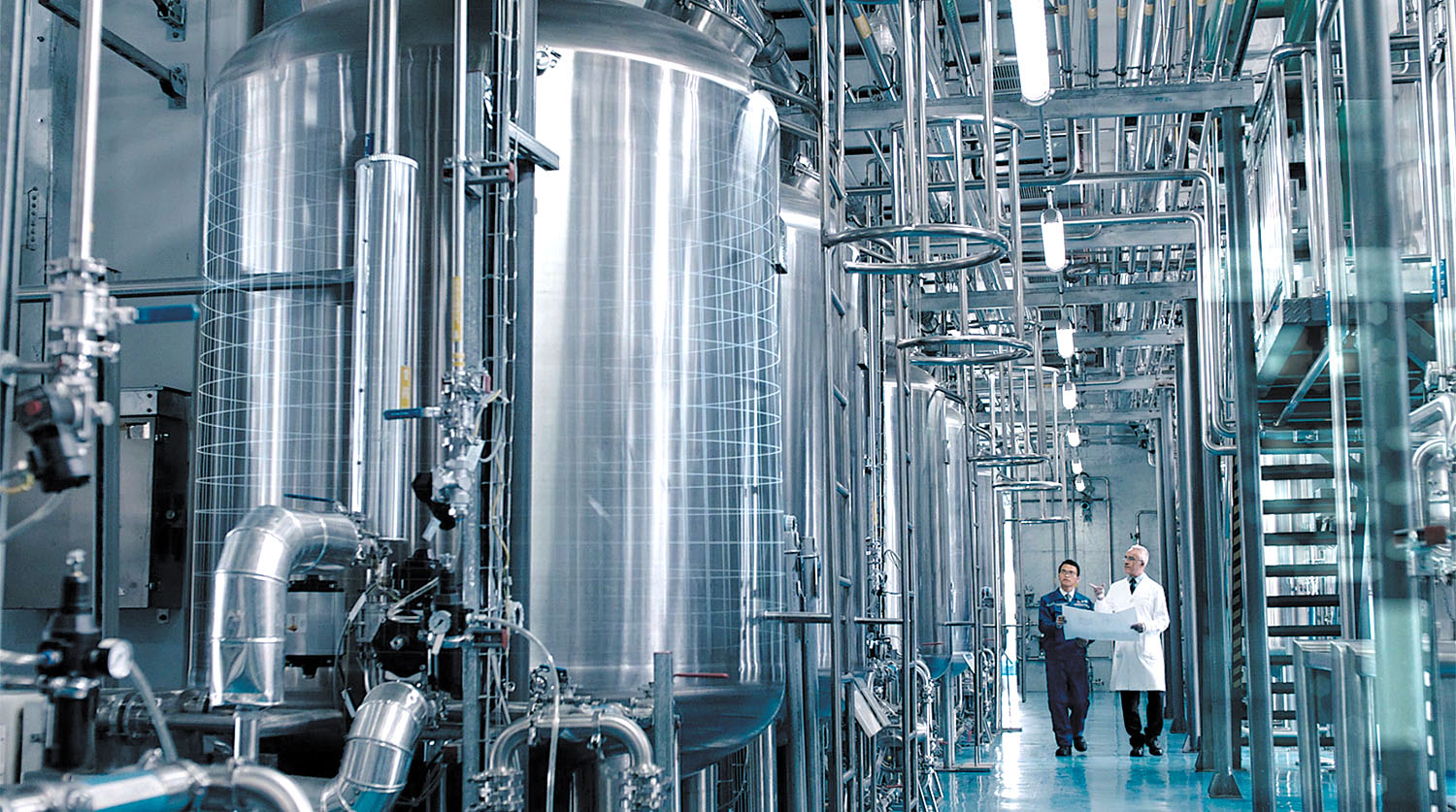
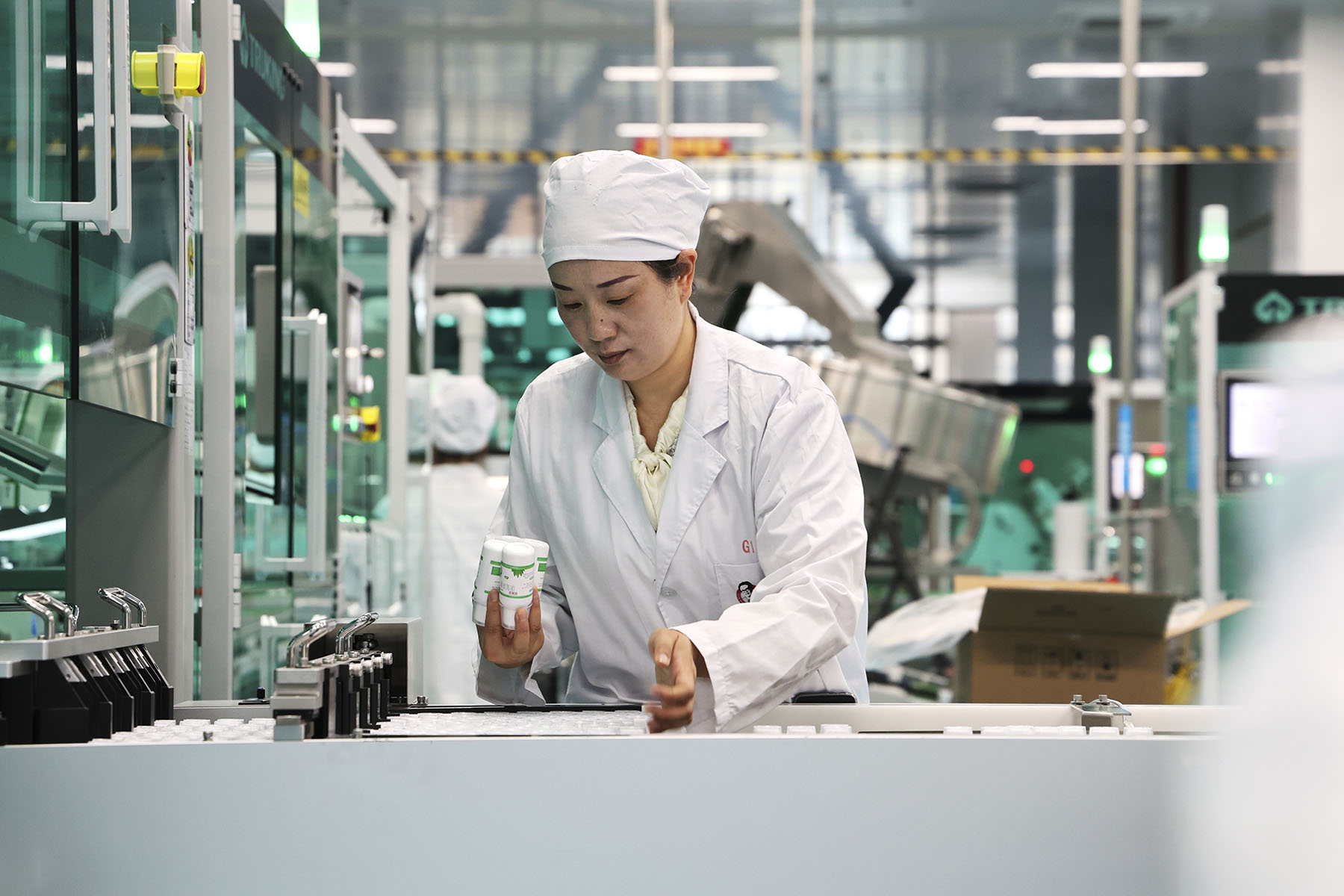
Meanwhile, Good Doctor Group has built an automated smart-manufacturing and biological breeding base in Sichuan province. Powered by thousands of digital control points regulating environmental conditions and extraction processes, the facility achieves about a 98 percent automation rate, boosting production efficiency by up to 30 percent while reducing quality deviations, according to Geng.
In distribution, firms such as Kangmei Pharmaceutical are combining blockchain technology with AI to track herbal medicines from cultivation to retail, improving transparency and safety oversight across the supply chain.
READ MORE: China's TCM sector undergoing tech-driven transition
The government has simultaneously stepped up regulatory upgrades to push high-quality industry development, with reforms targeting the re-registration of legacy TCM products with incomplete safety information, a move aimed at phasing out outdated products and raising overall industry standards. Such reforms, industry analysts said, could address a critical obstacle to TCM's global growth: the lack of unified quality and clinical standards.
Despite growing interest in traditional medicine worldwide, regulatory barriers remain high in Western markets where herbal medicines must meet strict clinical evidence and manufacturing standards.
According to customs data, China's exports of TCM products reached about $5.09 billion in 2025, although shipments declined slightly from the previous year. Exports remain dominated by relatively low-value raw herbs and extracts rather than high-value finished medicines.
That pattern reflects deeper structural challenges, including intellectual-property protection and quality standardization, according to Liu.
"The core competitiveness of TCM lies in its complex, multi-compound formulas," Liu said. "Under the current international patent system, companies seeking patent protection must fully disclose their core prescriptions and formulation logic."
"Given that proprietary Chinese medicines still face significant hurdles in achieving drug-market approval in major overseas markets in the near term, China needs IP protection mechanisms better suited to the characteristics of TCM. Stronger protection for clinically proven products could help build a pipeline for future international expansion," Liu added.
As of July 2025, TCM was practiced in 196 countries and regions, while acupuncture was recognized in 113 member states of the World Health Organization, according to data from the National Health Commission.
ALSO READ: 'Huanren ginseng' goes global, grows market
Yet analysts say the industry's global expansion will depend on whether Chinese firms can produce stronger scientific evidence for the safety and efficacy of traditional remedies, while simultaneously establishing an internationally recognized framework for TCM standards and IP protection.
"The next five years will be a crucial period for the transformation and upgrading of the TCM industry," Guo Lanping, director of the Institute of Chinese Materia Medica at the China Academy of Chinese Medical Sciences, said in an interview with Xinhua News Agency.
She said that as the new policy measures take effect, the industry is expected to move further toward "higher quality and greater modernization". Backed by policy support, AI innovation and industrial upgrading, China is poised to reposition its traditional medical heritage as a modern, tech-driven pharmaceutical sector with global competitiveness.
Contact the writers at lijing2009@chinadaily.com.cn
