

Fresh moves aim to enhance quality of life, promote common prosperity
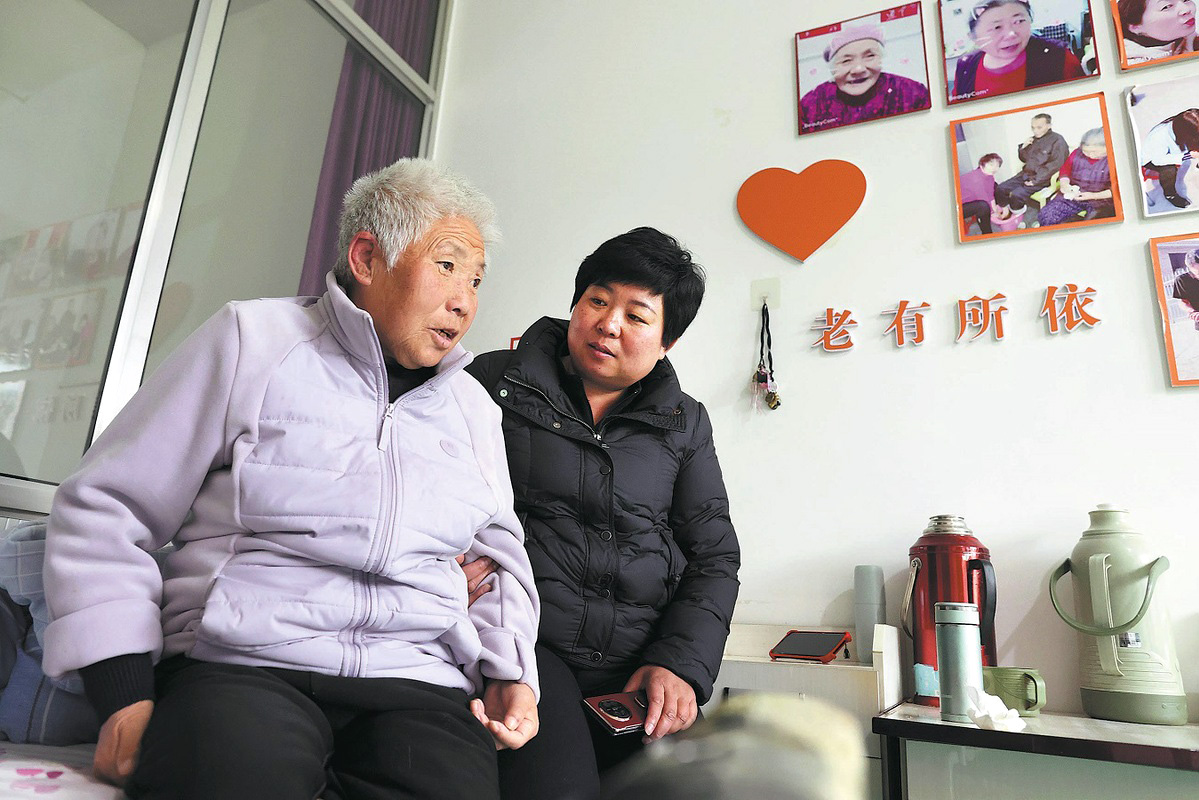
In a mountainous village in Shanxi province, Ma Jinlian takes care of more than 20 elderly rural residents. Ma, who formerly worked as a nurse in Beijing, later set up a care home in her village.
"The plight of elderly people in rural areas is that they often have limited pensions and have to rely on their children for support. However, with many children migrating to urban areas for work and those who remain struggling with low-wage jobs and farming, elderly care services are often unaffordable," said Ma, who is currently Party secretary of Xiaocheng village in the city of Lyuliang.
READ MORE: Lawmakers urge stronger support for rural elderly
People age 60 and above are expected to account for 25 percent of China's total population by 2030, with nearly half of them living in rural areas. During this year's two sessions, Ma, a deputy to the National People's Congress, China's top legislature, called for more attention to this group to allow rural seniors to gain better access to high-quality care and enjoy their later years in a dignified manner.
Ma's concerns about rural elderly care could be alleviated, as the country's 15th Five-Year Plan (2026-30) calls for improving elderly care services as part of a package of steps for enhancing people's well-being — one of the priorities that top the agenda of the Chinese government to endeavor to realize Chinese modernization.
The 15th Five-Year Plan, a landmark blueprint for social and economic development adopted by national lawmakers at the fourth session of the 14th NPC earlier this month, outlines 20 major indicators for economic and social development between 2026 and 2030. Among them are seven indicators related to people's well-being, accounting for more than one-third. These seven indicators cover areas including employment, income, education, health, elderly care and child care, addressing the most pressing and immediate concerns of the people.
Greater efforts will be made to ensure and improve people's well-being through high-quality development, and to steadily promote common prosperity for all, according to the plan. It emphasizes the need to improve basic public services, implement more equitable, inclusive and targeted social policies, and strive to enhance people's quality of life.
Observers said that behind the outline of the 15th Five-Year Plan lies the people-centered development philosophy that the Communist Party of China consistently adheres to in governing the world's second-largest economy, which has a population of more than 1.4 billion.
Zhang Linshan, a researcher at the Chinese Academy of Macroeconomic Research, said that the 15th Five-Year Plan sends a strong signal of focusing on people's wellbeing and high-quality development, ensuring that the benefits of development are more fairly shared by all.
It synchronizes economic growth with improvements in people's lives, creating a virtuous cycle that makes life more secure and promising for everyone, Zhang said.
Xi Jinping, general secretary of the CPC Central Committee, has noted on various occasions that people's well-being is of paramount importance in Chinese modernization, and that all the work of the Party and the government is intended to ensure that the people live happier lives.
When he took part in deliberation of the Government Work Report with deputies from the delegation of Jiangsu province at the fourth session of the 14th NPC on March 5, Xi noted that Chinese modernization is the modernization of common prosperity for all.
Xi urged Jiangsu to take the initiative to tackle such tasks as promoting high-quality and sufficient employment, increasing the incomes of urban and rural residents, and improving basic public services and social security, as part of efforts to explore effective ways to achieve common prosperity for all.
The new five-year plan sets the goal of increasing the average life expectancy to 80 years during the 2026-30 period, reaching the level of high-income countries. In the next five years, the country will strive to improve elderly care by optimizing basic elderly care services, advancing long-term care insurance, upgrading support for elderly people with disabilities or dementia, and expanding rehabilitation services, according to the plan.
A total of 109 major projects and initiatives have been arranged for the next five years, with an emphasis on the integration of investment in both physical infrastructure and human capital, including 25 focusing on ensuring and improving people's well-being.
ALSO READ: Key meeting focuses on work rules for local Party committees
As this year marks the start of the 15th Five-Year Plan period, a series of new initiatives aimed at improving people's well-being have been intensively launched. Among them, the central government continues to increase investment in the livelihood sector, raising the minimum monthly standards for basic pensions for urban and rural residents.
It has also taken measures to utilize long-term special treasury bonds to expand the categories of subsidies for the trade-in of consumer goods, upgrade facilities in elderly care institutions, and renovate old residential communities — all aimed at enhancing the quality of life for citizens.
Dong Yu, executive deputy dean and researcher of the China Institute for Development Planning at Tsinghua University, said the integration of investment in physical infrastructure and human capital is a highlight of the 15th Five-Year Plan. It achieves a better combination of development goals and pathways, as well as a synergy between investment targets and structure, he said.
"Where there is a demand from the people, investment will follow. This represents a significant innovation and shift in investment philosophy and is an important embodiment of the people-centered development approach," Dong said.
Contact the writers at caodesheng@chinadaily.com.cn
