

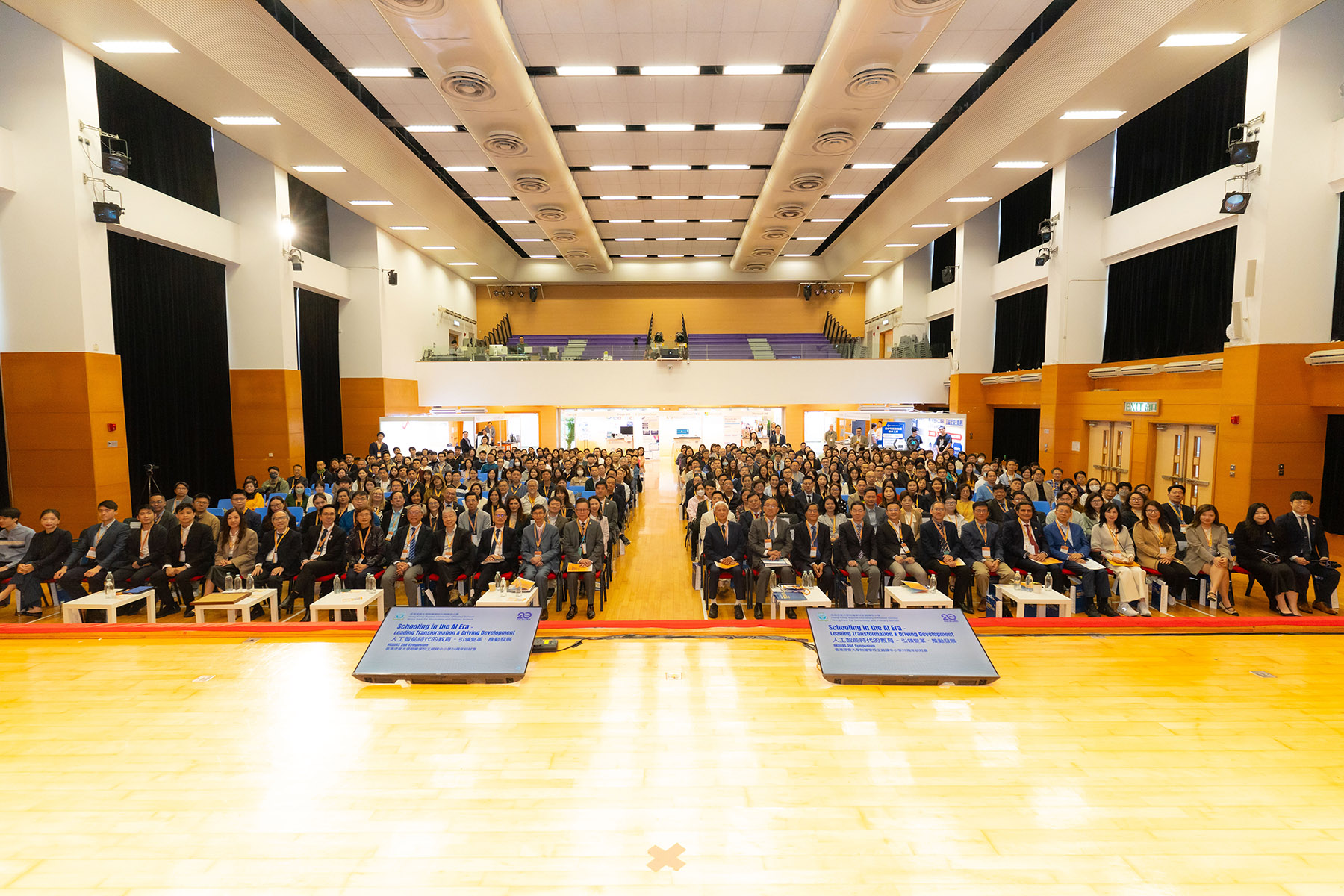
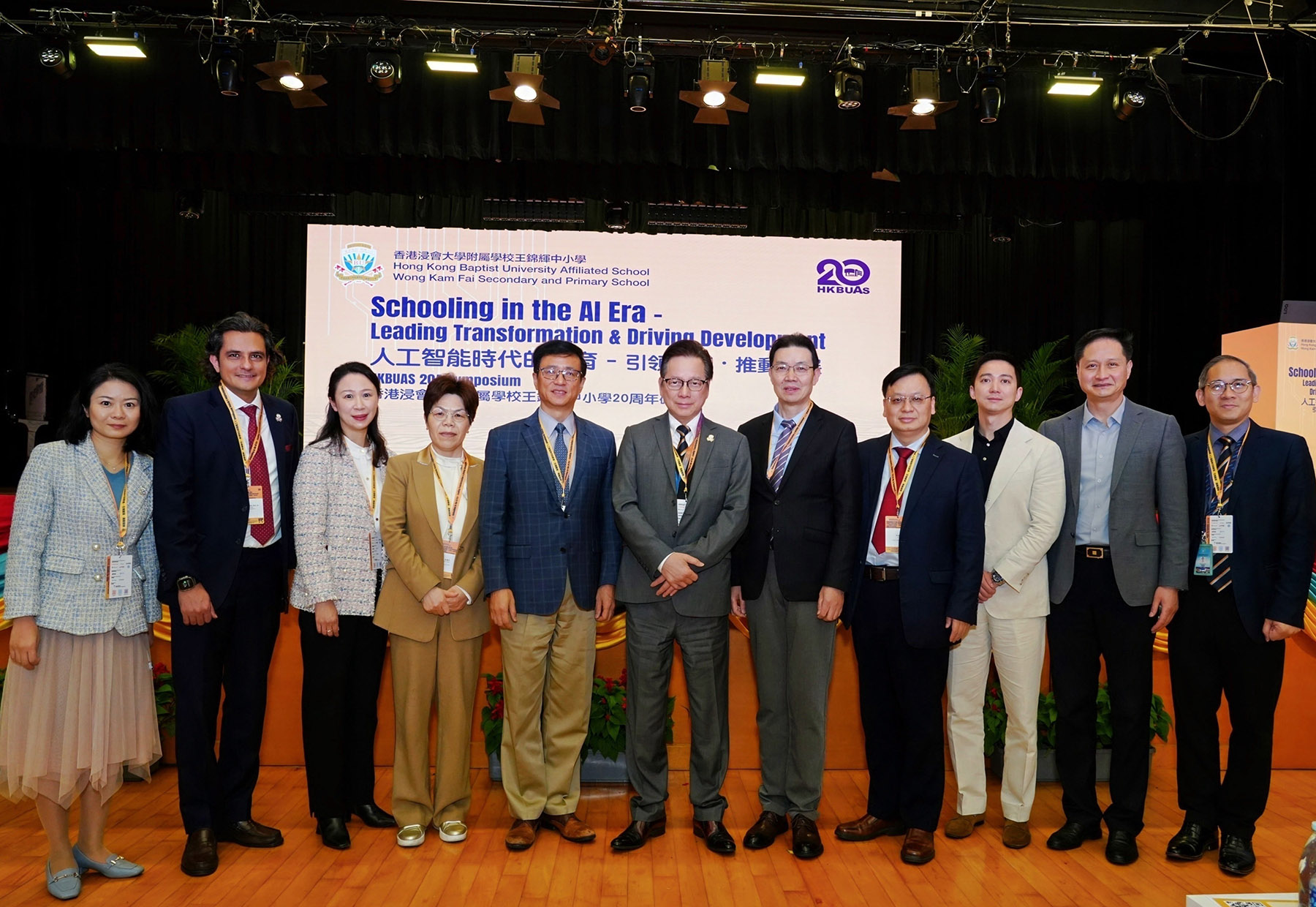
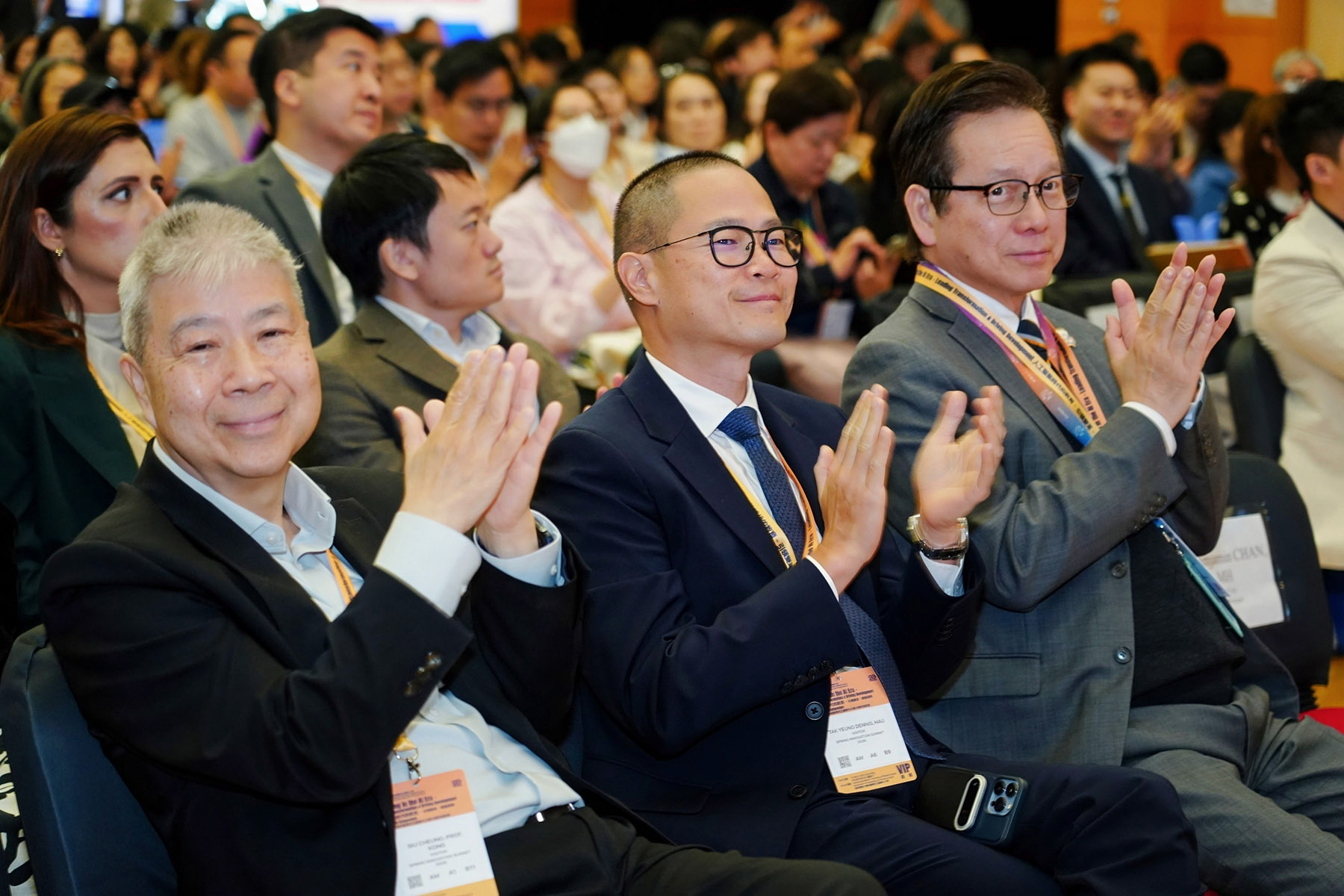
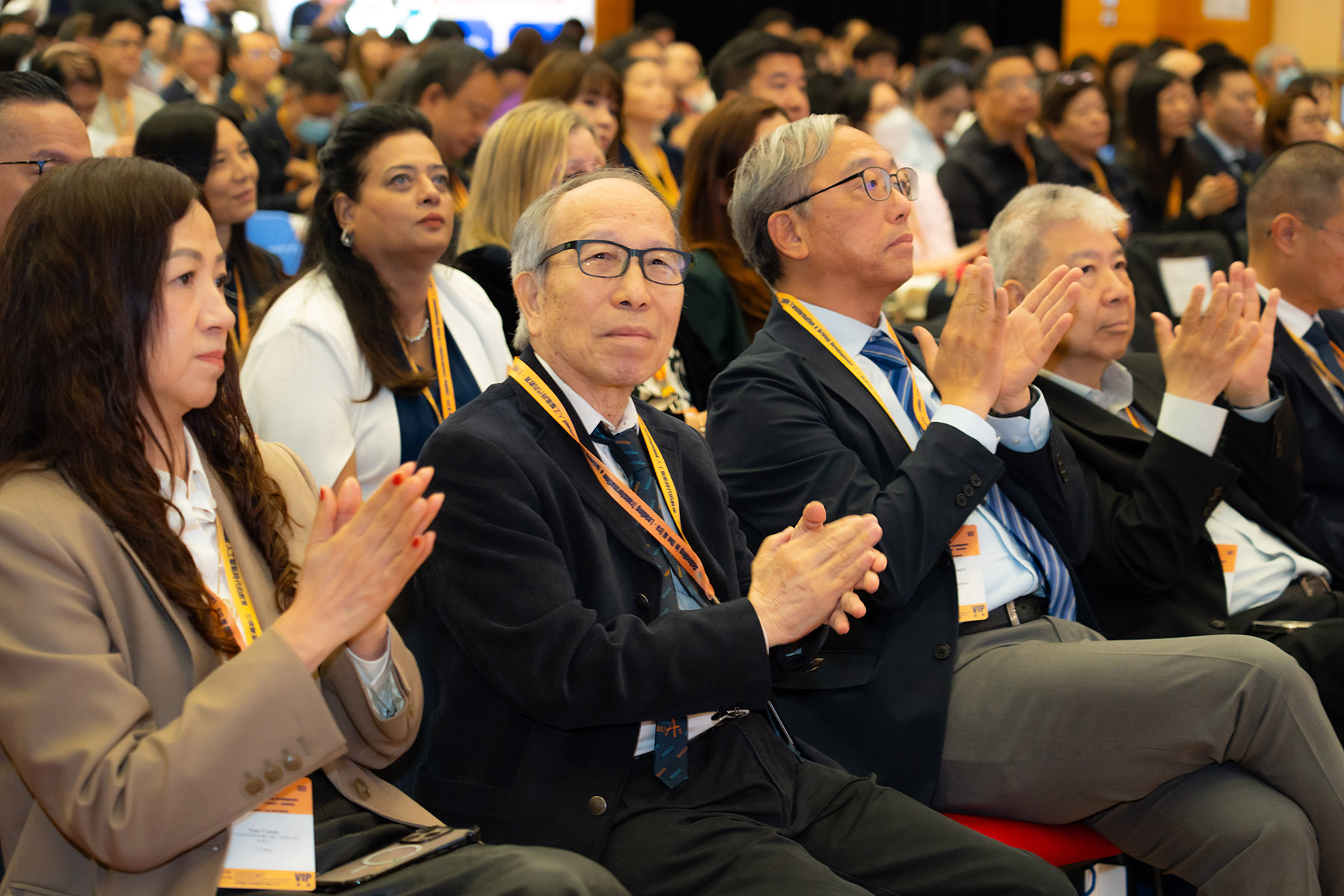
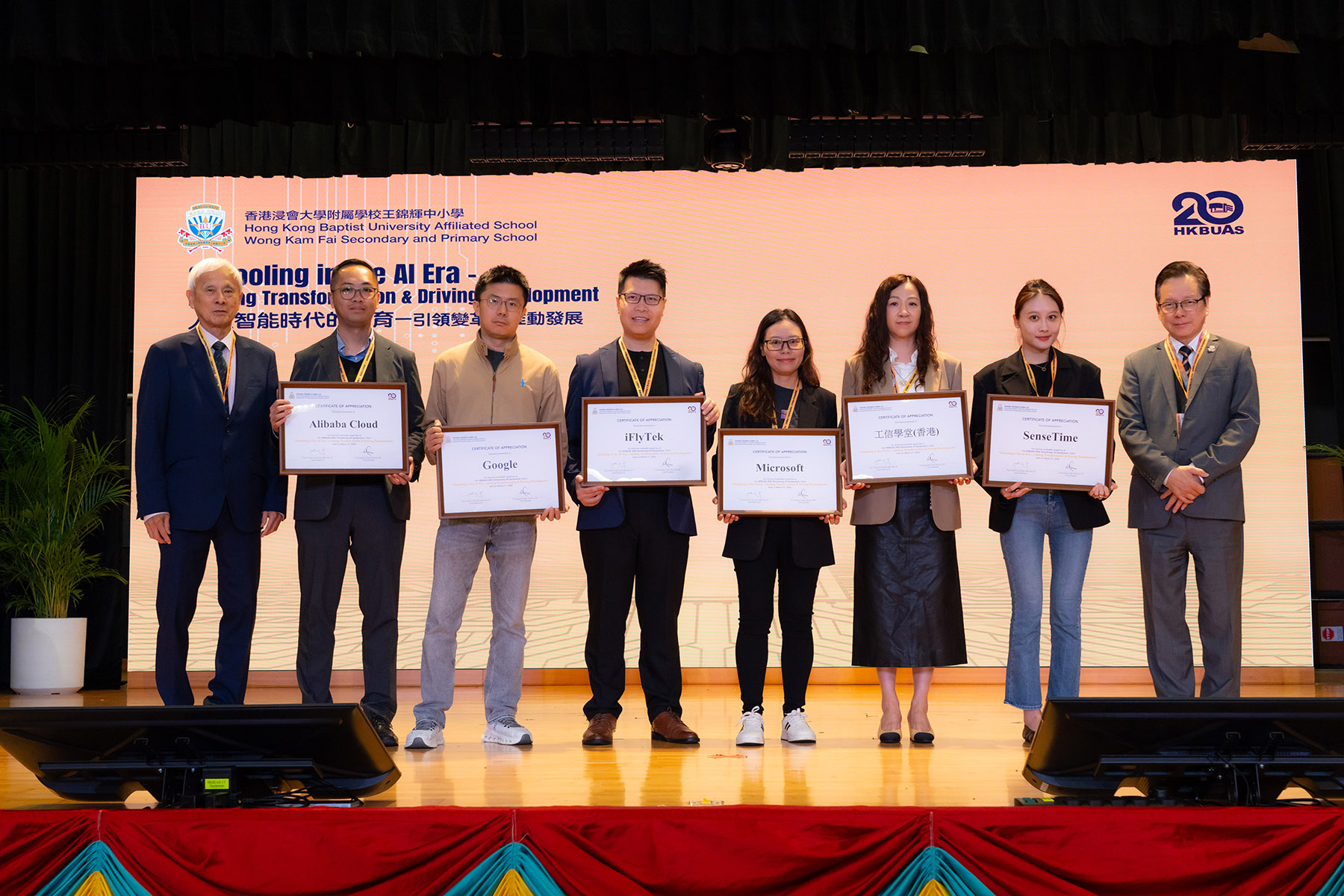
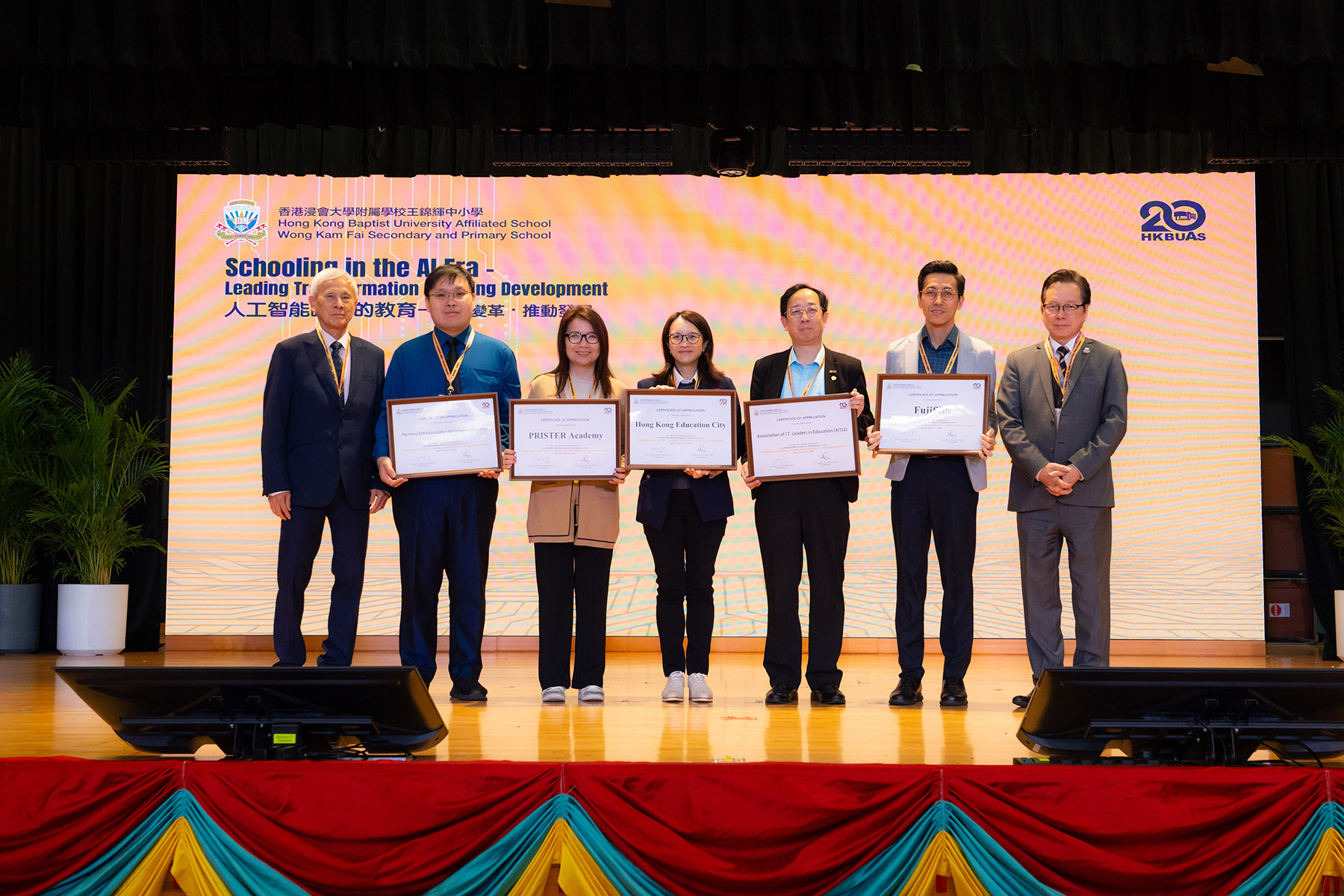
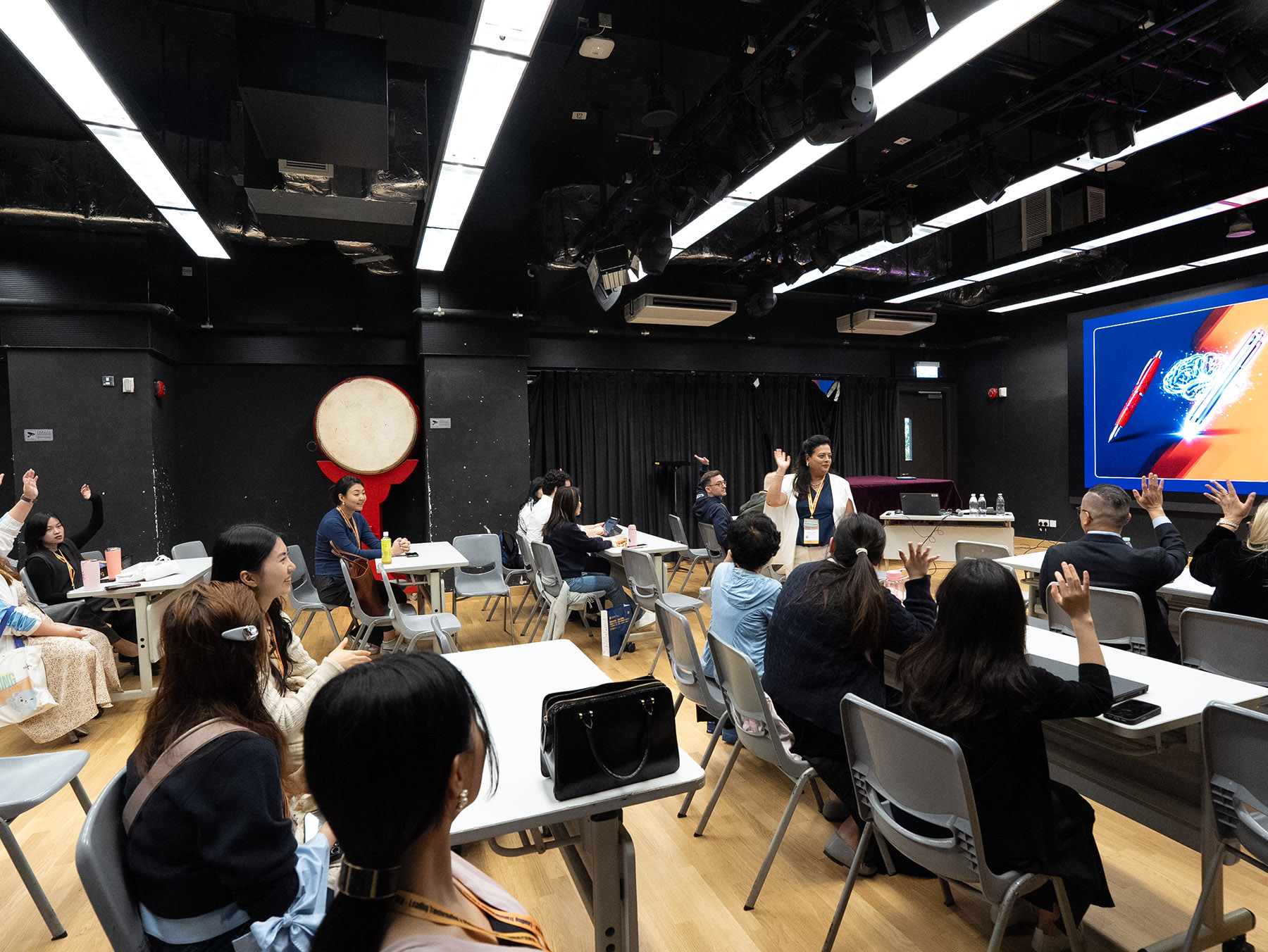
Hong Kong Baptist University Affiliated School Wong Kam Fai Secondary and Primary School recently hosted a symposium titled "Schooling in the AI Era - Leading Transformation & Driving Development", bringing together over 500 experts, scholars, educators, and representatives from the technology sector from overseas, Mainland China, and Hong Kong. The symposium provided a dynamic platform for thought‑provoking dialogue, where participants exchanged visionary ideas and cultivated meaningful perspectives to advance learning and teaching in the age of AI.
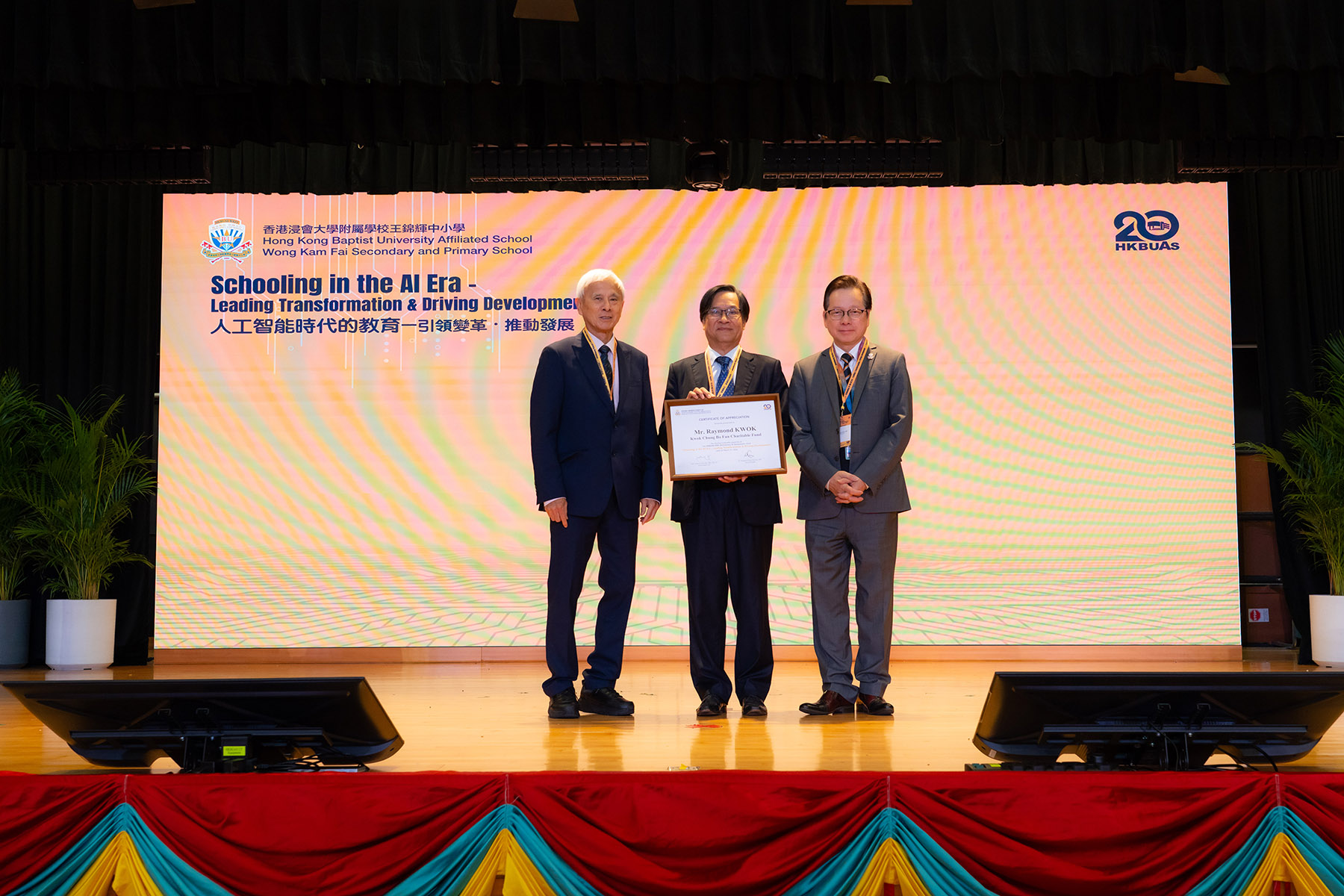
Human‑Centred Leadership to Drive Development
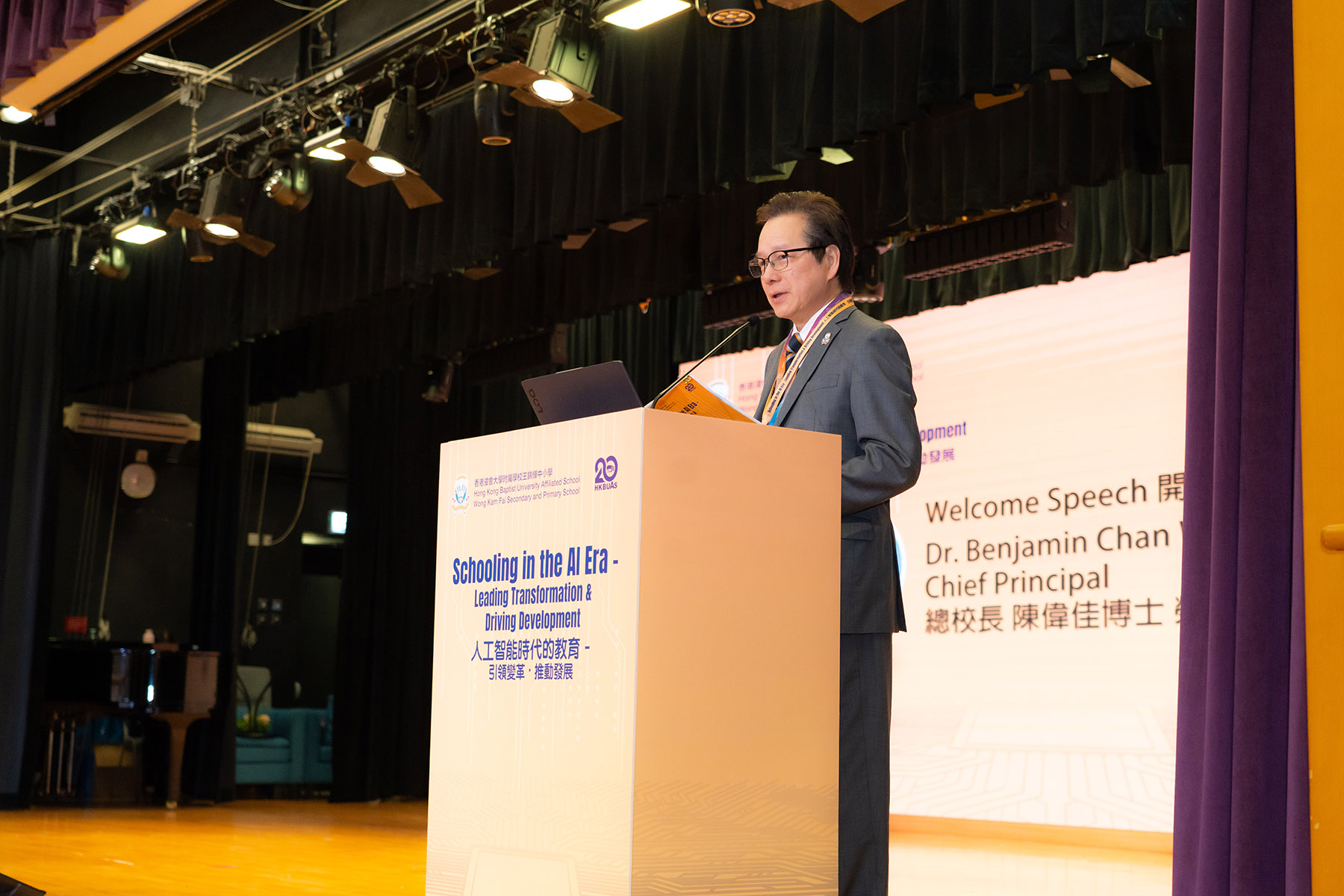
In his opening address, Dr. Benjamin Chan Wai Kai, MH, Chief Principal of HKBUAS Wong Kam Fai Secondary and Primary School, posed a question he reflects on daily: as the world changes at accelerated speed, are schools truly ready? The rise of artificial intelligence is reshaping social structures, work patterns, and knowledge paradigms at an unprecedented pace. AI has already entered our campuses, our classrooms, and the everyday lives of our students. In the face of this wave, avoidance is not an option, nor is passive waiting—we must take the lead in guiding change.
Traditionally, the mission of schools was to transmit knowledge. Today, when AI can generate information instantly, the core value of education must be redefined. Schools are no longer mere vessels of knowledge, but crucibles for cultivating character, capabilities, and values. Our goal is to nurture independent thinkers, creative and responsible citizens, and a generation that knows how to harness technology without being controlled by it.
In the age of AI, the role of the teacher will not be diminished but elevated. Technology can support instruction, yet it cannot replace the care, guidance, and moral compass that teachers provide. It can analyze data, but it cannot instill values. As school leaders, our responsibility is to create space and support for teachers—empowering them to innovate with confidence, embrace challenges, and continually strengthen both their AI literacy and pedagogical expertise. True transformation is never driven by technology alone, but by educators with meaningful purpose.
At the same time, development must be pursued with prudence and responsibility. We must ensure fairness in the application of technology, narrowing rather than widening the digital divide. We must establish clear ethical frameworks to safeguard student privacy and security. And we must teach students to approach AI with critical thinking rather than blind trust.
The purpose of education is not only to prepare students for the future but to empower them to shape it. AI presents challenges, but also unprecedented opportunities. The decisive factor lies not in how advanced the technology becomes, but in whether we have the vision and courage to lead the change.
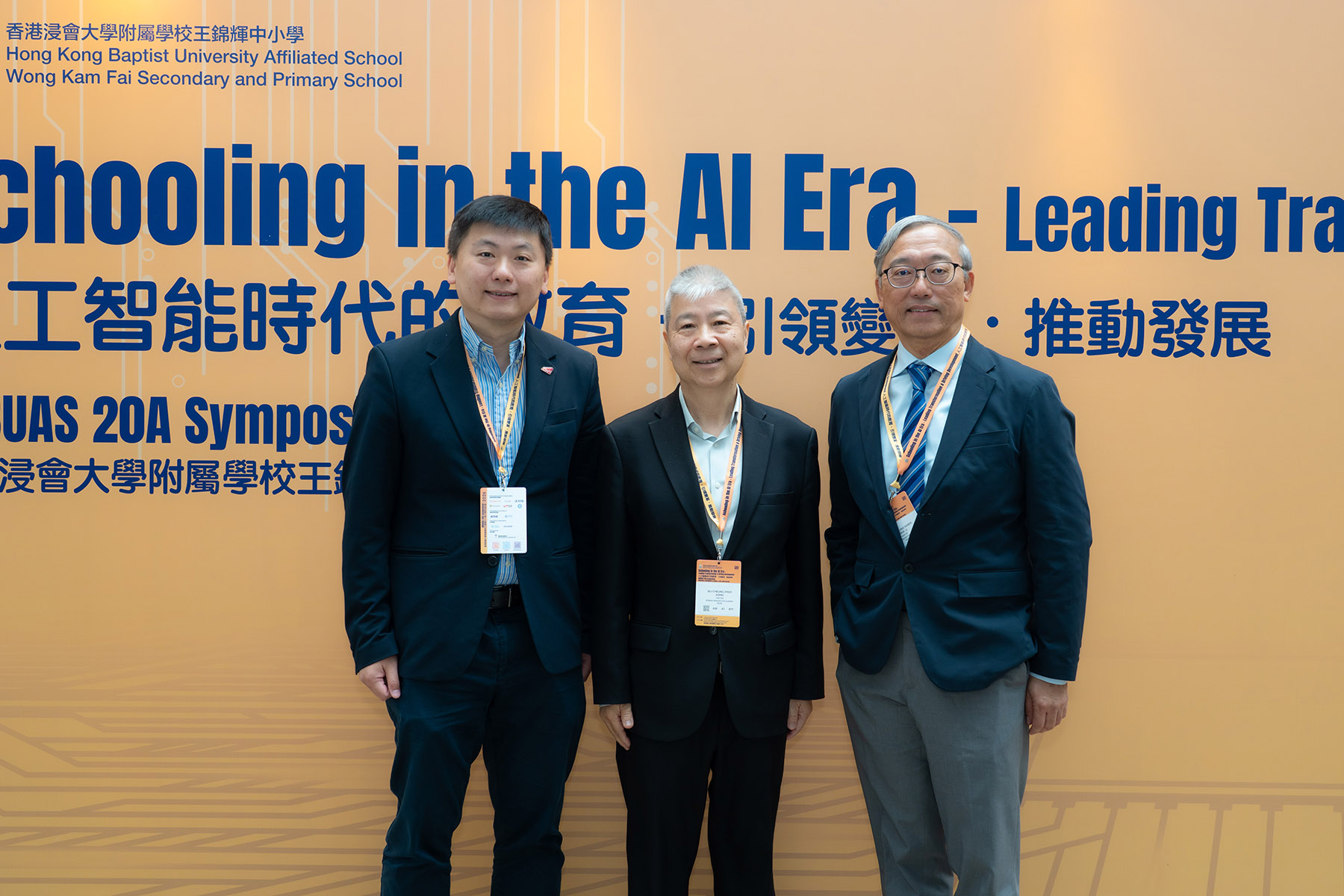
Redefining Education in the AI Era
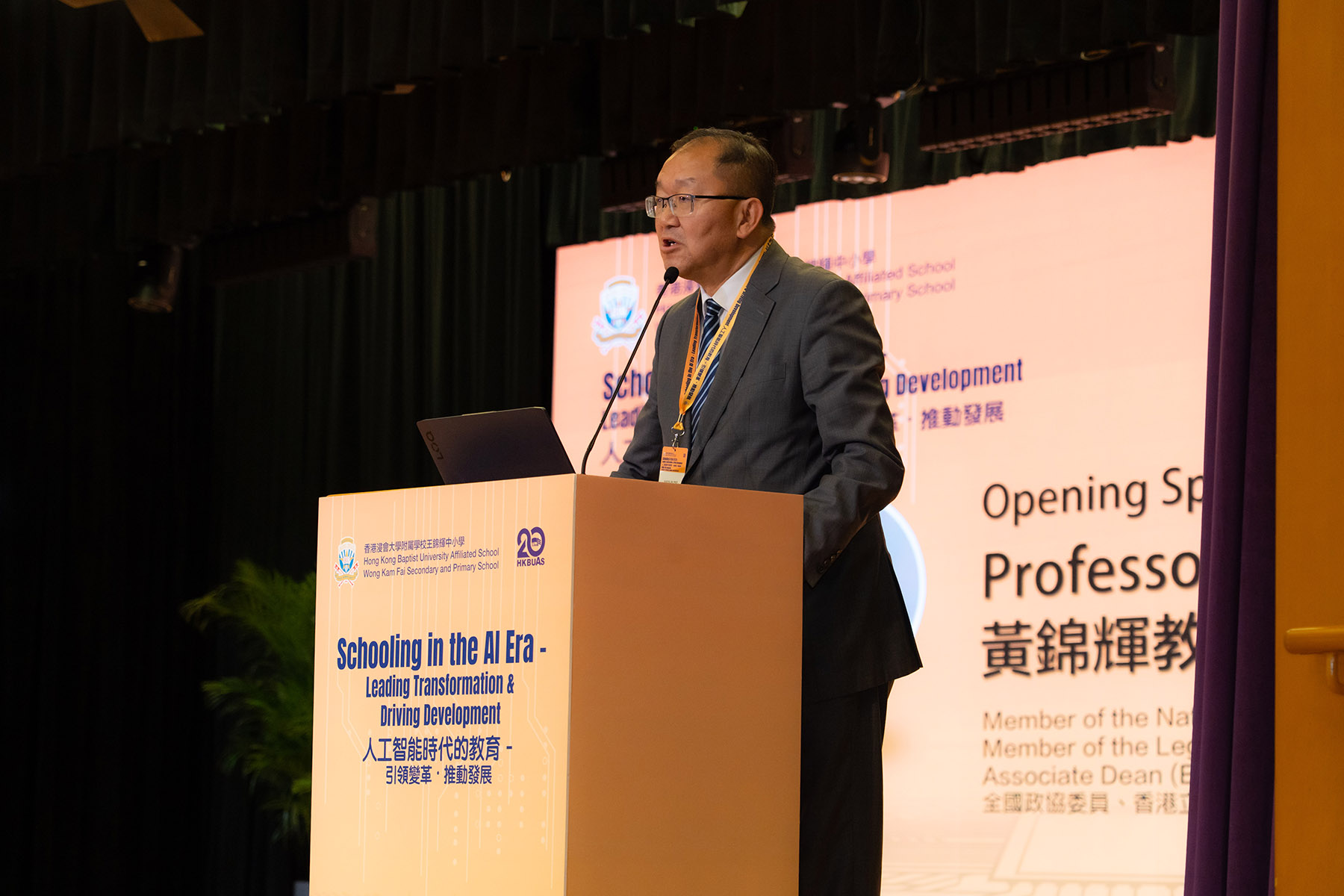
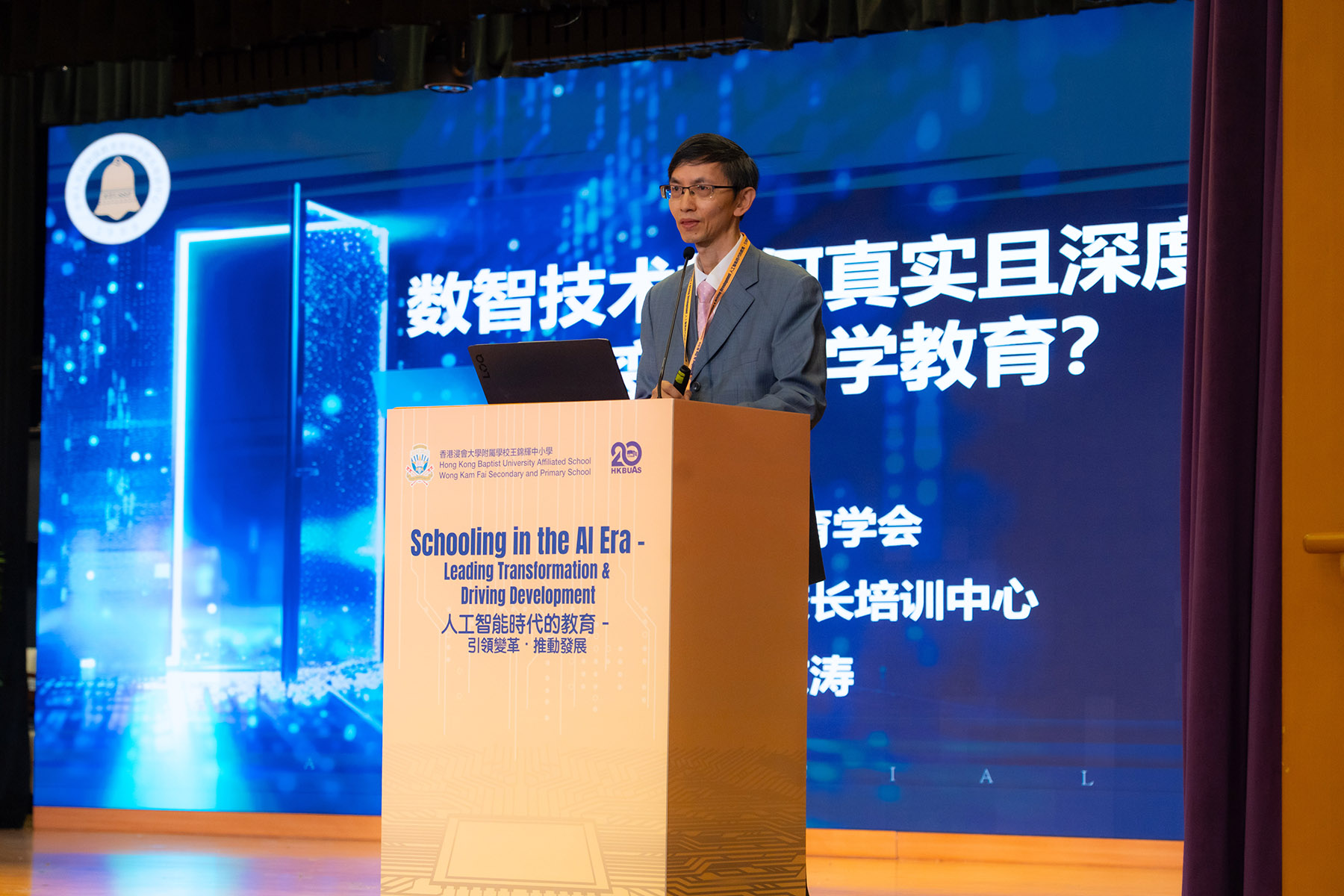
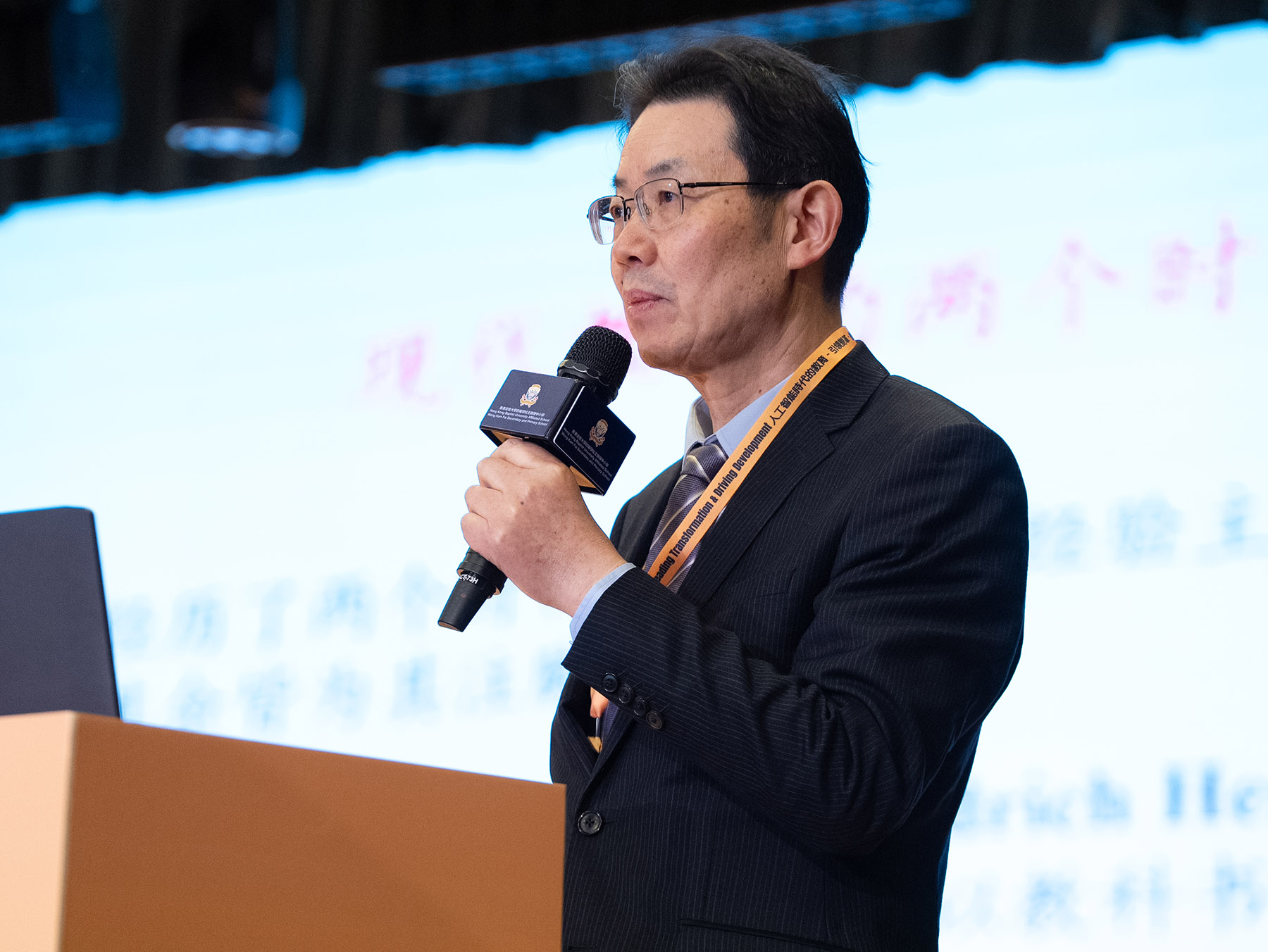
Professor Wong Kam Fai, MH, Associate Dean (External Affairs) of the Faculty of Engineering at The Chinese University of Hong Kong and Legislative Council Member, drew on three classic sayings—"It is better to have no books than to believe them entirely", "It is wise to hold what you know" and "Do not impose on others what you yourself do not desire"—to highlight the importance of cultivating critical thinking and moral judgment in students during the AI era. He reminded that students must learn to say "no" to AI to avoid being controlled by technology. Professor Li Zhengtao, Vice President of the Chinese Society of Education and Changjiang Distinguished Professor appointed by the Ministry of Education, shared insights from a macro perspective on how digital and AI technologies are transforming primary and secondary education. He emphasised that future education is not only about delivering knowledge, but also about nurturing the next generation’s vision and ways of thinking.
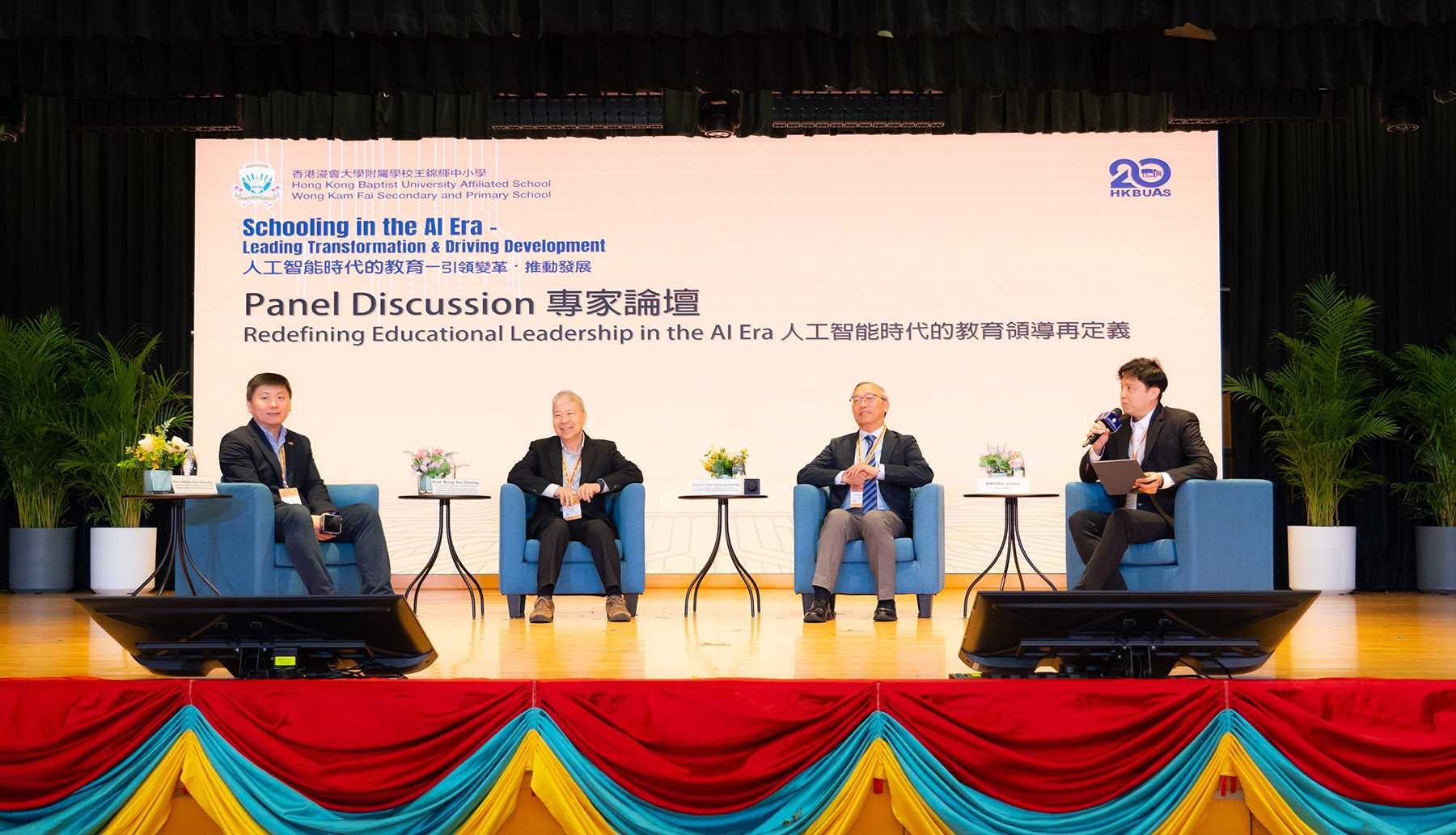
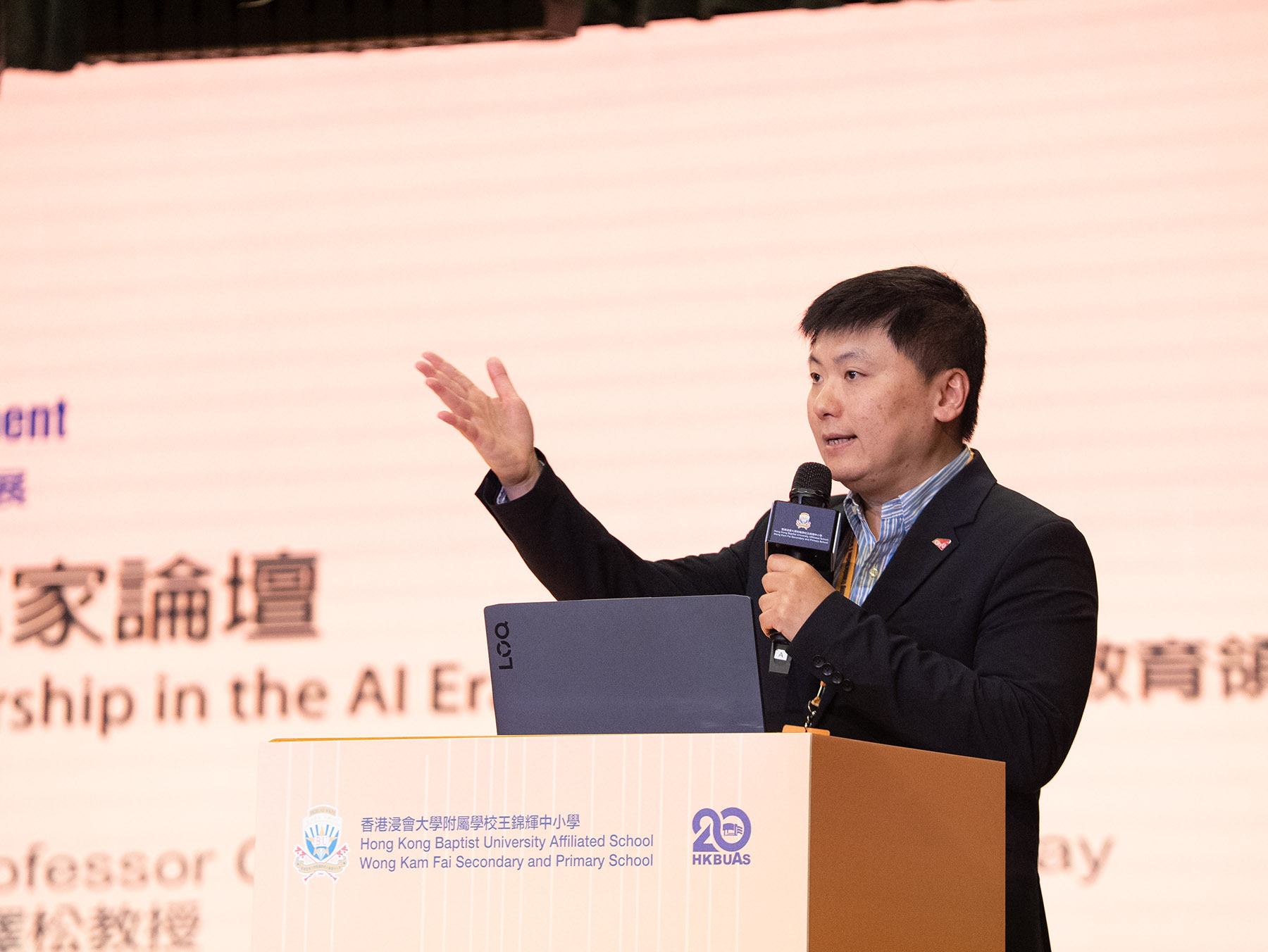
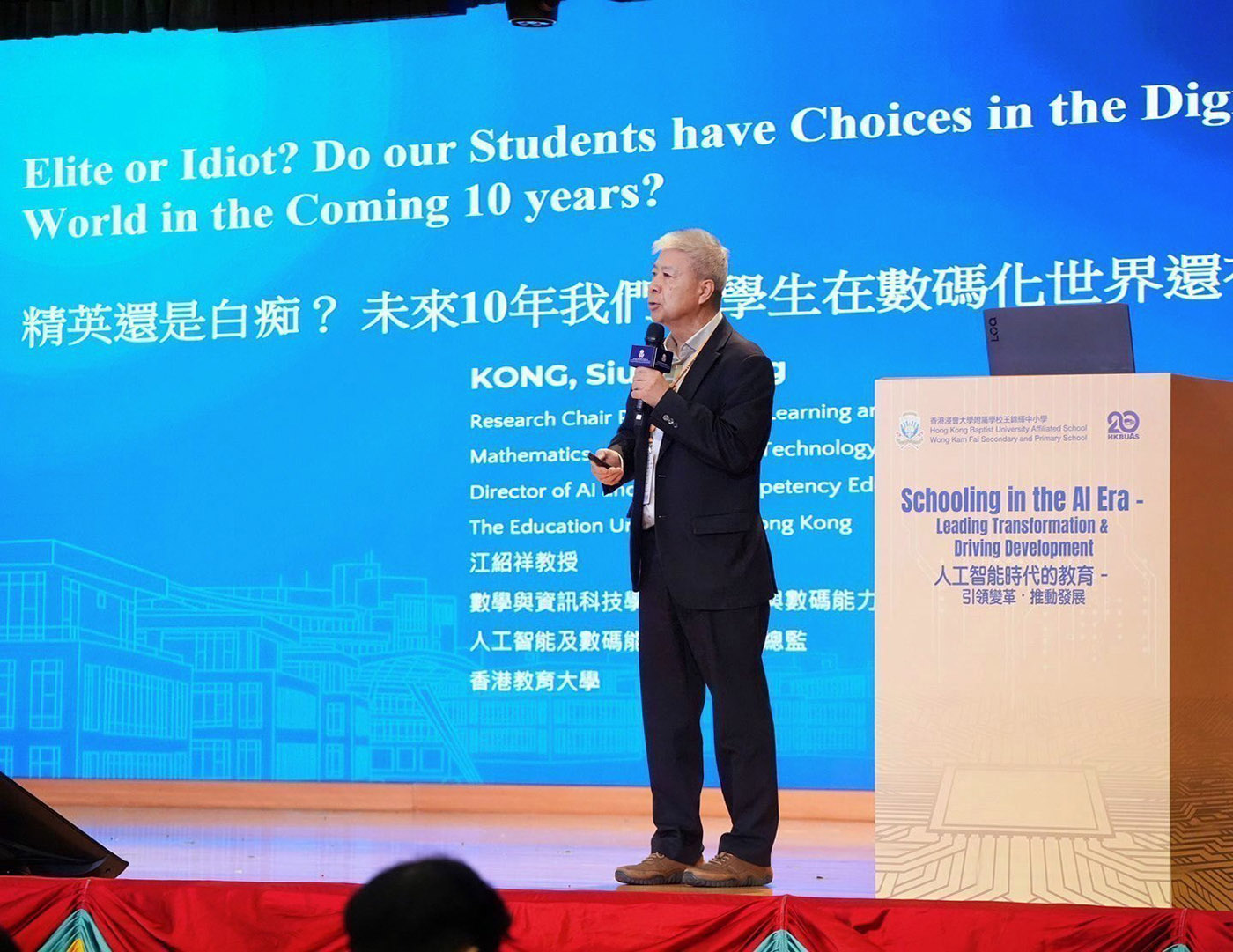
During the panel discussion forum, Professor Cheung Chak Chung Ray, Associate Provost (Digital Learning) at City University of Hong Kong, stressed the importance of fostering active learners through interaction and collaboration. He suggested that teachers should evolve from lecturers into learning facilitators, using technology to empower instruction. Professor Kong Siu Cheung, Director of Artificial Intelligence and Digital Competency Education Centre at The Education University of Hong Kong, called on the education community to focus on "unlocking human potential" and cultivating students as "passionate thinkers". He emphasised that students must understand the principles behind AI rather than rely on it blindly. Professor Li Siu Cheung Sandy, Director, Academy of Wellness and Human Development in the Faculty of Arts and Social Sciences at Hong Kong Baptist University, noted that while AI can accelerate the acquisition of knowledge, it cannot replace human curiosity, the spirit of inquiry, or emotional education. He argued that schools should serve as platforms connecting students to the world, fostering judgment and adaptability.
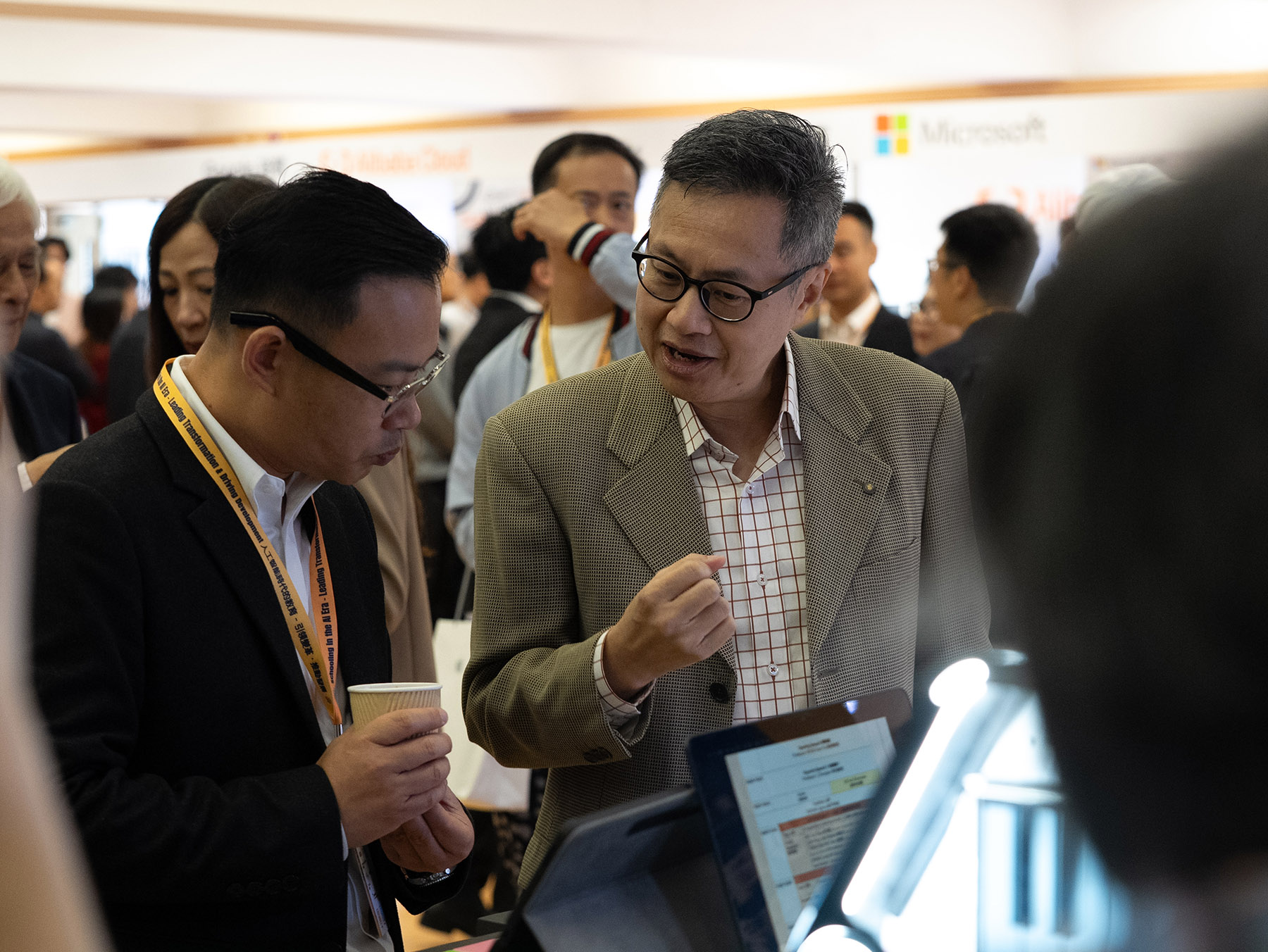
AI in Practice: Reflections and Applications
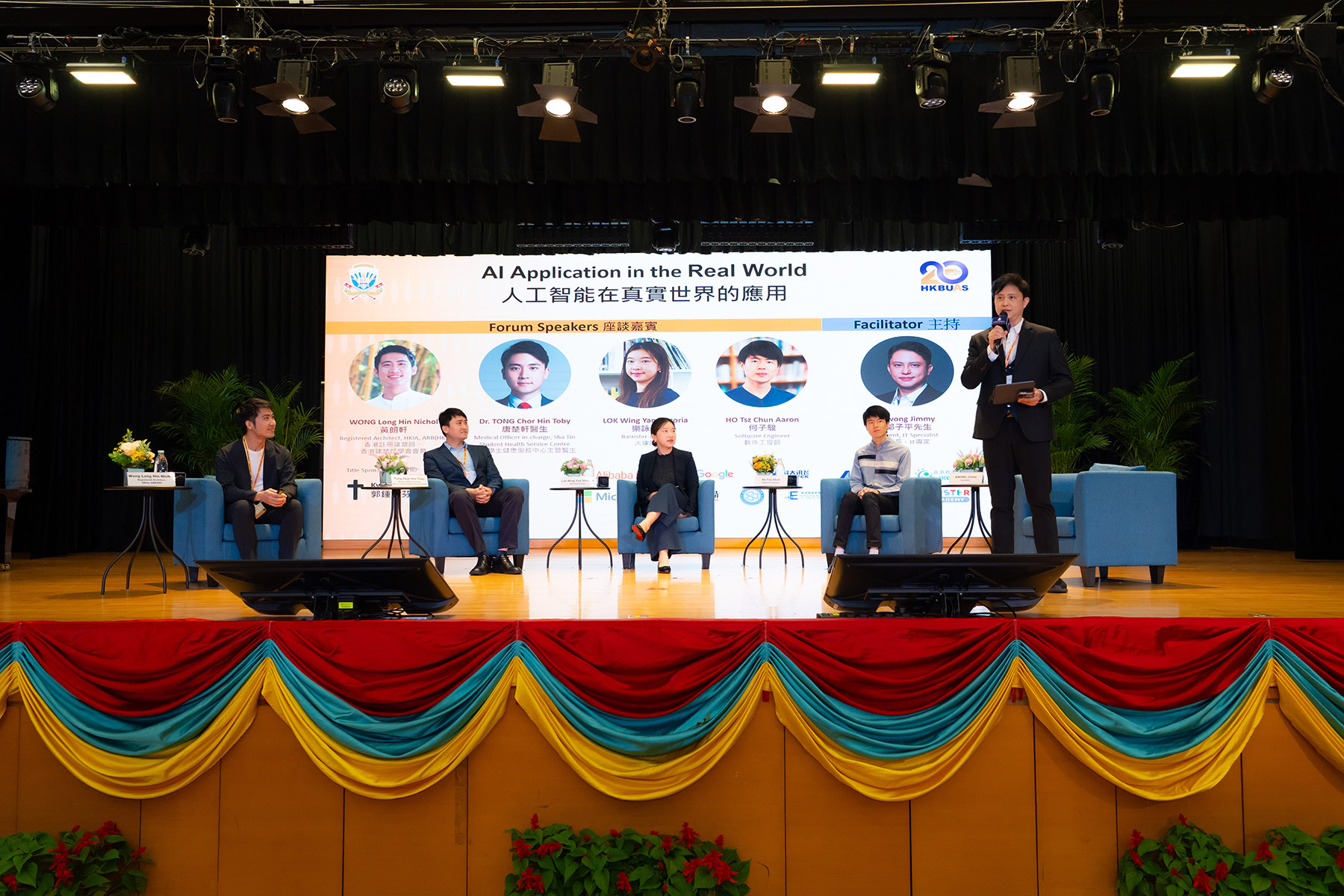
The Symposium also featured an industry sharing session in which four alumni from different fields—Mr. Wong Long Hin Nichol, a Registered Architect; Dr. Tong Chor Hin Toby, a Medical Officer-in-Charge in Sha Tin Student Health Service Centre; Ms. Lok Wing Yan Victoria, Barrister-at-Law, and Mr. Ho Tsz Chun Aaron, Software Engineer—shared practical applications and challenges of AI in architecture, healthcare, legal services and technology. They agreed that while AI can greatly enhance efficiency, human judgment, creativity and empathy remain irreplaceable. They stressed that future talent must learn to do what AI cannot, and remain human-centred in order to truly thrive.
Professor Wu Gang, Vice Dean of the Institute of Advanced Studies in Education at East China Normal University, presented a vision of a future where humans and machines coexist. He argued that education should go beyond knowledge transmission toward the co-creation of wisdom, enabling students to generate new knowledge through collaboration with AI rather than merely consuming it.
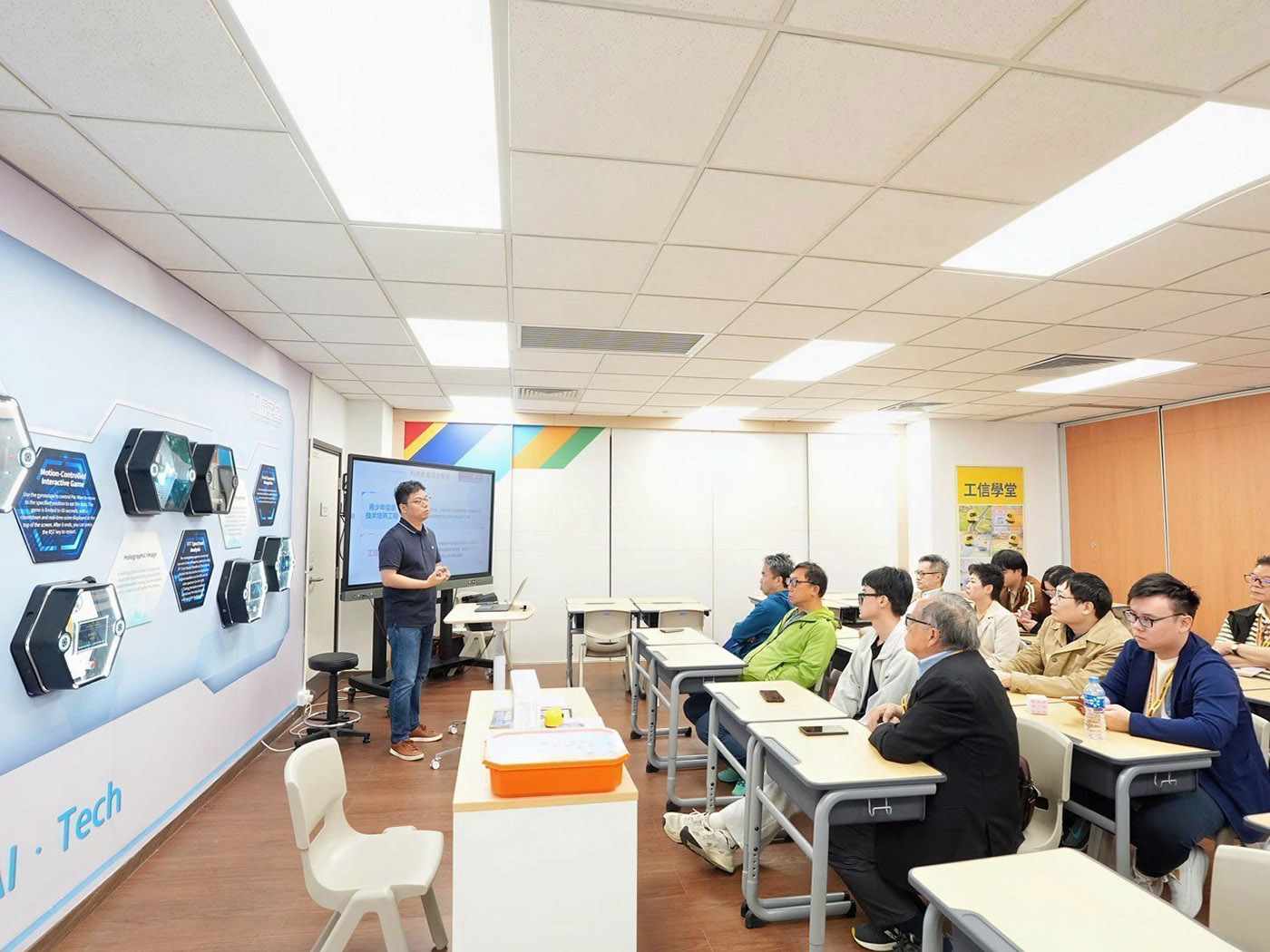
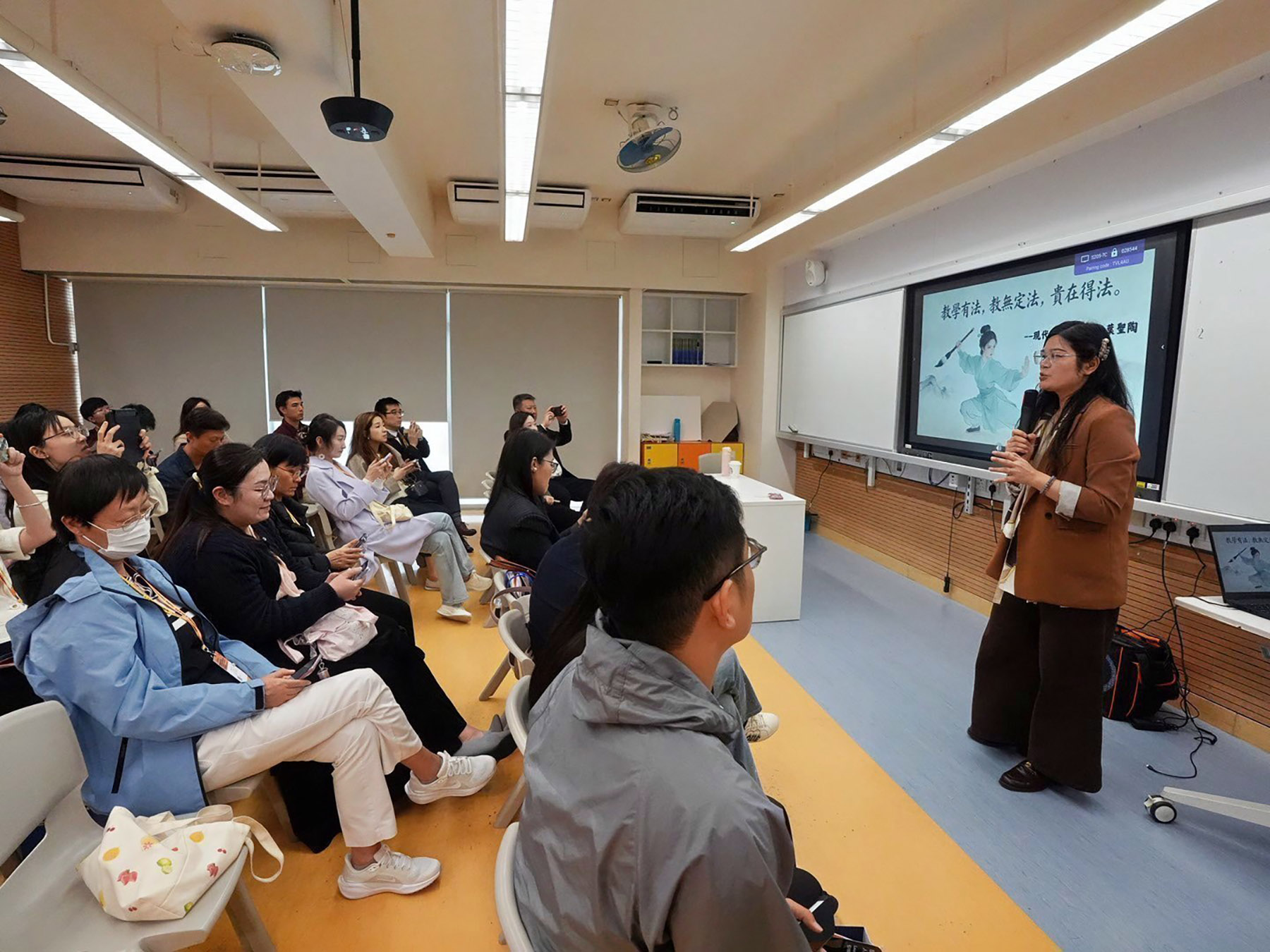
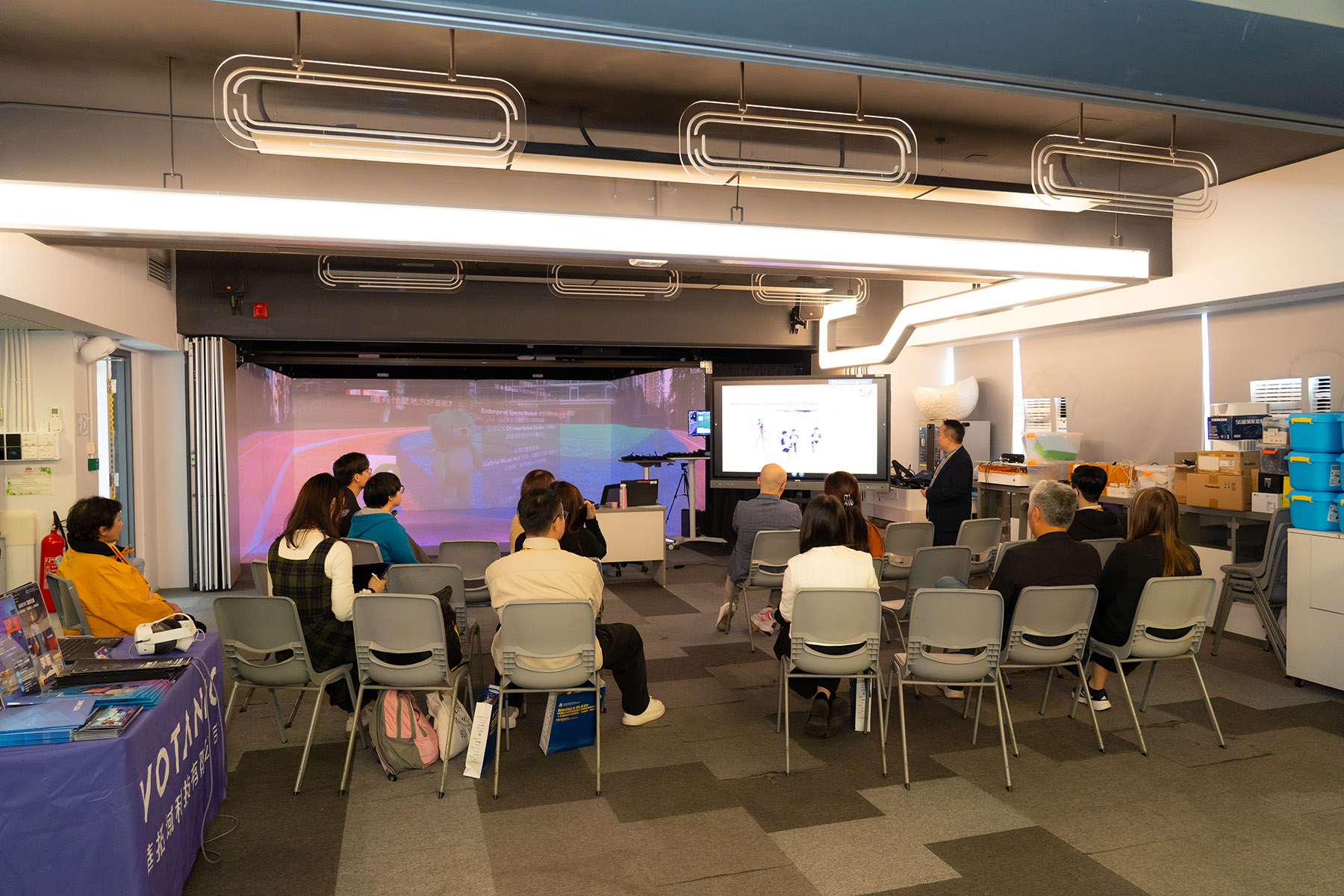
Conclusion: Building an Educational Future That Embraces Technology While Upholding Humanity
Throughout the conference, speakers agreed that AI is not a replacement for teachers, but rather a catalyst for education to return to its essence: focusing on the holistic development of students, cultivating character, creativity, and critical thinking. Speakers also called on the education community to establish clear ethical frameworks to ensure that the application of technology enhances learning effectiveness while narrowing the digital divide, truly guiding educational transformation with a human-centred principle.
Let us begin with our schools, starting in the classroom, with teacher professional development, and with student values education. Let us lead change, drive development, and build for our students an educational future that embraces technology while upholding the human spirit.
The Symposium, "Schooling in the AI Era - Leading Transformation & Driving Development" was not only an anniversary event for HKBUAS Wong Kam Fai Secondary and Primary School, but also a new chapter in advancing the future of education. From ideas to action, from cross-sector dialogue to educational practice, let us join hands in the AI era to collectively forge a new future for education.
