


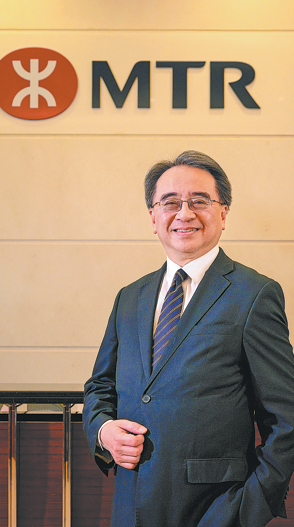
The China Development Forum 2026 started in Beijing on Sunday, bringing together global business leaders and policymakers to explore sustainable economic growth under China's 15th Five-Year Plan (2026-30). Among the distinguished speakers, Jacob Kam, chairman of MTR Corp, highlighted the Hong Kong-based railway operator's two-decade journey contributing to the development of urban rail transit in the Chinese mainland.
Dedicated service
MTR, a global leader in railway operations, has served Hong Kong for more than 40 years, gathering technical expertise and experience across the entire life cycle of railway projects. Twenty years ago, the corporation seized the opportunity presented by the mainland's rapid urbanization, expanding its operations northward.
Since then, MTR has participated in the investment, construction and operation of rail transit projects in key cities across the mainland.
ALSO READ: HK's MTR consortium wins major Sydney Metro West contract
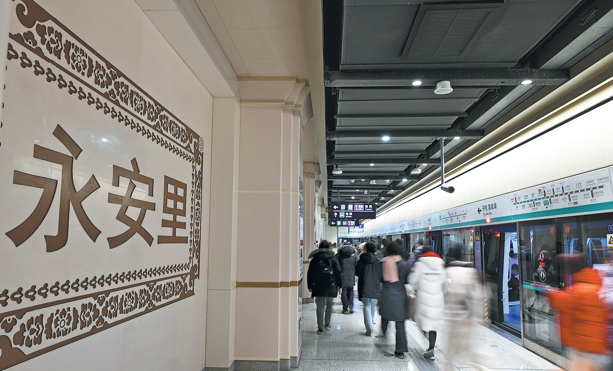
As of 2025, nine railway lines by MTR in Beijing, Hangzhou and Shenzhen are fully operational, expanding the total network length to 361 kilometers and providing safe, reliable and convenient services to over 4.3 million passengers daily, according to the corporation. That makes MTR one of the few operators capable of managing metro systems in multiple cities across both China and international markets, it said.
Kam recalled when many mainland cities were developing their metro systems. Hong Kong's metro system, known for its safety, efficiency and service quality, earned the trust of local governments, according to Kam. Coupled with national policy support for Hong Kong enterprises, this opened the path for MTR's development on the mainland.
Sustainable development
Urban railways are a highly efficient, green and high-capacity mode of mass transportation. However, their construction and long-term maintenance often require substantial financial support from local governments. In response, MTR has introduced its "Rail plus Community" development model, which integrates railway projects with community and property development. This model transforms some of the economic benefits generated by railway development into resources supporting ongoing operations and future projects.
In recent years, MTR has engaged in major transit-oriented development, or TOD, projects across the Chinese mainland. It involves the Hangzhou West Railway Station, the comprehensive transportation hub at the Beijing Tongzhou Railway Station, and a new zone in Shenzhen featuring high-speed rail.
Through these initiatives, MTR assists local governments in driving urban development, optimizing spatial layouts and improving functional capabilities.
Boosting consumption
In Hong Kong, through effective planning and marketing strategies, MTR has transformed station spaces into vibrant lifestyle hubs including retail, dining and diverse services, according to MTR. This approach not only enhances passengers' travel experiences but unlocks the value of railway passenger flow.
The corporation has extended its Hong Kong station commercial experience to the mainland, establishing joint ventures with local metro companies in cities such as Chengdu, Zhengzhou, Xi'an and Guangzhou to develop tailored station commercial models.
The Chengdu Ronggang, MTR's earliest station commercial joint venture with Chengdu Metro, has introduced 41 brands across more than 270 stations on 15 lines. The first batch of demonstration shops in Zhengzhou launched in January 2025, with Xi'an following in January 2026.
ALSO READ: MTR Corp wins top honors at international transport summit
Kam said that MTR's mainland commercial platform company was established in September, aiming to collaborate with local metro companies to explore and promote consumption within stations, adapting commercial models to suit mainland markets.
Going global
Over the past two decades, MTR has participated in the rapid development of urban rail transit on the mainland and expanded its presence across overseas markets. Its foundation in the mainland market, combined with mature international experience and growing global recognition, enables MTR to act as a bridge.
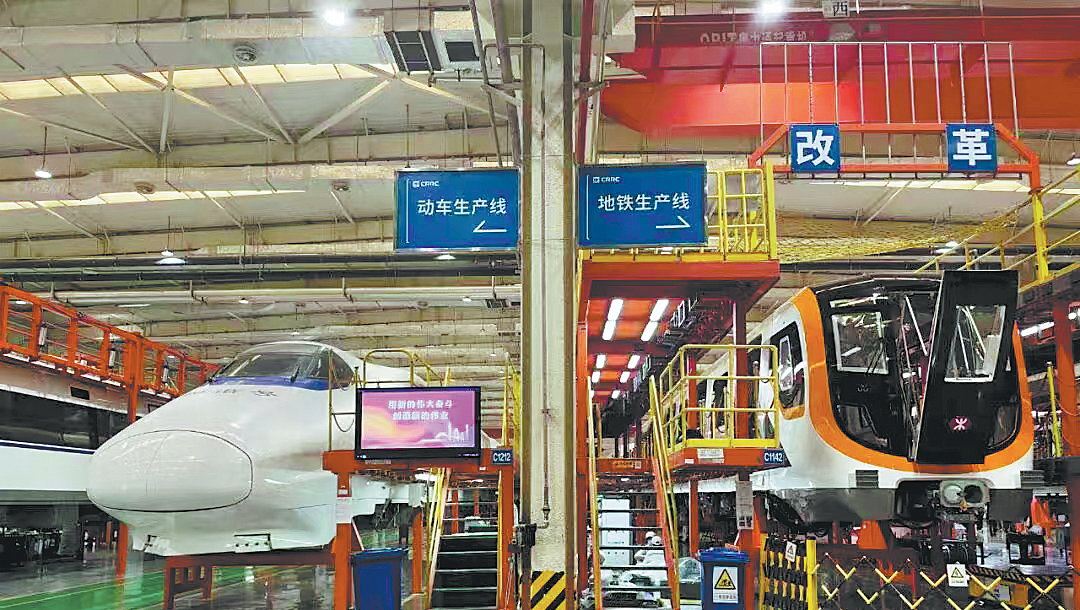
In 2025, MTR announced an investment in CRRC Guangdong, its first venture into the railway equipment industry in Guangdong province. This not only strengthens MTR's core competencies but fosters deeper cooperation with industry leaders.
In January, the Metro Trains West Consortium, a collaboration between MTR and CRRC, secured a contract for the Sydney Metro West project in New South Wales, Australia. The partnership brings together complementary strengths: MTR's expertise in system integration, operational oversight and service delivery, alongside CRRC's capabilities in rolling stock and industrial innovation.
READ MORE: A summer date with Chiikawa on MTR
It also marks a milestone in MTR's collaboration with Chinese mainland enterprises to go global, aiding the international expansion of China's advanced railway technologies and proven expertise, according to MTR.
National development
MTR is advancing several new railway projects in Hong Kong, investing over HK $140 billion ($17.86 billion) to expand the city's railway network and support the Hong Kong Special Administrative Region government's development of the Northern Metropolis.
Kam said that the 15th Five-Year Plan provides a clear vision for high-quality development in the Guangdong-Hong Kong-Macao Greater Bay Area. MTR is committed to leveraging its strengths to contribute to the needs of China.
MTR will continue to enhance connectivity in the GBA by improving cross-boundary rail services, such as the Guangzhou-Shenzhen-Hong Kong High-Speed Railway, facilitating the seamless flow of talent, capital and essential resources.
Utilizing its extensive TOD experience with the "Rail plus Community" model, MTR will support transit-oriented high-quality development across the GBA, helping to build an international first-class bay area and a world-class city cluster.
Moving forward, the corporation will uphold its professional and pragmatic approach while remaining committed to innovation and collaboration. It will proactively align with national development strategies, leveraging its role as a "super connector" and "super value-adder", contributing to the country's dual strategies of "going global" and "attracting foreign investment", integrating into and serving overall national development through concrete actions.
