

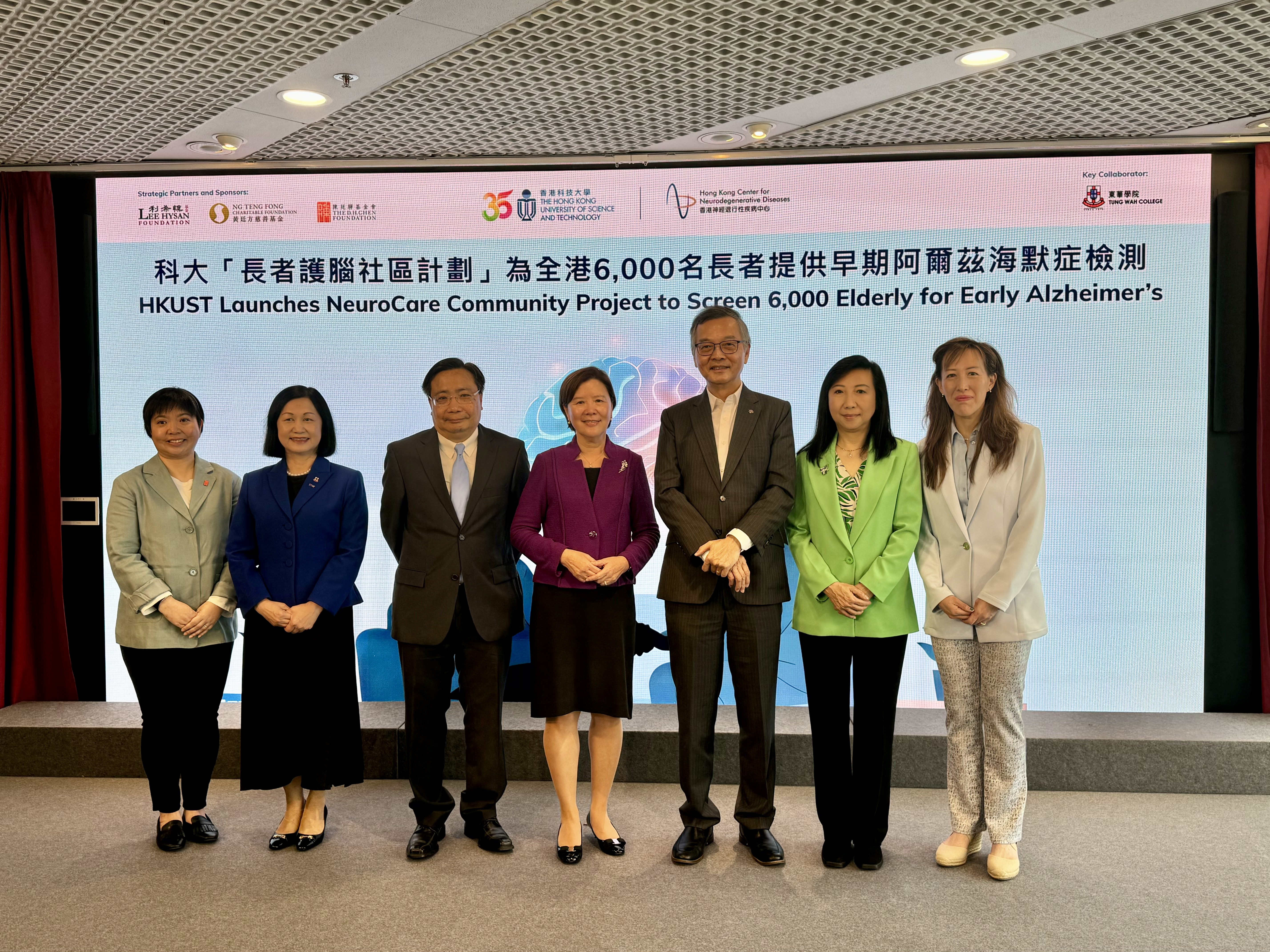
The Hong Kong University of Science and Technology on Monday launched a five-year project providing free early detection of Alzheimer’s disease in the community by using its globally pioneering blood test technology.
The program will benefit about 6,000 residents aged 60 to 75.
The university said Alzheimer’s is the most common form of dementia, affecting about 30 percent of people aged 85 or above. With Hong Kong’s population rapidly aging and the burden of chronic disease sharply increasing, it believes the project will enable faster, more effective planning of care solutions and early intervention, alleviating pressure on patients and caregivers.
ALSO READ: Chan: HKUST medical school to put city at forefront of innovation
Under the program, which was launched after an earlier pilot trial, some 6,000 elderly residents will first undergo initial cognitive and general health assessments. Among them, 2,500 will then receive standardized cognitive and functional assessments, along with routine blood tests and physician evaluation. Up to 750 will be selected for blood tests using a multiplex protein biomarker panel -- the world’s first of its kind.
In the final stage, 350 participants will undergo treatments like magnetic resonance brain imaging to determine their exact level of risk. Follow-ups and referrals to medical and community care will also be provided, with assessments to be made in two to three years.
READ MORE: HKUST sets to fast-track establishment of third medical school
HKUST President Nancy Ip Yuk-yu, who’s a renowned neuroscientist, said the university’s innovative, less-invasive technology enables early detection of Alzheimer’s disease that can transform the trajectory of brain health-giving families, allowing them to plan, seek support and take proactive steps together.
Scientific research must ultimately serve the public, she said, adding that the project will create a “healthier, more resilient future” for Hong Kong’s aging society, especially for the grassroots elderly.
READ MORE: HKUST contributes key global perspectives at WEF meeting in Davos
According to Lam Ching-choi, chairman of the SAR government’s Advisory Committee on Mental Health, the special administrative region would have more than 330,000 dementia patients by 2039, with Alzheimer’s being the most common type.
He said early detection of the disease among high-risk individuals remains difficult, and there’s no effective cure so far.
Emphasizing the importance of early detection and proactive intervention, Lam said the program marks a significant step in safeguarding Hong Kong’s mental health, and will alleviate pressure on patients, caregivers and primary care services.
He also urged seniors at risk to actively work with primary care services and improve their lifestyle habits so that the disease can be better curbed.
Contact the writer at amberwu@chinadailyhk.com
