

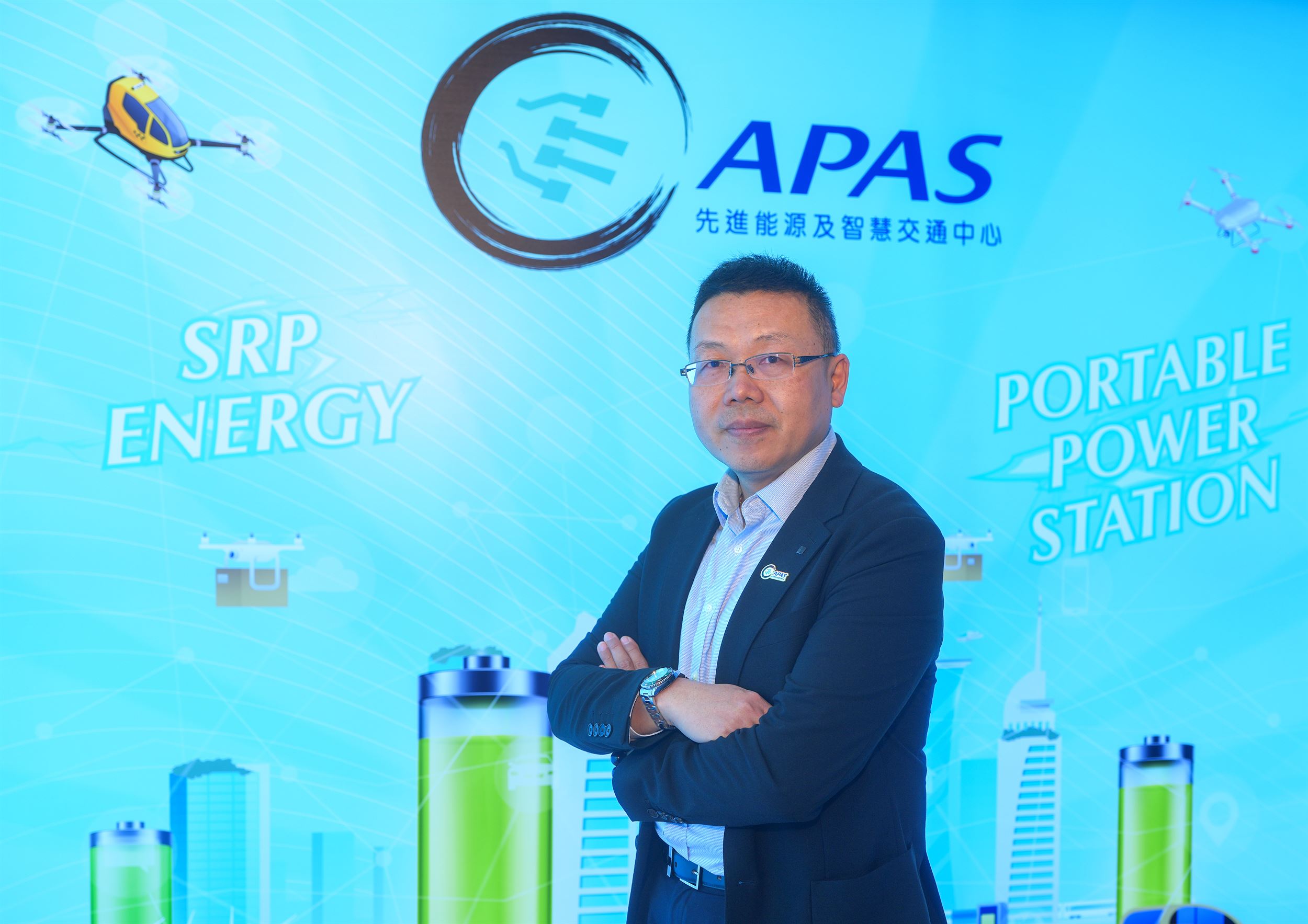
The Centre of Advanced Power and Autonomous Systems (APAS), under the Hong Kong Productivity Council (HKPC), continues to conduct market-driven research and development programs across multiple fields, partnering with industry, universities, and technology institutes to strengthen the city’s automotive and broader transportation sectors in new energy and smart driving technologies. APAS unveiled innovative energy solutions at the Battery Show Asia, held from March 10 through 12.
“APAS focuses on areas including new energy technologies, green transportation, smart mobility, intelligent systems and emerging applications, actively translating research outcomes into market-ready solutions to help industries enhance technological capabilities and industrial value,” said Du Yonghai, chief innovation officer of HKPC and general manager of APAS.
Making its inaugural appearance at the event, APAS showcased eight advanced battery technologies that prioritize high safety and intelligence, including the high-performance sodium-ion battery, explosion-proof high-energy battery system, and a yacht battery system.
APAS’ explosion-proof high-energy battery system directly tackles one of the sector’s most persistent safety threats — thermal runaway. It’s usually triggered when physical damage, overcharging or extreme conditions cause the battery’s temperature to spike suddenly, leading to chemical decomposition, further heat generation, and ultimately a fire or explosion in electric vehicle and energy storage applications.
The explosion-proof high-energy battery system can effectively prevent thermal runaway with exceptional energy density and a robust structural design. It offers waterproofing, corrosion resistance, shockproofing, and overheating protection, ensuring stable and reliable power delivery even in the harshest environments. This makes it an ideal solution for marine propulsion systems and various portable energy storage applications.
Moreover, its compact design reduces the volume to just one-quarter of traditional battery packs, saving valuable space on equipment, enabling users to install additional applications and improving operational efficiency.
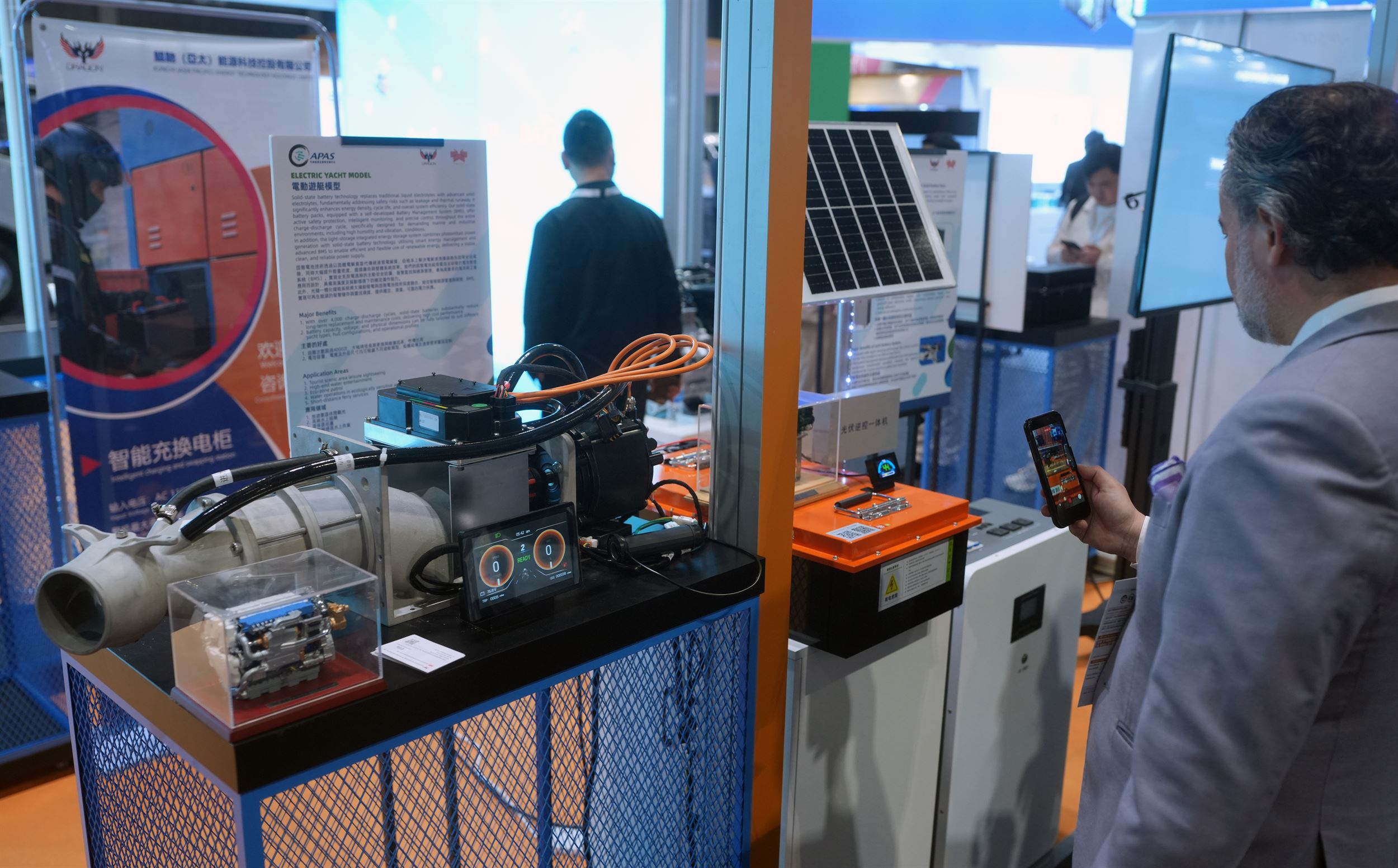
Another highlight is the yacht battery system, designed to withstand harsh marine environments, including high humidity, intense vibration, and salt-spray exposure. For example, the large amount of chloride ions brought by salt spray could accelerate metal corrosion and increase the risk of electrolyte leakage. The system can eliminate such risks by leveraging solid-state battery technology with exceptional thermal stability.
Meanwhile, its advanced battery management system (BMS) can detect any leakage risks and prevent thermal runaway. The product has gained significant traction in Europe.
“Energy technologies are entering an unprecedented period of growth,” Du said, highlighting Hong Kong’s unique advantages in hydrogen energy, green methanol, and sustainable aviation fuel.
Approximately 50 percent of the town gas in Hong Kong’s citywide pipeline network is hydrogen and the pipeline network has operated for over 160 years, laying a solid foundation for the city to utilize the energy, Du said.
Without such a foundation, he explained, increasing the amount of hydrogen in existing pipelines would require significant upgrades to delivery stations, pipeline materials, and other infrastructure.
Therefore, Hong Kong is well-positioned to serve as a model of how to integrate town gas as a partial hydrogen source, extracting and purifying hydrogen, and establishing refueling stations with low utilization costs.
“We aim to establish Hong Kong’s first hydrogen energy testing laboratory this year,” Du said, aligning with the strategic priorities outlined in the 15th Five-Year Plan (2026-30), which emphasizes emerging and future industries such as new energy, advanced energy storage, and hydrogen energy.
“APAS will continue to focus on research and practical applications in new energy and intelligent systems, while advancing technological innovation and cross-regional collaboration to support both the nation and Hong Kong in fostering emerging industries and future industries,” he added.
Du said that the Battery Show Asia provides an ideal platform to showcase Hong Kong and the Chinese mainland’s innovations in new energy, supporting their global expansion. Through international exhibitions, HKPC strengthens Hong Kong’s role as a superconnector. In line with the SAR government’s 2026-27 Budget to attract large-scale exhibitions in strengthening the city’s “World’s Meeting Place” brand, HKPC will continue to participate in international exhibitions and foster industry exchanges to drive innovation.
However, Du cautioned that Chinese new energy firms face “cultural and regulatory mismatches” when entering overseas markets. For instance, global buyers typically require compliance with established international frameworks such as ISO standards or the EU Battery Regulation, whereas some Chinese products are certified solely under mainland standards. Such gaps could create significant barriers to market acceptance, even though Chinese standards are often equivalent in substance to their international counterparts.
Du said Hong Kong can play a pivotal role in bridging any gaps, adding that the city could help increase global recognition of Chinese standards as the nation is emerging as a leader in setting new international benchmarks, especially in new energy vehicles.
“Hong Kong can play a more proactive role as a connector between the Chinese mainland and the global market in the development of innovation, international standards and the practical application of new energy technologies, thereby enhancing the city’s global competitiveness in the new energy industry,” he said.
During the exhibition, APAS also hosted the second edition of the New Energy Summit, which attracted industry experts and scholars from Hong Kong SAR, Switzerland, Singapore, Thailand, and India to discuss the latest developments and application trends in renewable energy and energy storage, fostering a future landscape of sustainable new energy.
HKPC APAS Special
