

Hong Kong’s planned third medical school will put the city at the forefront of medical innovation, emphasizing its commitment to become a global education hub, Chief Secretary for Administration Eric Chan Kwok-ki said on Monday.
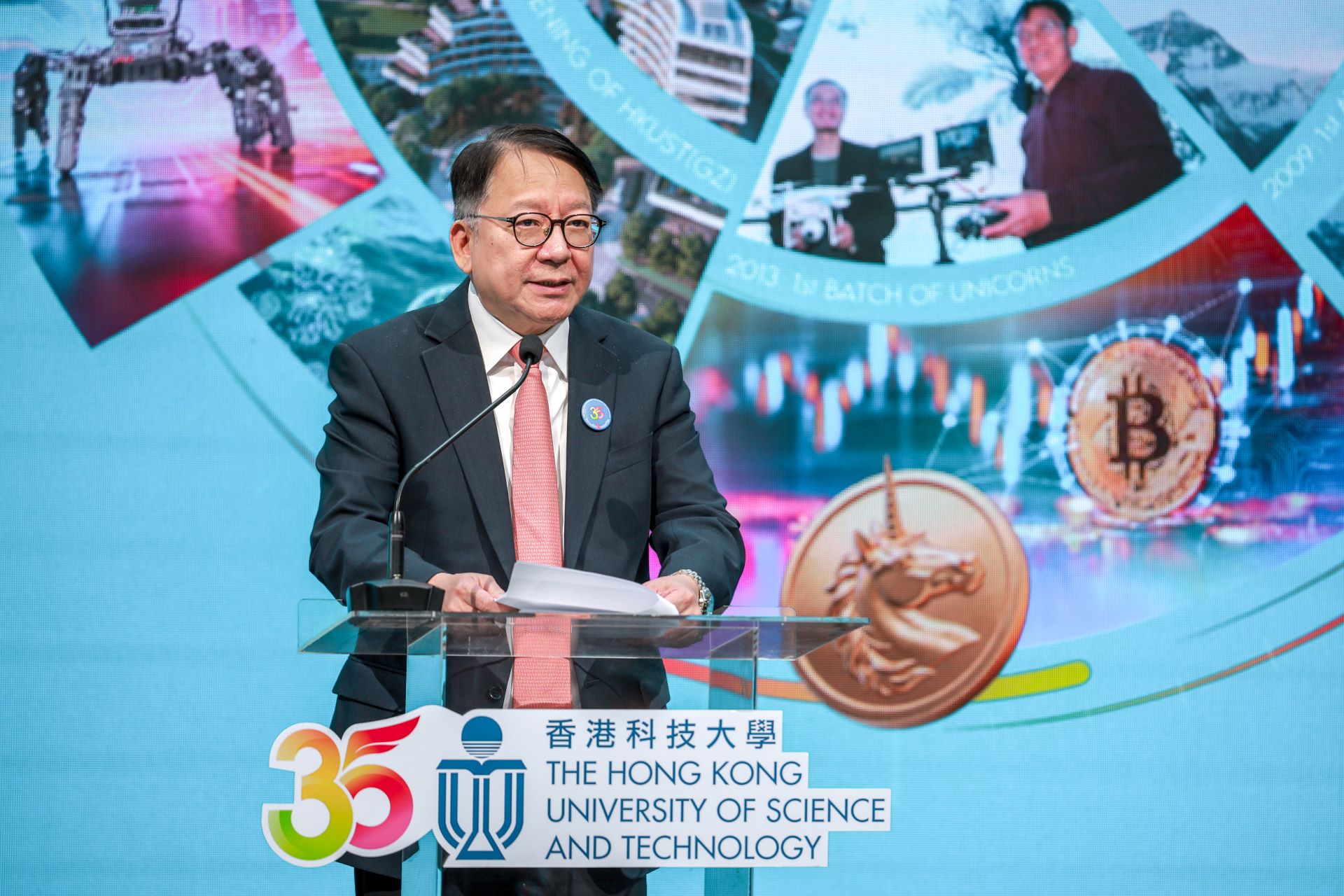
Speaking at the Hong Kong University of Science and Technology’s 35th Anniversary Launch Ceremony, Chan said the HKUST School of Medicine will combine medical education with the university’s well-known strengths in research and technology.
“The medical school's future campus will be strategically located - right next to the new integrated hospital in the Northern Metropolis' Ngau Tam Mei Development Area,” Chan said.
“That will ensure its close collaboration with the San Tin Technopole and the Northern Metropolis University Town, and strong connectivity with the Greater Bay Area. This will put Hong Kong, and the HKUST, at the forefront of medical innovation.”
ALSO READ: HKUST sets to fast-track establishment of third medical school
Chan added that the medical school will admit its first cohort in the 2028/29 academic year.
The Hong Kong Special Administrative Region government is committed to strengthening Hong Kong's status as an international education hub, Chan said.
He said the city intends to raise in the coming academic year the enrolment ceiling for self-financing, non-local students at publicly funded universities, from 40 percent to 50 percent of local student places, and increase the over-enrolment ceiling for self-financing research postgraduate programs to 120 percent.
“The HKUST has responded so well to these initiatives. In the current academic year, the University has attracted more than 20,000 undergraduate applications worldwide,” Chan said.
He said the HKUST now has a highly diverse non-local student community, with students from over 80 countries and regions.
READ MORE: HKUST to establish city's third medical school by mid-2027
“This is exactly how we enrich our talent pool and strengthen global connections,” Chan said. “The HKUST is a great example of how our universities can support national priorities.”
Chan noted that the HKUST ranked sixth in the 2026 QS Asia University Rankings, and 19th globally in the 2025 Times Higher Education Impact Rankings.
“Looking ahead, the university's contributions fit very well with the country's strategic priorities under the 15th Five-Year Plan: High-quality development, greater self-reliance and strength in science and technology, industrial modernization, as well as advances in original innovation and breakthroughs in core technologies,” he said.
